


Strainer 60 Mesh
In industrial filtration, the selection of mesh size is a critical engineering decision that directly impacts system efficiency, equipment longevity, and product purity. A strainer 60 mesh configuration is one of the most versatile specifications used in liquid and gas processing. Characterized by an aperture size of approximately 250 microns, this mesh count strikes a balance between fine particle retention and the structural integrity required for high-flow industrial environments.
For engineers and procurement teams sourcing Strainers & Baskets, understanding the technical nuances of 60 mesh—from its geometric properties to its performance under pressure—is essential for optimizing filtration systems. This guide examines the technical specifications, material considerations, and application-specific advantages of 60 mesh filtration components.
Technical Specifications of 60 Mesh Filtration
The term "mesh" refers to the number of openings per linear inch of the wire cloth. A 60 mesh screen contains 60 openings in one inch, measured from the center of one wire to the center of the next. However, the mesh count alone does not fully define the filtration capability; the wire diameter and the resulting aperture size are the primary metrics for engineering performance.
Aperture and Micron Rating
For a standard stainless steel strainer 60 mesh, the nominal aperture is typically 0.0098 inches or 250 microns. This means the strainer will effectively block particles larger than 250 microns. In many industrial contexts, this is considered "fine straining" or "medium filtration."
Wire Diameter and Open Area
The wire diameter used in a 60 mesh weave significantly influences the "Open Area" percentage. A common wire diameter for this mesh is 0.0075 inches (0.19 mm).
* Open Area Calculation: The percentage of open area determines the flow capacity and the rate of pressure drop. For a standard 60 mesh with 0.19 mm wire, the open area is approximately 37.5%.
* Flow Resistance: A lower open area percentage increases the velocity of the fluid passing through the pores, which can lead to higher differential pressure ($ΔP$). Engineers must ensure that the total surface area of the strainer basket is sufficient to compensate for this resistance.
Material Integrity: SS304 vs. SS316L
Because 60 mesh wire is relatively thin, material selection is paramount to prevent premature failure due to corrosion or mechanical stress. Stainless steel is the industry standard for industrial Strainers & Baskets due to its durability and resistance to oxidation.
Stainless Steel 304
SS304 is the most common material for general-purpose industrial filtration. It offers excellent strength and good corrosion resistance for water treatment, hydraulic oils, and non-acidic chemical processing. It is a cost-effective choice for environments where the pH levels are relatively neutral.
Stainless Steel 316/316L
For applications involving chlorides, marine environments, or highly corrosive chemicals, SS316L is preferred. The addition of molybdenum enhances its resistance to pitting and crevice corrosion. In the food and pharmaceutical industries, SS316L is often mandated due to its superior hygienic properties and ability to withstand aggressive Cleaning-in-Place (CIP) chemicals.
Structural Design and Reinforcement
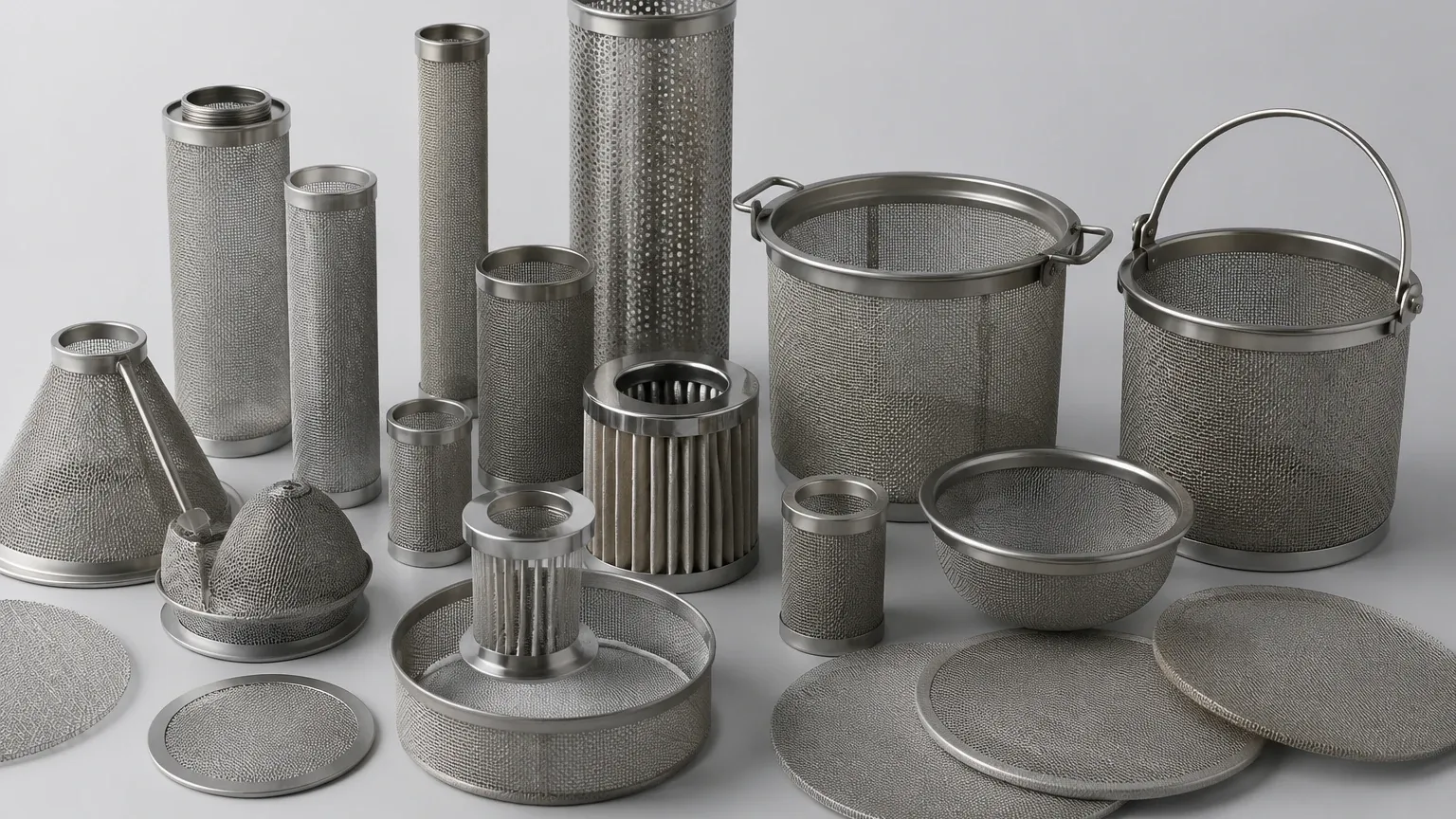
A strainer 60 mesh screen is inherently flexible and can be susceptible to deformation under high-pressure differentials. In industrial basket strainers, the mesh is rarely used as a standalone component. Instead, it is integrated into a multi-layered structure to ensure mechanical stability.
Perforated Metal Backing
To withstand the force of high-velocity flow and the weight of accumulated debris, 60 mesh wire cloth is typically lined or wrapped around a perforated metal cylinder or basket. The perforated metal provides the "skeleton," while the mesh provides the precise filtration. Common hole patterns for the backing include staggered round holes with 1/8" or 1/4" diameters.
Pleated Designs
In applications where space is limited but high flow rates are required, the 60 mesh material can be pleated. Pleating significantly increases the effective filtration surface area within the same footprint, reducing the frequency of cleaning cycles and lowering the initial pressure drop.
Seam Integrity
For high-performance filtration, the seams of the mesh must be securely joined. Kaifil utilizes advanced welding techniques, such as plasma or resistance welding, to ensure that the seams are as strong as the parent mesh and do not allow bypass of unfiltered particles.
Flow Dynamics and Pressure Drop Considerations
One of the most common challenges in implementing a strainer 60 mesh is managing the pressure drop. As the mesh captures particles, the available open area decreases, leading to an increase in differential pressure. If the $ΔP$ exceeds the design limits of the strainer, the mesh may burst or collapse.
The Clean Pressure Drop
Engineers should calculate the "clean" pressure drop based on the fluid's viscosity and flow rate. For high-viscosity fluids like heavy oils or resins, a 60 mesh screen will exhibit significantly higher resistance than it would with water. In such cases, oversizing the strainer housing or using a multi-basket configuration is recommended.
Dirt-Holding Capacity
The dirt-holding capacity of a 60 mesh strainer refers to the volume of contaminants it can retain before the pressure drop reaches a critical level (typically 10-15 psi above clean pressure). Because 60 mesh is a surface filtration medium, the particles are trapped on the upstream side of the wire. Regular monitoring via differential pressure gauges is essential for maintaining system health.
Industrial Applications for 250-Micron Filtration
The 250-micron rating of a strainer 60 mesh makes it suitable for a wide range of "protection" and "clarification" tasks across various sectors.
1. Pump and Valve Protection
In water intake systems and cooling towers, 60 mesh strainers are used to protect sensitive downstream equipment from fine sand, scale, and biological debris. This prevents erosion of pump impellers and clogging of control valve orifices.
2. Food and Beverage Processing
In the production of syrups, juices, and liquid sweeteners, 60 mesh baskets are used to remove undissolved solids or carbon fines used in decolorization processes. The mesh ensures a smooth final product texture while meeting food safety standards.
3. Chemical and Petrochemical Refining
60 mesh is frequently used for the secondary filtration of chemical intermediate products. It effectively removes catalyst fines and particulate matter that could interfere with subsequent reaction stages or contaminate the final chemical product.
4. Hydraulic and Lubrication Systems
While primary hydraulic filters often operate in the 10-25 micron range, 60 mesh strainers are used in suction lines or reservoir breathers to catch larger metallic shavings and environmental dust, providing a first line of defense for the hydraulic circuit.
Maintenance, Cleaning, and Replacement Cycles
To ensure the longevity of Strainers & Baskets, a proactive maintenance schedule is required. Unlike disposable cartridges, stainless steel 60 mesh strainers are designed to be cleaned and reused.
Cleaning Methods
* Manual Cleaning: Removing the basket and using a soft brush with high-pressure water or air. Care must be taken not to poke holes in the fine wire weave.
* Ultrasonic Cleaning: For stubborn or sticky contaminants (like resins or oils), ultrasonic baths are highly effective at vibrating particles out of the 250-micron pores without damaging the wire.
* Backwashing: In automated systems, a reverse flow of fluid can be used to dislodge the filter cake from the mesh surface.
When to Replace
Despite their durability, 60 mesh screens will eventually require replacement. Signs that a strainer has reached the end of its service life include:
* Permanent Blinding: When contaminants become deeply embedded in the weave and cannot be removed by cleaning, resulting in a high permanent $ΔP$.
* Work Hardening and Cracking: Repeated pressure cycles can cause the fine wires to become brittle and crack, leading to bypass.
* Deformation: If the mesh has been subjected to a pressure surge that exceeded its structural limit, it may stretch or tear.
Engineering Checklist for Sourcing 60 Mesh Strainers
When specifying a strainer 60 mesh for a new project or replacement, engineers should confirm the following parameters with the manufacturer:
1. Fluid Compatibility: Does the chemical composition of the fluid (including trace elements) require SS304, SS316L, or a specialty alloy like Monel or Hastelloy?
2. Flow Rate and Viscosity: What is the maximum flow rate, and how does the fluid's viscosity change at different operating temperatures?
3. Maximum Allowable Pressure Drop: What is the threshold at which the system must be shut down for cleaning?
4. Housing Compatibility: Does the basket require specific flange types, O-ring seals, or handle configurations for easy removal?
5. Reinforcement Needs: Based on the expected flow velocity, does the 60 mesh require a specific gauge of perforated metal backing?
Conclusion
The strainer 60 mesh is a foundational component in industrial filtration, providing precise 250-micron retention for a vast array of liquid and gas applications. By selecting the appropriate material, ensuring robust structural reinforcement, and accurately calculating flow dynamics, technical teams can achieve reliable and cost-effective filtration performance.
As a specialist in custom stainless steel filtration, Kaifil provides the engineering expertise and manufacturing precision needed to develop high-performance Strainers & Baskets tailored to demanding industrial environments. Whether for OEM integration or specialized process optimization, choosing the right 60 mesh solution is a critical step toward operational excellence.
