


Strainer 6 Inch
In industrial fluid handling, the selection of a strainer 6 inch (DN150) component is a critical decision for engineers managing large-scale piping systems. A 6-inch pipeline typically handles significant flow volumes, making the efficiency and reliability of the filtration interface paramount to protecting downstream equipment such as centrifugal pumps, flow meters, and heat exchangers. As a specialized manufacturer of stainless steel filtration solutions, Kaifil provides precision-engineered components designed to meet the rigorous demands of chemical processing, water treatment, and food production environments.
Selecting the correct strainer 6 inch unit involves more than simply matching the pipe diameter. It requires a deep understanding of fluid dynamics, material compatibility, and the mechanical stresses inherent in high-flow systems. This guide explores the technical parameters and engineering considerations essential for specifying 6-inch strainers and baskets in industrial applications.
Understanding the Role of a Strainer 6 Inch in Industrial Piping
A 6-inch pipeline is a common standard for main distribution headers and primary process lines. At this scale, the debris being filtered—ranging from weld slag and pipe scale to organic matter—can cause catastrophic failure in high-speed rotating equipment or clog sensitive instrumentation. The strainer acts as a mechanical barrier, utilizing a perforated metal basket or a wire mesh liner to capture solids while allowing the liquid or gas to pass through with minimal resistance.
In the context of Strainers & Baskets, the 6-inch designation refers to the nominal pipe size (NPS). For these larger diameters, the physical construction of the strainer housing and the internal element must account for higher pressure drops and greater structural loads. A standard 6-inch strainer must be capable of handling thousands of gallons per minute (GPM), depending on the fluid velocity, making the internal open area ratio a primary performance metric.
Comparing Design Types for 6-Inch Applications
When specifying a strainer 6 inch component, engineers typically choose between two primary configurations: the Y-strainer and the Basket (Simplex or Duplex) strainer. Each serves a distinct operational purpose based on the nature of the process.
Y-Strainers (6-Inch)
Y-strainers are often preferred for steam, gas, or liquid applications where the amount of debris is relatively low. Their compact design allows for installation in both horizontal and vertical piping runs. However, in a 6-inch size, the debris holding capacity of a Y-strainer is limited compared to a basket design. They are most effective in high-pressure systems (such as ASME Class 300 or 600) where the structural integrity of the "Y" shape provides superior resistance to mechanical stress.
Basket Strainers (6-Inch)
For liquid systems with higher solids loading, a 6-inch basket strainer is the industry standard. These units feature a larger internal chamber, allowing for a significantly higher "open area ratio"—the ratio between the total area of the holes in the basket and the cross-sectional area of the inlet pipe. A 6-inch basket strainer is typically installed in horizontal lines and offers the advantage of easier cleaning, as the basket is accessed from the top, often via a quick-opening cover.
Material Selection and Chemical Compatibility
The longevity of a strainer 6 inch unit depends heavily on the materials used for both the housing and the internal filtration element. Kaifil specializes in stainless steel constructions, which offer superior corrosion resistance and durability compared to cast iron or carbon steel alternatives.
* SS304 (AISI 304): This is the standard choice for general industrial applications, including water treatment and many food-grade processes. It provides excellent resistance to atmospheric corrosion and many organic and inorganic chemicals.
* SS316/SS316L (AISI 316): For more aggressive environments, such as chemical processing plants or marine applications, SS316 is required. The addition of molybdenum enhances resistance to pitting and crevice corrosion in chloride-rich environments. SS316L (low carbon) is preferred for welded components to prevent intergranular corrosion.
* Specialty Alloys: In highly specialized cases involving extreme temperatures or highly corrosive acids, materials like Monel, Hastelloy, or Duplex Stainless Steel may be specified for the internal mesh or the entire housing.
Engineering Calculations: Flow Rate and Pressure Drop
One of the most critical aspects of specifying a strainer 6 inch component is calculating the clean pressure drop ($ΔP$). In a 6-inch system, an excessive pressure drop can lead to cavitation in downstream pumps and increased energy consumption for the entire facility.
The Open Area Ratio (OAR)
To ensure efficient flow, engineers look for an OAR of at least 4:1, though 6:1 or 8:1 is often preferred for viscous fluids or systems where rapid clogging is a risk. A 6-inch pipe has a cross-sectional area of approximately 28.27 square inches. Therefore, a basket with a 6:1 ratio must provide roughly 170 square inches of free-flowing hole area. If the mesh is too fine without a corresponding increase in basket size, the $ΔP$ will rise sharply.
Flow Velocity Considerations
Standard engineering practice for liquid service in a 6-inch line usually limits flow velocity to between 5 and 10 feet per second (fps). At 8 fps, a 6-inch pipe carries approximately 700 GPM. The strainer must be sized to accommodate this volume without creating a bottleneck. If the process involves high-viscosity fluids, such as heavy oils or syrups, the pressure drop will be significantly higher, necessitating a larger strainer body or a coarser mesh.
Customization Options for Strainers & Baskets
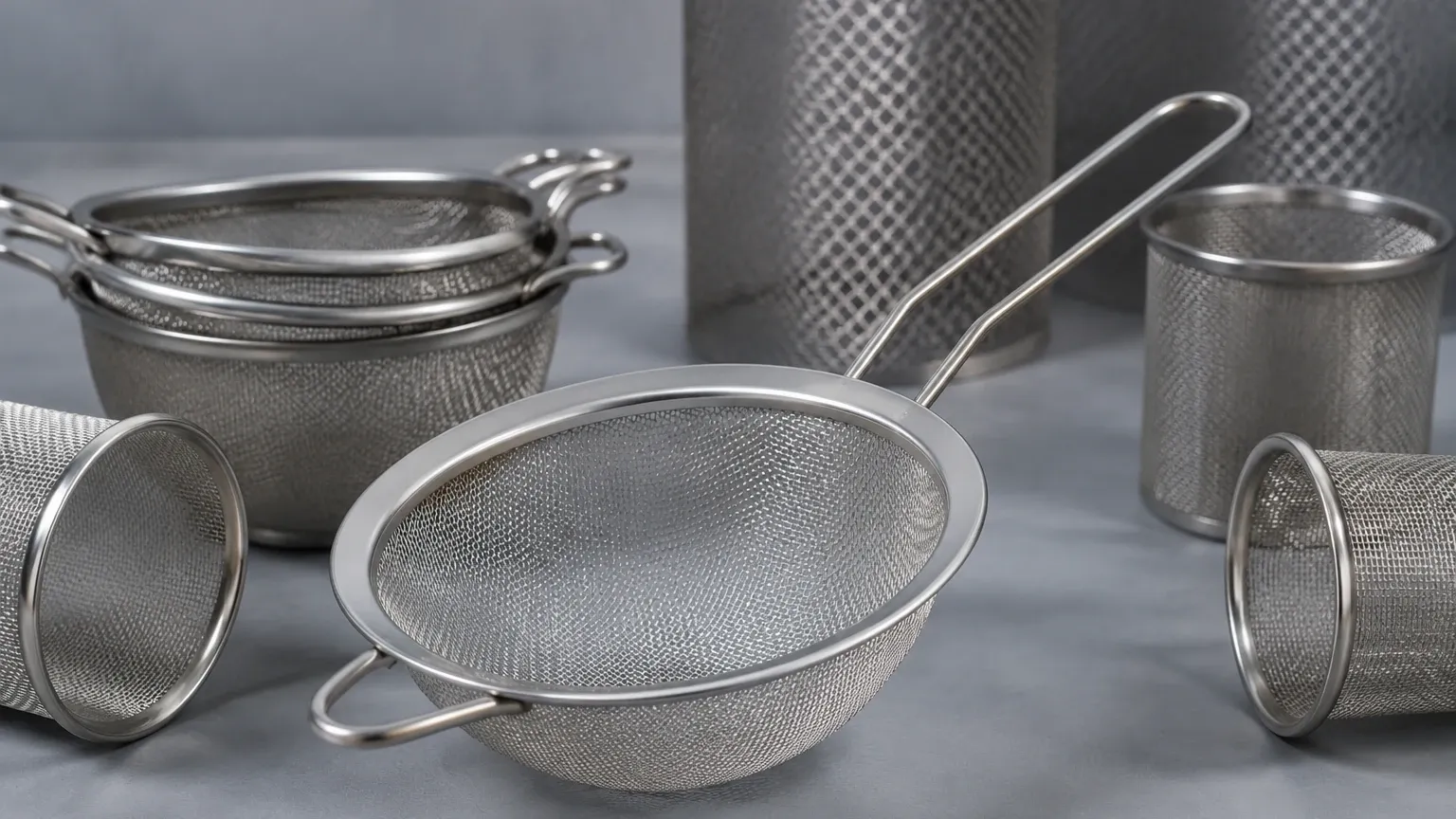
Industrial applications rarely follow a one-size-fits-all approach. Customization is often necessary to balance filtration precision with system throughput. Kaifil provides a range of tailored solutions for Strainers & Baskets to meet specific engineering requirements.
* Perforation and Mesh Combinations: A 6-inch basket often uses a heavy-duty perforated metal sheet (e.g., 1/8" or 1/4" holes) as a structural support, lined with a fine stainless steel wire mesh for precise particle retention. Mesh sizes can range from 20 mesh (840 microns) down to 400 mesh (37 microns) or finer.
* Reinforced Baskets: In high-pressure or high-velocity systems, the mechanical force of the fluid can deform a standard basket. Reinforcing bars or double-walled mesh structures are utilized to maintain structural integrity.
* Magnetic Inserts: For systems where fine iron or steel particles (black brown rust) are a concern, magnetic assemblies can be suspended inside the 6-inch basket to capture sub-micron metallic debris that might otherwise pass through the mesh.
* Connection Types: While flanged connections (ANSI/ASME B16.5) are standard for 6-inch lines, some applications may require butt-weld or specialized sanitary connections (Tri-Clamp) for food and pharmaceutical use.
Maintenance and Operational Efficiency
The total cost of ownership (TCO) of a strainer 6 inch unit is largely determined by its maintenance requirements. A poorly specified strainer will clog frequently, leading to excessive downtime and labor costs.
Differential Pressure Monitoring
To optimize cleaning cycles, engineers should install differential pressure ($ΔP$) gauges across the strainer. For a 6-inch line, a common rule of thumb is to clean or replace the basket when the pressure drop reaches 5-10 psi above the clean start pressure. Waiting too long can result in "basket burst," where the differential pressure exceeds the structural limit of the mesh, allowing contaminants to bypass the filter.
Cleaning Protocols
In a simplex 6-inch basket strainer, the system must be shut down and depressurized before the basket can be removed. For continuous processes, a duplex strainer (two 6-inch strainers connected by a diverter valve) is necessary. This allows the flow to be diverted to the clean chamber while the dirty basket is serviced, ensuring zero downtime.
Confirming Specifications Before Purchase
Before finalizing the procurement of a strainer 6 inch component, technical teams should confirm the following data points with the manufacturer:
1. Fluid Properties: Viscosity, specific gravity, and operating temperature.
2. Contaminant Profile: The type of solids, their concentration (ppm), and the required micron rating.
3. Pressure Rating: Ensure the housing meets the system's maximum allowable working pressure (MAWP) and follows relevant codes (e.g., ASME Section VIII).
4. Seal Materials: Verify that O-rings or gaskets (EPDM, Viton, PTFE) are compatible with the process fluid.
By focusing on these technical boundaries, engineers can ensure that their 6-inch filtration solution provides the necessary protection for their industrial infrastructure. Kaifil’s expertise in custom stainless steel manufacturing ensures that each component is built to withstand the specific rigors of the application, delivering long-term reliability and precise filtration performance.
