


6-inch Strainers
In industrial fluid handling, the selection of filtration components is a critical engineering decision that impacts system efficiency, pump longevity, and product purity. Among the various sizes utilized in mid-to-high-flow piping systems, 6-inch strainers (typically corresponding to DN150 nominal pipe size) serve as a foundational component for protecting downstream equipment from particulate contamination. These units are designed to handle significant flow volumes while maintaining manageable pressure drops, making them a staple in chemical processing, water treatment, and heavy industrial applications.
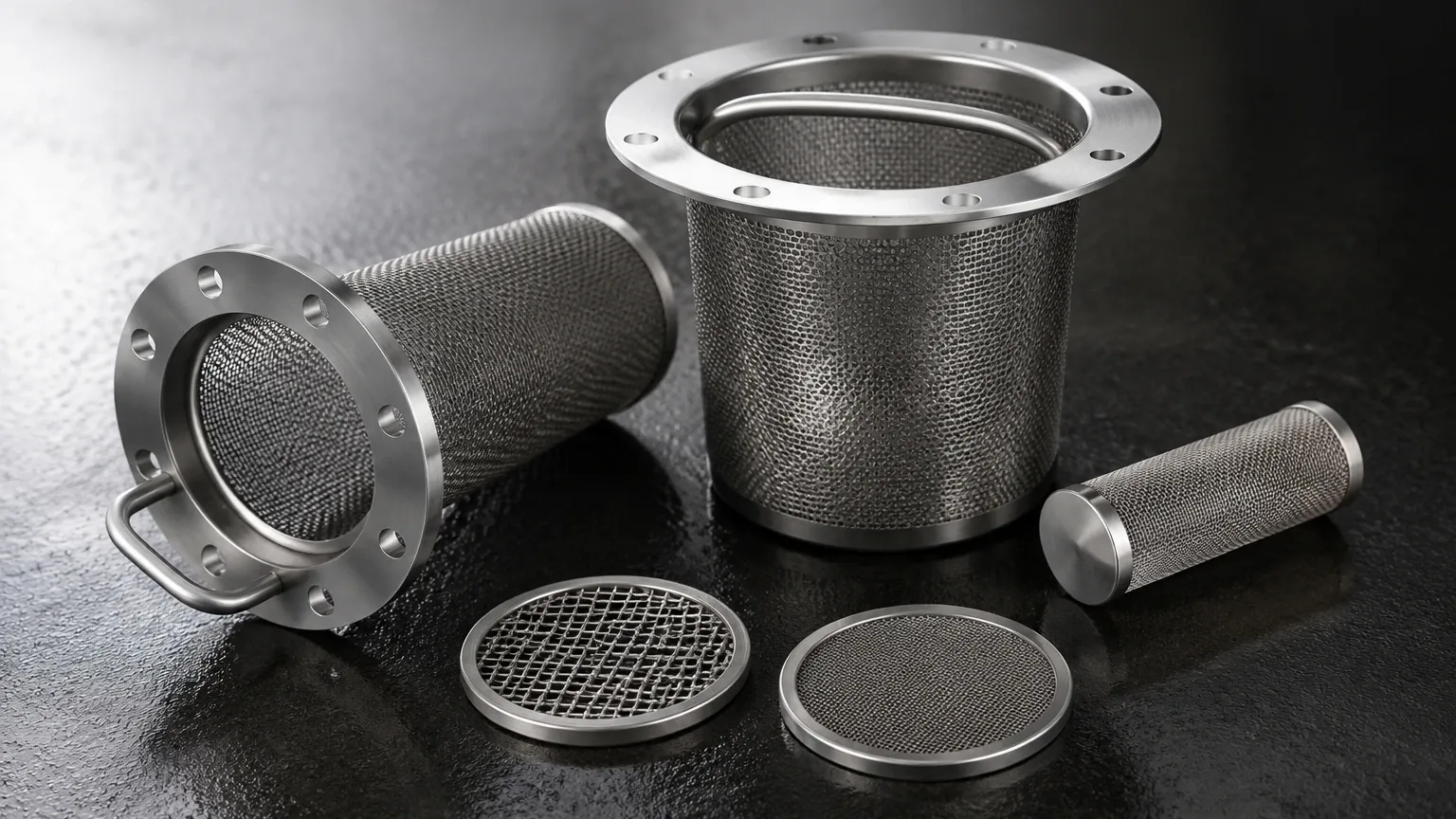
As a specialized manufacturer of stainless steel filtration solutions, Kaifil provides engineered Strainers & Baskets that address the rigorous demands of 6-inch piping architectures. Understanding the technical nuances of these components—from housing geometry to mesh selection—is essential for engineers and procurement teams tasked with optimizing industrial processes.
Engineering Fundamentals of 6-inch Strainers
A 6-inch strainer is defined by its connection size, but its performance is dictated by its internal volume and the surface area of the straining element. In a standard DN150 system, fluid velocities can be substantial. Therefore, the primary engineering objective is to maximize the "Open Area Ratio" (OAR). The OAR is the relationship between the internal cross-sectional area of the pipe and the total open area of the strainer basket. For most industrial applications, an OAR of at least 4:1 is recommended to prevent excessive pressure drop and frequent clogging.
Simplex vs. Duplex Configurations
For 6-inch lines, engineers must choose between simplex and duplex designs based on the required system uptime:
* Simplex Strainers: These are used in batch processes or systems where the flow can be temporarily halted for basket cleaning. They offer a compact footprint and lower initial capital expenditure.
* Duplex Strainers: In continuous flow applications where downtime is not an option, duplex 6-inch strainers utilize a diverter valve to switch flow between two separate chambers. This allows one basket to be cleaned while the other remains in service.
Material Selection and Chemical Compatibility
The durability of 6-inch strainers in demanding environments depends heavily on the metallurgy of both the housing and the internal basket. While cast iron or carbon steel may suffice for non-corrosive water applications, stainless steel is the industry standard for chemical, pharmaceutical, and food-grade processes.
Stainless Steel 304 vs. 316L
* Type 304 Stainless Steel: This provides excellent general corrosion resistance and is cost-effective for many industrial water and mild chemical applications.
* Type 316/316L Stainless Steel: For environments involving chlorides, high temperatures, or aggressive chemicals, 316L is preferred. The addition of molybdenum enhances pitting resistance, and the low carbon content (in 316L) minimizes carbide precipitation during welding, ensuring the structural integrity of the filter housing and the precision of the Strainers & Baskets.
Beyond the metal, seal materials must be carefully selected. EPDM, Viton (FKM), and PTFE gaskets are commonly used in 6-inch strainers to ensure leak-proof performance across different temperature and chemical profiles.
Filtration Media: Wire Mesh and Perforated Plate
The internal element of 6-inch strainers is what determines the filtration accuracy. Depending on the particle size targeted for removal, the element may consist of a perforated plate, a single layer of wire mesh, or a multi-layered sintered mesh for finer filtration.
Perforated Support Baskets
In larger 6-inch units, the mechanical stress of the fluid flow can be significant. Perforated plates usually serve as the primary structural support for finer wire mesh linings. Common perforation sizes range from 1/32" to 1/4". The hole pattern (staggered vs. straight) affects both the strength and the flow characteristics of the basket.
Precision Wire Mesh
For applications requiring the removal of smaller particulates, stainless steel wire mesh is lined inside the perforated basket. This allows for filtration ratings from 20 mesh (approx. 840 microns) down to 400 mesh (approx. 37 microns). When selecting 6-inch strainers for fine filtration, engineers must account for the increased flow resistance inherent in tighter mesh weaves and ensure the housing is sized to accommodate the resulting pressure differential.
Customization for Specialized Industrial Applications
Standard off-the-shelf strainers often fail to meet the specific spatial or performance requirements of complex industrial layouts. Customization is a core strength of Kaifil’s manufacturing process, allowing for the development of 6-inch strainers tailored to unique operational parameters.
Connection Types and Standards
While flanged connections (ANSI/ASME B16.5) are standard for 6-inch piping, custom units can be manufactured with:
* Butt-weld ends for high-pressure, permanent installations.
* Sanitary Tri-clamp fittings for food, beverage, and pharmaceutical applications where clean-in-place (CIP) capabilities are required.
* Threaded or NPT connections, though less common at the 6-inch scale, for specific utility interfaces.
Specialized Features
For high-viscosity fluids or sensitive chemical processes, 6-inch strainers can be equipped with:
* Steam Jackets: To maintain fluid temperature and prevent solidification of the media.
* Magnetic Inserts: To capture fine ferrous particles that might pass through standard mesh.
* Differential Pressure Taps: To allow for the installation of gauges that monitor basket loading in real-time.
Operational Maintenance and Replacement Cycles
The total cost of ownership for 6-inch strainers is determined more by maintenance and downtime than by the initial purchase price. Proper maintenance protocols ensure that the strainer protects downstream equipment like pumps, spray nozzles, and heat exchangers effectively.
Monitoring Pressure Drop
The most reliable indicator of a clogged strainer is the pressure differential ($\\Delta P$) between the inlet and outlet. For most 6-inch strainers, a clean pressure drop is typically between 0.5 and 2 psi. When the differential reaches 5 to 10 psi, the basket should be removed and cleaned. Operating beyond this limit risks basket collapse or "blow-by," where particles are forced through the media or around the seals.
Cleaning Procedures
Stainless steel baskets are designed for reuse. Cleaning methods vary by application:
1. Manual Cleaning: Removing the basket and using a high-pressure water jet or soft brush.
2. Ultrasonic Cleaning: Recommended for fine mesh baskets used in pharmaceutical or chemical processes to remove sub-micron particles trapped within the weave.
3. Chemical Cleaning: Using compatible solvents to dissolve resins or organic buildup.
Selection Criteria for Purchasing Teams
When specifying 6-inch strainers, purchasing teams and engineers should confirm several key data points to ensure the product is fit for purpose:
1. Design Pressure and Temperature: Ensure the housing rating (e.g., Class 150, Class 300) exceeds the maximum system parameters.
2. Flow Rate (GPM/m³/h): Verify that the internal volume of the strainer can handle the peak flow without exceeding the allowable pressure drop.
3. Particle Retention Target: Clearly define the micron or mesh rating required to protect downstream components.
4. Corrosion Allowance: Determine if the fluid requires 316L stainless steel or if 304 is sufficient.
5. Installation Space: Confirm the face-to-face dimensions and the clearance required for basket removal.
By focusing on these technical boundaries, industrial operators can ensure they select Strainers & Baskets that provide reliable, long-term service. Kaifil’s expertise in custom stainless steel fabrication ensures that even the most demanding 6-inch filtration requirements are met with precision-engineered solutions.
Conclusion
6-inch strainers are more than simple mechanical barriers; they are engineered components that must balance flow efficiency, structural integrity, and filtration precision. Whether used as a primary filter in a water treatment plant or a safety screen in a chemical reactor, the quality of the strainer housing and basket directly impacts the reliability of the entire system. By selecting high-grade stainless steel materials and optimizing the basket design for specific particulate loads, engineers can significantly reduce maintenance costs and prevent catastrophic equipment failure. For customized or high-performance filtration needs, collaborating with a dedicated manufacturer like Kaifil ensures that every 6-inch strainer is built to the exact specifications of the application.
