


65mm Strainer
In industrial fluid handling and process engineering, the 65mm strainer—often corresponding to a DN65 or 2.5-inch nominal pipe size—serves as a critical line of defense for downstream equipment. Whether utilized in chemical processing, food production, or hydraulic systems, these components are engineered to remove unwanted solids from liquid or gas streams. Selecting the correct 65mm strainer requires a deep understanding of fluid dynamics, material compatibility, and the specific mechanical stresses of the application environment.
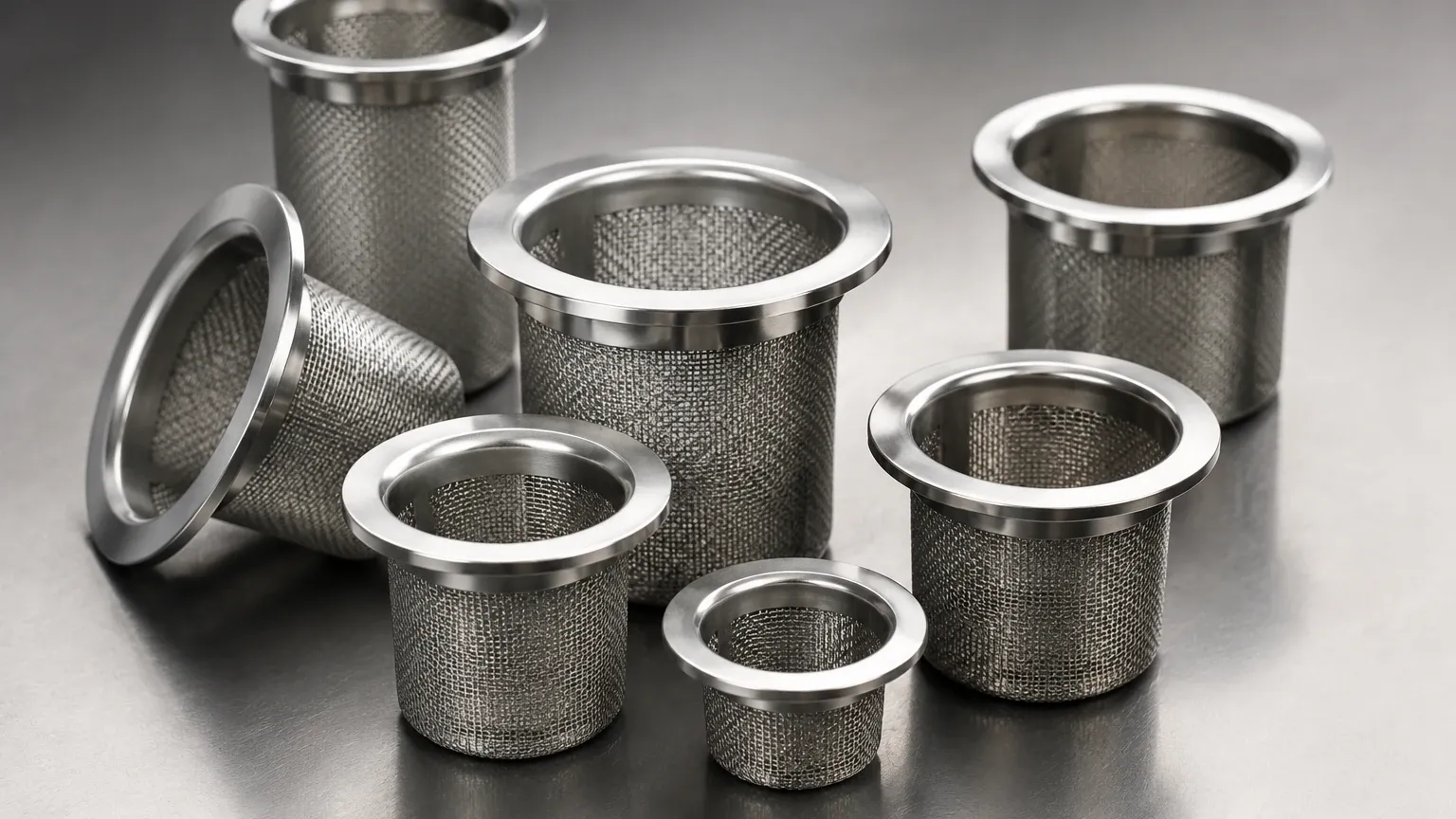
As a specialized manufacturer, Kaifil provides high-performance Strainers & Baskets designed to meet the rigorous demands of modern industry. This guide examines the technical specifications, engineering considerations, and selection criteria essential for integrating a 65mm strainer into a professional filtration system.
Technical Specifications and Engineering Fundamentals
A 65mm strainer is defined by its inlet and outlet diameters, but its internal architecture determines its actual performance. The primary function is to intercept particles larger than the specified filtration grade while maintaining an acceptable pressure profile.
Material Selection and Metallurgy
The choice of material is the first point of failure or success in industrial filtration. For a 65mm strainer, stainless steel is the industry standard due to its structural integrity and resistance to oxidation.
* SS304: Suitable for general industrial water treatment and non-corrosive environments. It offers excellent mechanical strength and cost-effectiveness.
* SS316L: The preferred choice for chemical processing and pharmaceutical applications. The addition of molybdenum provides enhanced resistance to chlorides and pitting corrosion, while the "L" (low carbon) designation prevents sensitization during welding, ensuring the longevity of the strainer housing and basket.
* Specialty Alloys: In highly aggressive environments, such as seawater filtration or high-temperature acidic processing, duplex stainless steels or Hastelloy may be required to prevent stress corrosion cracking.
Structural Design: Basket vs. Y-Strainer
The 65mm size is a common transition point between different strainer configurations.
1. Basket Strainers: These are typically used in horizontal pipelines where high flow capacity and large dirt-holding volumes are required. The "basket" design allows for easy removal and cleaning. Because a 65mm basket has a larger surface area than a standard screen, it results in a lower initial pressure drop.
2. Y-Strainers: These are more compact and can be installed in both horizontal and vertical positions. However, in a 65mm configuration, Y-strainers generally have a smaller debris collection chamber compared to basket types, making them better suited for applications with lower solids loading.
Filtration Media and Micron Ratings
The internal element of a 65mm strainer is where the actual separation occurs. This element is usually a combination of a perforated metal support and a fine wire mesh lining.
Perforated Support Sleeves
For coarse filtration (typically above 1mm), a perforated stainless steel plate is sufficient. The hole pattern—staggered or straight—affects the structural rigidity and the open area ratio. In a 65mm system, the support sleeve must be thick enough to withstand the maximum differential pressure ($ΔP$) without collapsing, especially if the strainer becomes heavily fouled.
Wire Mesh Linings
When finer filtration is required (down to 5 or 10 microns), a precision-woven wire mesh is layered inside the support basket.
* Plain Weave: Offers a straightforward flow path and is easy to clean.
* Dutch Weave: Provides a denser mesh structure for high-pressure applications and finer particle retention.
* Sintered Mesh: For the most demanding 65mm applications, multiple layers of mesh are sintered together to create a rigid, high-strength filter medium that resists media migration and can withstand repeated ultrasonic cleaning.
Key Performance Metrics: Flow Rate and Pressure Drop
Engineers must calculate the expected pressure drop across a 65mm strainer to ensure the system pump can handle the additional resistance. The total pressure drop is the sum of the drop across the housing and the drop across the clean filter element.
The Open Area Ratio (OAR)
The OAR is the ratio of the total area of the holes in the strainer element to the cross-sectional area of the inlet pipe (in this case, the 65mm aperture). A high-quality industrial strainer should ideally have an OAR of at least 6:1 or 8:1. A higher OAR means the strainer can accumulate more debris before the pressure drop reaches a critical level, thereby extending the time between cleaning cycles.
Fluid Velocity and Turbulence
At a 65mm diameter, fluid velocity plays a significant role in wear and efficiency. High-velocity streams can cause erosion on the mesh surface or lead to "channeling," where fluid bypasses the media through small gaps. Designing the internal geometry of the Strainers & Baskets to promote laminar flow as the fluid enters the basket is essential for maximizing the lifespan of the equipment.
Industry-Specific Applications for 65mm Strainers
The requirements for a 65mm strainer vary significantly depending on the sector in which it operates.
Food and Beverage Processing
In hygienic applications, the 65mm strainer must feature sanitary finishes. This involves polishing the stainless steel surfaces to a specific Ra (Roughness Average) value to prevent bacterial growth in microscopic crevices. Connection types are usually Tri-clamp or SMS unions to facilitate rapid disassembly for Clean-in-Place (CIP) or Manual-Cleaning (COP) protocols.
Chemical and Petrochemical
Here, the focus shifts to chemical compatibility and pressure ratings. A 65mm strainer in a chemical plant may need to meet specific ASME or DIN flange standards to integrate with existing high-pressure piping. Gasket materials must be carefully selected; while EPDM is common for water, PTFE or Viton are often required for solvent or acid handling.
Hydraulic and Lube Oil Systems
In these systems, the 65mm strainer acts as a suction or return line filter. It protects sensitive pumps and valves from metal shavings or environmental contaminants. Because hydraulic fluids are often more viscous than water, the strainer must be sized to prevent cavitation in the pump inlet.
Maintenance, Cleaning, and Operational Longevity
A 65mm strainer is not a "fit and forget" component. Its effectiveness is directly tied to a rigorous maintenance schedule.
Monitoring Differential Pressure
The most reliable way to determine when a 65mm strainer needs cleaning is by monitoring the differential pressure. Installing gauges upstream and downstream of the strainer allows operators to see the exact $ΔP$. Most industrial systems set a "dirty" limit at 10-15 psi above the clean pressure drop. Exceeding this limit risks damaging the internal basket or forcing contaminants through the mesh.
Cleaning Procedures
For a standard basket strainer, the process involves:
1. Isolating the strainer via bypass valves.
2. Venting the pressure and draining the housing.
3. Removing the 65mm basket.
4. Back-washing or ultrasonic cleaning the element.
5. Inspecting the gaskets and seals for wear before re-installation.
Replacement Cycles
While the stainless steel housing of a 65mm strainer can last for decades, the internal mesh elements are wear items. Over time, repeated cleaning and pressure cycles can lead to fatigue in the wire mesh. Engineers should keep spare baskets on hand to minimize downtime during scheduled maintenance.
Procurement Checklist: What to Confirm Before Ordering
When sourcing a 65mm strainer for a new project or as a replacement part, technical buyers should confirm the following parameters with the manufacturer:
1. Connection Type: Are the flanges ANSI, DIN, or JIS? Or is a threaded (NPT/BSP) or sanitary clamp connection required?
2. Maximum Operating Pressure and Temperature: Ensure the housing and seals are rated for the system's peak conditions, including potential surges.
3. Filtration Grade: Specify the micron or mesh size based on the smallest particle that must be removed to protect downstream components.
4. Fluid Characteristics: Provide the viscosity and specific gravity of the fluid, as these significantly impact the flow rate and pressure drop calculations.
5. Customization Requirements: Does the application require a magnetic insert to capture fine ferrous particles? Is a specialized handle needed for the basket to facilitate easier removal in tight spaces?
By addressing these technical details during the specification phase, engineering teams can ensure that their 65mm strainer provides reliable, cost-effective performance throughout its service life. Kaifil’s expertise in custom stainless steel fabrication ensures that every Strainers & Baskets solution is optimized for the specific hydraulic and chemical demands of the client's process.
