


9 Strainer
In industrial fluid handling and process engineering, the efficiency of a system often depends on the reliability of its primary filtration components. While standard piping sizes usually follow common increments, specialized requirements frequently call for a 9 strainer—a component designed to bridge the gap between high-capacity flow requirements and specific spatial or mechanical constraints. Whether utilized in chemical processing, water treatment, or hydraulic systems, these strainers serve as the first line of defense, protecting expensive downstream equipment such as pumps, valves, and heat exchangers from particulate contamination.
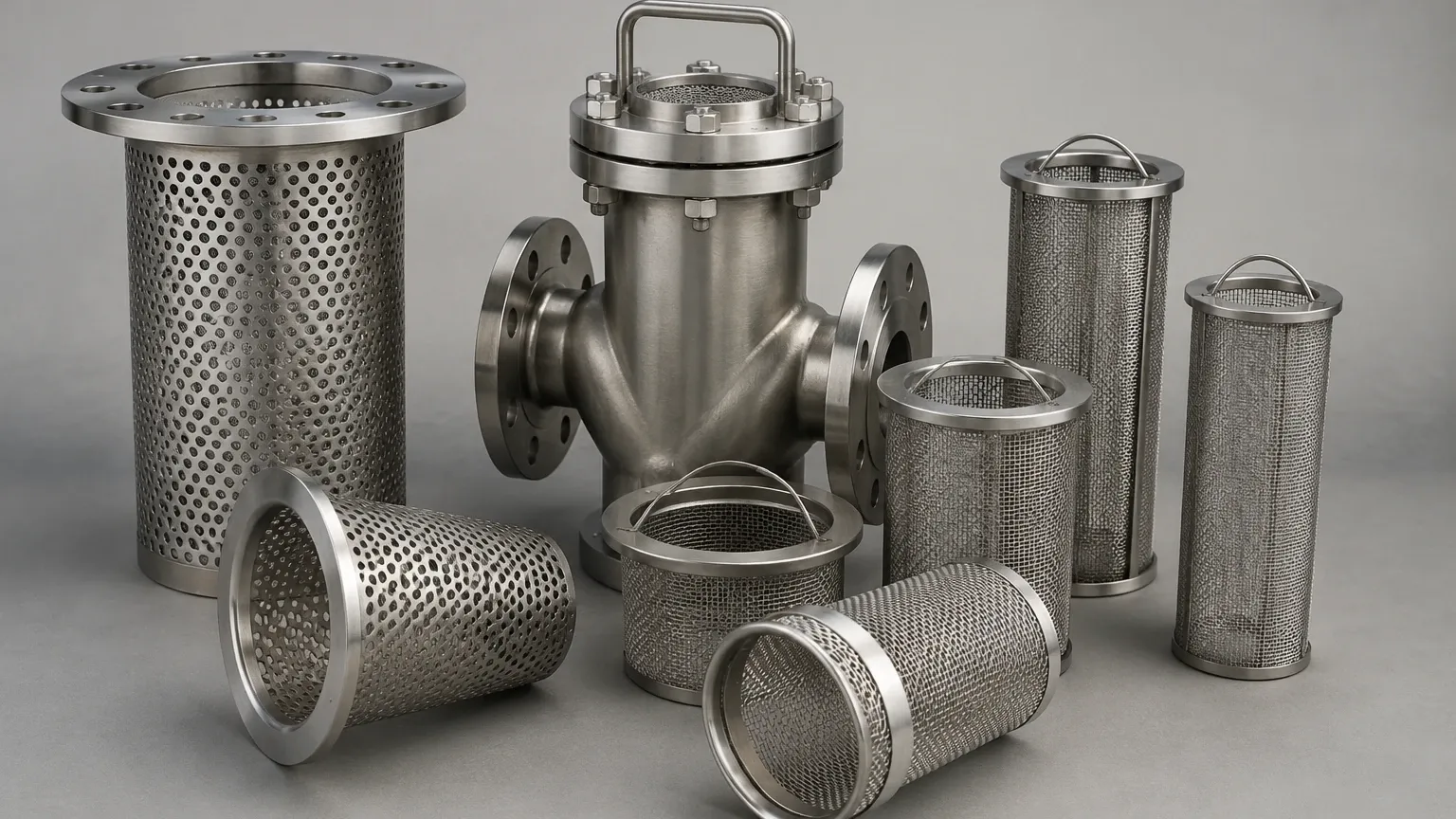
Selecting the right filtration hardware requires a deep understanding of fluid dynamics, material compatibility, and structural integrity. For engineers and procurement professionals, the focus is not merely on the nominal size but on the total performance profile of the Strainers & Baskets integrated into the process line. This guide examines the technical specifications, engineering considerations, and selection criteria essential for implementing a 9 strainer in demanding industrial environments.
The Role of Large-Scale Strainers in Process Piping
The primary function of a 9 strainer is the mechanical removal of solids from a flowing liquid or gas. Unlike fine membrane filters that target microscopic particles, industrial strainers are designed to handle larger debris loads while maintaining a low pressure drop. In many systems, the 9-inch specification refers to the nominal pipe size (NPS) or the specific diameter of the internal basket assembly, tailored for systems where a standard 8-inch strainer provides insufficient flow area and a 10-inch unit exceeds the available installation footprint.
In heavy-duty applications, these strainers are critical for preventing "catastrophic fouling." If a stray bolt, scale from a pipe wall, or large particulate matter enters a high-speed centrifugal pump, the resulting damage can lead to thousands of dollars in repairs and significant production downtime. By utilizing a robust stainless steel 9 strainer, facilities ensure that only fluid within the acceptable particulate range continues through the process.
Engineering Specifications of the 9 Strainer
When evaluating a 9 strainer for industrial use, several technical parameters must be scrutinized to ensure the component can withstand the operational rigors of the site.
Material Selection and Corrosion Resistance
Material science is the foundation of strainer longevity. Most high-performance 9 strainers are manufactured from stainless steel, specifically Grade 304 or Grade 316.
* Type 304 Stainless Steel: Suitable for general industrial applications, providing excellent strength and basic corrosion resistance. It is commonly used in food processing and water treatment where the chemical environment is relatively neutral.
* Type 316 Stainless Steel: Contains molybdenum, which significantly enhances resistance to chloride-induced pitting and crevice corrosion. This is the standard choice for chemical processing, marine environments, and pharmaceutical applications.
For highly specialized environments, manufacturers like Kaifil can provide custom alloys or reinforced structures to handle extreme pH levels or high-temperature steam applications.
Pressure Ratings and Flange Configurations
A 9 strainer must be rated to match or exceed the maximum allowable working pressure (MAWP) of the piping system. Common ratings include ANSI Class 150, 300, or 600. The flange configuration—whether it follows RF (Raised Face) or FF (Flat Face) standards—is essential for ensuring a leak-proof seal. Engineering teams must also consider the "surge pressure" or water hammer effects that can occur during pump start-up or valve closure, which places immense mechanical stress on the strainer housing.
The Importance of Basket Design in Strainers & Baskets
The heart of any strainer is the internal basket. The efficiency of the 9 strainer is determined by the relationship between the basket’s surface area and the cross-sectional area of the inlet pipe. This is known as the Open Area Ratio (OAR).
Calculating the Open Area Ratio (OAR)
A well-engineered basket should ideally provide an OAR of at least 6:1. This means the total open area of the mesh or perforated metal in the basket is six times the area of the inlet pipe. A high OAR is beneficial for several reasons:
1. Reduced Pressure Drop: More open area allows fluid to pass through with less resistance, minimizing the energy required for pumping.
2. Extended Service Intervals: A larger surface area can hold more debris before the pressure differential reaches the limit where cleaning is required.
3. Lower Velocity: Reducing the velocity of the fluid as it passes through the mesh prevents "particle bypass," where high-pressure fluid forces contaminants through the filter media.
Perforation and Mesh Liners
Baskets are typically constructed from a heavy-duty perforated metal sheet that provides structural support. For finer filtration, a wire mesh liner is welded to the interior or exterior of the perforated basket. In a 9 strainer, the mesh count can range from coarse (20 mesh) to very fine (400 mesh), depending on the specific application. Engineers must balance the need for fine filtration with the reality that finer mesh clogs more rapidly and creates a higher initial pressure drop.
Application Environments for 9-Inch Filtration Solutions
The versatility of the 9 strainer allows it to be deployed across a wide spectrum of industries. Each sector presents unique challenges that dictate the final design of the filtration component.
Chemical and Petrochemical Processing
In chemical plants, strainers must handle volatile and often corrosive fluids. A 9 strainer used here often features specialized gasket materials like PTFE or Viton to prevent chemical degradation of the seals. The filtration goal is often to protect sensitive instrumentation, such as flow meters and sensors, from pipeline scale and catalysts.
Food and Beverage Production
For food-grade applications, the 9 strainer must adhere to sanitary standards. This involves polished internal surfaces (often 3-A certified) to prevent bacterial growth in crevices. The design must allow for easy "Clean-in-Place" (CIP) operations or quick disassembly for manual cleaning without the risk of cross-contamination.
Water Treatment and Desalination
In large-scale water treatment, 9-inch strainers are used for intake protection. They remove sand, grit, and organic matter from raw water sources. Given the high volume of fluid, these strainers often incorporate a "blow-down" port at the bottom of the housing, allowing operators to flush out accumulated sediment without stopping the flow.
Customization and OEM Capabilities
Standard off-the-shelf strainers do not always meet the nuances of a specific engineering project. This is where custom manufacturing becomes a strategic advantage. A 9 strainer can be customized in several ways to fit a particular system:
* Custom Lengths: If the installation space is vertically constrained, the housing can be widened and shortened while maintaining the required OAR.
* Multiple Connection Types: While flanges are standard, some systems may require NPT threaded connections, socket welds, or specialized victaulic couplings.
* Differential Pressure Taps: High-end 9 strainers are often equipped with two small ports (upstream and downstream) to allow for the installation of a differential pressure gauge. This enables real-time monitoring of the basket’s condition.
* Heating Jackets: For fluids that solidify at room temperature (like bitumen or certain resins), a steam or hot oil jacket can be added to the exterior of the strainer housing to maintain fluid temperature.
Performance Evaluation and Maintenance
The total cost of ownership (TCO) for a 9 strainer is not determined by the purchase price alone, but by its maintenance requirements and durability. An improperly selected strainer will lead to frequent downtime and high labor costs.
Monitoring Pressure Drop (Delta P)
The most critical metric for any operator is the pressure drop across the strainer. A clean 9 strainer should have a minimal Delta P (typically less than 2 PSI). As the basket collects debris, the pressure drop increases. Most industrial protocols dictate that the basket must be cleaned or replaced once the Delta P reaches 10-15 PSI. Operating beyond this point risks collapsing the basket or causing the fluid to bypass the seal.
Cleaning Cycles and Basket Handling
For a 9 strainer, the weight of the basket when full of debris and fluid can be significant. Design features such as ergonomic handles and quick-opening covers (bolted, clamp, or swing-bolt) are essential for operator safety and efficiency. In continuous process lines, a "Duplex" configuration—where two 9 strainers are connected by a diverter valve—allows one side to be cleaned while the other remains in operation, ensuring zero downtime.
Procurement Checklist for Engineers
Before finalizing the purchase of a 9 strainer or any Strainers & Baskets, engineers should confirm the following data points with the manufacturer:
1. Fluid Characteristics: What is the viscosity, temperature, and chemical composition of the fluid?
2. Flow Rate: What is the minimum, normal, and maximum flow rate (GPM or m³/h)?
3. Contaminant Profile: What is the size and nature of the particles being removed? (Hard, soft, fibrous, or abrasive?)
4. Filtration Level: What is the required micron or mesh rating?
5. Housing Material: Is SS304 sufficient, or is SS316 required for corrosion resistance?
6. Seal Compatibility: Are the gaskets compatible with the process fluid and temperature?
7. Certification Requirements: Does the unit need to meet ASME, PED, or FDA standards?
Why Choose Kaifil for Your Filtration Needs?
As a professional manufacturer specializing in custom stainless steel filtration solutions, Kaifil understands that every industrial application has unique demands. Our expertise in wire mesh filters and precision metal components allows us to produce 9 strainers that are not only durable but also optimized for specific flow conditions.
By controlling the manufacturing process from material selection to final pressure testing, we ensure that every component meets the highest standards of filtration accuracy. Whether you require a standard basket strainer or a highly customized OEM solution for a complex hydraulic or chemical system, our engineering team works closely with you to deliver a product that minimizes total cost and maximizes system uptime.
In conclusion, the 9 strainer is a vital component for maintaining the health of industrial piping systems. By focusing on high-quality materials, optimized basket design, and precise engineering, facilities can achieve reliable filtration performance that protects their investment and ensures smooth operational continuity. For those seeking to optimize their filtration processes, reviewing specialized Strainers & Baskets options is the first step toward a more efficient and resilient system.
