


Strainer Basket Gasket
In the landscape of industrial filtration, the performance of Strainers & Baskets is often measured by their micron rating, flow rate, and pressure drop. However, the integrity of the entire filtration system frequently relies on a single, often overlooked component: the strainer basket gasket. This sealing element serves as the primary barrier between the unfiltered influent and the clean effluent, ensuring that the process fluid is forced through the filter media rather than bypassing it through gaps in the assembly.
For engineers and procurement professionals, understanding the technical nuances of the strainer basket gasket is essential for maintaining system efficiency, protecting downstream equipment, and minimizing downtime. This guide explores the engineering considerations, material science, and selection criteria necessary for optimizing sealing performance in industrial strainer applications.
The Critical Role of Sealing in Industrial Filtration
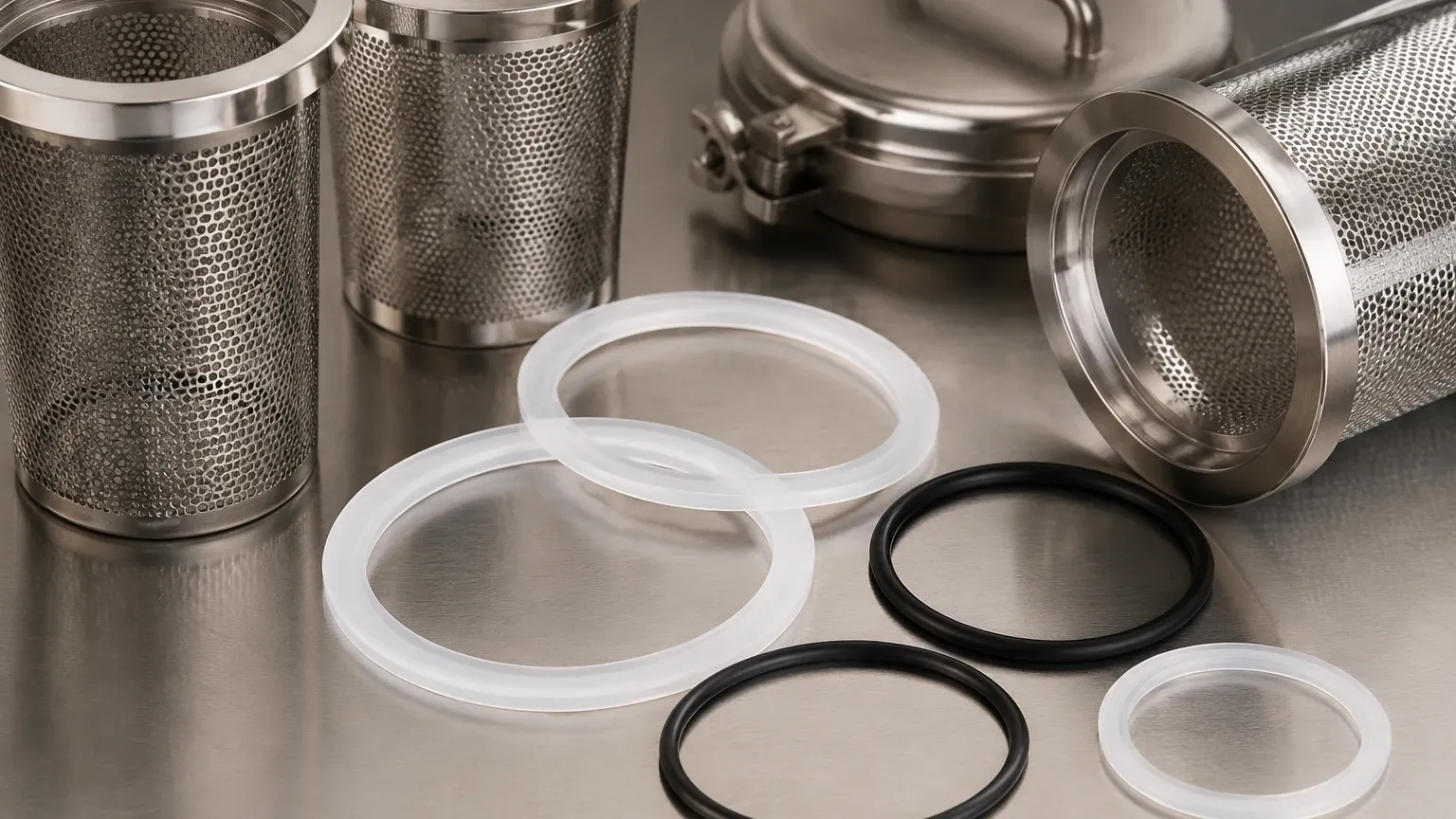
The primary function of an industrial strainer is to remove unwanted solids from a liquid or gas stream. To achieve this, the strainer basket must be securely seated within the housing. The gasket provides the necessary seal between the basket flange and the housing seat. Without an effective seal, a phenomenon known as "fluid bypass" occurs.
Fluid bypass allows unfiltered particles to escape the basket and travel downstream. In high-precision industries such as pharmaceutical manufacturing or chemical processing, even a minor leak caused by a degraded or improperly specified gasket can lead to catastrophic equipment failure, product contamination, or non-compliance with safety standards. Furthermore, a failing gasket can lead to external leaks, posing environmental hazards and safety risks to plant personnel.
Material Science: Selecting the Right Strainer Basket Gasket
Selecting the appropriate material for a strainer basket gasket requires a comprehensive analysis of the process fluid, operating temperature, and pressure requirements. Using an incompatible material can lead to swelling, hardening, or chemical degradation, all of which compromise the seal.
Common Elastomers and Polymers
* Buna-N (Nitrile): A standard choice for general-purpose applications involving water, oils, and some hydraulic fluids. It offers good abrasion resistance but has limited temperature tolerance, typically up to 250°F (121°C), and poor resistance to ozone and weathering.
* EPDM (Ethylene Propylene Diene Monomer): Excellent for water, steam, and dilute acids or alkalis. EPDM is widely used in HVAC and water treatment applications due to its resistance to heat and weather. However, it should never be used with petroleum-based oils or fuels.
* FKM (Viton™): Known for its high chemical resistance and ability to withstand elevated temperatures (up to 400°F/204°C). It is the preferred material for aggressive chemicals, hydrocarbons, and high-temperature oil applications.
* PTFE (Teflon™): While technically a fluoropolymer rather than an elastomer, PTFE gaskets offer near-universal chemical resistance. They are ideal for highly corrosive environments. Because PTFE is less resilient than elastomers, it often requires higher seating stress or may be used as an encapsulated gasket with a silicone or FKM core.
* Silicone: Primarily used in food and beverage or pharmaceutical applications where high-purity and high-temperature resistance (up to 450°F/232°C) are required. Silicone has poor tensile and tear strength compared to other elastomers.
Chemical Compatibility and Thermal Stability
Engineers must consult chemical compatibility charts to ensure the gasket material will not react with the process media. For example, a gasket used in a sulfuric acid line requires significantly different properties than one used in a food-grade vegetable oil line. Thermal cycling must also be considered; materials that expand and contract at different rates than the stainless steel housing can develop leaks over time.
Preventing Fluid Bypass and Ensuring Efficiency
The effectiveness of Strainers & Baskets is directly tied to the seal's ability to handle the system's differential pressure. As the strainer basket collects debris, the pressure drop across the media increases. This differential pressure exerts force on the basket and its gasket.
If the gasket is too soft, it may extrude into the clearance gaps under high pressure. If it is too hard, it may fail to conform to surface irregularities on the housing seat, leading to micro-leaks. The "durometer" or hardness of the gasket must be balanced with the mechanical clamping force provided by the strainer cover or basket hold-down mechanism.
In many high-performance designs, the gasket is integrated into the basket flange or held in a precision-machined groove. This "captured" design prevents the gasket from shifting during installation or being displaced by high-velocity fluid flow. When evaluating a strainer basket gasket, engineers should look for designs that minimize the risk of displacement under surge conditions.
Engineering Specifications and Dimensional Accuracy
A gasket is only as effective as its fit. In the B2B procurement process, providing exact dimensional specifications is vital. For custom filtration solutions, the following dimensions are typically required:
1. Inside Diameter (ID): Must clear the basket opening without obstructing flow.
2. Outside Diameter (OD): Must fit within the housing seat or flange groove.
3. Thickness: Critical for ensuring the correct amount of compression is achieved when the strainer cover is tightened.
4. Cross-Section Shape: While many gaskets are flat, O-rings or quad-rings may be used in high-pressure applications to provide a more concentrated sealing force.
At Kaifil, manufacturing precision ensures that custom stainless steel filtration components work in harmony with their sealing elements. Whether the application requires a standard wire mesh basket or a complex multi-stage filter cartridge, the dimensional tolerances of the sealing interface are held to strict industrial standards to prevent bypass.
Maintenance, Replacement, and Lifecycle Management
Even the highest quality strainer basket gasket is a wear item. Over time, elastomers lose their elasticity—a condition known as "compression set." Once a gasket has taken a permanent set, it can no longer provide the "spring-back" force necessary to maintain a seal, especially during pressure fluctuations.
Signs of Gasket Failure
* Visible Leaking: The most obvious sign, usually occurring at the housing cover or the basket seating area.
* Downstream Contamination: If particles that should be captured by the basket are found downstream, the gasket is the first component to inspect.
* Hardening or Brittleness: Often caused by heat aging or chemical attack.
* Swelling: Indicates that the gasket material is absorbing the process fluid, which leads to structural weakening.
Best Practices for Maintenance
It is recommended to replace the gasket every time the strainer basket is removed for cleaning, especially in high-pressure or critical applications. While a gasket may appear intact, the act of decompressing and re-compressing an aged elastomer often leads to failure. Maintaining a stock of replacement gaskets is a low-cost insurance policy against unplanned system downtime.
Customization and OEM Considerations for Strainers & Baskets
Standard off-the-shelf gaskets do not always meet the needs of specialized industrial processes. For example, cryogenic applications or high-vacuum systems require specialized sealing technologies that go beyond standard elastomers.
Kaifil specializes in providing customized filtration solutions where the basket, the housing, and the sealing mechanism are engineered as a single high-performance unit. When designing Strainers & Baskets for OEM applications, factors such as ease of maintenance and the availability of replacement parts are prioritized. Custom-molded gaskets or specialized metal-to-metal seals can be developed for environments where traditional rubber gaskets would fail.
Procurement Checklist for Industrial Filtration Components
Before finalizing a purchase for strainer components or replacement seals, technical teams should confirm the following details to ensure compatibility and performance:
* Media Compatibility: Does the gasket material resist degradation from the process fluid and any cleaning agents used in the system?
* Temperature Range: Does the material maintain its physical properties at both the minimum and maximum operating temperatures?
* Pressure Rating: Can the gasket withstand the maximum system pressure and the expected differential pressure as the basket loads with solids?
* Regulatory Compliance: Does the application require FDA-grade materials, USP Class VI certification, or 3-A Sanitary Standards?
* Dimensional Consistency: If sourcing from an OEM like Kaifil, ensure the gasket part number matches the specific basket revision to avoid fitment issues.
By focusing on these technical details, engineers can ensure that their Strainers & Baskets operate at peak efficiency. A high-quality strainer basket gasket is a small investment that yields significant returns in the form of protected equipment, consistent product quality, and reduced operational risk. Kaifil remains committed to delivering precision-engineered filtration components that meet these demanding industrial requirements, providing the reliability necessary for modern manufacturing environments.
