


Strainer Basket Gold
In industrial filtration, the term "gold" often signifies more than just a color; it represents a standard of performance, a specific application in precious metal recovery, or the use of specialized coatings like Titanium Nitride (TiN) to enhance wear resistance. For engineers and procurement specialists, selecting a strainer basket gold solution requires a deep understanding of fluid dynamics, material compatibility, and the mechanical stresses inherent in high-value processing environments.
As a professional manufacturer of custom stainless steel filtration solutions, Kaifil provides the technical expertise necessary to navigate these complexities. Whether the application involves the recovery of gold particles from a slurry or requires a high-durability basket for aggressive chemical filtration, the engineering behind the Strainers & Baskets determines the efficiency and longevity of the entire system.
Technical Foundations of Industrial Strainer Baskets
Industrial strainers are the primary line of defense for downstream equipment such as pumps, valves, and heat exchangers. A strainer basket is a removable, washable component designed to capture solid contaminants from a liquid stream. When we discuss high-performance or "gold" standard baskets, we are looking at specific engineering parameters that exceed standard commercial offerings.
Material Selection and Metallurgy
The foundation of any high-quality strainer basket is the alloy from which it is constructed. While standard applications may utilize 304 stainless steel, demanding industrial environments—particularly those involving gold mining circuits or corrosive chemical processing—require 316L stainless steel or higher-grade alloys like Duplex or Monel.
* SS304: Suitable for general water treatment and non-corrosive fluids. It offers good strength but is susceptible to pitting in chloride-rich environments.
* SS316L: The industry standard for pharmaceutical, food and beverage, and chemical applications. The addition of molybdenum provides superior resistance to corrosion and prevents intergranular corrosion during welding.
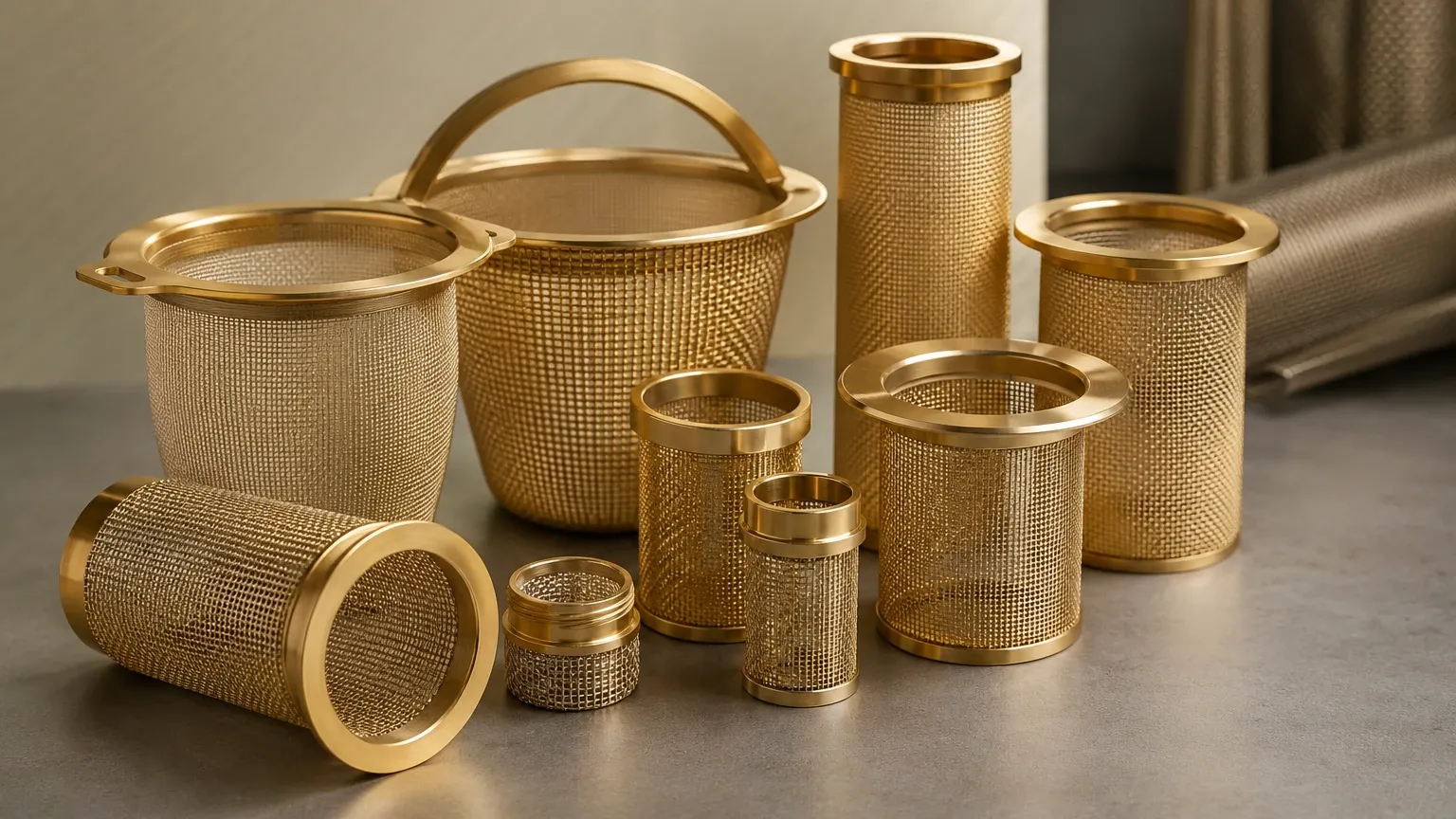
* Specialty Coatings: In some instances, a "strainer basket gold" appearance is achieved through Titanium Nitride (TiN) coating. This is not merely aesthetic; TiN significantly increases surface hardness (up to 2,500 HV), reduces friction, and provides an additional layer of chemical inertness, which is vital in abrasive slurry handling.
Engineering Considerations for Gold Recovery and High-Value Filtration
In the context of precious metal recovery, such as carbon-in-pulp (CIP) or carbon-in-leach (CIL) circuits, the strainer basket plays a critical role in separating gold-bearing carbon from the ore slurry. Here, the precision of the mesh or perforation is paramount.
Micron Rating and Open Area Ratio
The effectiveness of a strainer is measured by its ability to capture specific particle sizes while maintaining an acceptable pressure drop. Engineers must balance the micron rating with the Open Area Ratio (OAR).
1. Micron Rating: This defines the smallest particle the basket will reliably retain. In gold recovery, this might range from 500 microns to several millimeters, depending on the stage of the circuit.
2. Open Area Ratio: This is the ratio of the total area of the holes to the total area of the basket. A higher OAR results in a lower initial pressure drop and longer intervals between cleanings. A "gold standard" basket typically aims for an OAR of at least 3:1 or 4:1 relative to the cross-sectional area of the inlet pipe.
Structural Integrity Under Differential Pressure
As a strainer basket accumulates debris, the differential pressure (ΔP) across the element increases. If the basket is not engineered to withstand the maximum system pressure, it may collapse, leading to catastrophic downstream contamination. Kaifil's custom designs often include reinforced heavy-duty support cages or perforated metal backings to ensure the fine wire mesh remains intact even under high-load conditions.
Customization: Beyond Off-the-Shelf Solutions
Standard strainer baskets often fail in specialized industrial roles because they are designed for "average" conditions. For a professional-grade strainer basket gold application, customization is the only way to ensure optimal performance.
Geometric Configurations
Baskets are not one-size-fits-all. Depending on the housing design, an engineer may require:
* Slant-top Baskets: Designed for easy removal in angled housings.
* Flat-bottom Baskets: Maximizing volume for heavy solids loading.
* Multi-layered Baskets: Combining a coarse outer mesh for structural support with a fine inner mesh for precision filtration.
Handle and Seal Designs
Ease of maintenance is a critical factor in total cost of ownership. Custom baskets can be fitted with heavy-duty lift handles, ergonomic grips, or specialized sealing surfaces (such as O-ring grooves or machined flanges) to prevent bypass. A bypass of even 1% can render a high-precision filtration process ineffective, especially when dealing with high-value materials like gold-bearing carbon.
Performance Expectations and Maintenance Cycles
When investing in a high-quality strainer basket, the expectation is a long service life and predictable maintenance. However, several factors can influence the replacement cycle.
Abrasive Wear and Erosion
In mining and mineral processing, the slurry is often highly abrasive. Even stainless steel will eventually erode. This is where the "strainer basket gold" concept of hardened surfaces or specialized alloys becomes a financial necessity. Monitoring the wear on the mesh wires is essential; once the wire diameter is reduced by 20-30%, the structural integrity is compromised.
Cleaning Protocols
Proper cleaning is vital to restoring the basket's performance. Depending on the contaminant, cleaning methods may include:
* Manual Pressure Washing: Effective for coarse debris.
* Chemical Soaking: Necessary for removing scale or organic buildup that has blinded the mesh.
* Ultrasonic Cleaning: The preferred method for fine-mesh baskets where particles are lodged deep within the wire intersections.
Evaluating Total Cost of Ownership (TCO)
For a B2B purchaser, the initial price of a strainer basket is only a fraction of its total cost. A cheaper, low-quality basket may lead to:
* Frequent Downtime: If the basket clogs too quickly or fails mechanically.
* Increased Labor Costs: Due to difficult removal or frequent cleaning requirements.
* Downstream Damage: If the basket allows particles to pass through, damaging expensive pumps or sensitive instrumentation.
By choosing a custom-engineered solution from Kaifil, organizations can optimize their TCO through improved durability and filtration efficiency. The "gold" standard in filtration is achieved when the basket is perfectly matched to the flow rate, viscosity, and particle characteristics of the specific application.
Critical Questions for Engineers Before Purchasing
Before finalizing a specification for a strainer basket, engineering teams should confirm the following data points with their manufacturer:
1. What is the maximum allowable pressure drop (ΔP)? This dictates the required open area.
2. What are the chemical properties of the fluid? This determines the alloy and gasket material (e.g., Viton, EPDM, or PTFE).
3. What is the nature of the solids? Are they hard and abrasive, or soft and deformable? This influences the choice between wire mesh and perforated metal.
4. Is there a risk of hydraulic shock? Systems with fast-acting valves may require reinforced basket designs to prevent deformation.
Conclusion
Whether you are operating in the gold mining industry, chemical manufacturing, or high-end food processing, the strainer basket is a small component with a massive impact on system reliability. A "strainer basket gold" solution represents the intersection of high-grade materials, precision engineering, and application-specific design.
Kaifil’s commitment to quality and technical excellence ensures that every filtration component—from standard wire mesh filters to complex custom baskets—meets the rigorous demands of modern industry. By focusing on the engineering fundamentals of filtration, we help our global partners achieve higher yields, lower maintenance costs, and superior process control.
For those seeking to optimize their filtration systems, reviewing the technical specifications and customization options for Strainers & Baskets is the first step toward achieving a truly high-performance industrial operation. Our team of experts is ready to assist in material selection, structural design, and performance evaluation to ensure your filtration goals are met with precision.
