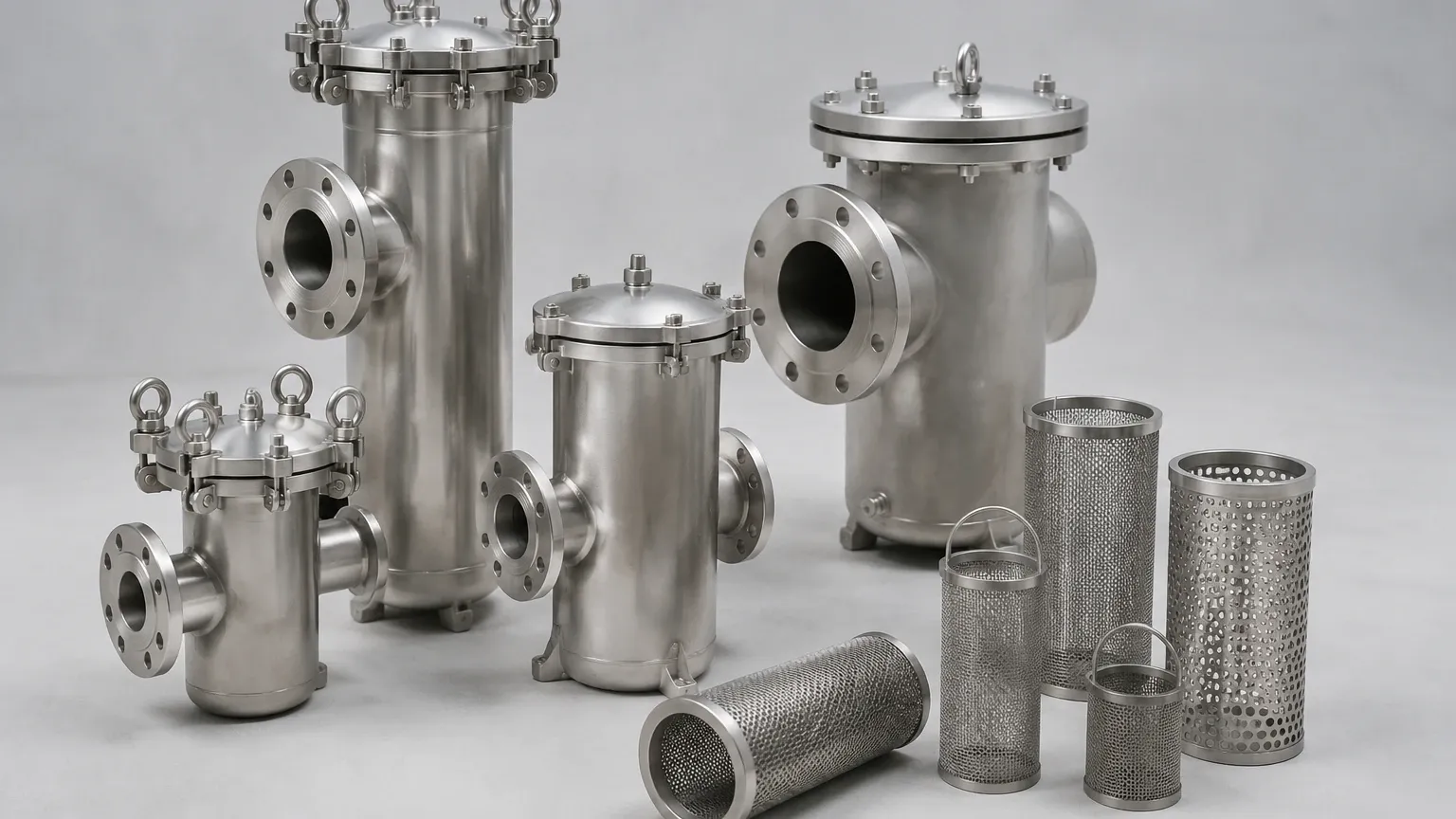
Strainer Basket Housing
In industrial fluid handling systems, the strainer basket housing serves as the primary pressure-retaining vessel designed to protect downstream equipment from particulate contamination. Whether integrated into a chemical processing line, a food and beverage production facility, or a hydraulic system, the housing is the structural foundation that ensures the internal filtration media—specifically Strainers & Baskets—operates under optimal hydraulic conditions. Selecting the correct strainer basket housing requires a deep understanding of fluid dynamics, material science, and mechanical engineering standards to prevent system failure and minimize maintenance overhead.
The Functional Role of Strainer Basket Housing
A strainer basket housing is more than a simple container; it is a precision-engineered component that directs flow through a removable basket. Its primary function is to provide a secure, leak-proof environment where the fluid velocity is managed to allow for effective separation of solids. Unlike Y-strainers, which are often used for smaller debris and lower flow rates, a basket-style housing offers a larger dirt-holding capacity and a lower pressure drop, making it suitable for high-volume industrial applications.
The housing must withstand the maximum operating pressure of the system while providing easy access for cleaning. In B2B procurement, the choice of housing often dictates the long-term reliability of the entire filtration stage. A poorly specified housing can lead to bypass leakage, where unfiltered fluid escapes around the basket, or structural fatigue caused by pressure surges.
Engineering Specifications and Material Selection
Material compatibility is the first hurdle in specifying a strainer basket housing. Because these components are frequently exposed to corrosive chemicals, high temperatures, or stringent sanitary requirements, stainless steel is the industry standard.
1. Stainless Steel 304: This is the most common material for general industrial use. It provides excellent strength and good corrosion resistance for water treatment and non-acidic chemical applications.
2. Stainless Steel 316/316L: For environments involving chlorides, marine conditions, or pharmaceutical processing, 316L is preferred. The addition of molybdenum enhances resistance to pitting and crevice corrosion. The "L" (low carbon) variant is essential if the housing requires extensive welding, as it prevents carbide precipitation that can lead to intergranular corrosion.
3. Surface Finishes: In the food and beverage or pharmaceutical sectors, the internal and external surfaces of the strainer basket housing must be treated. Options include mechanical polishing to a specific Ra (Roughness Average) value or electropolishing, which removes microscopic peaks and valleys where bacteria can colonize.
Connection Types and Mechanical Integration
How a strainer basket housing integrates into the piping system affects both installation costs and seal integrity. Engineers must choose connections that match the existing infrastructure and the required pressure rating.
* Flanged Connections: These are the standard for high-pressure and large-diameter pipes. ANSI/ASME or DIN flanges provide a robust mechanical joint that is easy to disassemble for major maintenance.
* Threaded Connections (NPT/BSP): Typically used for smaller housings (2 inches and under), threaded ports are cost-effective but may be prone to leaks if not properly sealed with industrial-grade tapes or compounds.
* Sanitary Tri-Clamp: Essential for high-purity applications, these allow for rapid, tool-free disassembly while maintaining a crevice-free internal environment.
Optimizing Flow Dynamics and Pressure Drop
The efficiency of a strainer basket housing is measured by its "clean pressure drop" (ΔP). When fluid enters the housing, it undergoes a change in velocity and direction. If the housing is too small for the flow rate, the resulting turbulence increases energy consumption and can cause cavitation in downstream pumps.
To optimize performance, the internal volume of the housing should be sufficient to ensure that the fluid velocity through the basket mesh remains within the recommended range (typically 5 to 10 feet per second for liquids). A well-designed housing will have an inlet and outlet configuration that minimizes dead zones where sediment can accumulate, which would otherwise lead to localized corrosion or biological growth.
Closure Designs and Operational Safety
Accessing the internal basket for cleaning is a routine but critical task. The closure mechanism of the strainer basket housing determines how quickly a technician can service the unit.
* Bolted Covers: These are used for high-pressure applications where safety is the absolute priority. While they take longer to open, they provide the most secure seal under extreme conditions.
* Quick-Opening Covers (Swing Bolts/V-Clamps): For systems that require frequent cleaning, quick-opening designs reduce downtime. These often feature a davit arm or hinge to support the weight of the cover, preventing injury to operators.
* Vent and Drain Ports: Every professional housing should include a vent port on the top to release trapped air during startup and a drain port at the bottom to empty the vessel before opening. This ensures the safety of the operator, especially when handling hot or hazardous fluids.
Sealing Technology: O-Rings and Gaskets
The integrity of a strainer basket housing relies heavily on its seals. The choice of elastomer must be dictated by the chemical composition of the fluid and the operating temperature.
* EPDM: Excellent for water and steam but poor for oils.
* Viton (FKM): High resistance to chemicals and heat, making it a staple in the oil and gas and chemical sectors.
* PTFE/Teflon: Used for the most aggressive chemicals, though it lacks the elasticity of other rubbers and may require specialized housing grooves.
* Buna-N (Nitrile): A standard choice for hydraulic oils and general-purpose applications.
Engineers should confirm the "compression set" of the chosen seal material, which refers to the seal's ability to return to its original shape after being compressed. A seal with a poor compression set will leak after the first few cleaning cycles.
Customization and OEM Considerations
Standard off-the-shelf housings may not always meet the specific constraints of a complex industrial skid. Customization of the strainer basket housing allows for specialized configurations, such as:
* Multi-Basket Designs: For very high flow rates, a single housing can contain multiple baskets to increase the filtration surface area without excessively increasing the footprint.
* Jacketed Housings: In industries like chocolate production or heavy oil processing, the fluid must be kept at a specific temperature to maintain its viscosity. A steam or hot water jacket can be welded to the exterior of the housing.
* Differential Pressure Gauges: Integrating ports for DP gauges allows operators to monitor the clogging level of the basket in real-time, enabling a transition from scheduled maintenance to condition-based maintenance.
Common Risks in Housing Selection
One of the most frequent mistakes in purchasing a strainer basket housing is ignoring the "surge pressure" or "water hammer" effect. If a valve downstream closes suddenly, the resulting pressure wave can exceed the housing's rated capacity. Engineers must ensure the housing has an adequate safety factor, often 1.5x to 2x the operating pressure.
Another risk is the bypass of particles. If the basket does not seat perfectly within the housing, fluid will take the path of least resistance around the basket. High-quality housings utilize a spring-loaded hold-down device or a precision-machined seat to ensure a positive seal between the basket and the housing body.
Procurement Checklist for Engineers
Before finalizing a purchase or RFQ for a strainer basket housing, technical teams should confirm the following data points:
1. Fluid Characteristics: Viscosity, density, and chemical compatibility with SS304/316.
2. Flow Rate: Minimum, normal, and maximum flow rates (GPM or m³/h).
3. Pressure and Temperature: Maximum operating and design limits.
4. Filtration Requirement: The micron rating of the internal basket to ensure the housing can handle the resulting pressure drop.
5. Space Constraints: Height clearance required to remove the basket from the top of the housing.
6. Compliance Standards: Requirements for ASME Section VIII, PED, or specific food-grade certifications.
Conclusion
The strainer basket housing is a critical investment in the longevity of industrial machinery. By focusing on material integrity, hydraulic efficiency, and ease of maintenance, facilities can significantly reduce their total cost of ownership. Whether you are replacing an aging unit or designing a new process line, prioritizing the engineering specifications of the housing ensures that your Strainers & Baskets can perform their job without the risk of housing failure or process bypass. High-performance filtration starts with a robust vessel, and selecting a manufacturer with OEM expertise allows for the precision required in today’s demanding industrial environments.