


Strainer Basket Home Depot
When a maintenance engineer or facility manager searches for a "strainer basket home depot," the immediate requirement is often a quick replacement for a standard drainage or plumbing component. Retail outlets like Home Depot provide essential hardware for residential and light commercial plumbing, such as sink strainers and basic floor drain baskets. However, in the context of industrial fluid processing—where high pressures, corrosive chemicals, and precise filtration levels are the norm—the specifications required for Strainers & Baskets shift from general-purpose hardware to engineered filtration components.
For professionals in the chemical, pharmaceutical, and food and beverage sectors, selecting a strainer basket involves more than matching a diameter. It requires an understanding of metallurgy, mesh geometry, and hydraulic dynamics. This guide explores the technical distinctions between retail-grade components and industrial-grade filtration solutions, helping procurement teams make informed decisions based on performance and longevity.
Understanding the Gap: Retail vs. Industrial Strainers
The primary difference between a "strainer basket home depot" search result and an industrial-grade component lies in the construction and intended duty cycle. Retail products are designed for atmospheric pressure and non-corrosive domestic wastewater. In contrast, industrial strainers must withstand significant differential pressures and maintain structural integrity under constant flow.
Material Integrity
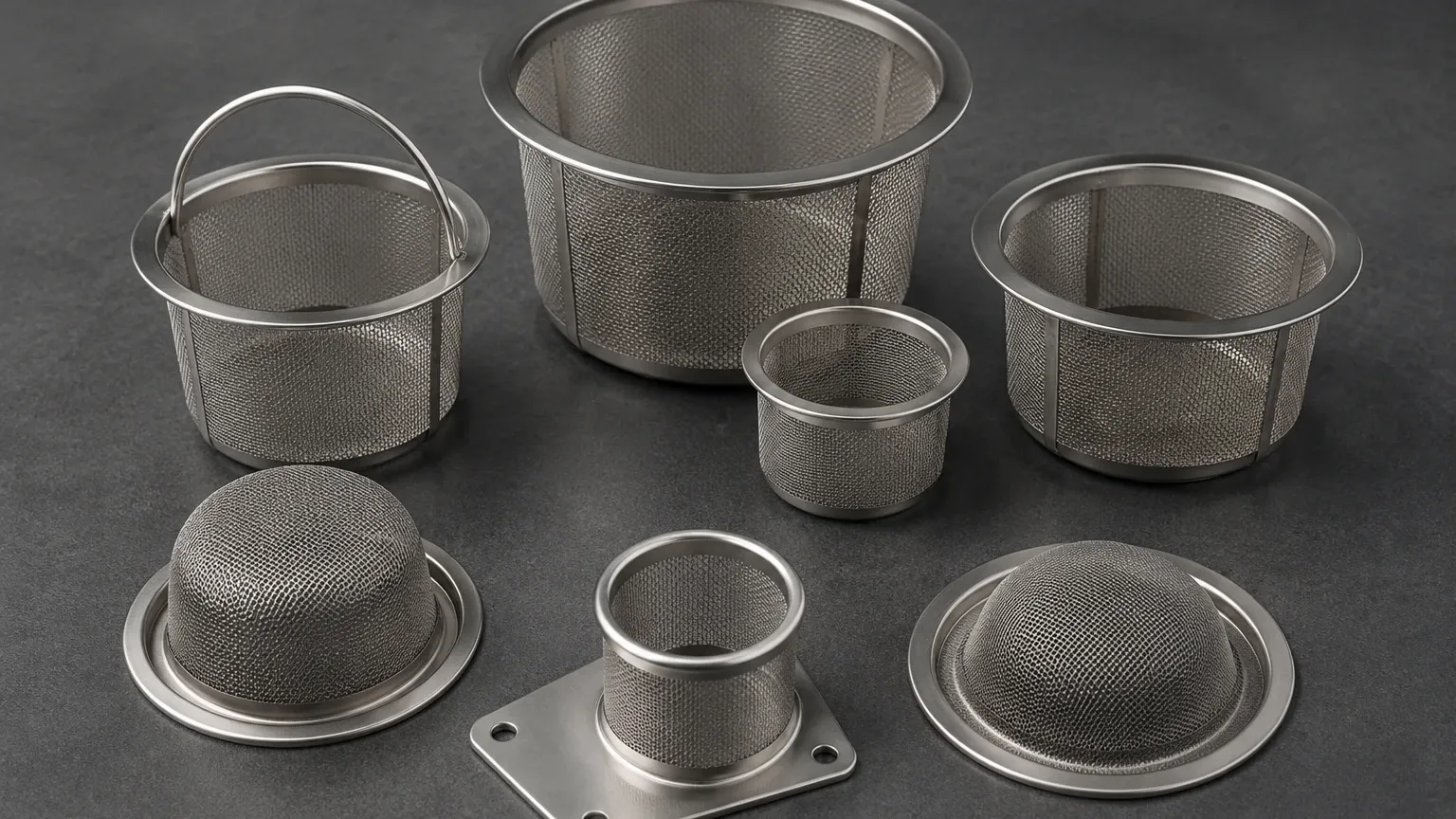
While retail baskets are often made of thin-gauge stainless steel or chrome-plated brass, industrial Strainers & Baskets are typically fabricated from heavy-duty 304 or 316L stainless steel. The use of 316L is particularly critical in pharmaceutical and marine applications due to its superior resistance to pitting and crevice corrosion. Industrial variants also feature reinforced handles, machined flanges, and precision-welded seams to prevent bypass—a common failure point in lighter-duty retail alternatives.
Filtration Precision
Retail strainer baskets usually feature large perforations designed to catch hair, food scraps, or large debris. Industrial applications, however, often require "fine straining" where particles as small as 50 microns must be captured. This is achieved through multi-layered wire mesh linings or precision-etched metal screens, which are rarely available in standard retail inventory.
Material Selection for Industrial Environments
Selecting the right material is the first step in ensuring the durability of a strainer basket. For engineers moving beyond the basic options found at a "strainer basket home depot" search, the choice of alloy determines the component's lifespan and the purity of the process fluid.
1. 304 Stainless Steel: This is the standard for most industrial applications. It offers excellent strength and good corrosion resistance for water treatment and general manufacturing.
2. 316L Stainless Steel: The addition of molybdenum makes 316L essential for environments involving chlorides (such as seawater or brine) and acidic chemical processing. It is also the preferred material for food-grade applications where rigorous CIP (Clean-in-Place) chemicals are used.
3. Specialty Alloys: For extreme environments involving high temperatures or highly aggressive acids, manufacturers like Kaifil can provide baskets in Monel, Hastelloy, or Duplex stainless steel. These materials provide a level of protection that standard retail hardware cannot match.
Engineering Specifications: Beyond Basic Dimensions
When specifying Strainers & Baskets for a professional system, several technical parameters must be evaluated to ensure the component does not become a bottleneck or a point of failure.
Open Area Ratio
The "open area" is the total area of the holes in the strainer basket expressed as a percentage of the total surface area. A higher open area results in a lower initial pressure drop across the strainer. In industrial systems, a common rule of thumb is to have an open area ratio of at least 4:1 or 6:1 relative to the cross-sectional area of the inlet pipe. This ensures that the system can continue to operate efficiently even as the basket begins to fill with debris.
Pressure Drop (Delta P)
Every strainer introduces some resistance to flow. Engineers must calculate the clean pressure drop to ensure the pump capacity is sufficient. Retail-grade baskets often lack documented flow coefficients (Cv values), making it difficult to perform accurate hydraulic modeling. Industrial manufacturers provide these specs, allowing for precise system design.
Burst Strength
In high-pressure hydraulic or process lines, the strainer basket must be able to withstand the maximum system pressure if it becomes completely clogged. Industrial baskets are often reinforced with internal or external support cages (perforated metal) to prevent the fine mesh from collapsing under the weight of the accumulated solids.
Application-Specific Considerations for Strainers & Baskets
The environment in which the strainer operates dictates its design. While a "strainer basket home depot" search might yield a one-size-fits-all solution for a kitchen sink, industrial applications require specialization.
Food and Beverage Processing
In this sector, hygiene is paramount. Strainers must be designed with "sanitary" features, meaning no sharp corners, crevices, or dead zones where bacteria can grow. Welds must be ground smooth (typically to a Ra < 0.8 μm finish), and the materials must be FDA-compliant. These baskets are often used to protect downstream equipment like plate heat exchangers or homogenizers from rogue particles.
Chemical and Petrochemical
Here, chemical compatibility is the driving factor. The strainer must not only resist the fluid being processed but also the cleaning agents used during maintenance. Heavy-duty baskets are used here to remove scale, rust, and other particulates from pipelines to protect expensive valves and instrumentation.
Water Treatment and Desalination
Large-scale water intake systems require robust baskets to remove sand, shells, and organic matter. These are often much larger than anything found in a retail store and may require custom lifting lugs and specialized coatings to resist biofouling.
Maintenance, Durability, and Total Cost of Ownership
One of the primary reasons engineers opt for professional-grade Strainers & Baskets over consumer-grade alternatives is the total cost of ownership (TCO). While a retail basket may have a lower initial purchase price, its failure rate in an industrial setting can lead to costly downtime.
Replacement Cycles
A retail-grade basket used in a high-flow industrial line may deform or corrode within weeks. An industrial basket, properly specified for the medium and flow rate, can last for years. The cost of a single hour of unplanned downtime in a production facility often exceeds the price difference between a standard and a high-performance strainer.
Ease of Cleaning
Industrial baskets are designed for rapid servicing. Features like quick-release handles, tapered designs for easy removal, and smooth interior surfaces for fast hosing-down are standard. This reduces the labor time required for routine maintenance cycles.
Integrity Testing
In critical pharmaceutical or microelectronics applications, strainer baskets may need to undergo integrity testing or material certification (MTRs). Retailers cannot provide the traceability or the documentation required to meet ISO or ASME standards, which is a mandatory requirement for many industrial quality management systems.
Customization and OEM Solutions in Filtration
Often, the "off-the-shelf" dimensions of a "strainer basket home depot" search simply do not fit the existing housing of an industrial machine. This is where custom manufacturing becomes essential. Manufacturers like Kaifil specialize in creating bespoke filtration components that match exact housing dimensions, flange types, and filtration requirements.
Tailored Mesh and Perforation Patterns
Depending on the specific gravity and viscosity of the fluid, a custom combination of perforated metal and fine wire mesh might be required. For example, a heavy viscous oil may require a coarse perforated support with a relatively open mesh to prevent excessive pressure buildup, while a light solvent might allow for much finer filtration.
Structural Modifications
Custom baskets can be outfitted with magnetic inserts to capture fine ferrous particles that might otherwise pass through the mesh. They can also be designed with slanted bottoms for side-entry housings or double-wall construction for extra-fine filtration without sacrificing structural strength.
Conclusion: Making the Right Choice
While the convenience of a "strainer basket home depot" search is undeniable for residential repairs, industrial operations demand a higher level of engineering rigur. Selecting the correct Strainers & Baskets involves a thorough evaluation of flow rates, chemical compatibility, pressure requirements, and filtration goals.
By partnering with a specialized manufacturer like Kaifil, engineers gain access to technical expertise that ensures their filtration components are not just "placeholders" in the pipe, but active contributors to system efficiency and equipment protection. Whether you are looking for an OEM replacement or a custom-designed solution for a new process line, focusing on industrial-grade specifications will always yield better long-term results than settling for retail-grade substitutes.
