


Strainer Basket Pool
In industrial water management and large-scale aquatic facilities, the reliability of filtration hardware is a primary determinant of system uptime and pump longevity. A strainer basket pool assembly serves as the critical first line of defense, capturing macroscopic debris before it can reach sensitive downstream components such as impellers, heat exchangers, and fine-media filters. For engineers and facility managers, selecting the appropriate Strainers & Baskets involves more than simply matching dimensions; it requires a deep understanding of fluid dynamics, material compatibility, and the structural stresses inherent in high-flow environments.
Kaifil specializes in the manufacture of precision-engineered stainless steel filtration solutions designed to replace or upgrade standard components. By focusing on industrial-grade materials and customized geometries, we ensure that every strainer basket pool application achieves optimal flow rates while minimizing maintenance-related downtime.
The Engineering Role of Strainer Baskets in Large-Scale Water Systems
The primary function of a strainer basket in a commercial or industrial pool system is the protection of the centrifugal pump. These pumps are designed to move large volumes of water at specific head pressures; however, they are highly susceptible to damage from solids. Even small debris, if allowed to pass into the pump housing, can cause erosion of the impeller, mechanical seal failure, or complete motor seizure.
In a typical industrial configuration, the strainer basket pool component is housed within a strainer pot or hair-and-lint strainer located just before the pump suction inlet. As water is drawn through the system, the basket traps leaves, hair, plastic fragments, and other solids. From an engineering perspective, the design must balance two competing factors: filtration efficiency (the ability to catch small particles) and hydraulic conductivity (the ability to allow water to pass with minimal resistance).
When a basket becomes excessively clogged, the resulting increase in differential pressure can lead to pump cavitation. Cavitation occurs when the pressure at the pump inlet drops below the vapor pressure of the liquid, causing bubbles to form and collapse violently against the metal surfaces. Using high-quality stainless steel baskets with optimized open-area ratios is essential to prevent these conditions and extend the service life of the entire hydraulic circuit.
Material Selection: Why Stainless Steel Outperforms Plastic in Industrial Pool Environments
While many residential systems utilize plastic or polymer-based baskets, industrial and commercial applications demand the structural integrity of metal. A strainer basket pool environment is often chemically aggressive and physically demanding. Kaifil utilizes high-grade stainless steel (typically Type 304 or Type 316L) to address these challenges.
Chemical Resistance and Corrosion
Large-scale pools and industrial water circuits often use high concentrations of chlorine, bromine, or ozone for disinfection. These oxidizers can cause standard plastics to become brittle over time, leading to cracks and structural failure. Furthermore, in salt-water chlorination systems, the high chloride content is extremely corrosive. Type 316L stainless steel, with its molybdenum content, provides superior resistance to pitting and crevice corrosion in these saline environments.
Thermal Stability and Pressure Tolerance
Industrial systems may operate at elevated temperatures or experience significant pressure surges during pump start-up and shut-down. Plastic baskets can deform under these stresses, potentially bypassing debris or becoming lodged in the housing. Stainless steel maintains its geometric profile under extreme pressure, ensuring a consistent seal against the strainer housing and preventing "bypass"—where unfiltered water leaks around the edges of the basket.
Longevity and Sustainability
From a total cost of ownership (TCO) perspective, stainless steel strainers offer a significantly longer service life. While the initial capital expenditure may be higher than plastic alternatives, the reduction in replacement frequency and the prevention of catastrophic pump failure provide a much higher return on investment (ROI) over the facility's lifecycle.
Technical Specifications and Design Considerations
When specifying a strainer basket pool solution, engineers must evaluate several technical parameters to ensure the component is fit for purpose. At Kaifil, we focus on the following engineering criteria:
1. Perforation and Mesh Size: The size of the openings determines the filtration grade. For heavy debris, large circular perforations (e.g., 1/8" or 1/4") are common. If finer filtration is required, a stainless steel wire mesh can be sintered or welded to the interior of the perforated basket to capture smaller particulates without sacrificing structural strength.
2. Open Area Ratio: This is the ratio of the total area of the holes to the total surface area of the basket. A higher open area ratio results in a lower pressure drop (ΔP) across the filter. We typically aim for an open area that is at least 3 to 5 times the cross-sectional area of the inlet pipe to ensure unrestricted flow.
3. Structural Reinforcement: In high-flow industrial pumps, the force of the water can be immense. We incorporate reinforced handles, heavy-duty top rings, and longitudinal ribs to ensure the basket does not collapse or distort under heavy debris loading.
4. Seating and Gaskets: A precision-machined flange or a high-tolerance seating surface is required to ensure that 100% of the water passes through the basket. Even a 2mm gap can allow enough debris through to damage a downstream mechanical seal.
Maintenance and Operational Efficiency
Operational efficiency in a B2B context is measured by the ease of maintenance and the length of cleaning intervals. A poorly designed strainer basket pool component can become a bottleneck if it requires constant cleaning or if it is difficult to remove from the housing.
Monitoring Differential Pressure
Sophisticated systems utilize pressure gauges on both the suction and discharge sides of the strainer. By monitoring the differential pressure, operators can determine the exact moment a basket requires cleaning. This data-driven approach prevents unnecessary labor while protecting the pump from cavitation caused by excessive clogging.
Ease of Cleaning
Kaifil designs baskets with smooth interior surfaces and minimal "dead zones" where debris can become permanently trapped. This allows for rapid manual cleaning or hosing down, reducing the time the system must be offline. For automated systems, we can provide specialized designs compatible with backwashing or mechanical scraping mechanisms.
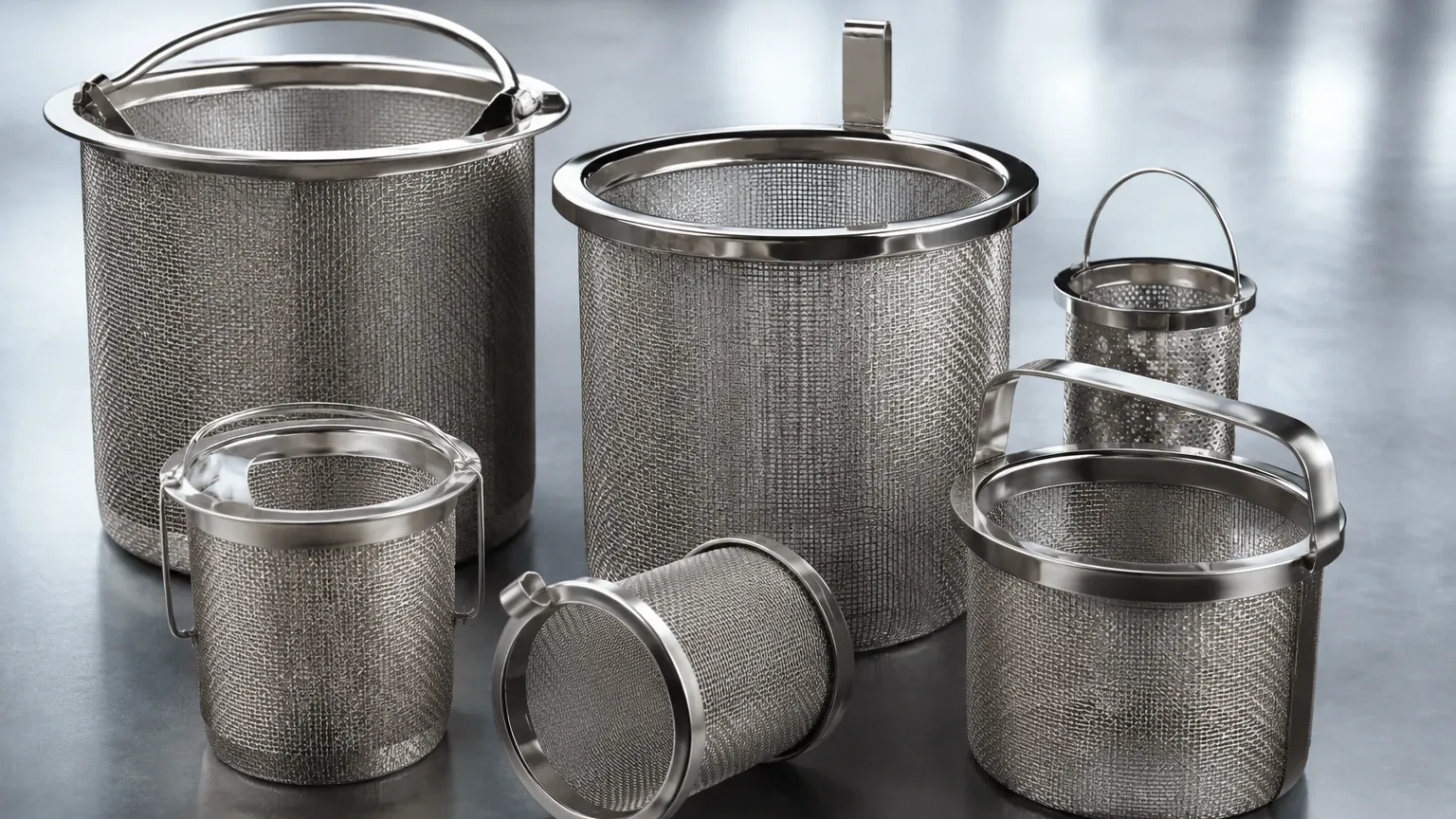
Customization Options for OEM and Specialized Requirements
Many industrial facilities operate with legacy equipment or specialized proprietary systems where standard off-the-shelf baskets do not fit. Kaifil’s core strength lies in our ability to provide customized OEM solutions. Our engineering team works directly with client blueprints or physical samples to manufacture exact replacements or improved designs.
Customization options include:
* Bespoke Dimensions: Custom diameters, heights, and flange thicknesses to fit any existing strainer pot.
* Variable Micron Ratings: Utilizing multi-layered wire mesh to achieve specific filtration levels for unique industrial fluids.
* Specialized Coatings: For extremely acidic or alkaline environments, we can apply additional protective coatings to our stainless steel baskets.
* Handle Configurations: Ergonomic handle designs, including swing-away or heavy-duty lifting eyes for large baskets that require mechanical hoists.
By choosing a customized Strainers & Baskets solution, facility managers can resolve recurring issues such as frequent basket breakage or inadequate flow rates that are common with generic parts.
Total Cost of Ownership in Industrial Water Filtration
In the B2B sector, purchasing decisions are increasingly driven by Total Cost of Ownership (TCO) rather than the lowest initial price. When evaluating a strainer basket pool investment, the following factors contribute to the TCO:
* Replacement Frequency: Stainless steel baskets typically last 5–10 times longer than plastic equivalents in industrial service.
* Energy Consumption: A basket with a superior open-area ratio reduces the load on the pump motor, leading to measurable energy savings over thousands of operating hours.
* Labor Costs: Durable baskets with easy-clean features reduce the man-hours required for maintenance and the risk of injuries associated with struggling with stuck or broken plastic parts.
* Downstream Protection: The most significant cost saving comes from preventing damage to high-value assets like pumps and heat exchangers. The cost of a single pump rebuild often exceeds the cost of several high-quality stainless steel strainer baskets.
Conclusion
The strainer basket pool component is a vital element of industrial hydraulic health. Moving beyond the limitations of standard consumer-grade hardware is essential for facilities that prioritize reliability, efficiency, and long-term cost control. Through precision manufacturing and the use of high-grade stainless steel, Kaifil provides the technical filtration solutions necessary to support demanding industrial and commercial water applications.
For engineers looking to optimize their filtration systems or replace failing components, focusing on material integrity and hydraulic performance is the most effective path to operational excellence. Whether you are managing a large-scale aquatic center or an industrial cooling circuit, the right strainer basket ensures your system remains protected and productive.
