


Basket Strainer Vessel
In industrial fluid handling, the protection of downstream equipment such as pumps, valves, and heat exchangers is a primary engineering concern. The basket strainer vessel serves as a critical line of defense, designed to remove large particulate matter from liquid streams through a mechanical straining process. Unlike high-efficiency fine filters, a basket strainer is typically utilized for high-capacity applications where the solids load is significant and the pressure drop must be kept to a minimum.
Selecting the correct basket strainer vessel requires a deep understanding of fluid dynamics, material science, and the specific operational parameters of the piping system. This guide examines the technical considerations, engineering specifications, and selection criteria necessary for technical professionals and purchasing teams to optimize their filtration performance.
Understanding the Role of a Basket Strainer Vessel in Industrial Systems
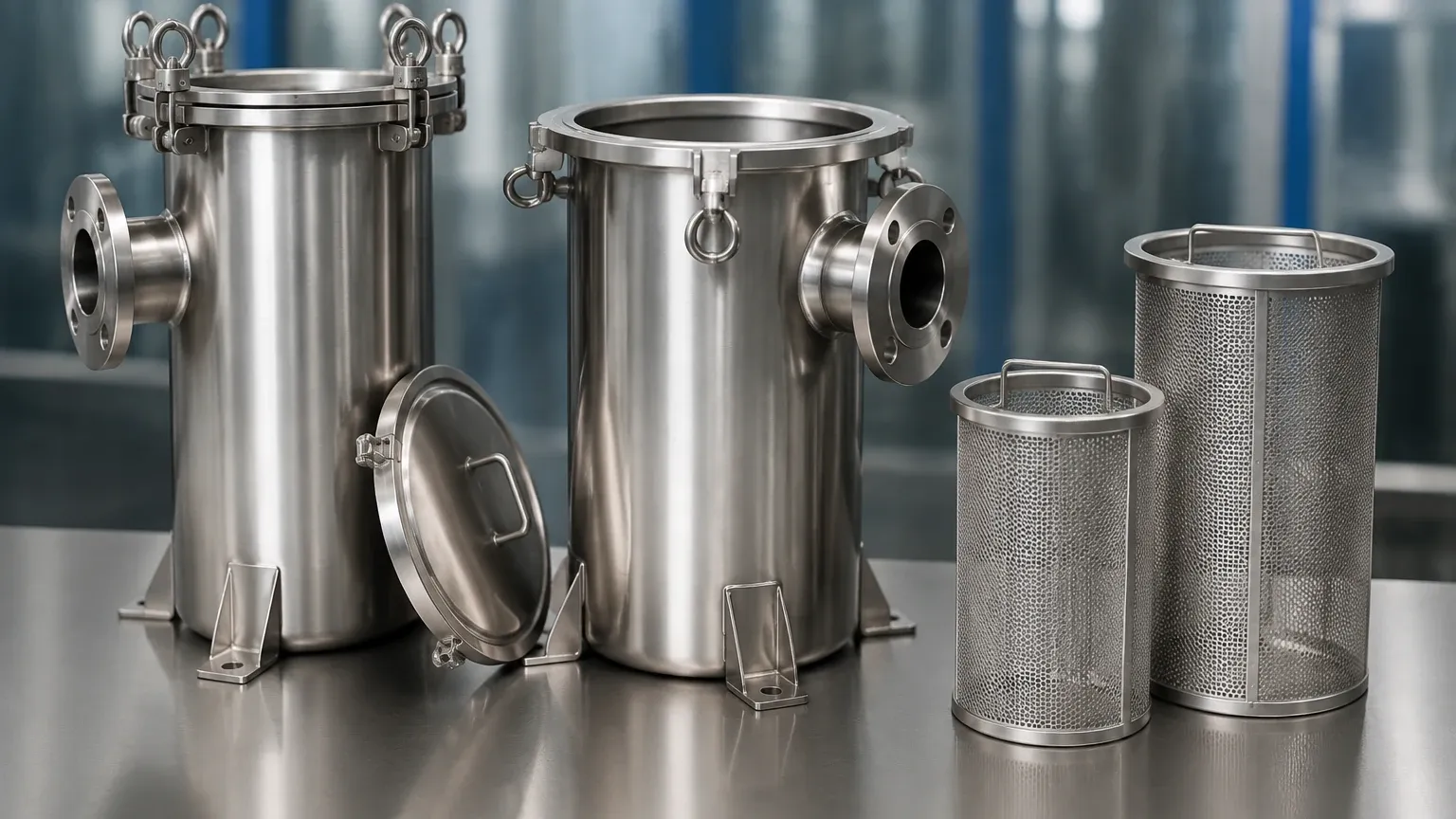
A basket strainer vessel is a closed housing containing a removable screen or basket that traps solids as fluid passes through. The design is characterized by its vertical orientation and its ability to hold a larger volume of debris compared to Y-strainers. This makes them the preferred choice for batch processes or continuous systems where downtime for cleaning must be minimized.
The primary advantage of the Strainers & Baskets configuration is the ease of maintenance. Because the basket is accessed from the top of the vessel, it can be removed, cleaned, and replaced without dismantling the entire piping assembly. This design is particularly effective in protecting sensitive equipment from pipe scale, welding beads, and other foreign contaminants that could cause mechanical failure or process contamination.
Key Components and Engineering Specifications
The performance of a basket strainer vessel is determined by the synergy of its internal and external components. Engineers must evaluate each part to ensure it meets the pressure and temperature requirements of the application.
The Vessel Housing
The housing is the pressure-containing shell of the strainer. In industrial environments, these are typically manufactured from stainless steel (304 or 316) to provide structural integrity and corrosion resistance. The vessel must be rated for the maximum operating pressure of the system, often following ASME Section VIII standards for pressure vessels. The inlet and outlet ports are usually flanged or threaded, depending on the pipe size and pressure rating.
The Internal Basket
The basket is the heart of the filtration process. It consists of a perforated metal support structure, which may be lined with a finer wire mesh to achieve specific filtration levels. The "open area ratio" is a critical metric here; it refers to the ratio of the total area of the holes in the basket to the internal area of the inlet pipe. A higher ratio (such as 6:1) ensures a lower initial pressure drop and longer intervals between cleanings.
The Cover and Sealing Mechanism
Access to the basket is provided through the vessel cover. For high-pressure applications, a bolted cover is standard to ensure a leak-proof seal. In systems requiring frequent cleaning, quick-opening covers with swing bolts or V-band clamps are utilized. The choice of gasket or O-ring material (such as Viton, EPDM, or PTFE) is dictated by the chemical compatibility and temperature of the process fluid.
Material Selection for Demanding Environments
Material compatibility is a non-negotiable factor in the longevity of a basket strainer vessel. While carbon steel is an option for non-corrosive fluids like oil, stainless steel is the industry standard for chemical processing, food and beverage, and pharmaceutical applications.
1. 304 Stainless Steel: Suitable for most general-purpose applications, providing excellent resistance to atmospheric corrosion and many organic and inorganic chemicals.
2. 316/316L Stainless Steel: Contains molybdenum, which enhances resistance to chlorides and pitting. This is essential for marine environments, brine solutions, and highly acidic chemical processes.
3. Specialty Alloys: For extreme environments involving high concentrations of sulfuric or phosphoric acids, alloys like Hastelloy or Monel may be required for the internal basket components.
Beyond the metal alloys, the surface finish of the vessel is also important. In the food and pharmaceutical sectors, an electropolished or sanitary finish is required to prevent bacterial growth and ensure the equipment can be properly sterilized.
Critical Performance Metrics: Flow Rate and Pressure Drop
When specifying a basket strainer vessel, engineers must balance the required filtration accuracy with the allowable pressure drop (ΔP). The pressure drop is the difference in pressure between the inlet and outlet of the strainer. As the basket collects debris, the ΔP increases.
Calculating Initial Pressure Drop
The initial "clean" pressure drop is influenced by the fluid's viscosity, specific gravity, and velocity. Thick, viscous liquids like resins or heavy oils will exhibit a much higher pressure drop than water. If the initial ΔP is too high, it limits the amount of debris the basket can hold before the system reaches a critical pressure limit, potentially starving downstream pumps.
The Importance of the 2:1 Rule
As a general engineering guideline, the total open area of the strainer basket should be at least two times the cross-sectional area of the inlet pipe. For high-viscosity fluids or applications with high solids loading, ratios of 4:1 or 6:1 are recommended to maintain efficient flow and reduce the frequency of maintenance cycles.
Customization Options for Specific Applications
Standard off-the-shelf strainers may not meet the requirements of complex industrial processes. Customization allows for the optimization of the basket strainer vessel to fit specific spatial and performance constraints.
* Duplex Strainer Systems: For systems that cannot be shut down for cleaning, a duplex configuration (two vessels connected by a diverter valve) allows flow to be switched to a clean basket while the dirty one is serviced.
* Steam Jacketing: In applications where fluids must be kept at a constant temperature to prevent solidification (such as liquid sulfur or heavy fuel oils), the vessel can be equipped with a steam jacket.
* Automatic Self-Cleaning: For high-volume applications with constant solids loading, automated systems can trigger a backwash or scraping cycle based on differential pressure, eliminating the need for manual intervention.
* Custom Inlet/Outlet Orientations: To fit into existing piping layouts, the nozzle positions can be customized (e.g., offset, right-angle, or bottom-out) to reduce the need for additional elbows and fittings.
Maintenance and Operational Longevity
The reliability of a basket strainer vessel is directly linked to the maintenance protocol. Neglecting a clogged basket can lead to basket collapse, seal failure, or damage to the downstream equipment the strainer was intended to protect.
Monitoring Differential Pressure
The most effective way to manage a strainer is by installing differential pressure gauges across the inlet and outlet. A common industry practice is to clean the basket when the pressure drop reaches 5-10 psi above the clean pressure drop. Waiting until the pressure drop is excessive can compress the debris into the mesh, making cleaning difficult and potentially damaging the basket structure.
Cleaning Procedures
When servicing the vessel, it is vital to depressurize the system and drain the fluid before opening the cover. The basket should be cleaned using a soft brush or a high-pressure water jet, taking care not to damage the wire mesh. In cases where the mesh is blinded by sticky or crystalline substances, ultrasonic cleaning or chemical soaking may be necessary.
Pre-Purchase Checklist for Engineers
Before finalizing the procurement of a basket strainer vessel, engineers and purchasing teams should confirm the following technical details with the manufacturer:
* Fluid Characteristics: What is the viscosity, temperature, and chemical composition of the fluid? Are there abrasive particles present?
* Filtration Level: What is the required micron or mesh rating? Is the goal to protect a pump (coarse straining) or a spray nozzle (fine straining)?
* Design Pressure and Temperature: Does the vessel meet the maximum potential surges in the system?
* Flow Capacity: What is the maximum and minimum flow rate? Will the vessel handle the flow without excessive turbulence?
* Space Constraints: Is there sufficient overhead clearance to remove the basket for cleaning?
* Compliance: Are there specific industry certifications required, such as FDA for food contact or PED for European pressure equipment standards?
By addressing these factors during the design phase, facilities can ensure they select a filtration solution that provides the best balance of performance, durability, and total cost of ownership. For specialized requirements, working with a manufacturer that offers custom engineering and OEM capabilities is essential to achieving precise filtration goals in demanding industrial environments.
