


Wire Mesh for Sand Filter: An Engineering Guide to Selection and Performance
In industrial water treatment, chemical processing, and irrigation systems, sand filtration remains one of the most reliable methods for removing suspended solids and organic matter. However, the efficiency of a sand filter is not solely dependent on the media itself; it relies heavily on the internal components that retain the sand while allowing processed fluid to pass. The use of high-quality wire mesh for sand filter applications is a critical engineering decision that affects the system's longevity, pressure stability, and maintenance cycles.
Selecting the correct filtration components requires a deep understanding of fluid dynamics, material science, and the mechanical stresses involved during filtration and backwashing. This guide explores the technical considerations for integrating Wire Mesh Filter Cylinders & Tubes into sand filtration systems, providing engineers and procurement teams with the data needed to optimize industrial performance.
The Role of Wire Mesh in Industrial Sand Filtration Systems
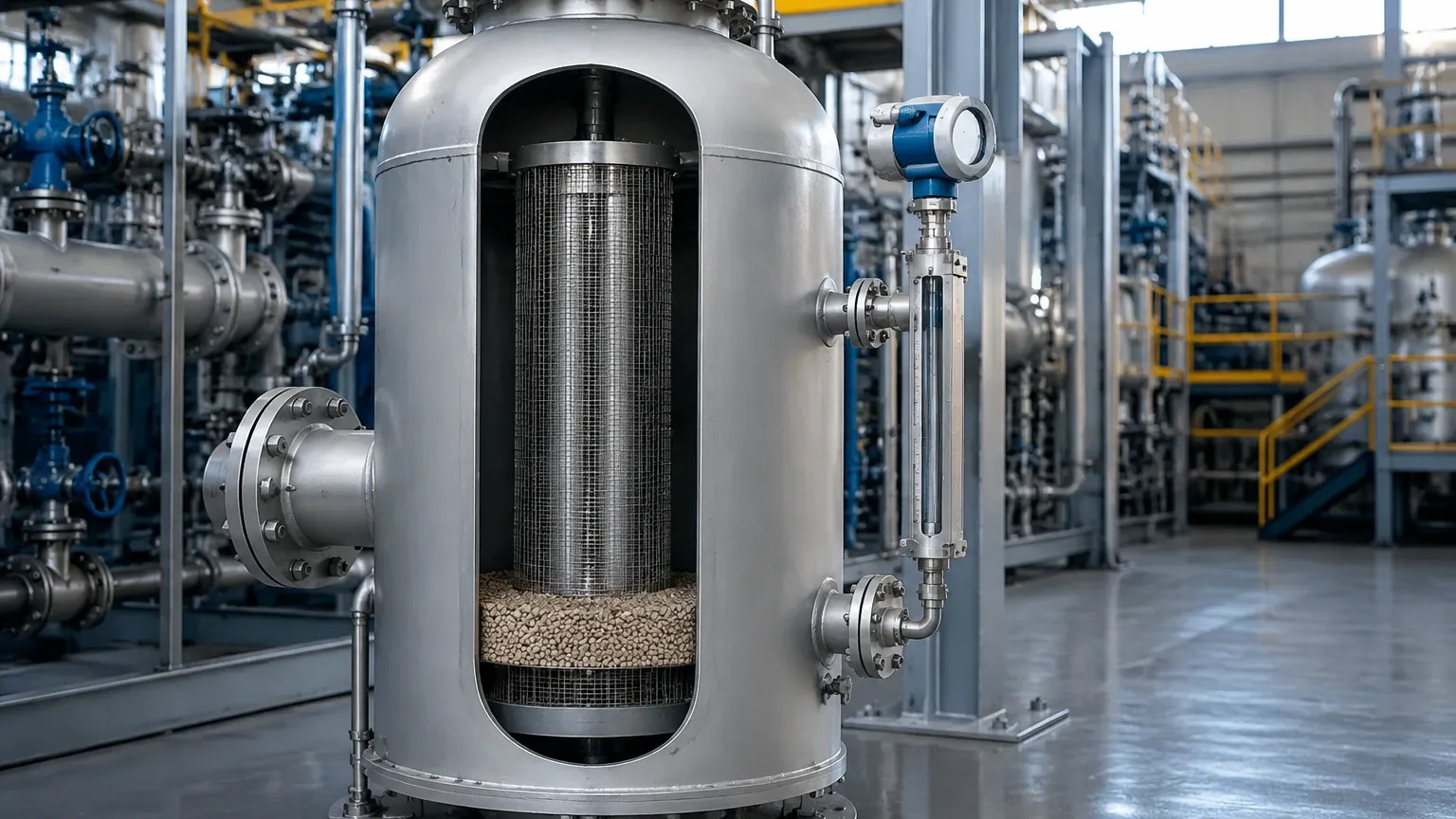
In a standard pressurized or gravity sand filter, the sand bed acts as the primary depth filtration medium. The wire mesh serves as the "underdrain" or the retention barrier. Its primary function is to prevent the sand media from escaping into the effluent stream (media migration) while ensuring a uniform flow distribution across the filter bed.
When a wire mesh for sand filter is poorly specified, two primary failures occur. First, if the mesh openings are too large, the fine grains of sand will pass through, leading to downstream equipment damage and loss of filter bed depth. Second, if the mesh is too restrictive or lacks sufficient open area, it creates a significant pressure drop, increasing energy costs and reducing the overall flow rate of the system. Therefore, the mesh must be engineered to balance mechanical strength with precise aperture control.
Technical Specifications: Mesh Count and Micron Rating
The most critical factor in selecting wire mesh is the relationship between the mesh opening and the particle size of the sand media. Industrial sand filters typically use specific grades of silica sand, garnet, or anthracite.
1. Aperture Selection: The mesh opening should generally be 1/2 to 2/3 the size of the smallest sand grain in the bed. This prevents "blinding," where particles become wedged in the openings, while ensuring the media remains trapped.
2. Open Area Ratio: High-performance filtration requires a maximized open area to minimize resistance. Precision-woven wire mesh allows for a high percentage of open area compared to perforated plates, which is essential for maintaining high flow rates in industrial applications.
3. Micron Precision: Unlike generic hardware cloth, industrial-grade wire mesh used in Wire Mesh Filter Cylinders & Tubes is manufactured to strict tolerances. This ensures that the filtration performance is consistent across the entire surface area of the component.
Structural Design: Wire Mesh Filter Cylinders & Tubes
In large-scale industrial filters, the wire mesh is rarely used as a flat sheet. Instead, it is fabricated into complex geometries to withstand the weight of the media and the hydraulic pressure of the fluid. The most common configurations are Wire Mesh Filter Cylinders & Tubes.
Single-Layer vs. Multi-Layer Construction
For light-duty applications, a single layer of heavy-gauge wire mesh may suffice. However, in high-pressure industrial environments, a multi-layer sintered or reinforced construction is preferred. This often involves:
* The Filtration Layer: A fine wire mesh that determines the micron rating.
* The Support Layer: A coarser, heavy-duty mesh or a perforated metal core that provides structural rigidity.
* The Drainage Layer: An intermediate mesh that facilitates the flow of fluid between the filtration and support layers.
These cylinders must be engineered to resist collapse during the filtration phase and to withstand the outward pressure applied during the backwash cycle, where water is pumped in reverse to clean the sand bed.
Material Science and Corrosion Resistance
The environment inside a sand filter can be chemically aggressive. Whether it is the salinity of seawater desalination, the acidity of chemical processing, or the presence of chlorine in municipal water treatment, material selection is paramount.
* Stainless Steel 304: The standard for general industrial use, offering good corrosion resistance and mechanical strength at a cost-effective price point.
* Stainless Steel 316L: Recommended for applications involving chlorides or high-salinity environments. The addition of molybdenum enhances resistance to pitting and crevice corrosion.
* Specialty Alloys: For extreme environments, alloys like Duplex stainless steel or Monel may be required to prevent stress corrosion cracking and ensure a service life spanning decades.
Using high-grade stainless steel for wire mesh for sand filter applications also ensures that the components are easy to clean and do not leach contaminants into the filtered fluid, which is vital for food, beverage, and pharmaceutical sectors.
Installation Constraints and Mechanical Stress
Engineers must account for the physical constraints of the filter vessel when specifying Wire Mesh Filter Cylinders & Tubes. Proper installation is the difference between a system that lasts ten years and one that fails in six months.
Pressure Differential (ΔP)
As the sand filter captures debris, the pressure differential across the bed and the mesh increases. The wire mesh components must be rated for the maximum expected ΔP. If the mesh deforms under pressure, the seal between the mesh and the housing may fail, leading to "bypass," where unfiltered fluid and sand bypass the filtration barrier entirely.
Backwashing Dynamics
Backwashing is a violent process. High-velocity water (and sometimes air scour) is forced through the mesh to lift and expand the sand bed. The wire mesh for sand filter must be securely welded or mechanically fastened to its support structure to prevent fatigue failure caused by the repetitive cycling of pressure.
Application Risks and Preventative Maintenance
While stainless steel wire mesh is highly durable, it is not immune to operational risks. Understanding these risks allows for better system design:
1. Biofouling: In water treatment, biofilms can grow on the mesh surface, particularly if the system sits stagnant. Selecting a mesh with a smooth surface finish can reduce the rate of biological attachment.
2. Abrasive Wear: The constant movement of sand grains during backwashing can cause abrasive wear on the wire. Using hard-drawn stainless steel wires increases the surface hardness and extends the component's life.
3. Scaling: Mineral deposits (calcium carbonate, etc.) can clog the mesh openings. In these cases, the mesh must be compatible with chemical cleaning agents (CIP) used to dissolve the scale without damaging the metal.
Procurement Checklist for International Buyers
When sourcing Wire Mesh Filter Cylinders & Tubes for sand filtration projects, technical buyers should confirm the following details with the manufacturer to ensure application compatibility:
* Media Specification: Provide the exact grain size distribution of the sand being used.
* Flow Requirements: Specify the maximum and nominal flow rates (m³/h or GPM) to calculate the required surface area.
* Chemical Profile: Disclose the pH, temperature, and chemical composition of the fluid.
* Connection Type: Determine if the cylinders require NPT/BSP threads, flange connections, or custom fittings for integration into the manifold.
* Certification: Ensure the materials meet relevant industrial standards (e.g., ASTM, ISO) and, if applicable, food-grade or drinking water certifications.
Conclusion: Total Cost of Ownership
In the context of industrial engineering, the cheapest component often results in the highest total cost of ownership. Selecting a high-quality wire mesh for sand filter prevents frequent downtime, reduces the loss of expensive filter media, and protects downstream equipment like pumps and membranes. By investing in precision-engineered Wire Mesh Filter Cylinders & Tubes, facilities can achieve stable filtration performance, lower energy consumption, and significantly extended maintenance intervals.
Kaifil specializes in the custom manufacture of these critical components, providing the engineering expertise required to match the filtration mesh to your specific sand media and operational environment. Whether you are designing a new system or retrofitting an existing installation, focusing on the technical integrity of your wire mesh components is the key to long-term operational success.
