


Engineering Guide to Wire Mesh for Coffee Filter Applications in Industrial Extraction
In the industrial food and beverage sector, specifically within large-scale coffee extraction and commercial brewing, the choice of filtration media significantly impacts both product consistency and operational efficiency. While consumer-grade filters often prioritize convenience, industrial systems require robust, reusable, and high-precision components. Stainless steel wire mesh has emerged as the primary material for these applications, offering a balance of mechanical strength, chemical resistance, and precise particle retention.
Selecting the correct wire mesh for coffee filter systems involves more than choosing a micron rating. It requires an understanding of fluid dynamics, material science, and the structural requirements of the filtration housing. This guide explores the engineering considerations for integrating Wire Mesh Filter Cylinders & Tubes into industrial coffee processing environments.
1. Technical Principles of Stainless Steel Mesh Filtration
Industrial coffee filtration is a process of mechanical separation where the filter medium must allow the passage of soluble solids and aromatic oils while retaining insoluble coffee grounds and "fines" (particles smaller than 100 microns). Unlike paper filters, which rely on depth filtration and can absorb essential oils, stainless steel wire mesh functions primarily through surface filtration.
Pore Size and Micron Ratings
In coffee extraction, the target particle size for retention typically ranges from 50 to 150 microns, depending on the brewing method (e.g., cold brew vs. espresso-style extraction). The "mesh count"—the number of openings per linear inch—determines the filtration fineness. For industrial applications, engineers must specify the aperture size to ensure that the pressure drop across the filter remains within the system's design limits while achieving the desired clarity in the final extract.
Flow Rate and Open Area
The percentage of open area in a wire mesh directly influences the flow rate and the velocity of the liquid passing through the filter. A higher open area reduces the resistance to flow, which is critical in high-volume industrial systems to prevent pump cavitation and minimize energy consumption. However, increasing the open area often requires using thinner wires, which can compromise the structural integrity of the filter under high hydraulic pressure.
2. Material Selection: Why 304 and 316L Stainless Steel?
Material compatibility is a non-negotiable factor in food-grade filtration. Coffee is naturally acidic (pH 4.5 to 5.0) and is often processed at elevated temperatures (up to 95°C or higher in some extraction methods).
* AISI 304 Stainless Steel: This is the standard grade for most food-grade applications. It offers excellent corrosion resistance and can withstand standard cleaning cycles. It is suitable for most coffee filtration environments where chloride concentrations are low.
* AISI 316L Stainless Steel: For environments involving high-salinity water or aggressive Clean-In-Place (CIP) chemicals (such as strong caustic or acidic descalers), 316L is preferred. The addition of molybdenum enhances its resistance to pitting and crevice corrosion, ensuring a longer service life for the wire mesh for coffee filter components.
Both materials are compliant with international food safety standards (such as FDA and EU 1935/2004), provided they are manufactured and finished correctly to eliminate burrs, oils, and manufacturing residues.
3. Structural Configurations: Wire Mesh Filter Cylinders & Tubes
In industrial settings, the filter medium is rarely a flat sheet. Instead, it is typically formed into geometric shapes that maximize surface area within a compact footprint. The use of Wire Mesh Filter Cylinders & Tubes is the industry standard for continuous or batch extraction systems.
Cylindrical Geometry Advantages
Cylindrical filters provide a high strength-to-weight ratio. When liquid flows from the inside out (or vice versa), the cylindrical shape distributes the pressure load evenly across the surface of the mesh. This prevents the mesh from deforming or tearing—a common failure point in flat-screen systems subjected to high flow rates.
Multi-Layer Sintered Structures
For demanding industrial applications, a single layer of wire mesh may not be sufficient. Engineers often specify multi-layer sintered mesh or mesh reinforced with perforated metal. In these designs, a fine filtration layer is bonded to one or more coarser support layers. This configuration provides the precision of fine mesh with the mechanical rigidity required to withstand backwashing and high-pressure differentials.
4. Weave Types and Their Impact on Performance
The method by which the wires are woven determines the filter's performance characteristics. There are three primary weave types used in industrial coffee filtration:
1. Plain Weave: The simplest and most common weave, where each warp wire crosses over and under each weft wire. It provides high open area and is easy to clean, making it ideal for standard filtration tasks.
2. Dutch Weave: This weave utilizes different diameters for warp and weft wires, resulting in a much tighter, denser mesh. Dutch weave is used when extremely fine filtration (below 50 microns) is required, though it is more difficult to clean than plain weave.
3. Twilled Weave: In this weave, wires pass over two and under two wires. This allows for the use of heavier wires for a given mesh count, increasing the durability of the filter tube without significantly reducing the micron rating.
5. Engineering Considerations for Installation and Integration
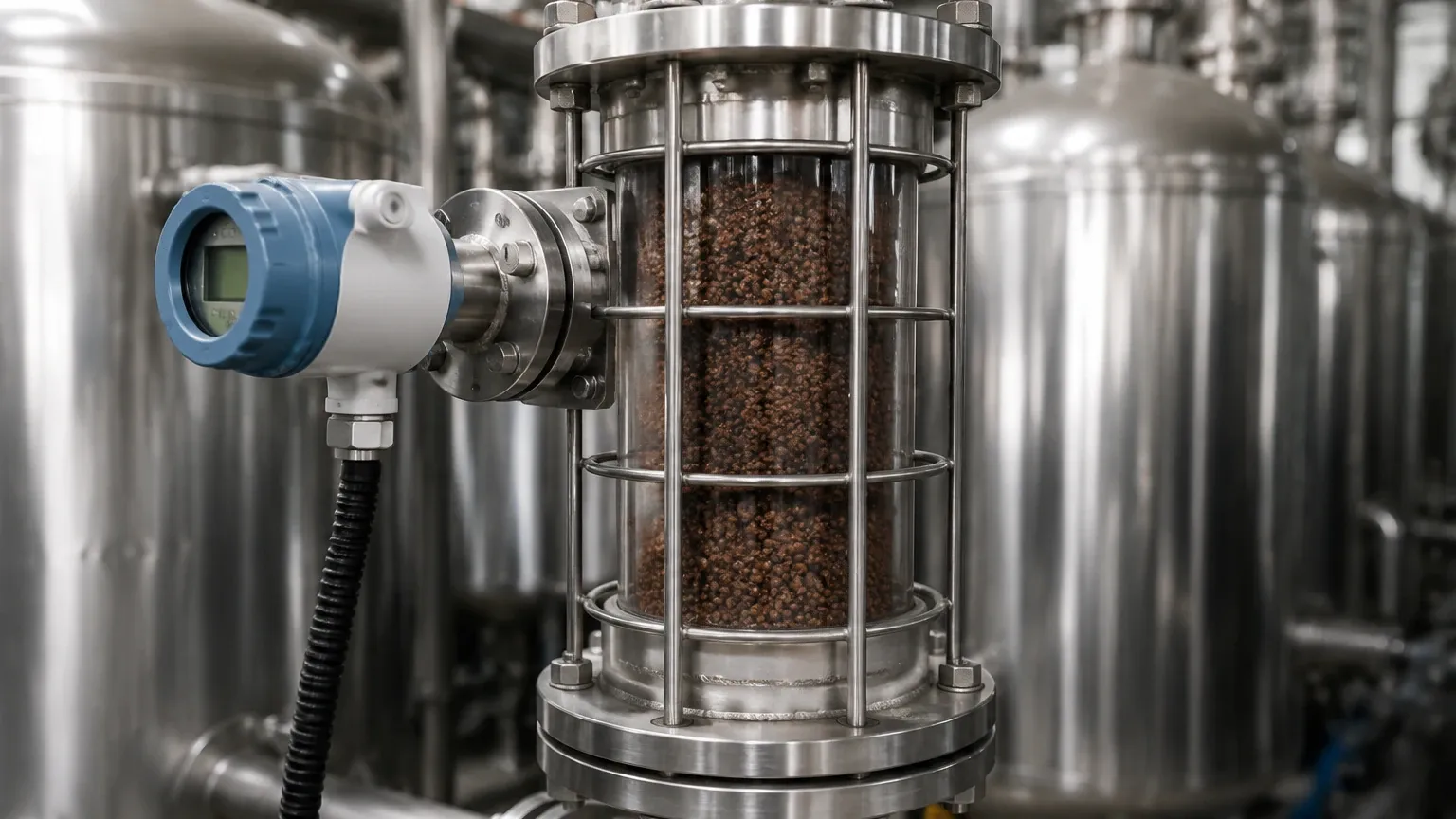
When integrating Wire Mesh Filter Cylinders & Tubes into an industrial coffee processing line, several engineering constraints must be addressed during the design phase:
Sealing and End Fittings
A filter is only as effective as its seal. Industrial filter tubes must be equipped with precision-engineered end fittings—such as flanges, threaded connectors, or O-ring grooves—to ensure that no "bypass" occurs. Bypass allows unfiltered liquid to circumvent the mesh, leading to sediment contamination in the final product. Common joining methods include TIG (Tungsten Inert Gas) welding and ultrasonic welding, which provide clean, sanitary joints without the use of adhesives.
Pressure Drop (Delta P) Management
As the filter captures coffee grounds, the pressure drop across the mesh will increase. Engineers must calculate the "terminal pressure drop"—the point at which the filter must be cleaned or replaced. Monitoring Delta P is essential for protecting upstream pumps and maintaining a consistent flow rate through the extraction bed.
Backwashing and Cleanability
In automated systems, the ability to clean the filter in situ (CIP) is critical. Stainless steel mesh is highly conducive to backwashing, where the flow is reversed to dislodge trapped particles. The mesh must be robust enough to handle the reverse pressure without buckling. This is where the choice of a reinforced cylindrical structure becomes vital.
6. Application Risks and Quality Control
Using sub-standard filtration components in a B2B food production environment carries significant risks. International buyers and engineers should confirm the following before finalizing a procurement order:
* Mesh Migration: Ensure the mesh is properly annealed and the edges are secured. Loose wires (mesh migration) can contaminate the food product, leading to significant liability and equipment damage.
* Fatigue Failure: In systems with pulsating flows or frequent backwashing, the mesh can suffer from metal fatigue. Specifying the correct wire diameter and support structure is necessary to mitigate this risk.
* Sanitary Finishing: For food applications, the filter must be free of "dead zones" where organic matter can accumulate and promote bacterial growth. Electropolishing is often recommended to create a smooth, ultra-clean surface that resists biofilm formation.
7. Procurement Checklist for Industrial Buyers
Before ordering customized Wire Mesh Filter Cylinders & Tubes, technical teams should provide the manufacturer with the following data points to ensure the component is fit for purpose:
1. Micron Rating: Specify whether you require absolute or nominal filtration.
2. Operating Temperature: Both the standard operating temperature and the peak temperature during cleaning cycles.
3. Max Differential Pressure: The maximum pressure the filter will encounter before cleaning.
4. Chemical Environment: List all cleaning agents (acids, bases, sanitizers) used in the facility.
5. Dimensional Tolerances: Precise ID/OD (Inner/Outer Diameter) and length requirements for housing compatibility.
6. Certification Requirements: (e.g., FDA compliance, material test reports/MTRs).
Conclusion
Stainless steel wire mesh is an indispensable component in modern industrial coffee processing. By selecting the appropriate material grade, weave type, and structural configuration—specifically utilizing Wire Mesh Filter Cylinders & Tubes—engineers can achieve a balance of high-precision filtration and long-term durability. Moving away from disposable media to permanent, cleanable stainless steel solutions not only improves product quality but also reduces the total cost of ownership and the environmental footprint of large-scale extraction operations.
When specifying wire mesh for coffee filter systems, collaborating with a manufacturer that understands the nuances of industrial instrumentation and food-grade fabrication is essential for ensuring system reliability and regulatory compliance.
