


Basket Strainer 80mm
In industrial fluid handling systems, the protection of downstream equipment such as pumps, valves, and flow meters is a critical engineering priority. The basket strainer 80mm, often referred to in metric piping systems as a DN80 strainer, serves as a primary line of defense against particulate contamination. These components are designed to remove large solids from liquids, preventing mechanical wear and system downtime. For engineers and procurement specialists, selecting the right Strainers & Baskets involves a deep understanding of flow rates, material compatibility, and the specific mechanical stresses of the application environment.
Kaifil specializes in the manufacture of high-performance stainless steel filtration solutions, providing the technical expertise required to integrate these components into demanding industrial workflows. This guide examines the technical parameters, selection criteria, and maintenance considerations essential for the effective implementation of an 80mm basket strainer.
Understanding the Role of the Basket Strainer 80mm in Industrial Piping
The 80mm (3-inch) nominal pipe size is a standard in various sectors, including chemical processing, water treatment, and food and beverage production. A basket strainer 80mm is typically a simplex or duplex unit installed in a horizontal pipeline. Unlike Y-strainers, which are often used for smaller debris and steam applications, basket strainers are preferred for high-flow liquid systems where a larger dirt-holding capacity is required.
The primary advantage of the basket design is its volume. The "basket" configuration allows for a greater surface area of the filtration media, which directly correlates to a lower pressure drop across the unit. In a DN80 system, maintaining a low differential pressure (Delta P) is vital to ensure that pump efficiency is not compromised. When fluid enters the strainer housing, it is directed into the basket; solids are trapped inside the mesh or perforated metal, while the clean fluid passes through to the outlet. This design also facilitates easier cleaning, as the basket can be lifted out vertically once the housing cover is removed.
Engineering Specifications: Sizing and Flow Dynamics
When specifying a basket strainer 80mm, engineers must look beyond the nominal pipe size. The performance of the strainer is governed by the relationship between the fluid velocity, viscosity, and the open area ratio of the basket.
Flow Rate and Velocity
For an 80mm pipeline, the flow rate is a determining factor in whether a standard basket strainer is sufficient. Generally, liquid velocities in industrial piping are maintained between 1.5 to 3 meters per second to prevent erosion and excessive pressure loss. If the flow rate exceeds these parameters, the turbulence within the strainer housing can lead to mechanical vibration or premature clogging of the mesh.
Pressure Drop (Delta P)
The pressure drop is the difference in pressure between the inlet and outlet of the strainer. A clean basket strainer 80mm should ideally exhibit a pressure drop of less than 0.1 to 0.2 bar. As debris accumulates, this pressure drop increases. Engineering teams must calculate the "clean pressure drop" based on the fluid's specific gravity and viscosity. High-viscosity fluids, such as heavy oils or syrups, require larger baskets or coarser mesh to maintain acceptable flow levels.
Open Area Ratio (OAR)
The OAR is the ratio of the total open area of the basket to the internal cross-sectional area of the inlet pipe. For a robust industrial application, an OAR of at least 6:1 is often recommended. This ensures that even when the basket is 50% clogged, the system can still operate without a significant increase in backpressure. Kaifil’s engineering approach focuses on optimizing this ratio through precision-engineered perforated patterns and high-quality wire mesh linings.
Material Science: Selecting Stainless Steel for Harsh Environments
The longevity of a basket strainer 80mm is heavily dependent on the materials used for both the housing and the internal basket. While cast iron or carbon steel may be suitable for non-corrosive water applications, stainless steel is the standard for industrial reliability.
AISI 304 vs. AISI 316L
* Grade 304 Stainless Steel: This is the most common choice for general industrial use. It offers excellent corrosion resistance to most oxidizing acids and is widely used in food processing and standard water treatment. It is cost-effective while providing the structural integrity needed for high-pressure systems.
* Grade 316L Stainless Steel: For environments involving chlorides (such as seawater or brine) or aggressive chemicals, 316L is the preferred material. The addition of molybdenum enhances its resistance to pitting and crevice corrosion. In pharmaceutical and high-purity chemical applications, 316L is often required to meet stringent hygiene and durability standards.
Temperature and Pressure Ratings
Stainless steel basket strainers are capable of withstanding significant temperature fluctuations. However, the pressure-temperature rating of the flanges (such as ANSI Class 150 or PN16) must be verified. At elevated temperatures, the allowable working pressure of the stainless steel housing decreases. Engineers must ensure that the basket strainer 80mm selected is rated for the maximum surge pressure and peak operating temperature of the specific process loop.
Filtration Precision: Mesh and Perforation Options
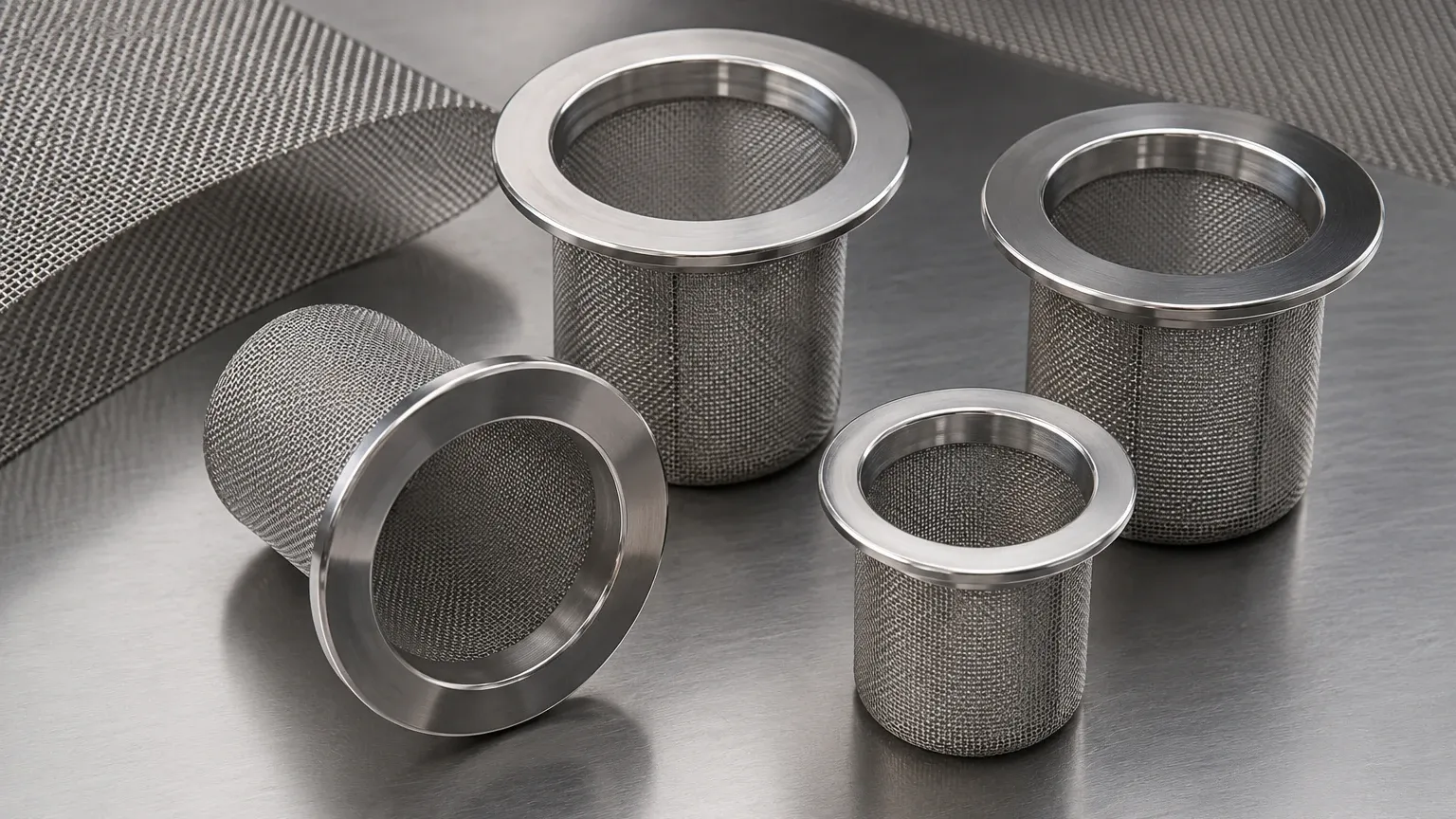
The "basket" in a basket strainer 80mm is usually a two-stage component: a heavy-duty perforated metal support cylinder and a fine wire mesh liner. The choice of filtration grade depends entirely on the size of the particles that need to be removed.
Perforated Metal Supports
The outer perforated layer provides the mechanical strength to withstand the pressure of the fluid flow. Common hole sizes range from 1mm to 5mm. If the application only requires the removal of large stones or welding slag, the perforated basket alone may suffice.
Wire Mesh Liners
For finer filtration, a stainless steel wire mesh is welded to the inside of the perforated basket. Mesh sizes are defined by the number of openings per linear inch. For example:
* 20 Mesh: Removes particles down to approximately 840 microns.
* 80 Mesh: Removes particles down to 177 microns.
* 150 Mesh: Removes particles down to 100 microns.
When selecting a mesh for a basket strainer 80mm, it is important to find a balance. A mesh that is too fine will clog rapidly, requiring frequent maintenance, while a mesh that is too coarse will allow harmful contaminants to pass through to sensitive downstream equipment. Kaifil provides customized mesh configurations to ensure the filtration accuracy matches the specific protection requirements of the system.
Maintenance and Operational Best Practices
A basket strainer 80mm is not a "set and forget" component. Its effectiveness is tied to a disciplined maintenance schedule. Failure to clean the basket can lead to basket collapse, pump cavitation, or even pipe rupture due to excessive pressure build-up.
Differential Pressure Monitoring
The most reliable way to determine when a basket needs cleaning is by installing differential pressure gauges across the inlet and outlet. When the pressure drop reaches a pre-defined limit (usually around 0.5 to 1.0 bar above the clean pressure drop), the basket should be serviced.
Cleaning Procedures
In a simplex basket strainer 80mm, the flow must be diverted or stopped before opening the housing. The procedure involves:
1. Isolating the strainer using upstream and downstream valves.
2. Venting the internal pressure and draining the fluid.
3. Removing the cover (often secured by swing bolts for quick access).
4. Extracting the basket and cleaning it via high-pressure water, steam, or ultrasonic baths, depending on the nature of the debris.
5. Inspecting the O-ring or gasket for wear before re-sealing the unit.
For continuous processes where flow cannot be interrupted, a duplex strainer (which contains two baskets and a changeover valve) is the recommended solution.
Customization and OEM Considerations for Complex Systems
Standard off-the-shelf strainers may not always meet the unique spatial or functional requirements of a specialized industrial plant. This is where custom manufacturing becomes essential. When sourcing a basket strainer 80mm, purchasing teams should consider the following customization options:
* Connection Types: While flanged connections (RF or FF) are standard for DN80 pipes, some applications may require NPT threaded ends or socket weld connections for high-pressure integrity.
* Reinforced Baskets: In systems with high-pressure surges or high-viscosity fluids, standard baskets may deform. Reinforced frames and heavier gauge perforated metal can be used to ensure the basket maintains its shape under stress.
* Magnetic Inserts: For applications in machining or metalworking, magnetic rods can be added to the center of the basket to capture fine ferrous particles that might otherwise pass through the mesh.
* Special Coatings: In highly acidic environments, even 316L stainless steel may require additional protection. Specialized coatings or linings can be applied to the internal surfaces of the housing.
Kaifil works closely with global customers to develop these customized Strainers & Baskets, ensuring that every dimension and material choice is optimized for the intended application.
Confirming Requirements Before Purchase
Before finalizing the procurement of a basket strainer 80mm, the following technical checklist should be confirmed with the manufacturer:
1. Fluid Characteristics: What is the chemical composition, viscosity, and specific gravity of the liquid?
2. Operating Parameters: What are the normal and maximum operating pressures and temperatures?
3. Filtration Target: What is the smallest particle size that must be removed to protect downstream equipment?
4. Flow Rate: What is the maximum GPM (gallons per minute) or m³/h (cubic meters per hour) the strainer will handle?
5. Installation Space: Are there height restrictions for basket removal? (Top-removal baskets require vertical clearance equal to the height of the housing).
6. Compliance Standards: Does the unit need to meet specific certifications such as ASME, PED, or food-grade FDA standards?
By addressing these factors, engineers can ensure that the basket strainer 80mm provides reliable, long-term protection for their industrial assets. Investing in a high-quality stainless steel strainer from a specialized manufacturer like Kaifil reduces the total cost of ownership by minimizing maintenance frequency and extending the lifespan of the entire fluid handling system.
