


Metal Mesh Grease Filter Cleaner: An Engineering Guide to Industrial Maintenance and Selection
In industrial exhaust systems, food processing facilities, and heavy-duty hydraulic applications, managing grease and oil particulates is critical for both operational efficiency and fire safety. Metal mesh filters, particularly those configured as Wire Mesh Filter Cylinders & Tubes, serve as the primary line of defense. However, the performance of these components is entirely dependent on a rigorous maintenance regime. Selecting the correct metal mesh grease filter cleaner and understanding the engineering implications of the cleaning process are essential for technical professionals tasked with optimizing filtration lifecycles.
This guide explores the technical relationship between filter design, grease accumulation, and the chemical and mechanical processes required to restore filtration efficiency without compromising the structural integrity of the stainless steel media.
The Engineering Role of Wire Mesh Filter Cylinders & Tubes
Before addressing the cleaning process, it is vital to understand the structural demands placed on the filter itself. In industrial environments, grease is rarely a simple liquid; it is often a complex mixture of polymerized fats, carbonized particles, and moisture.
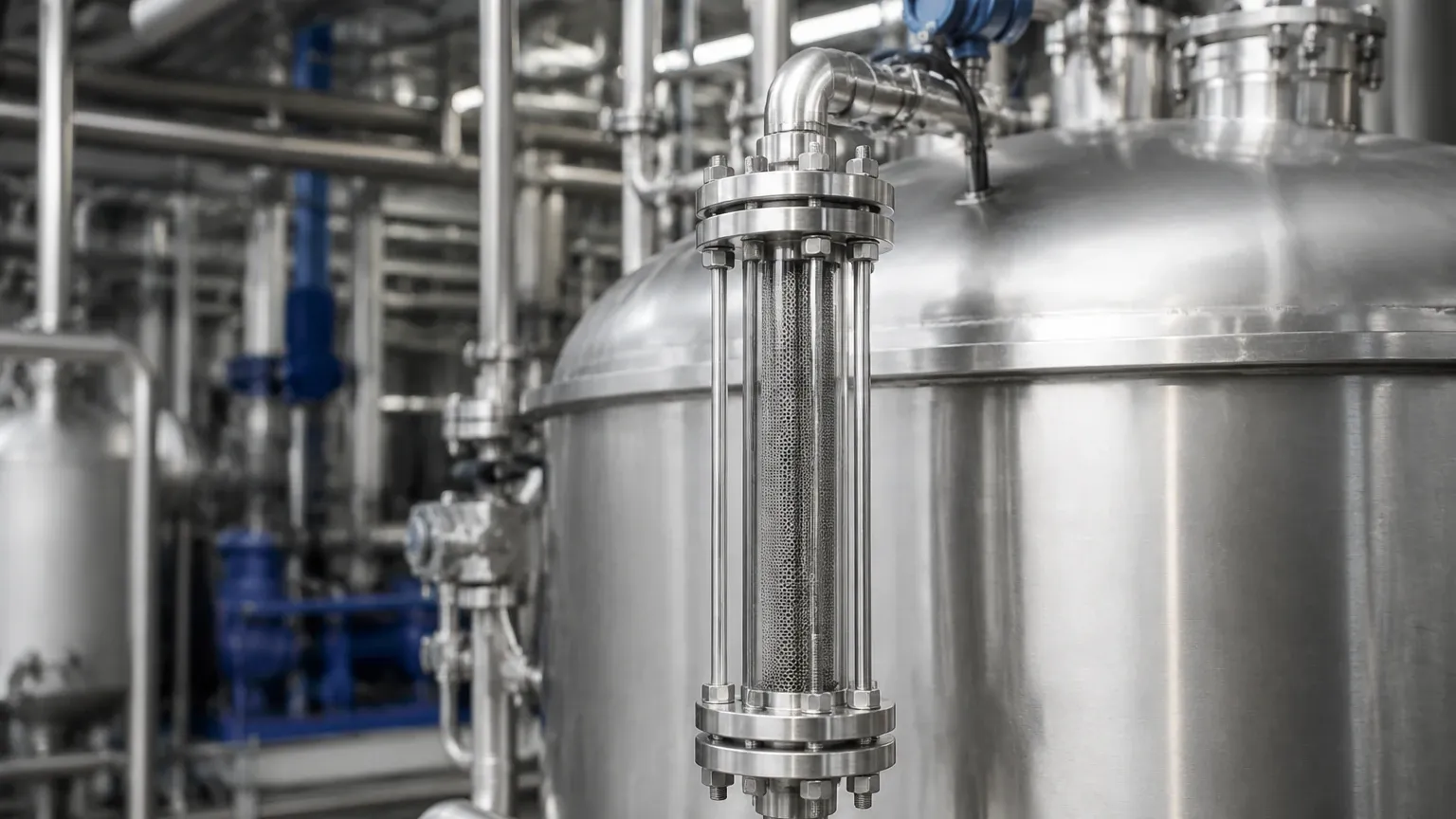
Wire mesh filter cylinders and tubes are engineered to provide a high surface-area-to-volume ratio. Unlike flat panel filters, the cylindrical geometry allows for uniform pressure distribution and can withstand higher differential pressures. These components are typically manufactured from multi-layered stainless steel wire mesh (often 304 or 316L grades), which are sintered or pleated to increase the effective filtration area.
The filtration mechanism relies on impingement and coalescence. As grease-laden air or fluid passes through the tortuous path of the wire mesh, particles collide with the wires and accumulate. Over time, this accumulation leads to a "grease cake," which, if not managed by a proper metal mesh grease filter cleaner, will lead to a significant increase in pressure drop (ΔP) and a decrease in system flow rate.
Principles of the Metal Mesh Grease Filter Cleaner
An effective industrial cleaner must do more than simply surface-wash the filter; it must penetrate the deep layers of the wire mesh to dissolve hardened or polymerized grease. From an engineering perspective, the selection of a cleaner is governed by three primary factors: chemical compatibility, solvency power, and environmental safety.
Chemical Compatibility and Material Science
While stainless steel is highly resistant to corrosion, certain aggressive cleaning agents—particularly those containing high concentrations of chlorides or extremely high pH levels—can induce stress corrosion cracking (SCC) or pitting over long-term exposure. A professional-grade metal mesh grease filter cleaner is typically formulated to be alkaline (pH 11-13) to saponify fats, yet it must contain corrosion inhibitors to protect the chromium oxide passive layer of the stainless steel mesh.
Solvency and Saponification
Industrial grease often undergoes thermal degradation, turning into a varnish-like substance. The cleaner must utilize surfactants and solvents that can break the molecular bonds of these degraded lipids. Saponification—the process of converting fat into soap—is the primary chemical reaction used to liquefy grease, allowing it to be flushed out from the intricate gaps in the wire mesh tubes.
Selection Criteria for Industrial Cleaning Equipment
When specifying a cleaning solution for an industrial facility, engineers must evaluate the method of application alongside the chemical agent. The geometry of Wire Mesh Filter Cylinders & Tubes presents unique challenges; manual scrubbing is often impossible for internal mesh layers.
1. Ultrasonic Cleaning Compatibility: For precision metal filters, ultrasonic cleaning is the gold standard. The cleaner must be compatible with ultrasonic tanks, where cavitation bubbles implode against the wire surfaces, mechanically dislodging grease that chemical action alone cannot reach.
2. Rinse-ability: The cleaner must be free-rinsing. Any residue left within the mesh can act as a binder, causing new grease to adhere more quickly and accelerating the clogging cycle.
3. Temperature Requirements: Most industrial grease cleaners are optimized for use at elevated temperatures (typically 50°C to 70°C). The engineering team must ensure that the cleaning tanks and the filter's structural adhesives or welds can withstand these thermal cycles.
Maintenance Protocols and Pressure Drop Management
The primary indicator that a filter requires cleaning is a rise in differential pressure. In a B2B industrial context, waiting for a visual inspection is often inefficient. Instead, engineers should establish a cleaning cycle based on ΔP transducers.
The Cleaning Cycle
* Pre-Rinse: Removal of loose debris using low-pressure hot water.
* Chemical Soak/Agitation: Immersion in the metal mesh grease filter cleaner. In the case of cylindrical filters, rotation or agitation is necessary to ensure the chemical reaches the core of the media.
* Rinsing: High-volume, low-pressure rinsing to ensure all saponified grease and chemical surfactants are removed.
* Drying and Inspection: Forced air drying followed by a light-box inspection to check for mesh blinding or structural deformities.
Failure to adhere to these protocols can result in "permanent blinding," where the grease becomes so compacted and carbonized within the wire mesh that the filter can no longer be restored to its original flow characteristics, necessitating a full replacement.
Application Risks and Installation Constraints
Using the wrong cleaning method or agent introduces several risks that can lead to catastrophic system failure:
* Media Migration: If high-pressure washers are used incorrectly on fine wire mesh, the pressure can displace the wires, changing the micron rating of the filter or causing holes that allow unfiltered grease to pass through.
* Hydrogen Embrittlement: Although rare in stainless steel compared to high-tensile steels, certain acidic cleaners can contribute to hydrogen embrittlement in specialized alloys used in high-pressure hydraulic filtration.
* Environmental Compliance: International buyers must confirm that the cleaner complies with local wastewater regulations. Many traditional solvents are now restricted due to VOC (Volatile Organic Compound) limits, shifting the industry toward aqueous-based, biodegradable cleaners.
What Buyers Should Confirm Before Purchasing
When sourcing Wire Mesh Filter Cylinders & Tubes and the associated cleaning systems, procurement teams and engineers should verify the following with the manufacturer:
1. Maximum Allowable Pressure Drop: What is the ΔP limit before the filter structure risks collapsing or bypassing?
2. Material Certification: Ensure the mesh is genuine 304 or 316L to prevent unexpected corrosion during the cleaning process.
3. Recommended Cleaning Agents: Does the manufacturer provide a list of approved chemical bases for their specific mesh construction?
4. Customization for Cleanability: For highly specialized applications, can the filter be designed with a removable outer shroud to facilitate easier cleaning of the inner mesh layers?
The Total Cost of Ownership (TCO) Perspective
In the B2B industrial sector, the cheapest filter often results in the highest TCO. Low-quality wire mesh may degrade after only a few cleaning cycles, losing its shape or filtration accuracy. Conversely, high-quality stainless steel filters from specialized manufacturers like Kaifil are designed for hundreds of cleaning cycles when paired with a proper metal mesh grease filter cleaner.
By investing in durable filtration components and a scientifically sound maintenance strategy, facilities can reduce downtime, lower replacement costs, and ensure that their exhaust or fluid systems operate within their designed engineering parameters.
Conclusion
Effective grease management in industrial environments is a balance of robust hardware and precise chemical maintenance. Wire mesh filter cylinders and tubes provide the necessary surface area and durability for demanding applications, but their longevity is inextricably linked to the cleaning processes employed. Engineers must treat the selection of a metal mesh grease filter cleaner with the same technical rigor as they do the selection of the filter itself, ensuring compatibility, efficiency, and environmental compliance.
For those seeking high-performance filtration components, choosing a manufacturer that understands these maintenance realities is key to achieving long-term operational success. Proper care not only extends the life of the filter but also protects the entire system from the risks associated with grease accumulation and restricted flow.
