


Engineering Precision: A Guide to Wire Mesh Filter Cylinders & Tubes for Industrial Applications
In the landscape of industrial process engineering, the efficiency of a filtration system often dictates the longevity of downstream equipment and the purity of the final product. Among the most versatile and durable components used in these systems are Wire Mesh Filter Cylinders & Tubes. These components serve as the primary barrier against contaminants in environments ranging from high-pressure hydraulic systems to corrosive chemical processing plants.
Selecting the right filtration component requires more than just a basic understanding of pore size. It involves a deep dive into material science, structural integrity, and the specific manufacturing capabilities of a wire cloth filter manufacturing co. This article provides a technical overview of the design, selection, and application of wire mesh filter cylinders, helping engineers and procurement teams optimize their filtration performance.
The Anatomy of Wire Mesh Filter Cylinders & Tubes
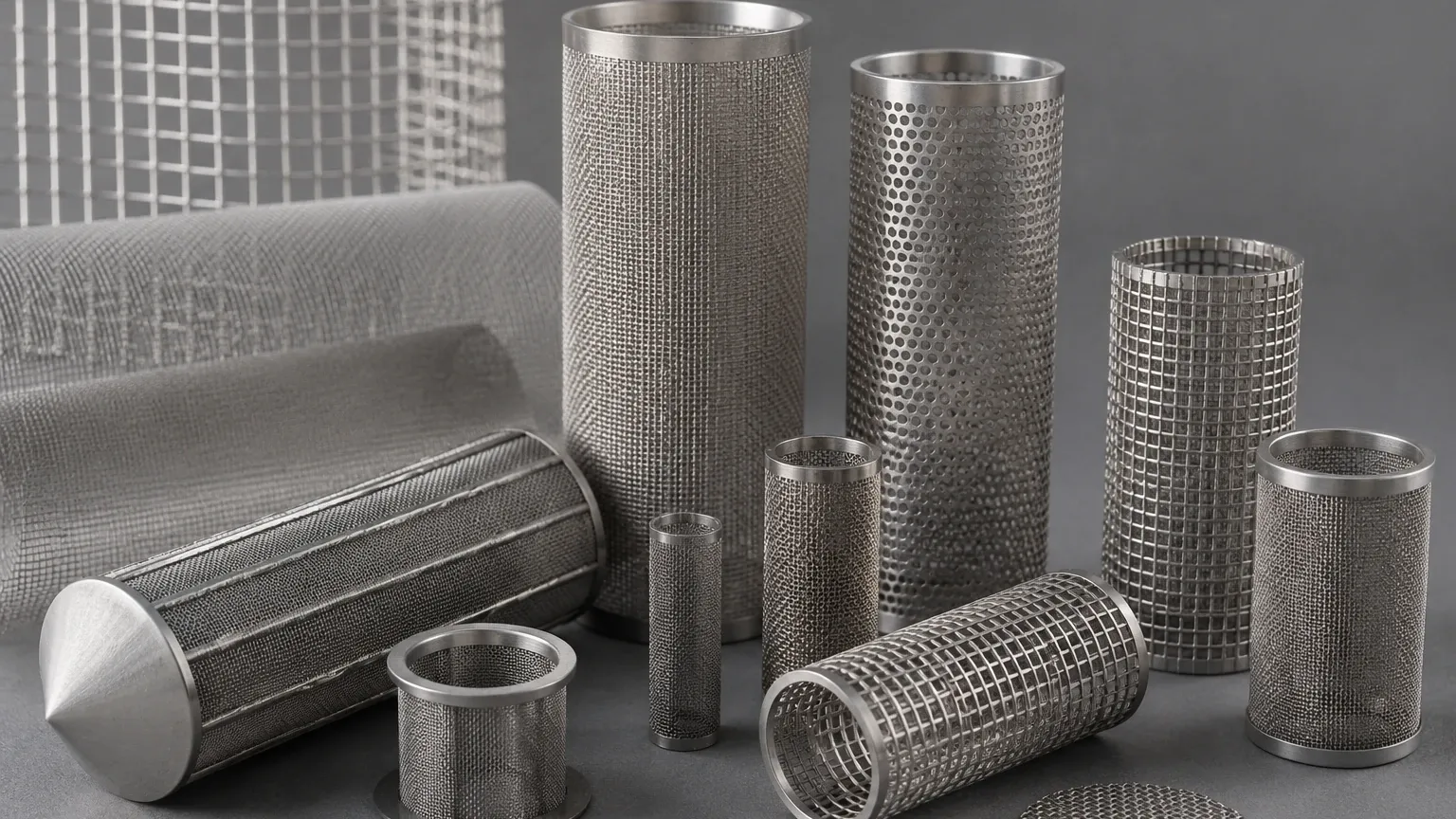
Wire mesh filter cylinders and tubes are cylindrical filtration elements constructed from woven wire cloth. Unlike disposable paper or polymer filters, these metal components are engineered for reuse, high-temperature resistance, and structural stability under significant differential pressure.
Structural Components
The basic design typically consists of the following:
1. Filter Media: The woven wire mesh that determines the filtration accuracy (micron rating).
2. Support Layers: In many high-pressure applications, the fine mesh is supported by a coarser mesh or a perforated metal core to prevent collapsing or bursting.
3. End Caps and Fittings: These are welded or bonded to the ends of the cylinder to ensure a leak-proof seal within the filter housing. Common configurations include NPT threads, flange mounts, or O-ring seals.
Weave Types and Their Impact
The performance of the filter is largely defined by the weave pattern of the wire cloth. A professional wire cloth filter manufacturing co typically offers several options:
* Plain Weave: The simplest pattern where wires cross over and under each other. It provides high flow rates but is generally limited to coarser filtration.
* Twill Weave: Allows for heavier wires in a given mesh count, increasing durability for finer filtration tasks.
* Dutch Weave (Plain and Twill): These weaves utilize different diameters for warp and shute wires, creating a dense, tortuous path for particles. This is the standard for high-precision liquid and gas filtration where high mechanical strength is required.
Critical Selection Criteria for Industrial Engineers
When specifying Wire Mesh Filter Cylinders & Tubes, engineers must balance several competing factors to ensure the component survives the operating environment while meeting filtration targets.
1. Micron Rating: Absolute vs. Nominal
Understanding the distinction between absolute and nominal ratings is critical for process integrity. A nominal rating refers to the ability of the filter to retain a certain percentage (usually 60% to 90%) of particles of a specific size. An absolute rating, common in stainless steel wire mesh, indicates that 100% of particles larger than the specified micron size will be captured. For pharmaceutical or food and beverage applications, absolute ratings are often mandatory.
2. Material Compatibility and Corrosion Resistance
Most industrial filter cylinders are manufactured from stainless steel, but the specific grade matters:
* 304 Stainless Steel: Suitable for general industrial use, water treatment, and mild chemical environments.
* 316L Stainless Steel: Contains molybdenum, providing superior resistance to chlorides and acids. This is the standard for marine, chemical, and pharmaceutical applications.
* Specialty Alloys: For extreme environments, alloys like Monel, Inconel, or Hastelloy may be required to withstand high-temperature oxidation or highly aggressive chemical reagents.
3. Differential Pressure and Flow Rate
The "clean pressure drop" is the initial resistance the filter offers to the fluid flow. As the filter accumulates debris, the differential pressure increases. Engineers must calculate the effective filtration area (EFA) to ensure that the flow velocity does not exceed the mesh's structural limits or cause premature clogging.
The Role of a Specialized Wire Cloth Filter Manufacturing Co
Partnering with a dedicated wire cloth filter manufacturing co like Kaifil is essential for applications requiring customized dimensions or specific performance tolerances. Industrial filtration is rarely a one-size-fits-all solution; custom engineering ensures that the filter fits perfectly into existing housings while meeting the unique demands of the fluid being processed.
Customization and OEM Capabilities
Manufacturing expertise allows for the creation of multi-layered sintered mesh cylinders. Sintering is a process where multiple layers of wire cloth are bonded together through heat and pressure without the use of binders. This results in a filter media that is exceptionally strong, easy to clean, and permanent in its pore structure. For OEM equipment manufacturers, having a partner that can produce these components to exact CAD specifications is vital for system reliability.
Quality Control and Traceability
In regulated industries, such as food production or aerospace, material traceability is non-negotiable. A reputable manufacturer provides material test reports (MTRs) and ensures that the welding processes—such as plasma welding or TIG welding—do not introduce contaminants or weaken the corrosion resistance of the stainless steel.
Installation and Operational Best Practices
Even the highest quality Wire Mesh Filter Cylinders & Tubes will underperform if installed or maintained incorrectly. To maximize the lifecycle of these components, consider the following engineering practices:
Proper Sealing
The bypass of unfiltered fluid is a common failure point. Ensure that the gaskets or O-rings used at the end caps are compatible with the process fluid and the operating temperature. Compression must be uniform to prevent gaps.
Monitoring Pressure Drop
Installing differential pressure gauges across the filter housing is the most effective way to monitor filter health. Establishing a "terminal pressure drop"—the point at which the filter must be cleaned or replaced—prevents structural damage to the mesh and ensures consistent flow.
Cleaning and Regeneration
One of the primary advantages of stainless steel wire mesh is its cleanability. Depending on the contaminant, filters can be regenerated using:
* Backwashing: Reversing the flow of fluid to dislodge particles from the surface.
* Ultrasonic Cleaning: Using high-frequency sound waves in a cleaning solvent to remove fine particles trapped deep within the weave.
* Chemical Cleaning: Using specific solvents or acids to dissolve organic or mineral deposits, followed by thorough neutralization and rinsing.
Common Challenges in Industrial Filtration
Engineers often encounter specific hurdles when implementing wire mesh filtration. Addressing these during the design phase can prevent costly downtime.
Particle Morphology
Not all particles are spherical. Elongated or irregular particles can "wedge" themselves into the mesh, a phenomenon known as blinding. In these cases, selecting a Dutch weave or a pleated cylinder design can increase the surface area and reduce the likelihood of blinding.
High-Viscosity Fluids
Filtering high-viscosity liquids, such as resins or heavy oils, requires significantly more pressure. A wire cloth filter manufacturing co may recommend a reinforced perforated core to support the wire mesh against these higher forces, preventing the cylinder from deforming.
Temperature Fluctuations
Thermal expansion can affect the seal and the structural integrity of the filter. When operating at extreme temperatures, the thermal expansion coefficients of the filter media, the housing, and the seals must be synchronized to prevent bypass or mechanical failure.
Total Cost of Ownership (TCO) Considerations
While the initial cost of stainless steel Wire Mesh Filter Cylinders & Tubes is higher than that of disposable polymer filters, the Total Cost of Ownership is often lower in industrial settings. The ability to clean and reuse the filter reduces waste disposal costs and the recurring expense of purchasing new cartridges. Furthermore, the durability of metal mesh minimizes the risk of filter breakthrough, which can cause catastrophic damage to downstream pumps, nozzles, or delicate instrumentation.
When evaluating a wire cloth filter manufacturing co, look beyond the unit price. Consider the manufacturer's ability to provide technical support, their lead times for custom designs, and the projected lifespan of their components in your specific application.
Conclusion
Wire Mesh Filter Cylinders & Tubes are fundamental components in modern industrial engineering, providing the precision and durability required for demanding filtration tasks. By understanding the nuances of weave types, material grades, and structural reinforcements, engineers can specify filtration solutions that enhance process efficiency and protect valuable equipment.
Successful filtration outcomes depend on the synergy between engineering requirements and manufacturing precision. Whether you are designing a new hydraulic system or optimizing a chemical reactor, choosing a partner with deep expertise in wire cloth fabrication is the first step toward achieving reliable, long-term filtration performance. For more information on specific configurations and technical data, Review product options and application support to find the ideal solution for your industrial requirements.
