


Cigarette Filter Sizes
In the tobacco and filtration manufacturing industries, understanding the precise dimensions and specifications of cigarette filters is essential for both product design and production efficiency. While consumers often categorize filters by their external diameter—such as standard, slim, or super slim—engineers and procurement specialists must look deeper into the technical requirements of the machinery and the filtration media used to produce these components.
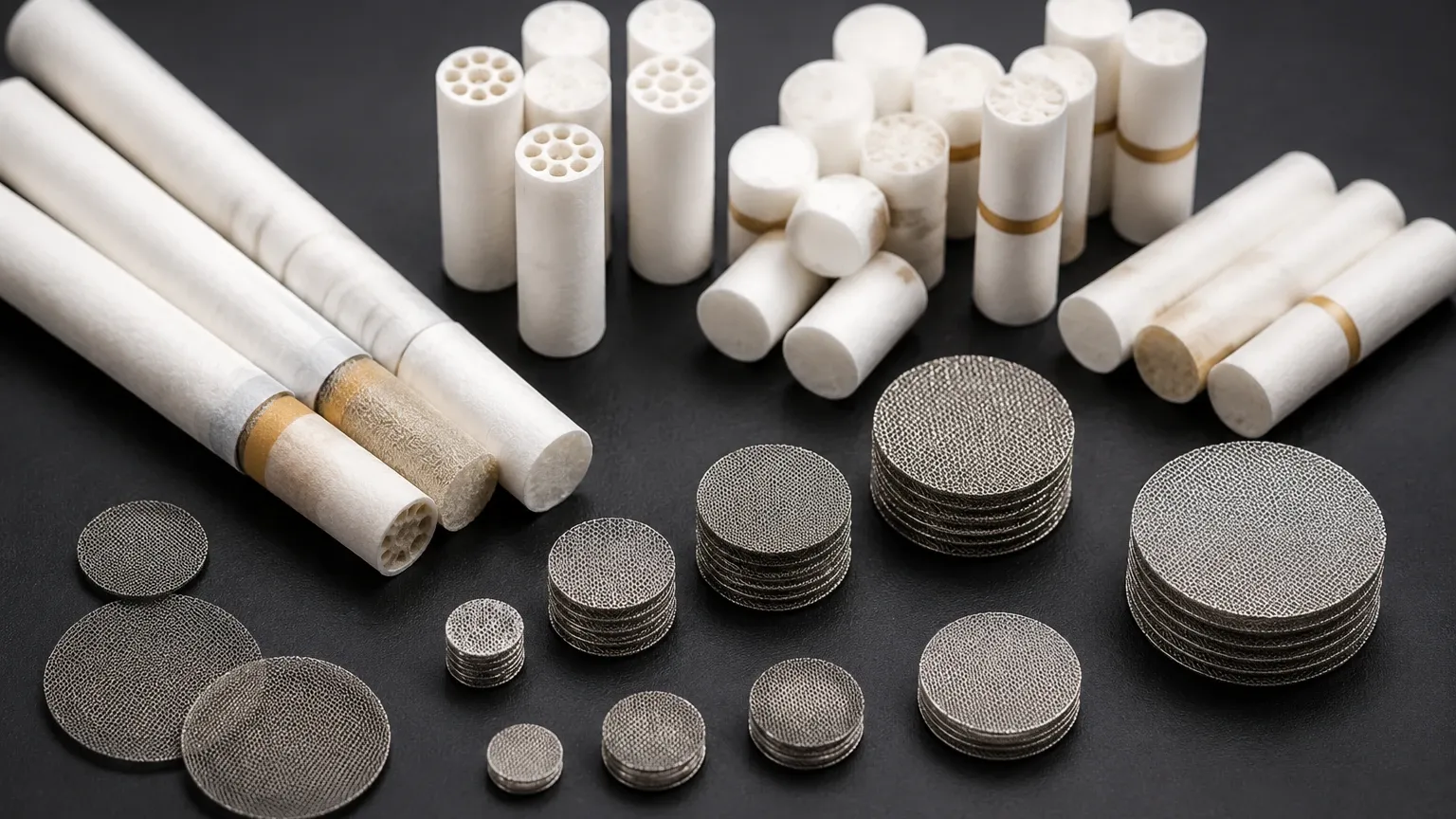
From an industrial perspective, the consistency of cigarette filter sizes directly impacts high-speed assembly lines and the final sensory profile of the product. Achieving these exact dimensions requires high-precision manufacturing equipment, which in turn relies on specialized Filter Discs & Packs to maintain material purity during the processing of cellulose acetate and other filtration materials.
Standard Dimensions in the Tobacco Industry
The tobacco industry has standardized several filter sizes to meet global market demands. These dimensions are not arbitrary; they are engineered to balance smoke cooling, pressure drop (draw resistance), and the retention of particulates. The most common cigarette filter sizes include:
* Standard (King Size): Typically features a diameter of approximately 7.5 mm to 8.0 mm. This is the most widely used size globally, offering a balance between airflow and filtration efficiency.
* Slim: These filters generally have a diameter ranging from 6.0 mm to 7.0 mm. Slim cigarettes require tighter tolerances in the manufacturing of the filter rods to ensure consistent density.
* Super Slim: With a diameter often between 5.0 mm and 5.4 mm, super slim filters represent a challenge for high-speed production due to the fragility of the thinner filter rods.
* Micro Slim: Even smaller diameters, occasionally dipping below 5.0 mm, are used in niche markets, requiring extreme precision in the extrusion and cutting phases.
Length also varies significantly, typically ranging from 15 mm to 30 mm. The combination of diameter and length determines the total volume of the filter, which dictates the amount of cellulose acetate tow required and the pressure drop experienced by the end-user.
The Role of Industrial Filtration in Filter Production
The production of cigarette filters is a complex chemical and mechanical process. Most modern filters are made from cellulose acetate, a synthetic fiber produced from wood pulp. The pulp is chemically treated to create cellulose acetate flakes, which are then dissolved in a solvent (usually acetone) to create a "dope" for spinning.
At this stage, industrial filtration becomes critical. Any impurity in the acetate dope can lead to fiber breakage during the spinning process, resulting in inconsistent filter density or machinery downtime. To prevent this, manufacturers utilize multi-layer Filter Discs & Packs within the extrusion equipment. These metal mesh filters remove microscopic contaminants and undissolved particles, ensuring that the extruded fibers meet the exact diameter requirements necessary for the target cigarette filter sizes.
Why Stainless Steel Mesh is Preferred
Stainless steel wire mesh is the industry standard for these applications due to its:
1. Chemical Resistance: It withstands the solvents used in the acetate dope.
2. Thermal Stability: It maintains structural integrity under the heat and pressure of extrusion.
3. Precision: It allows for specific micron ratings to capture even the smallest impurities without causing excessive pressure drops in the production line.
Engineering Considerations for Filter Discs and Packs
When selecting filtration components for the production of various cigarette filter sizes, engineers must consider several technical factors to optimize the manufacturing lifecycle.
Mesh Weave and Micron Rating
The choice of weave—whether plain, twill, or Dutch weave—affects both the filtration accuracy and the flow rate. For high-viscosity materials like cellulose acetate dope, Dutch weave filter packs are often preferred because they provide superior strength and fine filtration. The micron rating must be fine enough to protect the spinnerets (the small holes through which the fibers are extruded) but coarse enough to prevent rapid clogging, which would necessitate frequent replacements.
Multi-Layer Construction
Single-layer mesh is rarely sufficient for industrial tobacco processing. Instead, manufacturers use sintered or spot-welded filter packs. These packs consist of a fine filtration layer supported by coarser mesh layers. This structure provides the mechanical strength needed to withstand high differential pressures while maintaining the precise filtration required for consistent fiber production.
Dimensional Accuracy of the Filter Disc
Just as cigarette filter sizes must be precise, the filter discs used in the machinery must have exact diameters to fit perfectly within the extruder head. Any bypass—where the liquid flows around the filter rather than through it—can introduce contaminants into the fibers, leading to defects in the final filter rods.
Impact of Filtration on Draw Resistance and Quality
The performance of a cigarette filter is measured largely by its pressure drop, often referred to in the industry as "Resistance to Draw" (RTD). The RTD is a direct result of the filter's diameter, length, and the density of the fibers.
If the industrial filtration process is inconsistent, the diameter of the individual cellulose acetate fibers will vary. This variation leads to fluctuations in the packing density of the filter rod. For a "King Size" filter (approx. 8mm), even a small deviation in fiber consistency can result in a cigarette that is either too difficult to draw or one that provides insufficient filtration. By utilizing high-quality stainless steel Filter Discs & Packs, manufacturers can ensure that the raw materials are uniform, leading to a stable RTD across millions of units.
Maintenance and Replacement Cycles
In a high-volume B2B manufacturing environment, downtime is the primary driver of total cost. Filtration components are consumable items, but their lifespan can be optimized through proper selection and maintenance.
* Pressure Drop Monitoring: Engineers monitor the pressure differential across the filter packs. A sudden rise indicates clogging, while a drop might indicate a breach in the mesh.
* Cleaning vs. Replacement: While some stainless steel filter discs can be cleaned using ultrasonic baths or chemical solvents, many high-speed lines prefer the reliability of fresh, precision-manufactured packs to avoid any risk of residual contamination.
* OEM Customization: Working with a manufacturer that provides custom-sized filter discs ensures that the components fit the specific housing of the production machinery, reducing the risk of leaks and extending the intervals between maintenance cycles.
Technical Selection Guide for Purchasing Teams
When procuring filtration components for tobacco processing lines, purchasing teams should confirm the following specifications with their suppliers:
1. Material Grade: Ensure the use of SS304 or SS316L for maximum corrosion resistance.
2. Layer Configuration: Specify the number of layers and the micron rating for each layer (e.g., a 20-micron filtration layer with a 100-micron support layer).
3. Edge Treatment: For high-pressure applications, rimmed or bound edges on filter discs prevent fraying and ensure a tighter seal within the machinery.
4. Flow Rate Requirements: Confirm that the filter pack can handle the required throughput of the acetate dope without exceeding the pump's pressure capacity.
By focusing on these technical details, manufacturers can maintain the strict tolerances required for standard and slim cigarette filter sizes while minimizing production waste and machinery wear.
Conclusion
While cigarette filter sizes are a standard aspect of consumer product design, the engineering behind their production is a rigorous process that demands high-precision filtration. Whether producing standard 8mm filters or ultra-slim 5mm variants, the consistency of the raw materials is paramount. High-performance stainless steel Filter Discs & Packs play a vital role in this ecosystem, protecting sensitive machinery and ensuring that every filter rod meets the required diameter and resistance specifications. For engineers and procurement professionals, selecting the right filtration partner is not just about buying a component; it is about ensuring the long-term stability and quality of the entire production line.
