


9 Water Filters
In industrial process engineering, the selection of filtration media is a critical decision that directly impacts operational uptime, product purity, and equipment longevity. For engineers and procurement specialists working in chemical processing, food and beverage production, or pharmaceutical manufacturing, the term "water filter" encompasses a broad spectrum of technical solutions. Moving beyond basic sediment removal, industrial-grade Filter Cartridges must withstand high pressures, extreme temperatures, and corrosive environments while maintaining precise micron ratings.
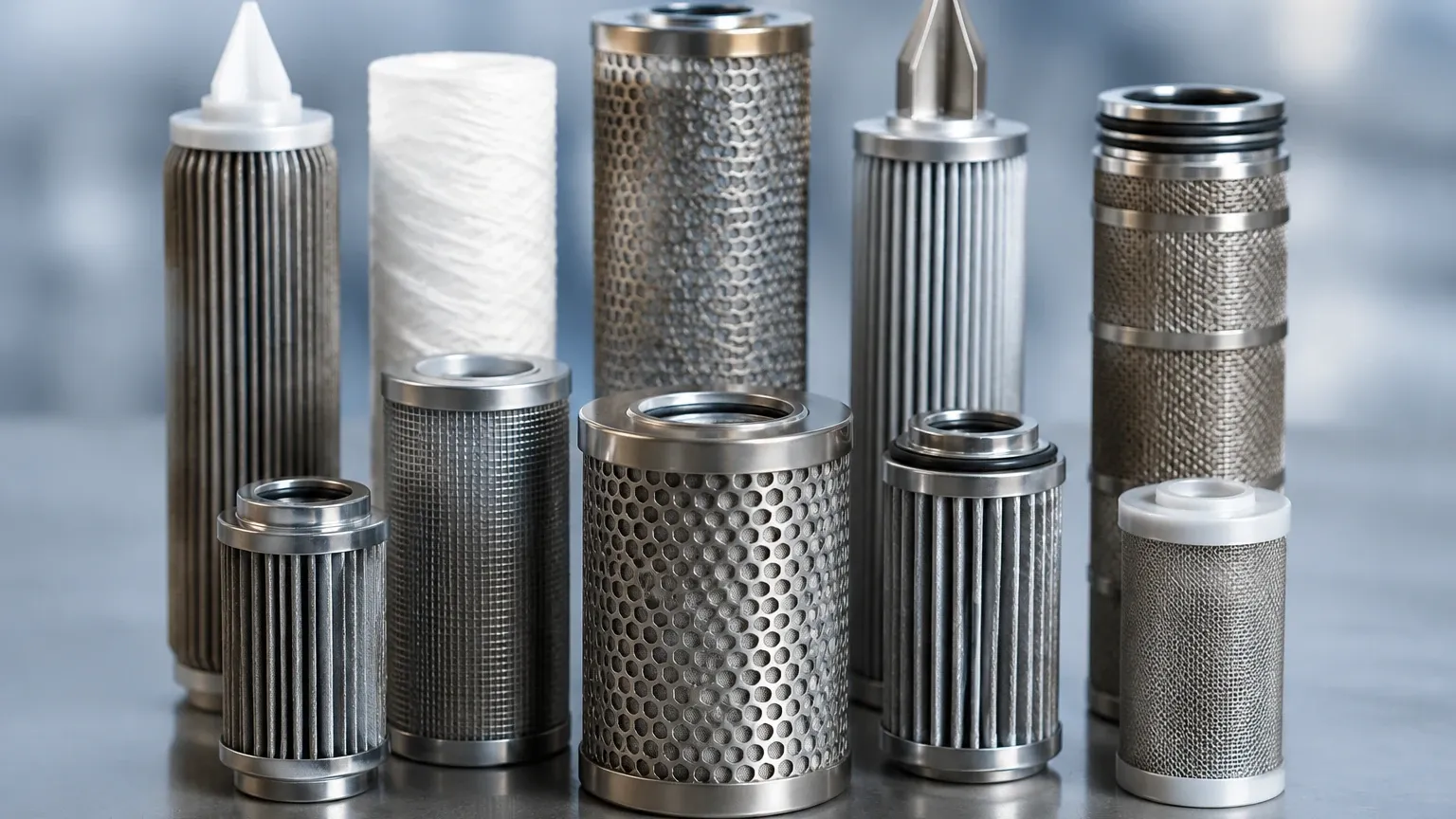
This guide examines 9 water filters commonly utilized in industrial settings, focusing on stainless steel and metal-based technologies. By understanding the mechanical properties and application-specific advantages of these systems, technical teams can optimize their filtration processes and reduce the total cost of ownership.
Understanding the Role of High-Performance Filter Cartridges
Industrial filtration is rarely a one-size-fits-all application. The performance of Filter Cartridges is defined by their ability to provide consistent particle retention under varying flow rates and pressure differentials. Unlike disposable polymer filters, stainless steel cartridges offer a sustainable, cleanable, and highly durable alternative for demanding environments.
When evaluating filtration components, engineers must consider the "Beta Ratio" (the ratio of particles upstream versus downstream) and the structural integrity of the filter media. In high-viscosity or high-temperature water treatment, the physical strength of the filter prevents media migration—a common failure mode where fragments of the filter itself contaminate the process stream. Stainless steel construction ensures that the filter remains rigid even when subjected to hydraulic shock or backwashing cycles.
9 Water Filters: Industrial Types and Applications
To help engineers navigate the complexities of fluid purification, we have categorized 9 water filters based on their construction, filtration mechanism, and industrial utility.
1. Stainless Steel Wire Mesh Cartridges
Wire mesh filters are the workhorse of industrial pre-filtration. Constructed from woven stainless steel wire (typically 304 or 316L), these filters provide a precise surface filtration layer. They are ideal for removing large particulates and are highly valued for their cleanability. In cooling water systems, they prevent debris from entering heat exchangers, ensuring thermal efficiency is maintained.
2. Sintered Metal Fiber Cartridges
Sintered metal fiber media is produced by felt-laying fine stainless steel fibers, which are then bonded through a high-temperature sintering process. This creates a highly porous, three-dimensional structure. These are among the most efficient of the 9 water filters for high-temperature steam filtration and gas-liquid separation, offering high dirt-holding capacity and low pressure drop.
3. Sintered Powder Metal Filters
For applications requiring extreme pressure resistance and very fine filtration (down to 0.5 microns), sintered powder filters are preferred. These are formed by pressing and sintering stainless steel powder into a rigid shape. They are commonly used in the pharmaceutical industry for catalyst recovery and in chemical processing where high-pressure differentials are expected.
4. Pleated Metal Filter Elements
Pleated designs significantly increase the effective filtration area within the same footprint as a standard cylindrical cartridge. By pleating the wire mesh or sintered fiber media, engineers can achieve higher flow rates and longer service intervals. These are essential in high-volume water treatment plants where minimizing downtime for filter changes is a priority.
5. Wedge Wire Filters
Wedge wire, or V-wire, filters are constructed by wrapping a triangular profile wire around longitudinal support rods. This creates a non-clogging surface with a continuous slot. In industrial water intake systems or wastewater treatment, wedge wire filters are used for their exceptional mechanical strength and ease of backwashing, as the V-shape prevents particles from wedging in the openings.
6. High-Flow Filter Cartridges
When processing massive volumes of water, such as in desalination or large-scale municipal pretreatment, high-flow cartridges are employed. These typically feature a larger diameter (up to 6 inches) and a specialized internal flow geometry. Using these reduces the number of individual filter elements required in a housing, simplifying maintenance and reducing the initial capital expenditure on filter vessels.
7. Multi-Layer Sintered Mesh Filters
These filters combine multiple layers of wire mesh—ranging from fine filtration layers to coarse support layers—into a single, robust plate or cylinder. This composite structure provides the precision of fine mesh with the structural rigidity of heavy-duty screens. They are frequently used in polymer melt filtration and high-pressure hydraulic water systems.
8. Backwashable Filter Elements
In automated industrial systems, backwashable filters allow for in-situ cleaning. By reversing the flow of the fluid, accumulated debris is flushed from the filter surface. Stainless steel cartridges are uniquely suited for this because they can withstand the reverse pressure without deforming. This technology is vital for continuous processes where manual filter replacement is not feasible.
9. Magnetic Water Filters
While not a traditional barrier filter, magnetic filters are often integrated into industrial water loops to capture ferrous particles. In closed-loop heating or cooling systems, fine iron oxide (magnetite) can cause significant wear on pumps and valves. Combining magnetic separation with mechanical filter cartridges provides a comprehensive solution for protecting sensitive downstream equipment.
Engineering Considerations for Material Selection
The efficacy of the 9 water filters mentioned above is heavily dependent on material science. For most industrial water applications, Stainless Steel 304 is the standard due to its balance of cost and corrosion resistance. However, in environments involving chlorides (such as seawater or brine) or acidic cleaning agents, Stainless Steel 316L is required. The "L" denotes low carbon content, which is essential for preventing intergranular corrosion after welding.
Beyond basic metallurgy, engineers must evaluate the compatibility of seals and gaskets. EPDM, Viton, and PTFE are common choices, each offering different levels of chemical and thermal resistance. A failure in the seal is just as detrimental as a failure in the filter media itself, as it allows unfiltered fluid to bypass the system.
Evaluating Filtration Efficiency and Micron Ratings
A common point of confusion in procurement is the distinction between "nominal" and "absolute" micron ratings.
* Nominal Rating: Indicates the filter's ability to retain the majority of particles of a specific size (e.g., 90% of 10-micron particles). This is often sufficient for general water clarification.
* Absolute Rating: Refers to the diameter of the largest hard spherical particle that will pass through the filter under specified test conditions. For critical pharmaceutical or food-grade water, an absolute rating is mandatory to ensure safety and compliance.
When selecting among the 9 water filters for a specific project, the pressure drop (Delta P) must also be calculated. A filter with a very fine micron rating will naturally create a higher resistance to flow. If the pump system cannot overcome this resistance, the flow rate will drop below the required threshold for the process.
Operational Challenges and Performance Risks
Even the highest quality Filter Cartridges can fail if not properly integrated into the system. One of the primary risks is "blinding," where the filter surface becomes prematurely coated with sticky or gelatinous contaminants, such as algae or oils. In these cases, a multi-stage filtration approach—using a coarse pre-filter followed by a fine finishing filter—is more cost-effective than relying on a single high-precision element.
Another risk is hydraulic fatigue. In systems with frequent start-stop cycles or rapid valve closures, the resulting pressure spikes can cause mechanical stress on the filter pleats. Selecting a cartridge with a reinforced center core and outer support cage is a necessary engineering safeguard in these environments.
Determining the Optimal Replacement Cycle and Maintenance Strategy
For stainless steel filters, the maintenance strategy shifts from "replace" to "recover." Because these materials can be cleaned using ultrasonic baths, chemical soaking, or high-pressure steam (SIP), the lifespan of a single cartridge can span several years.
To determine the optimal cleaning cycle, engineers should monitor the differential pressure across the filter housing. Once the pressure drop reaches a predetermined limit (often 15-25 psi depending on the housing design), the filter should be removed for cleaning. Over-cleaning can lead to mechanical wear, while under-cleaning can result in permanent fouling or "plugging" of the pores.
Conclusion: Confirming Specifications Before Procurement
Selecting the right solution from the 9 water filters discussed requires a deep understanding of the specific process fluid and environmental conditions. Before proceeding with a purchase, engineers should confirm the following data points with their manufacturer:
1. Fluid Chemistry: Presence of chlorides, pH levels, and potential for oxidation.
2. Flow Dynamics: Minimum and maximum flow rates, as well as expected pressure spikes.
3. Contaminant Profile: Particle size distribution and the physical nature of the solids (e.g., abrasive vs. soft).
4. Regulatory Compliance: Requirements for FDA, 3-A, or other industry-specific certifications.
By focusing on these technical boundaries, organizations can ensure they invest in filtration solutions that provide reliable, long-term performance in even the most demanding industrial landscapes.
