


Do Organic Vapor Cartridges Filter Particulates
In industrial environments where air quality and fluid purity are paramount, the distinction between gas-phase adsorption and mechanical filtration is a critical engineering consideration. A common question encountered by procurement teams and safety engineers is: do organic vapor cartridges filter particulates? Understanding the technical boundaries of these components is essential for maintaining system integrity, ensuring personnel safety, and optimizing the lifespan of high-performance Filter Cartridges.
To answer this question accurately, one must look at the physics of filtration and the specific design intent of the media used in industrial cartridges. While both types of filtration aim to remove contaminants, the mechanisms they employ—adsorption versus mechanical interception—are fundamentally different.
The Fundamental Difference Between Vapor Adsorption and Particulate Filtration
The primary confusion regarding whether organic vapor cartridges filter particulates stems from the broad use of the word "filter." In technical terms, organic vapor cartridges are typically adsorption devices, whereas particulate filters are mechanical barriers.
Adsorption in Organic Vapor Cartridges
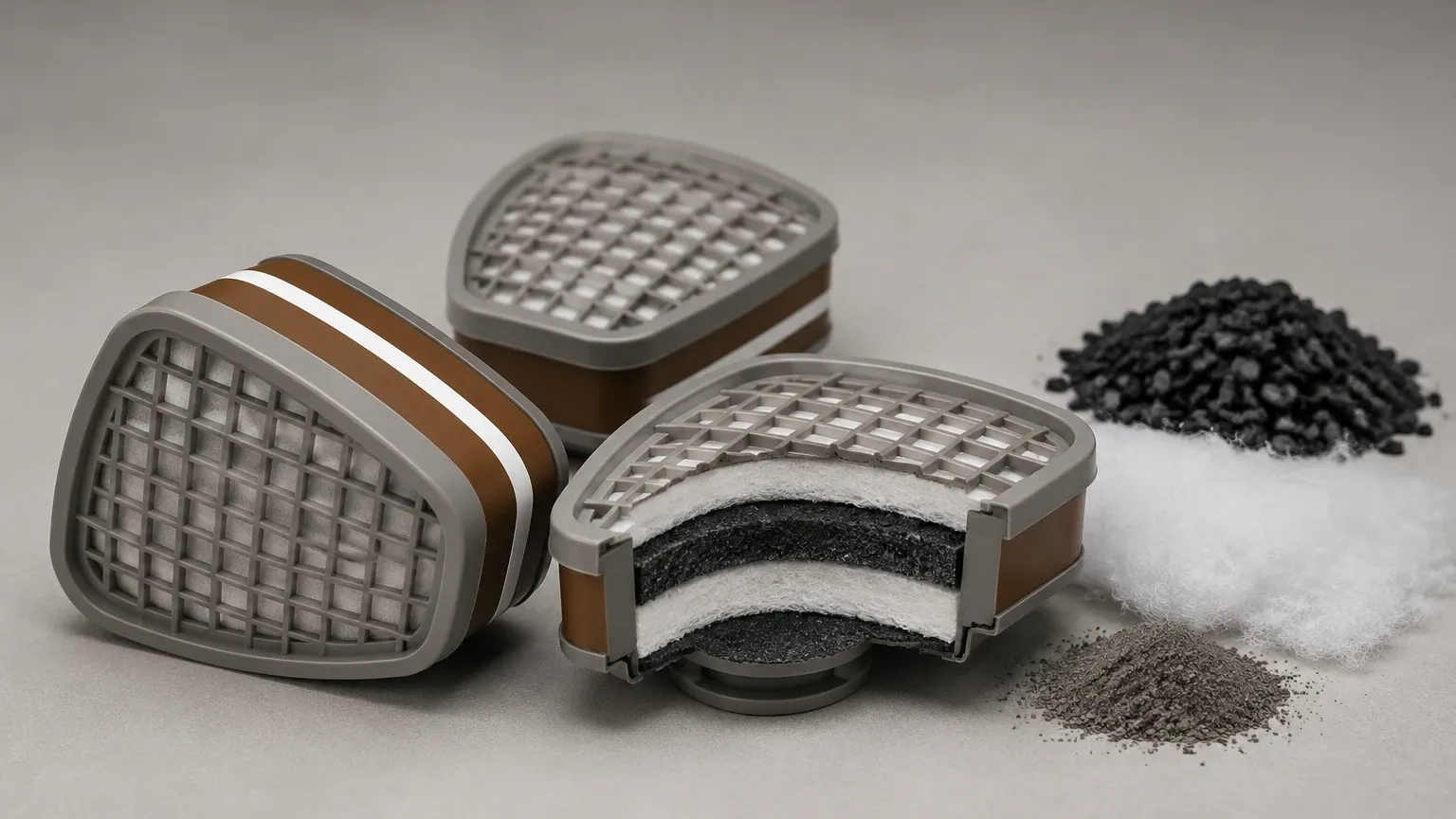
Organic vapor (OV) cartridges are engineered to remove gases and vapors through a process called adsorption. This usually involves a bed of activated carbon. Activated carbon is processed to have a massive internal surface area characterized by millions of microscopic pores. When organic vapors—which are individual molecules in a gaseous state—pass through this bed, they are attracted to the carbon surface by Van der Waals forces and become chemically or physically bonded to the internal pore structure.
Mechanical Interception in Particulate Filters
Particulate filtration, conversely, deals with solid or liquid matter suspended in a medium (air or liquid). These contaminants have physical dimensions significantly larger than gas molecules. Particulate filters, such as those made from stainless steel wire mesh or pleated synthetic media, utilize mechanisms like inertial impaction, interception, and diffusion to trap solids. The goal is to create a physical labyrinth or a precise pore size that prevents the passage of particles based on their physical diameter.
Do Organic Vapor Cartridges Filter Particulates?
The short answer is: No, standard organic vapor cartridges are not designed to filter particulates.
If a cartridge is rated strictly for organic vapors, it lacks the specific fibrous or mesh structure required to capture fine dust, mists, or fumes effectively. While the bed of activated carbon might mechanically trap a small percentage of very large particles, it is not a reliable or rated method for particulate control. Relying on an OV cartridge for particulate filtration leads to two primary failures:
1. Premature Clogging: Large particles will quickly fill the interstitial spaces between carbon granules, significantly increasing the pressure drop ($ΔP$) and reducing the flow rate before the carbon's adsorption capacity is even reached.
2. Bypass and Penetration: Fine particulates (such as those in the sub-micron range) can easily navigate the gaps between carbon granules, passing through the cartridge and into the downstream environment or process.
To achieve both gas and particulate removal, engineers must specify "combination" cartridges that integrate a rated particulate filter (such as a P100 or a stainless steel pre-filter) with the organic vapor adsorption bed.
Engineering Considerations for Industrial Filter Cartridges
When selecting Filter Cartridges for demanding industrial applications, engineers must evaluate the specific nature of the contaminant. In chemical processing, pharmaceutical manufacturing, and water treatment, the choice of media impacts both the efficiency of the process and the total cost of ownership.
Material Compatibility and Durability
In many industrial settings, synthetic filter media may fail due to high temperatures or corrosive chemical environments. This is where stainless steel filtration solutions become indispensable. Stainless steel filter cartridges offer superior mechanical strength and can be cleaned and reused, providing a sustainable alternative to disposable polymer-based cartridges. For applications involving organic vapors that may also contain abrasive particulates, a multi-stage system using a stainless steel mesh pre-filter is often the most robust design.
Pressure Drop and Flow Dynamics
The relationship between filtration efficiency and pressure drop is a core concern in system design. A cartridge that is too restrictive will force pumps or blowers to work harder, increasing energy consumption. Conversely, a filter with too high a porosity may fail to meet purity standards. Engineers must calculate the "clean pressure drop" and establish a "terminal pressure drop" at which point the cartridge must be cleaned or replaced.
The Role of Pre-Filtration in Protecting Vapor Cartridges
Because organic vapor cartridges are sensitive to particulate loading, industrial systems often employ a staged filtration approach. By installing a precision metal filter component upstream, the heavier particulate load is removed before the fluid or gas reaches the adsorption media.
* Stainless Steel Wire Mesh: Provides precise surface filtration and can be manufactured to specific micron ratings to capture solid contaminants.
* Sintered Metal Filters: Offer deep filtration capabilities and high structural integrity, ideal for high-pressure hydraulic or steam applications.
By protecting the organic vapor media from physical particulates, the adsorption bed can function at peak efficiency, ensuring that the "breakthrough point" (the moment when vapors begin to pass through the saturated carbon) is reached based on chemical capacity rather than physical blockage.
Customization and OEM Solutions for Complex Filtration
Standard off-the-shelf cartridges often fall short in specialized industrial environments. Whether the challenge is an unusual flow rate, extreme temperature, or a specific chemical footprint, customized filtration solutions are often required. Manufacturers like Kaifil specialize in developing bespoke stainless steel filter cartridges that address these unique variables.
Factors in Custom Filter Design:
* Micron Rating: Defining the exact size of particles that must be excluded.
* Surface Area Optimization: Using pleated designs to increase the effective filtration area within a compact cartridge footprint.
* End-Cap Configurations: Ensuring a leak-proof seal within existing filter housings through various O-ring or gasket materials.
* Structural Reinforcement: Adding internal cores or external cages to prevent cartridge collapse under high differential pressure.
Maintenance and Replacement Cycles
Understanding the lifecycle of a filter cartridge is vital for operational continuity. For particulate filters, the replacement cycle is usually determined by the pressure drop. For organic vapor cartridges, the cycle is determined by the adsorption capacity, which is often harder to monitor without sensors or strict usage logs.
In a combined system, if the particulate pre-filter is integrated into the OV cartridge, the entire unit must be replaced when either the carbon is saturated or the filter is clogged. However, in modular industrial systems, the particulate filter (especially if it is a cleanable stainless steel unit) can be serviced independently, significantly extending the life of the more expensive adsorption components.
Conclusion: Selecting the Right Technology
Addressing the question of whether organic vapor cartridges filter particulates requires a clear understanding of the application's goals. For engineers and purchasing managers, the priority should be matching the filtration technology to the specific phase of the contaminant—gas or solid.
For high-performance industrial applications, the integration of durable, precision-engineered Filter Cartridges is the most effective way to ensure long-term reliability. By utilizing stainless steel components for particulate control and dedicated adsorption media for vapor removal, facilities can achieve the highest standards of purity while minimizing downtime and maintenance costs.
When evaluating your next filtration project, consider the mechanical demands of the environment. If the process involves high temperatures, high pressures, or the need for reusable components, stainless steel filtration solutions provide the technical performance required to protect both equipment and personnel from the complexities of industrial contaminants.
Download Do Organic Vapor Cartridges Filter Particulates as a PDF
