


Filter Cartridge 58094
In the landscape of industrial and commercial filtration, specific part numbers often become benchmarks for size, compatibility, and performance. The filter cartridge 58094 is one such designation. While frequently recognized in light commercial and consumer water circulation systems, the technical specifications of this cartridge represent a broader category of filtration needs that engineers and procurement specialists must navigate. Understanding the mechanical properties, material constraints, and performance expectations of the filter cartridge 58094 is essential for maintaining system integrity and optimizing filtration efficiency.
For industrial applications, the selection of Filter Cartridges extends beyond simple part-number matching. It involves a rigorous evaluation of fluid dynamics, chemical compatibility, and the total cost of ownership. This article provides a technical overview of the 58094 specification and explores the engineering considerations required when integrating these components into professional filtration systems.
Understanding the Specifications of Filter Cartridge 58094
The filter cartridge 58094 is defined by its specific geometric dimensions and media configuration. Typically measuring approximately 4.2 inches (10.6 cm) in diameter and 5.4 inches (13.6 cm) in height, it is a compact solution designed for moderate flow rates. In its standard form, it utilizes a pleated synthetic media, often polyester or a similar non-woven fabric, to maximize the available surface area within a small footprint.
From an engineering perspective, the pleated design is critical. Pleating increases the filtration area significantly compared to a cylindrical sleeve of the same dimensions. This increased area reduces the face velocity of the fluid passing through the media, which in turn lowers the initial pressure drop and increases the dirt-holding capacity. For systems where space is a constraint, the 58094 size offers a balance between physical size and effective filtration surface.
However, the standard "off-the-shelf" versions of the filter cartridge 58094 are often limited by their construction materials. Most utilize molded plastic end caps and a central core that may not withstand high-pressure differentials or aggressive chemical environments. When these specifications are required for industrial processes, engineers often look toward reinforced or customized versions that maintain the 58094 dimensions but utilize superior materials.
Industrial Applications and Material Requirements
While the filter cartridge 58094 is common in water treatment, its form factor is also utilized in various industrial sub-systems. These include pre-filtration for reverse osmosis (RO) units, cooling loop filtration for machinery, and small-scale chemical processing. In these environments, the standard polyester media may be insufficient.
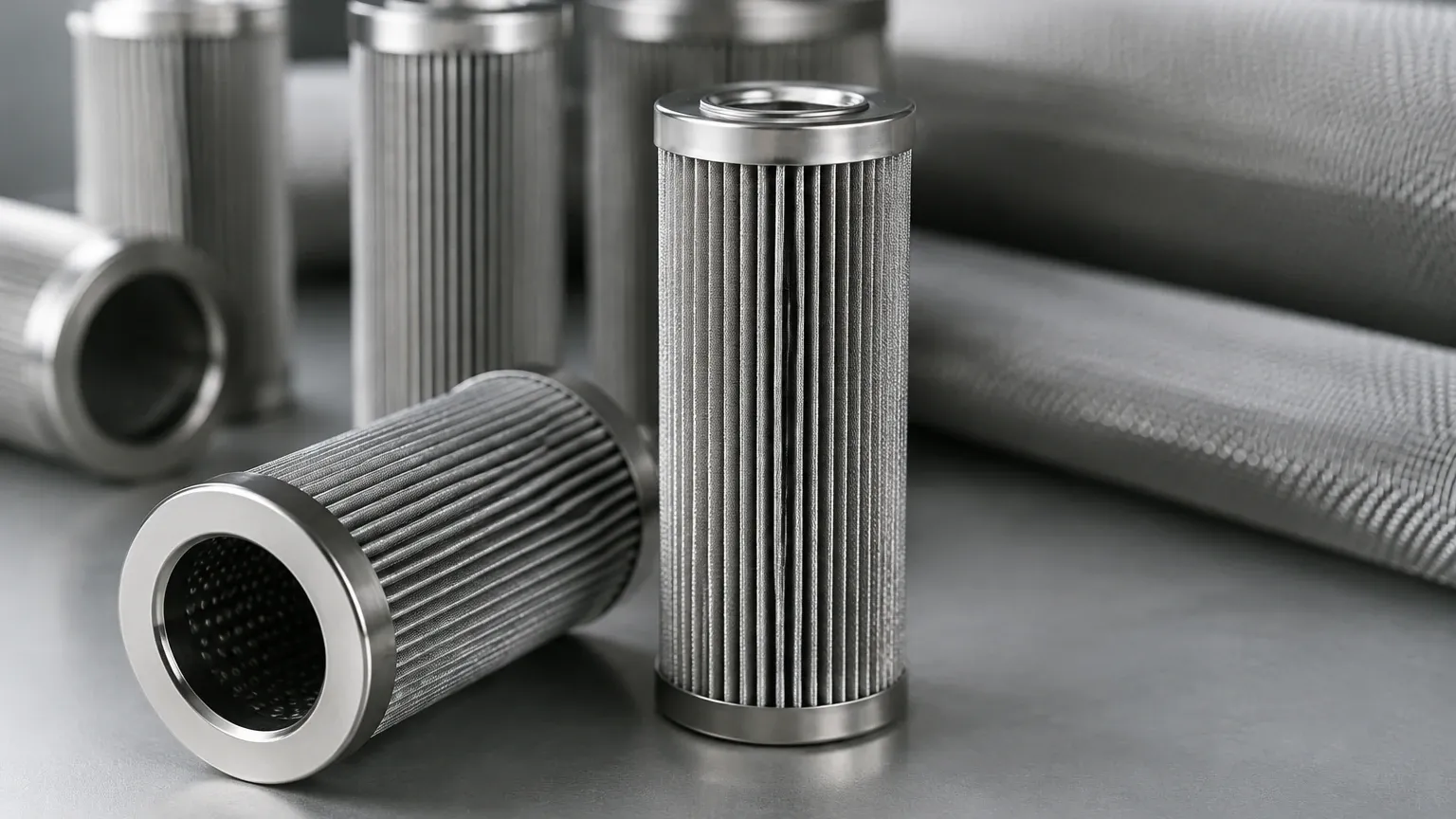
Material selection is the primary boundary for industrial performance. In chemical processing, for instance, the presence of solvents or extreme pH levels can degrade standard synthetic fibers. This is where stainless steel alternatives become necessary. A stainless steel wire mesh equivalent of the 58094 provides several advantages:
1. Chemical Resistance: Stainless steel (typically 304 or 316L) is inert to a wide range of industrial chemicals, ensuring that the filter does not leach contaminants or lose structural integrity.
2. Thermal Stability: Synthetic cartridges often have a maximum operating temperature of around 60°C (140°F). Stainless steel variants can operate in excess of 200°C, depending on the seal materials used.
3. Structural Strength: Under high-viscosity loads or sudden pressure surges, plastic-core cartridges can collapse. A metal core and mesh structure provide the mechanical strength needed to maintain flow paths under duress.
Performance Metrics: Micron Rating and Flow Dynamics
When evaluating the filter cartridge 58094, the micron rating is the most discussed metric, yet it is often the most misunderstood. Standard versions are typically rated for "nominal" filtration, often in the 20 to 50-micron range. Nominal ratings imply that the filter will catch a majority of particles at that size, but they do not guarantee 100% efficiency.
In professional B2B applications, engineers must distinguish between nominal and absolute ratings. An absolute-rated cartridge ensures that 99.9% of particles above a specific size are retained. If a process requires the removal of fine particulates to protect sensitive downstream equipment, a standard 58094 may need to be replaced with a high-precision pleated metal mesh cartridge that offers a verified absolute rating.
Flow dynamics also play a vital role. The flow rate through a filter cartridge 58094 is influenced by the viscosity of the fluid and the porosity of the media. As the filter accumulates debris, the pressure drop (ΔP) across the media increases. If the system pump is not sized to handle the terminal pressure drop of a loaded 58094, flow rates will diminish prematurely, leading to system inefficiency. Engineers must calculate the Clean Pressure Drop and set clear guidelines for the Change-out Pressure Drop to ensure continuous operation.
Transitioning from Disposable to Reusable Stainless Steel Cartridges
A significant trend in industrial procurement is the shift from disposable synthetic filters to cleanable, reusable stainless steel Filter Cartridges. While the initial purchase price of a stainless steel version of the 58094 is higher, the long-term economics often favor the durable option.
Disposable cartridges represent a recurring operational expense and generate significant waste. In contrast, a stainless steel wire mesh cartridge can be cleaned via backwashing, ultrasonic cleaning, or chemical baths. This reusability is particularly valuable in processes with high particulate loads where filters would otherwise need to be changed weekly or even daily.
Furthermore, stainless steel cartridges eliminate the risk of "media migration." In some low-quality synthetic filters, fibers from the filter media can break loose and enter the downstream flow, potentially contaminating the final product. The woven nature of stainless steel wire mesh ensures that the media remains intact, providing a cleaner and more reliable filtration solution for pharmaceutical or food and beverage applications.
Engineering Considerations for Custom Filtration Solutions
Often, a standard filter cartridge 58094 does not perfectly meet the needs of a specialized industrial machine. In these cases, customization is the most effective path forward. Manufacturers like Kaifil specialize in adapting standard footprints into high-performance components. When requesting a customized filtration solution based on the 58094 dimensions, several factors should be confirmed:
* End Cap Configuration: Does the application require a double open end (DOE), a code 7 (226 o-ring), or a specific threaded connection? The 58094 typically uses a simple gasket seal, but high-pressure systems may require a more secure mechanical interface.
* Media Type: Beyond simple mesh, options include sintered metal fibers (for high porosity and fine filtration) or multi-layered mesh laminates (for maximum strength).
* Seal Material: The choice of O-ring or gasket material (Buna-N, EPDM, Viton, or PTFE) must be matched to the fluid's chemical profile and temperature.
By focusing on these engineering details, procurement teams can move away from "commodity" parts and toward components that are purpose-built for their specific operational environment. This reduces the risk of bypass—where unfiltered fluid escapes around the edges of the cartridge—and ensures that the filtration system performs as designed.
Maintenance and Operational Longevity
The lifespan of a filter cartridge 58094 is not a fixed number; it is a function of the contaminant load and the maintenance protocol. In B2B environments, downtime is the most significant cost associated with filtration. Therefore, implementing a predictive maintenance schedule is essential.
For systems using disposable 58094 cartridges, monitoring the pressure differential is the only reliable way to determine when a replacement is needed. Waiting for flow to stop entirely can strain pumps and potentially cause the filter media to rupture.
For those utilizing stainless steel equivalents, maintenance involves a defined cleaning cycle. It is important to note that cleaning should be performed before the contaminants are "baked" onto the mesh or before the pressure drop reaches a point where particles are forced through the mesh openings. Proper maintenance not only extends the life of the cartridge but also ensures that the filtration efficiency remains consistent throughout the production cycle.
Conclusion: Making Informed Purchasing Decisions
Selecting the right filter cartridge 58094 requires a deep understanding of the application's specific demands. While the part number provides a guide for size, the internal materials and construction methods dictate the success of the filtration process. For engineers and purchasing managers, the goal is to balance initial cost with reliability and performance.
Whether the requirement is for a standard replacement or a high-durability stainless steel upgrade, focusing on technical specifications such as micron rating, material compatibility, and structural integrity will lead to better outcomes. By evaluating Filter Cartridges through the lens of industrial engineering, businesses can optimize their processes, protect their equipment, and achieve a lower total cost of ownership.
