


Filter Cartridge 50 Micron
In industrial filtration, the selection of a specific micron rating is a critical engineering decision that directly impacts process efficiency, equipment longevity, and product purity. A filter cartridge 50 micron rating represents a common threshold for coarse to medium-fine filtration, often serving as the first line of defense in multi-stage systems or the primary filtration stage for high-viscosity fluids. At this level, the filter is designed to remove particles approximately 0.05 millimeters in size—roughly the diameter of a fine human hair.
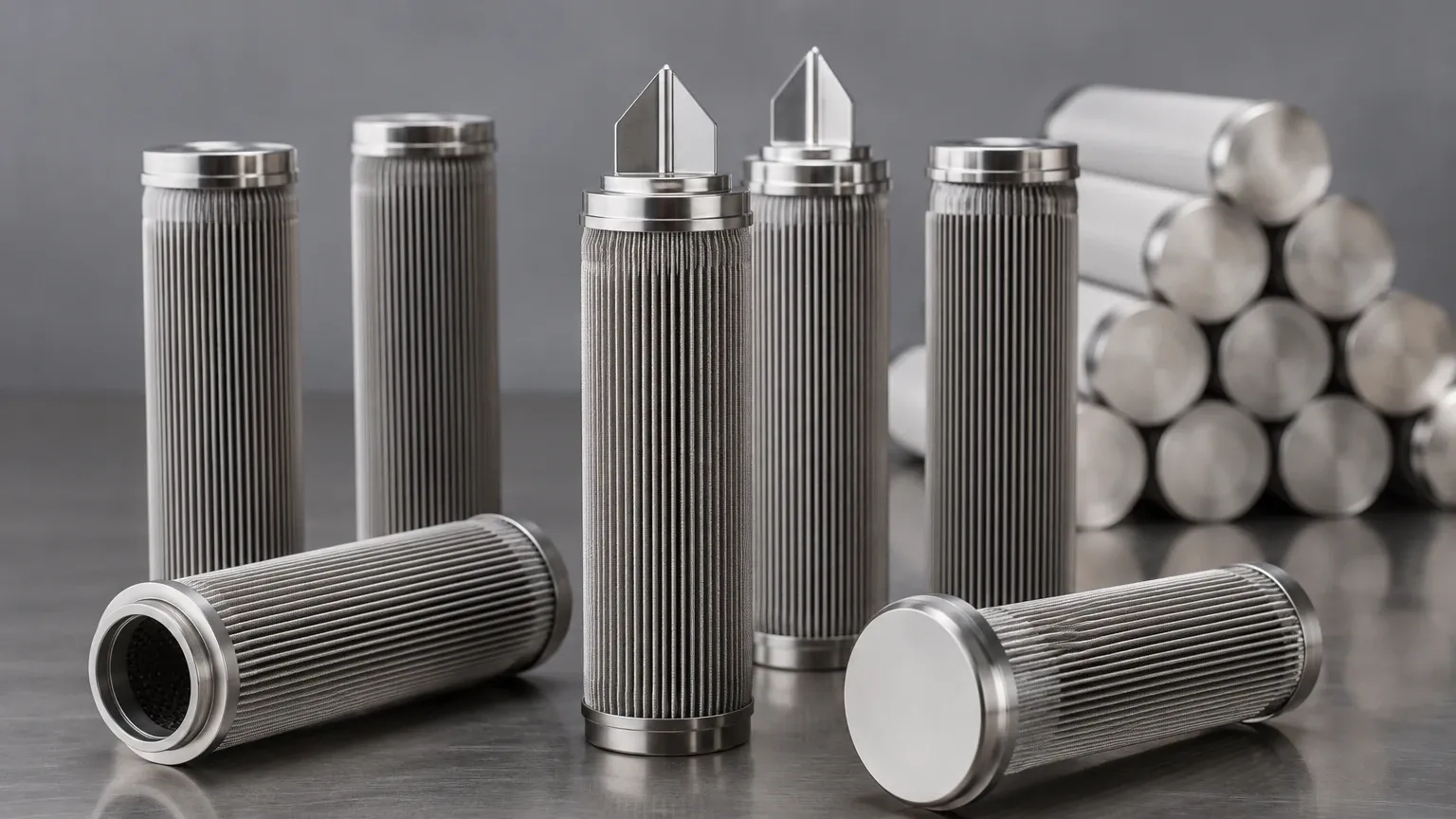
For engineers and procurement professionals, selecting the right Filter Cartridges involves more than just identifying the micron size. It requires a deep understanding of material science, fluid dynamics, and the specific mechanical stresses of the application environment. Stainless steel 50-micron cartridges, in particular, offer a reusable and durable alternative to disposable depth filters, providing significant advantages in high-temperature or chemically aggressive settings.
Understanding the 50-Micron Filtration Threshold
A 50-micron rating sits at a strategic point in the filtration spectrum. It is fine enough to capture visible sediment, sand, scale, and larger organic debris, yet coarse enough to allow for high flow rates with relatively low initial pressure drops. In many industrial water treatment and cooling systems, a filter cartridge 50 micron is employed to protect downstream components such as spray nozzles, heat exchangers, and finer membrane filters from clogging.
When evaluating these cartridges, it is essential to distinguish between nominal and absolute ratings. A nominal 50-micron filter might capture 60% to 80% of particles at that size, whereas an absolute-rated filter (often achieved through precision-woven stainless steel wire mesh) ensures that 99% or more of particles 50 microns or larger are retained. For critical industrial processes, absolute-rated metal cartridges are preferred because they provide a predictable and repeatable filtration barrier that does not unload captured contaminants under pressure surges.
Material Selection: Why Stainless Steel Matters
While 50-micron filters are available in polypropylene or polyester, industrial applications often demand the mechanical integrity of stainless steel. Kaifil specializes in manufacturing stainless steel filter cartridges using 304 or 316L wire mesh, which offers several technical advantages over synthetic media:
1. Thermal Stability: Stainless steel cartridges can operate in environments exceeding 250°C (482°F), where polymer-based filters would lose structural integrity or melt.
2. Chemical Compatibility: In chemical processing, 316L stainless steel provides superior resistance to corrosion from acids, alkalis, and organic solvents.
3. Mechanical Strength: Metal cartridges can withstand high differential pressures without collapsing or bypassing, making them ideal for hydraulic systems and high-viscosity oil filtration.
4. Cleanability: Unlike disposable cartridges, a stainless steel filter cartridge 50 micron can be cleaned via backwashing, ultrasonic baths, or chemical cleaning, significantly reducing the total cost of ownership over the life of the equipment.
Engineering Considerations: Flow Rate and Pressure Drop
One of the primary concerns for engineers when integrating a filter cartridge 50 micron into a system is the clean pressure drop ($ΔP$). The pressure drop is a function of the fluid's viscosity, the flow velocity, and the open area of the filter media.
Stainless steel wire mesh used in 50-micron filtration typically features a high percentage of open area. This allows for high-volume throughput in a compact footprint. However, as particles accumulate on the surface of the mesh, a "filter cake" begins to form. While this cake can actually improve filtration efficiency by trapping smaller particles, it also increases resistance to flow.
System designers must calculate the maximum allowable differential pressure before the cartridge requires cleaning or replacement. For most stainless steel cartridges, a change-out or cleaning cycle is initiated when the differential pressure reaches 1.0 to 1.5 bar, depending on the structural limits of the cartridge core and the pump's performance curve.
Key Applications for 50-Micron Filtration
The versatility of the filter cartridge 50 micron makes it a staple across various industrial sectors. Its application is usually determined by the nature of the contaminants and the requirements of the downstream equipment.
Water Treatment and Desalination
In large-scale water treatment, 50-micron cartridges serve as effective pre-filters for Reverse Osmosis (RO) systems. By removing larger suspended solids (TSS), they prevent the premature fouling of expensive membranes, thereby extending the time between membrane cleanings.
Food and Beverage Processing
In the production of juices, syrups, and edible oils, 50-micron filtration is used to remove pulp, seeds, or carbon fines after decolorization processes. Stainless steel is the preferred material here due to its compliance with food safety standards and its ability to withstand Steam-In-Place (SIP) sterilization cycles.
Hydraulic and Lube Oil Systems
Protecting hydraulic pumps and valves from wear-inducing particles is critical for machinery uptime. A 50-micron filter is often used in the return line or as a suction strainer to capture metallic wear debris and environmental contaminants that have entered the system reservoir.
Chemical and Petrochemical Processing
For the filtration of catalysts, polymers, and aggressive solvents, the 50-micron stainless steel cartridge provides a reliable barrier that resists chemical degradation. It is frequently used in the filtration of cooling tower water to prevent the buildup of scale and biological growth in heat exchangers.
Customization and OEM Specifications
Industrial filtration is rarely a one-size-fits-all solution. Depending on the housing design and the specific fluid properties, a filter cartridge 50 micron may require custom engineering. Kaifil provides extensive OEM capabilities to ensure that the filter cartridge integrates seamlessly into existing infrastructure.
End Cap Configurations
Standard configurations include Double Open End (DOE), Single Open End (SOE) with 222 or 226 O-ring fittings, and threaded connections (NPT/BSP). The choice of end cap is vital for ensuring a leak-proof seal, preventing fluid bypass which would compromise the 50-micron filtration target.
Reinforcement and Support
For high-pressure applications or high-viscosity fluids like resins and adhesives, the 50-micron mesh is often pleated to increase surface area and supported by an internal perforated core and an external shroud. This multi-layer construction prevents the mesh from deforming under the force of the flow.
Dimensional Tailoring
While standard lengths of 10, 20, 30, and 40 inches are common, custom diameters and lengths are often necessary for specialized machinery. Engineering teams should confirm the exact housing dimensions and the required effective filtration area (EFA) to optimize the service life of the cartridge.
Maintenance and Cleaning Protocols
The primary economic advantage of a stainless steel filter cartridge 50 micron is its reusability. However, the effectiveness of the cleaning process determines the cartridge's ultimate lifespan.
* Backwashing: This is the most common method for in-situ cleaning, where the flow is reversed to dislodge particles from the surface of the mesh.
* Ultrasonic Cleaning: For particles that have become deeply embedded in the wire intersections, ultrasonic baths use high-frequency sound waves to create cavitation bubbles that strip away contaminants without damaging the mesh.
* Chemical Cleaning: In applications involving organic fats or mineral scale, soaking the cartridge in compatible detergents or mild acids can restore the original flow characteristics.
Engineers should monitor the "recovered" pressure drop after each cleaning cycle. If the pressure drop does not return to near-original levels, it indicates permanent fouling or blinding of the media, suggesting that the cartridge is approaching the end of its functional life.
Selecting the Right Supplier for Industrial Filters
When sourcing a filter cartridge 50 micron, the technical expertise of the manufacturer is as important as the product itself. A reliable partner should provide detailed material certifications (MTRs), pressure drop curves, and guidance on chemical compatibility.
As a professional manufacturer, Kaifil focuses on delivering high-performance Filter Cartridges that meet the rigorous demands of industrial environments. By controlling the manufacturing process from mesh selection to final assembly, we ensure that every 50-micron component provides the precision and durability required to protect your critical processes and reduce operational downtime.
Before finalizing a purchase, engineers should confirm the following data points with their supplier:
* Maximum Operating Temperature: To ensure seal and media compatibility.
* Differential Pressure Limit: Both for clean and dirty states.
* Seal Material: Options such as Viton, EPDM, or PTFE depending on the fluid.
* Filtration Efficiency: Confirmation of absolute vs. nominal performance at 50 microns.
By addressing these technical parameters, procurement teams can secure filtration solutions that offer the best balance of performance, longevity, and total cost efficiency.
