


Filter Cartridge Air
In industrial environments, the management of air quality is not merely a matter of environmental compliance but a critical factor in operational efficiency, equipment longevity, and product purity. Systems utilizing filter cartridge air solutions are foundational to processes ranging from pneumatic power and gas purification to dust collection and sterile venting. For engineers and procurement specialists, selecting the appropriate filtration media requires a deep understanding of fluid dynamics, material science, and the specific rigors of the application environment.
Industrial air filtration often involves high flow rates, varying pressure levels, and exposure to contaminants that can range from fine sub-micron particulates to abrasive dust. Unlike standard HVAC filtration, industrial process air demands robust components capable of maintaining structural integrity under stress. This article examines the technical nuances of filter cartridge air systems, focusing on the engineering considerations that drive performance in demanding B2B sectors.
The Role of Stainless Steel in Filter Cartridge Air Systems
While polymer-based and cellulose media are common in light-duty applications, industrial air processes often necessitate the use of metal filtration media. Stainless steel, particularly grades 304 and 316L, serves as the primary material for high-performance filter cartridges designed for air and gas applications. The choice of stainless steel is driven by several technical requirements:
1. Thermal Stability: Industrial air processes, such as those found in chemical plants or power generation, often involve high-temperature gases. Stainless steel filter cartridges can operate at temperatures exceeding 500°C, far beyond the melting points of synthetic fibers.
2. Corrosion Resistance: In environments where air is mixed with corrosive vapors or where high humidity is present, stainless steel prevents the degradation of the filter media, ensuring that the filtration efficiency remains constant over time.
3. Mechanical Strength: Air filtration systems frequently experience pressure surges or high differential pressures. Metal mesh and sintered metal components provide the necessary rigidity to prevent media migration or structural collapse.
4. Cleanability: One of the most significant advantages of using stainless steel in a filter cartridge air setup is the ability to clean and reuse the element. Through ultrasonic cleaning, chemical baths, or back-pulsing, these cartridges offer a lower total cost of ownership (TCO) compared to disposable alternatives.
Technical Parameters: Micron Ratings and Flow Dynamics
When specifying a filter cartridge for air applications, engineers must balance filtration efficiency with the energy costs associated with pressure drop. The performance of a filter is typically defined by its micron rating and its permeability.
Absolute vs. Nominal Ratings
In air filtration, the distinction between absolute and nominal micron ratings is critical. A nominal rating refers to a filter's ability to retain a majority of particles at a specific size, whereas an absolute rating indicates that 99.9% or more of particles above that size are captured. For sensitive applications like instrument air or sterile tank venting, absolute-rated Filter Cartridges are required to ensure the protection of downstream components.
Pressure Drop and Energy Efficiency
The initial pressure drop ($ΔP$) is the resistance the filter offers to the airflow when clean. As the filter cartridge air system captures particulates, the $ΔP$ increases. Engineers must calculate the "terminal pressure drop"—the point at which the energy required to force air through the filter exceeds the cost of cleaning or replacing the element. High-quality stainless steel mesh filters are engineered with high porosity to minimize initial pressure drop while maximizing the effective filtration surface area.
Structural Design and Customization for Air Applications
The physical architecture of a filter cartridge significantly impacts its performance in air and gas streams. Because air is compressible and often moves at high velocities, the structural design must account for turbulence and vibration.
Pleated vs. Cylindrical Designs
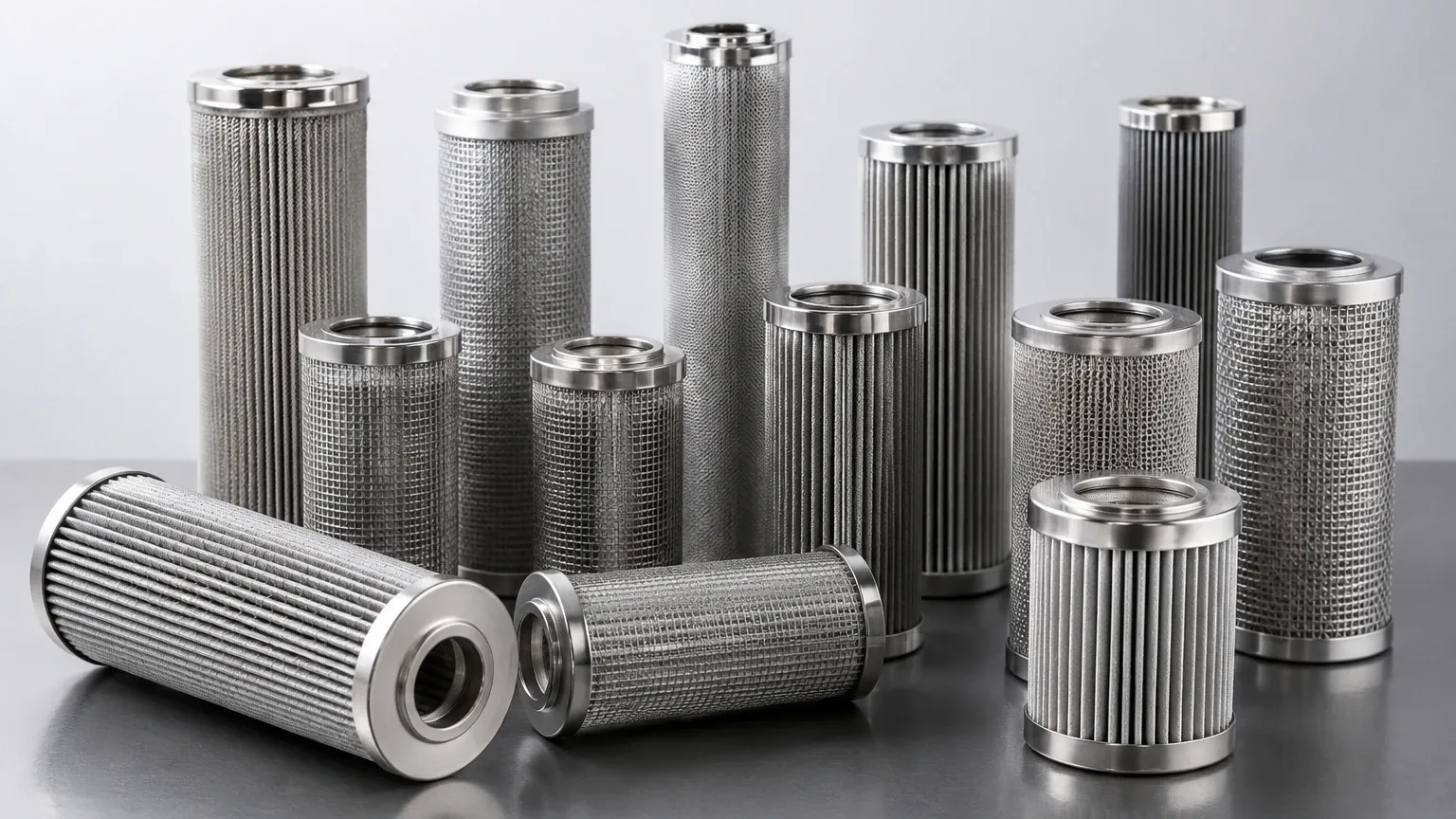
Pleating is a common technique used to increase the surface area of the filter media within a fixed footprint. For air applications, a pleated stainless steel cartridge can offer three to ten times the surface area of a standard cylindrical design. This increased area leads to lower face velocities, higher dirt-holding capacity, and longer intervals between maintenance cycles. However, in applications involving heavy dust loading, a simple cylindrical mesh might be preferred to facilitate easier cleaning and prevent "bridging" between pleats.
Support Cores and Outer Cages
To withstand high differential pressures, filter cartridges are often designed with an internal perforated support core. In high-flow air systems, an outer cage may also be added to protect the delicate filter media from mechanical damage during installation or from the impact of high-velocity particulates. These components are typically welded using advanced TIG or plasma welding techniques to ensure a seamless, contaminant-free construction.
End Cap Configurations
Compatibility with existing filter housings is ensured through various end cap designs. Common configurations include Double Open End (DOE), Single Open End (SOE) with various O-ring codes (such as Code 7 or Code 3), and threaded connections. Proper sealing is paramount in air systems to prevent "bypass," where unfiltered air escapes around the edges of the cartridge.
Application-Specific Considerations
The requirements for filter cartridge air solutions vary significantly across different industrial sectors. Understanding these nuances is essential for making an informed purchasing decision.
Chemical and Petrochemical Processing
In these industries, air filters are often exposed to aggressive chemical environments. The use of 316L stainless steel is standard here due to its superior resistance to pitting and crevice corrosion. These filters are used for catalyst recovery, vent gas filtration, and protecting expensive rotating equipment like compressors and turbines from particulate ingestion.
Food and Beverage Production
Air used in direct contact with food products or for aerating fermentation tanks must be free of oil, moisture, and microbial contaminants. Stainless steel filter cartridges are ideal here because they can be steam-sterilized in place (SIP). The smooth surface finish of electropolished stainless steel also prevents the buildup of organic matter, reducing the risk of bacterial growth.
Hydraulic and Pneumatic Systems
In pneumatic control systems, clean air is vital for the reliable operation of valves and actuators. A filter cartridge air element in these systems must remove not only solid particulates but also moisture and oil aerosols. Sintered metal fiber felt is often used in these applications for its high efficiency in capturing fine droplets.
Maintenance, Cleaning, and Replacement Cycles
One of the primary questions engineers face is when to clean versus when to replace a filter cartridge. For stainless steel media, the decision is usually driven by the nature of the contaminant.
* Dry Particulates: If the filter is capturing dry, non-adhesive dust, it can often be cleaned multiple times using compressed air back-pulsing or ultrasonic vibration.
* Adhesive or Oily Contaminants: If the air stream contains oils or resins, chemical cleaning or solvent baths may be required to restore the permeability of the mesh.
* Structural Fatigue: Even though stainless steel is durable, repeated cleaning cycles and thermal cycling can eventually lead to material fatigue. Regular integrity testing, such as the bubble point test, should be conducted to ensure the filter still meets its original micron rating.
Establishing a rigorous maintenance schedule based on differential pressure monitoring is the most effective way to optimize the lifespan of the filter. By tracking the rate of $ΔP$ increase, maintenance teams can predict failure points and schedule downtime before a critical system breach occurs.
Selecting the Right Filter Cartridges for Your System
Choosing the correct filter cartridge air solution requires a holistic view of the system's operational parameters. Purchasing teams and engineers should confirm the following data points before finalizing a specification:
* Flow Rate (SCFM or $m^3/h$): Ensure the filter can handle the maximum expected air volume without excessive pressure drop.
* Operating Pressure: The cartridge must be rated for the system's maximum working pressure, including potential surges.
* Temperature Range: Confirm that the media, seals, and adhesives (if any) can withstand the process temperatures.
* Contaminant Type: Identify whether the particulates are abrasive, corrosive, or adhesive.
* Required Efficiency: Determine if a nominal rating is sufficient or if an absolute rating is required for downstream protection.
By focusing on high-quality materials and precision manufacturing, industrial facilities can achieve a balance between filtration performance and operational cost. Stainless steel filtration components provide the durability needed for the most demanding air and gas applications, ensuring that processes remain clean, safe, and efficient. For those seeking specialized configurations or OEM support, exploring a wide range of Filter Cartridges is the first step toward optimizing industrial air quality and system reliability.
