


Filter Cartridge Cuno
In the landscape of industrial filtration, the term "filter cartridge cuno" is frequently used by engineers and procurement specialists to refer to a specific standard of depth filtration technology. Originally developed by Cuno (now a part of 3M), these cartridges set the benchmark for high-surface-area, rigid-structure depth filters used across a multitude of critical industrial processes. Understanding the technical nuances of these components—and knowing when to opt for traditional media versus advanced stainless steel alternatives—is essential for optimizing system performance and managing the total cost of ownership.
For technical teams managing fluid purity in chemical processing, food and beverage production, or hydraulic systems, selecting the right Filter Cartridges involves more than just matching a part number. It requires a deep dive into material compatibility, structural integrity under differential pressure, and the specific contaminant loading characteristics of the process stream.
The Evolution of Depth Filtration and the Cuno Standard
The legacy of the filter cartridge cuno lies in its pioneering approach to depth filtration. Unlike surface filters, which trap particles on a single plane, depth filters utilize a thick medium to capture contaminants throughout the entire cross-section of the material. This design allows for a significantly higher dirt-holding capacity, which translates to longer service intervals and more consistent downstream quality.
Historically, these cartridges were characterized by their rigid, resin-bonded construction. This rigidity is a critical engineering feature; it prevents the "unloading" of contaminants. In many lower-quality melt-blown filters, as the differential pressure increases, the pore structure can expand, allowing previously trapped particles to bypass the filter and enter the clean stream. The rigid architecture associated with the Cuno standard ensures that the pore structure remains stable even as the pressure drop across the element rises.
Technical Architecture: Multi-Zone and Rigid Structures
One of the defining characteristics of high-performance depth filters, such as those in the Cuno Micro-Klean or Betapure series, is the multi-zone design. This engineering approach involves creating a gradient of pore sizes within a single cartridge. The outer layers have larger pores to capture larger particles, while the inner layers feature progressively tighter pores to trap finer contaminants.
This "graded density" structure is vital for preventing premature surface blinding. If a filter had a uniform pore size throughout, the surface would quickly become clogged with large particles, rendering the interior of the filter media useless. By distributing the contaminant load throughout the depth of the cartridge, engineers can achieve a much more efficient use of the filter media.
When evaluating a filter cartridge cuno style replacement, engineers must confirm whether the replacement offers a similar graded density. A failure to match this architecture can result in significantly shorter filter life and increased downtime for cartridge change-outs.
Material Selection: Comparing Polymer, Cellulose, and Stainless Steel
While traditional filter cartridge cuno products often utilize resin-bonded cellulose or various polymers like polypropylene and polyester, modern industrial demands often require more robust materials. The choice of material is dictated by three primary factors: chemical compatibility, operating temperature, and the requirement for cleanability.
Resin-Bonded and Polymer Media
These are excellent for general-purpose water treatment, light chemicals, and food-grade applications where the filter is intended to be a consumable item. They offer a cost-effective solution for high-volume processes where the contaminant load is predictable and the chemical environment is relatively mild.
Stainless Steel Filter Cartridges
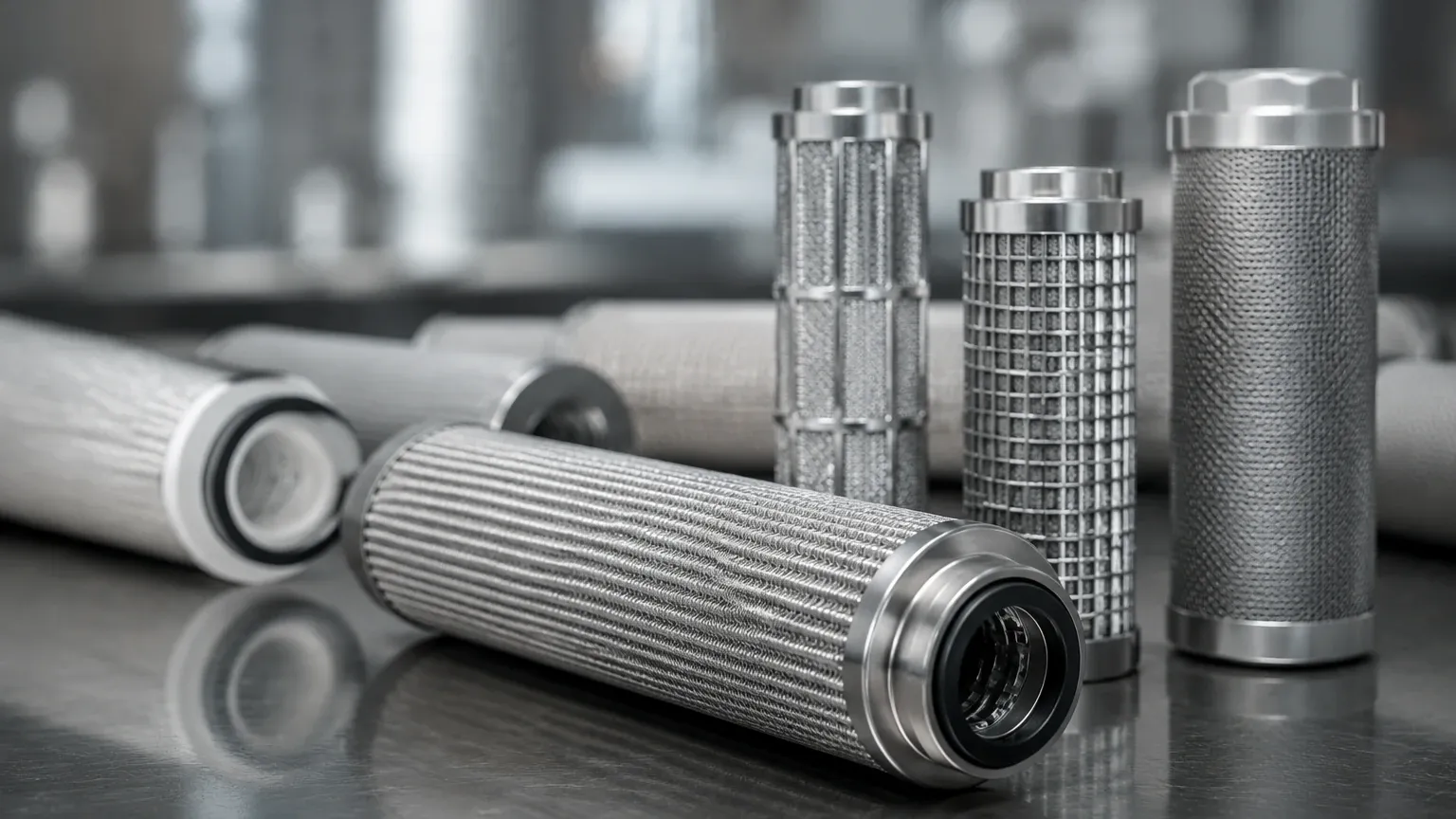
In more demanding environments, such as high-temperature steam filtration, aggressive solvent processing, or high-viscosity hydraulic fluids, stainless steel Filter Cartridges become the preferred choice. Stainless steel (typically 304 or 316L) provides several technical advantages over traditional Cuno-style polymer media:
* Thermal Stability: Stainless steel can operate at temperatures exceeding 500°F (260°C), far beyond the limits of resin-bonded or polypropylene filters.
* Chemical Resistance: For processes involving strong acids, bases, or specialized solvents that would degrade polymer binders, stainless steel offers superior longevity.
* Structural Strength: Stainless steel mesh or sintered metal filters can withstand much higher differential pressures without collapsing or bypassing.
* Cleanability: Unlike disposable depth cartridges, stainless steel elements can often be cleaned via backwashing, ultrasonic cleaning, or chemical stripping, making them a permanent or semi-permanent asset in the filtration system.
Performance Metrics: Micron Ratings and Differential Pressure
When specifying a filter cartridge cuno equivalent, engineers must look beyond the nominal micron rating. The distinction between "nominal" and "absolute" filtration is critical for process integrity.
* Nominal Rating: This indicates the filter's ability to retain a majority of particles at a specific size (usually 60% to 90%). It is a general guideline rather than a guarantee of purity.
* Absolute Rating: This refers to the diameter of the largest hard spherical particle that will pass through the filter under specified test conditions. For critical applications, such as pharmaceutical or fine chemical production, absolute-rated cartridges are mandatory.
Another key metric is the Clean Pressure Drop (ΔP). This is the initial resistance to flow when the filter is new. A high clean ΔP suggests that the filter is either too tight for the application or that the housing is undersized. Engineers should aim for a system where the initial pressure drop is less than 2-3 PSI. The Terminal Pressure Drop is the point at which the filter must be replaced or cleaned. For many depth filters, this is typically set between 20 and 35 PSI, depending on the structural limits of the cartridge and the pump's capabilities.
Application Specifics: Chemical, Food, and Hydraulic Systems
The application of filter cartridge cuno technology varies significantly across industries, each with its own set of engineering constraints.
Chemical Processing
In the chemical industry, the primary concern is often the compatibility of the filter media and the binders. Many Cuno-style filters use phenolic resins as binders. Engineers must verify that these resins will not leach into the process fluid or be dissolved by the chemicals being filtered. In cases where leaching is a risk, a binder-free stainless steel cartridge is often the safest technical alternative.
Food and Beverage
For this sector, compliance with FDA and EU food contact regulations is paramount. Filters must be constructed from materials that are generally recognized as safe (GRAS). Furthermore, the filters must be able to withstand sanitization cycles, which may involve hot water or steam. The rigid structure of the filter cartridge cuno is particularly valued here because it prevents the release of fibers into the product stream, ensuring a high level of clarity in beverages like beer, wine, and bottled water.
Hydraulic and Industrial Fluids
In hydraulic systems, the focus is on protecting sensitive valves and pumps from particulate wear. The high viscosity of hydraulic oils requires a filter that can maintain flow without excessive pressure drop. Depth filtration is ideal here because it can handle the "sludgy" nature of degraded oil and capture the fine metallic wear particles that cause system failure.
Engineering Considerations for Replacement and Customization
When a facility looks to replace or upgrade their current filter cartridge cuno setup, several physical and performance parameters must be confirmed to ensure a seamless transition.
1. End-Cap Configuration: Industrial cartridges come in various configurations, including Double Open End (DOE), Single Open End (SOE) with various O-ring codes (such as Code 7 or Code 3), and flat or finned tops. Ensuring the replacement cartridge fits the existing housing's seat is the first step in procurement.
2. Seal Material: The choice of O-ring or gasket material (Buna-N, EPDM, Viton, PTFE) must match the chemical and thermal profile of the fluid. A seal failure can lead to bypass, rendering the high-quality filter media ineffective.
3. Flow Rate vs. Viscosity: As fluid viscosity increases, the flow rate through a standard cartridge decreases. Engineers should consult flow-curve charts to determine if multiple cartridges or a larger housing are required to maintain the desired throughput.
4. Customization Requirements: In many specialized OEM applications, standard off-the-shelf cartridges do not meet the specific space or performance constraints. This is where custom-manufactured stainless steel Filter Cartridges provide a solution, allowing for tailored lengths, diameters, and micron ratings that are not available in mass-produced polymer lines.
Total Cost of Ownership (TCO) in Filtration
While the initial purchase price of a disposable filter cartridge cuno might be lower than a custom stainless steel alternative, a B2B procurement strategy should focus on the Total Cost of Ownership. TCO includes the cost of the cartridge, the labor required for frequent change-outs, the cost of downtime during maintenance, and the disposal costs of contaminated filter media.
In high-load environments, a stainless steel filter that can be cleaned and reused 50 times may provide a significantly better ROI than 50 disposable cartridges. Furthermore, the reduced environmental impact of moving away from disposable media is becoming an increasingly important factor for many global industrial firms.
By carefully analyzing the particle size distribution of the contaminant, the fluid dynamics of the system, and the chemical environment, engineering teams can determine whether the traditional filter cartridge cuno or a more advanced metal filtration solution is the most efficient choice for their specific industrial application.
