


Filter Cartridge Hot Tub
In the realm of water treatment and recirculating aquatic systems, the efficiency of filtration components determines both the longevity of the equipment and the safety of the water chemistry. While the term "filter cartridge hot tub" often brings to mind residential spa maintenance, the engineering principles behind these components are rooted in industrial filtration technology. For engineers and facility managers overseeing large-scale commercial spas, hydrotherapy pools, or industrial water heating loops, selecting the right filtration media is a critical decision that impacts operational costs and system downtime.
Industrial-grade filtration requires a deep understanding of fluid dynamics, material compatibility, and particulate capture mechanisms. When standard consumer-grade filters fail to meet the rigors of high-temperature, chemically treated, or high-flow environments, technical professionals turn to robust Filter Cartridges designed for durability and precision. This article explores the technical nuances of cartridge filtration, comparing materials, engineering specifications, and the total cost of ownership in demanding water treatment applications.
The Role of Cartridge Filtration in High-Temperature Water Systems
Cartridge filtration is a form of mechanical separation used to remove suspended solids from a liquid stream. In systems like commercial hot tubs or industrial process water loops, the primary goal is to maintain clarity and hygiene by capturing organic debris, minerals, and microorganisms. The effectiveness of a filter cartridge is generally measured by its micron rating, which indicates the size of the smallest particle the media can reliably intercept.
In high-temperature environments, the physical properties of the water change. Viscosity decreases, and the potential for chemical reactions—such as the precipitation of calcium carbonate—increases. A filter cartridge hot tub system must be capable of handling these variables without losing structural integrity. For industrial applications, surface filtration (where particles are caught on the face of the media) and depth filtration (where particles are trapped within the thickness of the media) are both employed depending on the specific contaminant load.
Comparative Analysis: Stainless Steel vs. Synthetic Filter Media
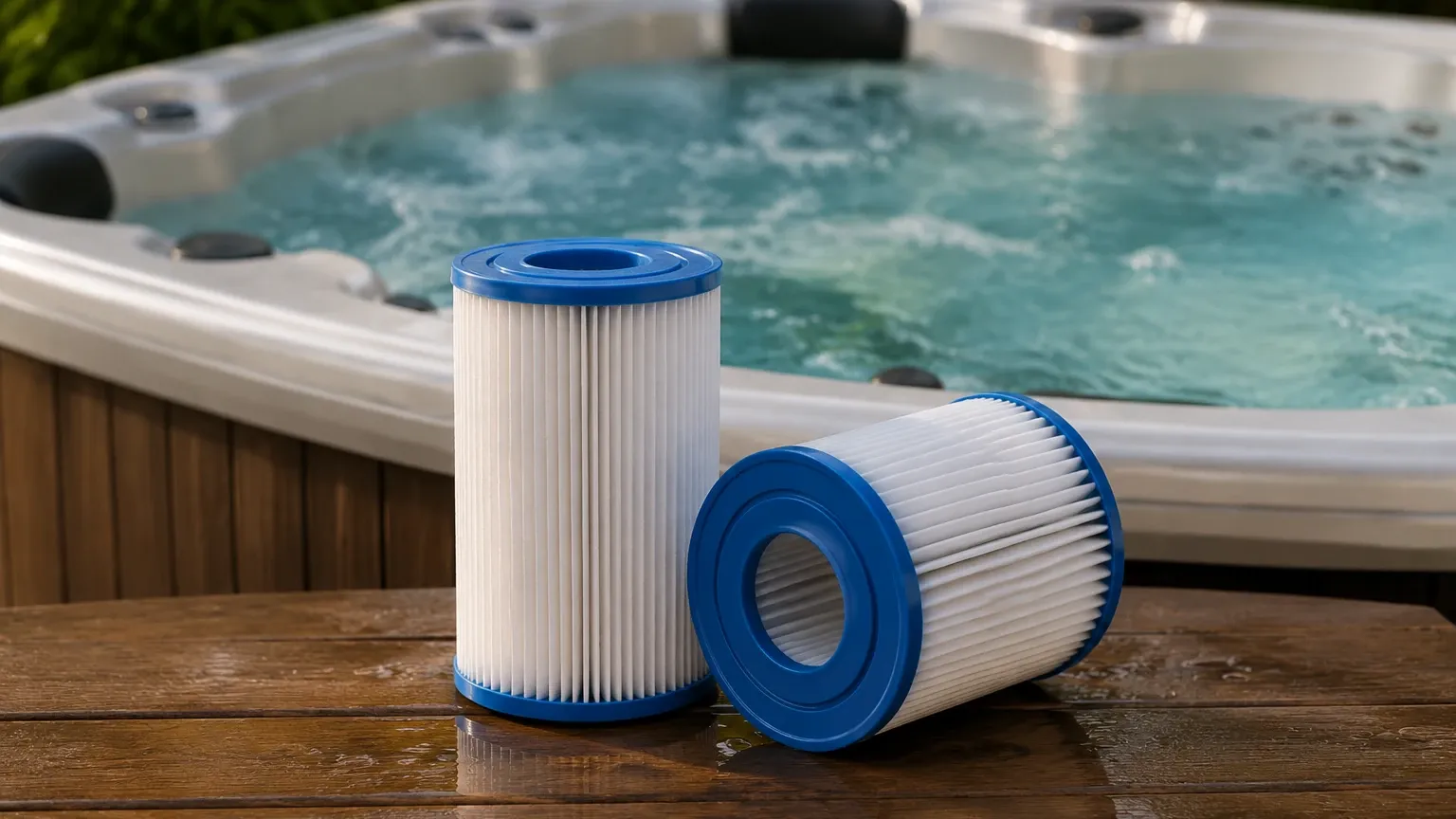
Most entry-level spa filters utilize pleated polyester or cellulose media. While effective for low-demand residential use, these materials have limitations in industrial or high-use commercial settings. Professionals often evaluate the transition to stainless steel filtration components for several reasons:
1. Thermal Stability
Synthetic fibers can soften or degrade when exposed to continuous high temperatures and aggressive sanitizers like chlorine or bromine. Stainless steel, particularly grades 304 and 316L, maintains its mechanical properties across a much wider temperature range, ensuring that the filter does not bypass or collapse under thermal stress.
2. Chemical Resistance
In a filter cartridge hot tub application, the water is often a complex chemical environment. High concentrations of oxidizers and pH adjusters can cause synthetic media to become brittle over time. Stainless steel provides superior resistance to corrosion and chemical attack, which is essential for maintaining consistent filtration performance over several years rather than months.
3. Cleanability and Reusability
Unlike disposable synthetic cartridges, stainless steel wire mesh filters can be cleaned and returned to service. Through backwashing, ultrasonic cleaning, or chemical soaking, the accumulated debris can be removed without damaging the filter structure. This makes them an ideal choice for facilities looking to reduce their environmental footprint and long-term consumable costs.
Engineering Specifications for Industrial-Grade Filter Cartridges
When specifying a filter for a commercial or industrial water system, engineers must look beyond basic dimensions. Several technical factors dictate the performance of the unit:
* Micron Rating (Absolute vs. Nominal): A nominal rating refers to a filter's ability to trap a percentage of particles of a given size, whereas an absolute rating indicates that 99.9% of particles above that size will be captured. For critical hygiene applications, absolute-rated Filter Cartridges provide a higher level of security.
* Effective Filtration Area (EFA): The total surface area available for filtration determines the flow capacity and the dirt-holding capacity. Pleated designs are used to maximize EFA within a compact footprint, allowing for higher flow rates with lower pressure drops.
* End Cap Design: The interface between the cartridge and the housing is a common point of failure. Industrial filters utilize various end cap configurations—such as DOE (Double Open End), SOE (Single Open End) with 222 or 226 O-rings—to ensure a bypass-free seal.
* Structural Support: In high-pressure systems, the filter media requires internal support cores or external cages. Stainless steel perforated cores provide the necessary rigidity to withstand differential pressures that would crush a standard plastic-core filter.
Operational Efficiency and Pressure Drop Management
One of the most critical metrics in filtration is the "clean pressure drop" (ΔP). This represents the resistance to flow caused by the filter media itself. As the filter accumulates debris, the pressure drop increases. In a filter cartridge hot tub system, an excessive pressure drop can strain circulation pumps, leading to increased energy consumption and potential motor failure.
Engineers must balance the desire for fine filtration (low micron ratings) with the need for high flow rates. A finer mesh naturally creates more resistance. By utilizing precision-engineered stainless steel wire mesh, manufacturers can achieve specific micron ratings with high porosity, ensuring that the system maintains optimal flow even as the filter nears its cleaning cycle.
Monitoring differential pressure is the standard method for determining when a filter requires maintenance. In industrial setups, sensors are often integrated into the filtration housing to provide real-time data, allowing for predictive maintenance rather than reactive troubleshooting.
Maintenance Protocols and Replacement Cycles
Maintenance is the key to ensuring the longevity of any filtration system. For synthetic cartridges, maintenance usually involves periodic rinsing and eventual replacement once the fibers become clogged with oils and minerals that cannot be washed away.
For stainless steel Filter Cartridges, the maintenance protocol is more robust:
1. Inspection: Regularly checking the filter for signs of scaling or physical damage to the mesh.
2. Degreasing: Using specialized surfactants to remove body oils and lotions that can coat the filter surface.
3. Acid Cleaning: If mineral scaling (calcium) occurs, a mild acid wash can restore the filter's original flow characteristics.
4. Sterilization: Stainless steel components can be steam-sterilized or treated with high-strength disinfectants, which is a significant advantage in medical or high-occupancy hydrotherapy settings.
The replacement cycle for high-quality metal filters is significantly longer than that of disposables. While the initial capital expenditure is higher, the reduction in replacement frequency and the elimination of disposal costs often result in a lower total cost of ownership over the life of the system.
Custom OEM Solutions for Specialized Aquatic Applications
Every industrial water system has unique requirements. Standard off-the-shelf filters may not always fit the specific flow rates, housing dimensions, or chemical profiles of a specialized project. This is where custom manufacturing and OEM capabilities become invaluable.
Customization options for filter cartridges include:
* Bespoke Dimensions: Tailoring the length, outer diameter, and inner diameter to fit existing proprietary housings.
* Material Selection: Choosing between 304, 316, 316L, or even exotic alloys for extreme environments.
* Layering Techniques: Combining multiple layers of wire mesh (sintered or bonded) to achieve specific depth filtration characteristics and structural strength.
* Gasket Materials: Selecting EPDM, Viton, or Silicone gaskets based on the chemical compatibility of the water treatment regimen.
By working closely with a manufacturer like Kaifil, engineers can develop filtration components that are specifically optimized for their application, ensuring maximum efficiency and reliability.
Total Cost of Ownership (TCO) in Industrial Filtration
When evaluating a filter cartridge hot tub solution for a commercial or industrial facility, the purchase price is only one component of the total cost. A comprehensive TCO analysis should include:
* Consumable Costs: The price of replacement cartridges over a 5-to-10-year period.
* Labor Costs: The man-hours required for frequent filter changes vs. occasional cleaning.
* Energy Costs: The impact of filter pressure drop on pump electricity consumption.
* Disposal Costs: The expense and environmental impact of sending used synthetic filters to landfills.
* Downtime: The lost revenue or operational delays caused by system maintenance.
In many high-use scenarios, the durability and reusability of stainless steel Filter Cartridges provide a clear economic advantage. By investing in higher-quality filtration components, facility managers can ensure more consistent water quality with fewer interruptions.
Conclusion
Whether it is a commercial hydrotherapy pool or a complex industrial water loop, the choice of filter cartridge is a fundamental engineering decision. While the "filter cartridge hot tub" keyword might suggest a simple consumer product, the reality of high-performance water treatment demands a more technical approach. By understanding the principles of filtration, the benefits of various materials, and the importance of precision engineering, technical professionals can select solutions that offer superior performance, durability, and value. For those requiring specialized or high-durability filtration, exploring custom stainless steel options is a strategic step toward optimizing system efficiency and water quality.
