


Filter Cartridge Hepa
In the landscape of industrial filtration, the requirement for high-efficiency particulate air (HEPA) performance extends far beyond standard HVAC systems. For engineers and technical procurement teams, the term "filter cartridge hepa" refers to a specific class of high-performance filtration components designed to capture at least 99.97% of particles as small as 0.3 microns. While traditional HEPA filters are often associated with pleated fiberglass or synthetic media used in cleanrooms, industrial applications frequently demand this level of precision within more robust, cartridge-based architectures capable of withstanding high pressures, extreme temperatures, and corrosive chemical environments.
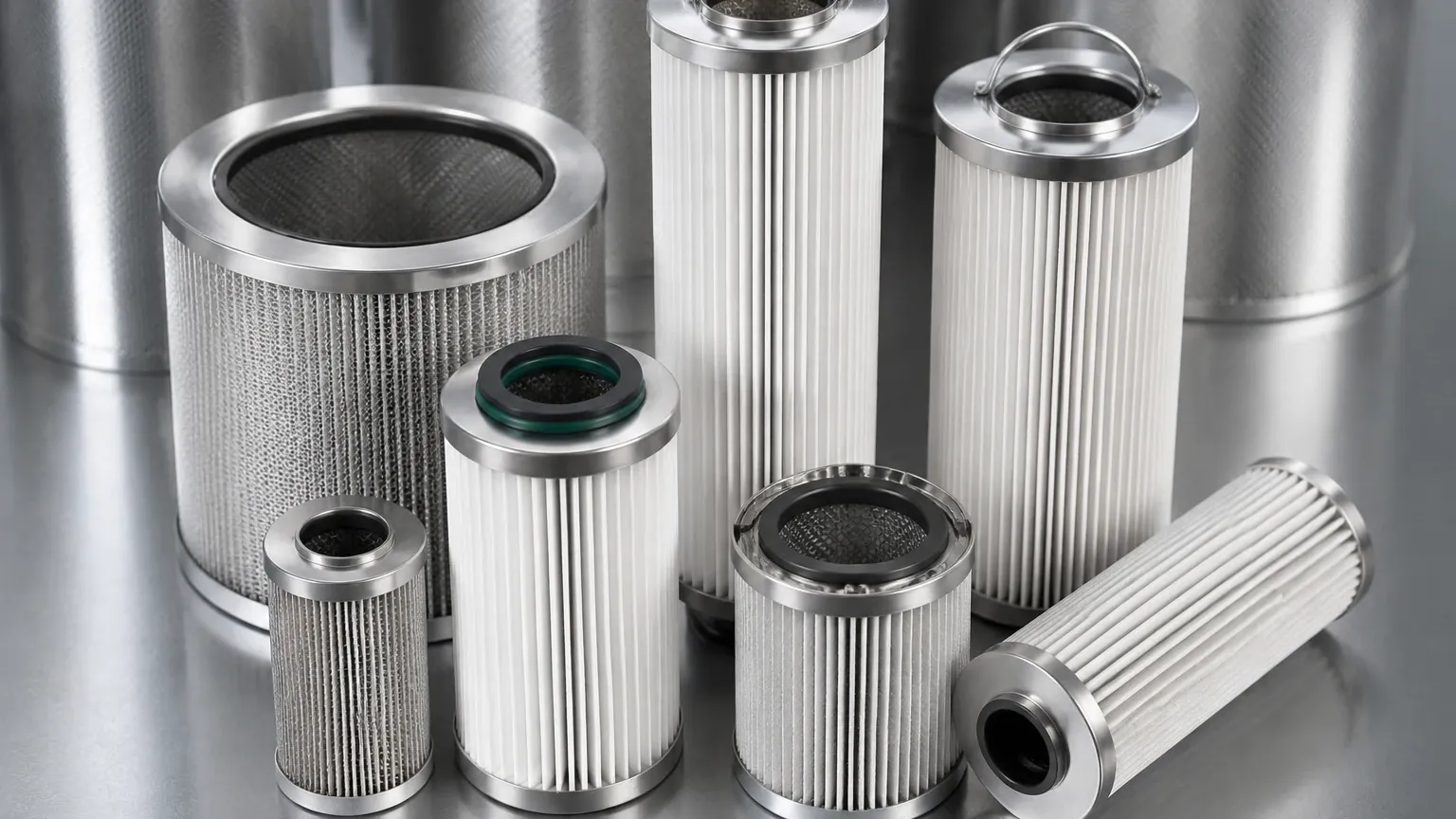
Achieving HEPA-level efficiency in a cartridge format requires a deep understanding of material science and fluid dynamics. Industrial Filter Cartridges designed for these stringent requirements are critical in sectors such as pharmaceutical manufacturing, semiconductor fabrication, and precision chemical processing. This guide examines the technical specifications, engineering considerations, and selection criteria necessary for implementing HEPA-grade cartridge filtration in demanding industrial settings.
Defining HEPA Performance in Industrial Cartridge Systems
The standard for HEPA filtration was originally developed to capture radioactive dust particles, but it has since become the benchmark for high-purity air and gas filtration. In a B2B industrial context, a filter cartridge hepa must maintain its efficiency rating under operational stresses that would compromise standard commercial filters.
Efficiency is typically measured using the Most Penetrating Particle Size (MPPS), which for most mechanical filters is approximately 0.3 microns. Particles smaller than this are often captured through Brownian motion, while larger particles are captured through interception and inertial impaction. For an industrial cartridge to be classified as HEPA-grade, it must demonstrate an absolute rating rather than a nominal one. While a nominal rating indicates the filter can trap a percentage of particles of a given size, an absolute rating—often verified through rigorous bubble point testing or challenge testing with specific aerosols—guarantees the retention of particles at the specified efficiency level.
Material Science: Synthetic vs. Stainless Steel Media
When selecting a filter cartridge hepa, the choice of media is the most significant factor impacting performance and longevity. The environment in which the cartridge operates dictates whether synthetic polymers or metallic media are appropriate.
Synthetic Media (PTFE and Glass Fiber)
For many gas filtration and venting applications, Borosilicate glass microfibers or expanded Polytetrafluoroethylene (ePTFE) membranes are used. PTFE is particularly valued for its hydrophobic properties, making it ideal for tank venting and sterile air applications where moisture could otherwise lead to microbial growth or increased pressure drop. However, these materials have limitations regarding temperature (usually capped at 140°C to 260°C depending on the support structure) and mechanical strength.
Stainless Steel and Sintered Metal Media
In heavy industrial environments where high temperatures, high pressures, or aggressive cleaning protocols (such as Steam-in-Place or SIP) are present, stainless steel filtration media is the preferred choice. Sintered metal fiber felt or multi-layered wire mesh can be engineered to achieve high-efficiency ratings comparable to HEPA standards.
Stainless steel 316L is the industry standard for these applications due to its excellent corrosion resistance. Unlike synthetic media, stainless steel cartridges can be cleaned and reused, which significantly alters the total cost of ownership (TCO) calculations. For processes involving high-pressure gas or volatile chemicals, the structural integrity of a metal filter cartridge hepa ensures that the media does not migrate or shed fibers into the downstream flow.
Key Engineering Parameters for High-Efficiency Filtration
Integrating HEPA-grade cartridges into an industrial process requires careful calculation of several engineering variables to ensure the system operates within its design limits without frequent downtime.
1. Pressure Drop (Delta P)
High-efficiency media naturally creates a higher resistance to flow. The initial pressure drop (clean Delta P) must be accounted for in pump or compressor sizing. As the filter captures contaminants, the pressure drop increases. Engineers must define the terminal pressure drop—the point at which the cartridge must be cleaned or replaced—to prevent structural failure of the media or the bypass of contaminants.
2. Flow Velocity and Residence Time
For HEPA-level capture, the face velocity of the fluid or gas passing through the media is critical. If the velocity is too high, the residence time of the particles within the media is reduced, potentially lowering the efficiency of Brownian diffusion capture for sub-micron particles. Cartridge designs often utilize pleating to increase the effective filtration area, thereby reducing the local velocity and extending the service life.
3. Sealing Mechanisms and Bypass Prevention
A filter is only as effective as its seal. In HEPA applications, even a microscopic bypass can lead to system failure. Common sealing configurations include:
* Double Open End (DOE): Uses flat gaskets at both ends, requiring a tie-rod and nut assembly to maintain compression.
* Single Open End (SOE): Usually features a 222 or 226 O-ring configuration with a locking tab or fin. The 226 O-ring with a bayonet lock is often preferred in high-purity applications because it provides a more secure, vibration-resistant seal.
Critical Applications for Filter Cartridge HEPA Solutions
The implementation of HEPA-grade cartridges is non-negotiable in industries where particulate contamination can lead to catastrophic product failure or safety hazards.
Pharmaceutical and Biotechnology
In these sectors, filter cartridges are used for sterile venting of storage tanks and the filtration of compressed air used in fermenters. The cartridge must not only meet HEPA efficiency but also be capable of withstanding repeated sterilization cycles without losing its integrity.
Food and Beverage Processing
High-efficiency cartridges are employed in nitrogen blanketing and the filtration of "culinary steam." While standard filters might remove large debris, a HEPA-grade cartridge ensures that the gases coming into direct contact with the product are free of microscopic contaminants and spoilage organisms.
Microelectronics and Semiconductor Manufacturing
The production of integrated circuits requires ultra-pure chemicals and gases. Even a single particle at the 0.3-micron level can ruin a wafer. Here, stainless steel HEPA cartridges are used in point-of-use gas delivery systems to ensure absolute purity.
Selection Guidance: Efficiency, Compatibility, and Capacity
When specifying a filter cartridge hepa for a new or existing system, technical professionals should evaluate the following criteria to ensure optimal performance:
* Chemical Compatibility: Ensure that both the media and the hardware (end caps, support cores, and O-rings) are compatible with the process fluid. For example, while 316L stainless steel is highly versatile, certain highly acidic environments may require specialized alloys like Hastelloy.
* Temperature Ratings: Consider the maximum operating temperature as well as the temperature during cleaning cycles. Synthetic cartridges may soften or lose structural integrity at elevated temperatures, whereas metal cartridges maintain their pore structure.
* Dirt Holding Capacity: A filter with high efficiency but low dirt-holding capacity will require frequent change-outs. Engineers should look for pleated designs that maximize surface area, especially in applications with high particulate loads.
* Validation and Certification: In regulated industries, it is essential to confirm that the cartridges are manufactured in facilities that provide traceability and performance validation. This includes compliance with USP Class VI plastics (for synthetic components) or specific ISO standards for filtration efficiency.
Integrity Testing and Maintenance Protocols
To ensure that a filter cartridge hepa continues to perform at its rated efficiency, regular integrity testing is required. This is especially true for cartridges used in critical safety or purity roles.
The Bubble Point Test
The bubble point test is a non-destructive method used to determine the pore size of a filter. It is based on the principle that liquid is held in the pores of the filter by surface tension and capillary forces. The minimum pressure required to force air through the largest pore is the bubble point. By comparing the measured bubble point to the manufacturer's specifications, engineers can verify if the cartridge has been damaged or if the seal is compromised.
Cleaning and Regeneration
One of the primary advantages of stainless steel HEPA-grade cartridges is their cleanability. Depending on the contaminant, cartridges can be cleaned using ultrasonic baths, chemical solvents, or backpulsing with high-pressure gas. This extends the lifespan of the filter from weeks to years, significantly reducing the environmental impact and long-term costs compared to disposable synthetic cartridges.
Total Cost of Ownership Considerations
While the initial purchase price of a high-efficiency metal filter cartridge hepa is higher than that of a standard nominal-rated disposable filter, the total cost of ownership (TCO) often favors the high-quality cartridge. Factors contributing to TCO include:
* Frequency of Change-outs: High-efficiency cartridges with superior dirt-holding capacity reduce labor costs and process downtime.
* Product Yield: In industries like pharmaceuticals, the cost of a single batch failure due to poor filtration far outweighs the cost of a premium filter.
* Disposal Costs: Reusable stainless steel filters eliminate the waste stream associated with disposable cartridges, which is increasingly important for corporate sustainability goals.
Selecting the right filtration solution involves balancing these technical requirements with the specific needs of the application. By focusing on material integrity, absolute efficiency ratings, and robust sealing mechanisms, engineering teams can ensure their processes remain protected against microscopic contaminants. For those seeking specialized configurations, exploring various Filter Cartridges options allows for the customization of micron ratings and hardware to meet the exact demands of the industrial environment.
