


Filter Cartridge Jacuzzi
In the realm of commercial water treatment and high-temperature aquatic environments, the efficiency of a filtration system is dictated by the structural integrity and media performance of its core components. For engineers and facility managers overseeing large-scale spa installations, the selection of a filter cartridge jacuzzi system is not merely a matter of maintenance but a critical engineering decision that impacts water chemistry, pump longevity, and operational costs. While residential applications often rely on disposable paper or polyester media, industrial-grade and high-traffic commercial environments require a more robust approach to particle separation.
Industrial filtration principles applied to heated water loops necessitate a deep understanding of hydraulic flow, thermal expansion, and chemical resistance. This article examines the technical specifications, material considerations, and engineering benchmarks required to optimize filtration performance in demanding spa and jacuzzi environments.
The Role of Filtration in High-Temperature Water Systems
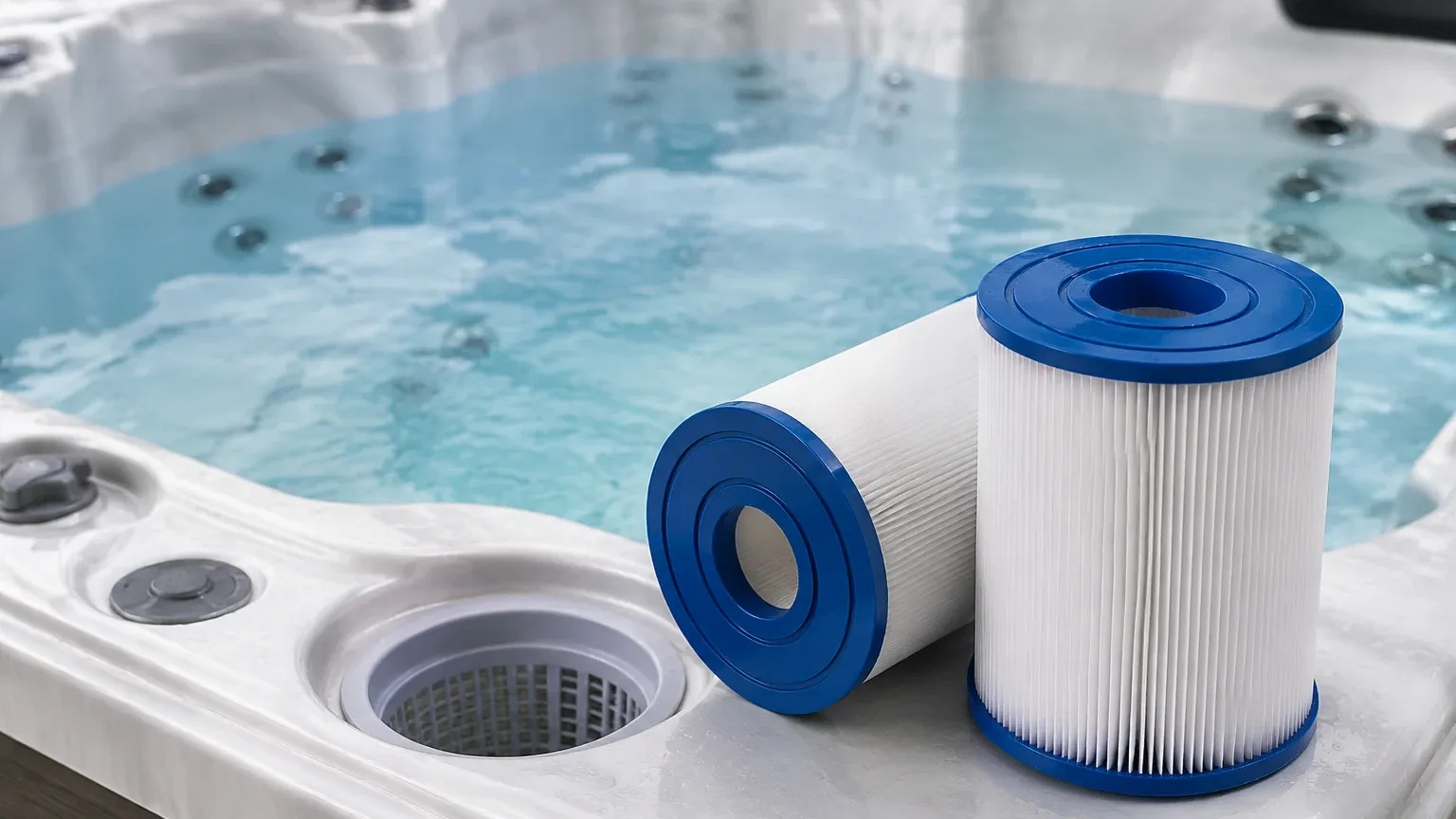
A jacuzzi environment presents unique challenges to standard filtration media. Unlike ambient temperature water treatment, heated loops (typically maintained between 37°C and 40°C) accelerate chemical reactions and the degradation of organic contaminants. The primary function of the filter cartridge jacuzzi assembly is to remove suspended solids, including skin cells, lipids, and environmental debris, which can otherwise serve as a substrate for biofilm growth.
From a hydraulic perspective, the filter must maintain a low pressure drop (ΔP) while processing high volumes of water. In commercial settings, turnover rates are significantly higher than in residential pools, often requiring the entire volume of water to pass through the filter every 30 minutes. This necessitates Filter Cartridges with high surface area and structural reinforcement to prevent media collapse under the stress of high-velocity flow.
Comparing Filter Media: Synthetic vs. Stainless Steel
When specifying filtration components for commercial spa systems, engineers must choose between traditional synthetic media and advanced metal mesh solutions. Each material offers distinct performance profiles regarding filtration accuracy and durability.
Synthetic Pleated Media
Synthetic cartridges, often made of spun-bonded polyester, are common due to their high surface area provided by pleating. They are effective at capturing fine particulates down to 10–20 microns. However, in a jacuzzi environment, these fibers are susceptible to "blinding" by oils and lotions. Once the pores are clogged with organic fats, the pressure across the media rises rapidly, necessitating frequent chemical cleaning or replacement.
Stainless Steel Wire Mesh
For industrial-scale or high-load applications, stainless steel wire mesh filter cartridges offer a superior alternative. Utilizing 304 or 316L stainless steel, these filters provide precise micron ratings and are virtually immune to the thermal degradation that affects plastics. Stainless steel mesh is particularly advantageous in systems where backwashing or high-pressure cleaning is utilized, as the media can withstand mechanical stress without losing its geometric pore consistency. Furthermore, the chemical resistance of 316L stainless steel ensures that high concentrations of chlorine or bromine do not lead to pitting or stress corrosion cracking.
Engineering Parameters for Filter Cartridge Selection
Selecting the correct filter cartridge jacuzzi component requires an analysis of several key engineering metrics. Failure to align these parameters with the pump and piping system can lead to cavitation, reduced flow, and inadequate sanitation.
1. Micron Rating and Filtration Efficiency
Filtration efficiency is often measured by the "Beta Ratio," which compares the number of particles of a given size upstream of the filter to the number downstream. In spa applications, a nominal rating of 20 microns is usually sufficient for clarity, but systems requiring high-purity water may specify absolute-rated cartridges. Engineers must balance the desire for fine filtration with the reality that tighter pores increase resistance to flow.
2. Effective Filtration Area (EFA)
The EFA determines the dirt-holding capacity of the cartridge. A larger surface area allows for longer run times between cleaning cycles. In pleated designs, the pleat density must be carefully calculated; if pleats are too tight, the water cannot access the full depth of the media, leading to premature clogging at the outer edges.
3. Flux Rate
Flux refers to the volume of water passing through a unit area of filter media (typically measured in GPM/sq. ft.). High flux rates can force contaminants through the media or cause particles to become deeply embedded, making cleaning difficult. Maintaining a conservative flux rate extends the life of the filter cartridge jacuzzi system and ensures consistent water quality.
Addressing Chemical and Thermal Stress in Spa Filtration
The chemical environment of a jacuzzi is notoriously aggressive. High temperatures combined with sanitizers like chlorine, bromine, or ozone create an oxidative atmosphere that can embrittle standard plastic end caps and degrade adhesives used in cartridge construction.
In professional-grade filtration, the use of thermally bonded end caps or all-welded stainless steel construction eliminates the risk of bypass—a common failure mode where unfiltered water leaks around the edges of the media due to adhesive failure. For systems utilizing ozone (O3) as a secondary disinfectant, stainless steel components are highly recommended, as ozone rapidly degrades many common elastomers and synthetic polymers.
Operational Efficiency and Total Cost of Ownership (TCO)
While the initial purchase price of a filter cartridge is a factor, the Total Cost of Ownership (TCO) is a more accurate metric for B2B procurement. TCO includes the cost of replacement units, the labor required for cleaning, the energy costs associated with pump head loss, and the chemical costs of water treatment.
* Replacement Cycles: Synthetic cartridges typically last 12 to 24 months in a commercial setting before the fibers lose their integrity. In contrast, stainless steel cartridges can last for several years, as they can be ultrasonically cleaned or chemically descaled without damage.
* Pressure Drop and Energy: As a filter loads with debris, the pump must work harder to maintain flow. High-quality cartridges with optimized pleat geometry maintain a lower ΔP for a longer duration, directly reducing the electrical consumption of the circulation pumps.
* Water Conservation: Durable cartridges that can be effectively cleaned reduce the frequency of system drainage and refilling, which is a significant cost factor in heated spa operations.
Maintenance Protocols for Commercial Cartridges
To ensure the longevity of a filter cartridge jacuzzi installation, a structured maintenance protocol is essential. For commercial facilities, this involves more than just rinsing the filter with a hose.
1. Degreasing: Because jacuzzis accumulate high levels of body oils, a specialized degreasing solution must be used to break down lipids before the filter is treated for mineral scale.
2. Acid Bathing: In areas with hard water, calcium carbonate scale can build up within the mesh or fabric. A mild acid soak (such as muriatic acid or a proprietary descaler) is used to dissolve these deposits.
3. Drying: For synthetic media, allowing the cartridge to dry completely after cleaning can help kill any remaining microbial colonies and reset the fibers, although this is less critical for stainless steel variants.
4. Differential Pressure Monitoring: Maintenance should be triggered by ΔP readings rather than a set calendar date. Typically, a rise of 8-10 PSI over the "clean" baseline indicates that the cartridge requires servicing.
Custom OEM Solutions for Commercial Filtration Systems
Many industrial water treatment projects require bespoke filtration solutions that standard off-the-shelf products cannot satisfy. Whether it is a non-standard housing size, a specific flange requirement, or a need for reinforced internal cores to handle extreme pressure spikes, customization is often necessary.
Kaifil specializes in the engineering and manufacture of custom stainless steel filtration components designed for these demanding environments. By working directly with a manufacturer, engineers can specify the exact alloy, mesh weave, and structural reinforcements needed for their specific spa or industrial water loop. This collaborative approach ensures that the resulting Filter Cartridges provide the optimal balance of filtration precision and mechanical durability.
Conclusion
The selection of a filter cartridge jacuzzi system for commercial or industrial use requires a move away from consumer-grade assumptions toward rigorous engineering standards. By evaluating material compatibility, hydraulic efficiency, and long-term durability, facility managers can ensure their water systems remain clear, safe, and cost-effective. Stainless steel filtration solutions, in particular, offer a path toward sustainable, high-performance water treatment in the most challenging thermal and chemical environments. For those seeking to optimize their filtration infrastructure, focusing on high-quality components and precise technical specifications is the most reliable strategy for long-term success.
