


Filter Cartridge Jura
In the professional beverage and food processing industries, the precision of water filtration is a critical factor that determines both product quality and equipment longevity. The term filter cartridge jura is widely recognized in the context of high-end coffee and espresso systems, where maintaining specific mineral balances and removing impurities is essential for consistent flavor profiles. However, from an industrial engineering perspective, the requirements for beverage filtration extend far beyond simple sediment removal. For engineers and facility managers, understanding the technical nuances of these filtration components—ranging from material science to hydraulic performance—is vital for optimizing commercial operations.
Industrial-grade Filter Cartridges are designed to meet rigorous standards that ensure water chemistry remains stable under high-pressure and high-temperature conditions. Whether integrated into a commercial coffee system or a larger-scale beverage production line, these components must provide reliable performance to prevent scale buildup and protect sensitive internal components from mechanical wear.
Technical Requirements of Beverage Filtration
Beverage filtration is a multi-stage process that addresses several chemical and physical variables. When evaluating a filter cartridge jura or similar high-performance filtration unit, engineers must consider the specific contaminants present in the source water and the desired output specifications.
Scale Inhibition and Ion Exchange
One of the primary functions of filtration in beverage equipment is the management of water hardness. Calcium and magnesium ions, while contributing to the body of the beverage, can precipitate out of solution at high temperatures, forming lime scale. In commercial environments, scale accumulation leads to restricted flow, increased energy consumption, and eventual heating element failure. High-quality cartridges often utilize ion-exchange resins or polyphosphate media to sequester these minerals, ensuring the equipment remains operational for longer intervals.
Chlorine and Organic Compound Removal
Chlorine is frequently used in municipal water treatment for disinfection, but it can negatively impact the taste and aroma of beverages. Furthermore, chlorine can be corrosive to certain metallic components within a machine. Activated carbon stages within the filter cartridge are designed to adsorb chlorine and volatile organic compounds (VOCs). The effectiveness of this stage depends on the contact time and the surface area of the carbon media, which is why larger commercial cartridges often outperform smaller consumer-grade alternatives.
Sediment and Micro-Particulate Filtration
Beyond chemical treatment, physical filtration is necessary to remove rust, sand, and other micro-particles. These particles can clog precision valves and wear down seals. The micron rating of the filter—often ranging from 0.5 to 5 microns for beverage applications—determines the level of protection provided to the downstream equipment.
Materials and Construction: The Industrial Advantage
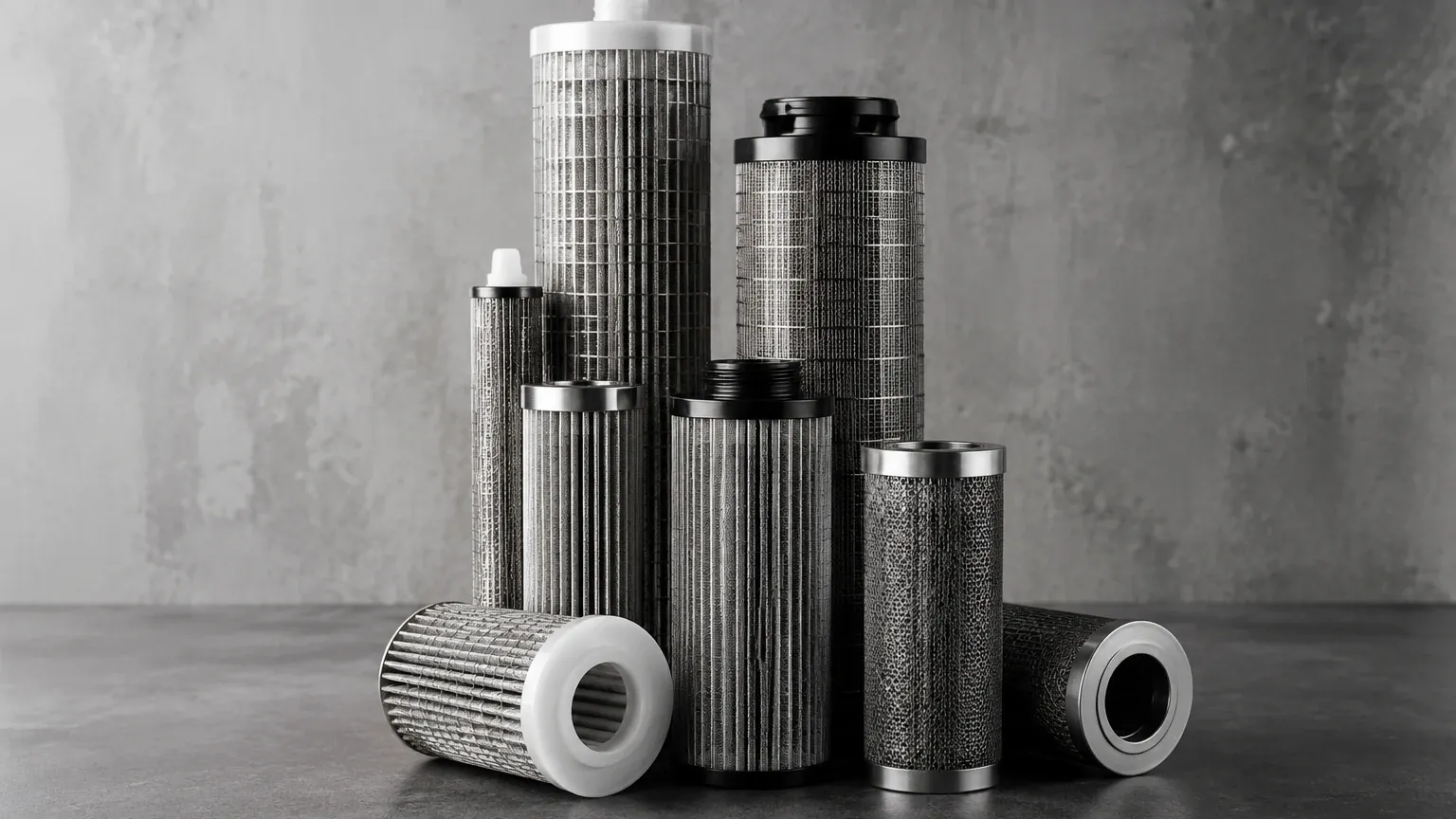
While many standard beverage filters utilize plastic housings and synthetic media, industrial applications often demand more robust materials. At Kaifil, the focus is on stainless steel and precision metal components that offer superior durability and chemical resistance compared to traditional polymers.
Stainless Steel Wire Mesh
In heavy-duty or high-volume beverage processing, stainless steel wire mesh is often employed as a pre-filtration or primary filtration layer. Unlike synthetic fibers, stainless steel mesh can be manufactured to extremely tight tolerances, providing a consistent pore size that does not deform under pressure. This ensures that the filtration efficiency remains constant throughout the life of the cartridge.
Chemical Compatibility and Hygiene
Stainless steel (typically grades 304 or 316L) is the gold standard for food and beverage applications due to its inert nature. It does not leach chemicals into the fluid stream and can withstand aggressive Cleaning-in-Place (CIP) protocols involving high temperatures or caustic chemicals. For engineers designing systems that require a high degree of sterilization, transitioning to metal-based Filter Cartridges provides a level of hygienic security that plastic components cannot match.
Engineering Considerations for Filter Cartridge Jura Compatibility
When sourcing a filter cartridge jura for commercial or industrial use, compatibility involves more than just the physical dimensions of the cartridge. Engineers must evaluate the hydraulic and mechanical interface between the filter and the machine.
Pressure Drop and Flow Rates
Every filtration stage introduces a degree of flow resistance, known as pressure drop. If the pressure drop is too high, the pump in the beverage system may be overworked, leading to premature failure or inconsistent brewing pressure. Industrial filters are engineered to maximize the effective filtration area (EFA), which minimizes resistance while maintaining high capture efficiency. Calculating the required flow rate (measured in liters per minute or gallons per hour) against the cartridge's flow curve is a standard step in the selection process.
Seal Integrity and Bypass Prevention
The interface between the cartridge and the filter head must be perfectly sealed to prevent "bypass"—where unfiltered water leaks around the cartridge and enters the system. High-performance cartridges utilize precision-molded O-rings (often made of EPDM or Viton) that are compatible with the specific temperatures and pressures of the application. In industrial settings, the reliability of these seals is paramount, as even a small bypass can lead to significant scale issues over time.
Performance Metrics: Micron Ratings and Efficiency
Understanding how a filter cartridge jura is rated is essential for predicting its performance in the field. There are two primary ways filtration efficiency is measured: nominal and absolute.
1. Nominal Micron Rating: This indicates the filter's ability to retain the majority of particles of a specific size (e.g., 95% of 5-micron particles). This is common for general-purpose sediment filters.
2. Absolute Micron Rating: This is a more stringent measure, indicating that the filter will retain essentially all particles of a given size (e.g., 99.9% of 1-micron particles). In critical applications where microbial control or ultra-fine sediment removal is required, an absolute rating is necessary.
For beverage applications, a multi-stage approach is often most efficient. A coarse pre-filter captures larger debris, extending the life of the more expensive fine-filtration or ion-exchange stages. This tiered strategy reduces the frequency of maintenance and ensures the highest possible water quality.
Maintenance, Replacement Cycles, and TCO
The Total Cost of Ownership (TCO) of a filtration system is not just the purchase price of the cartridge, but the ongoing costs associated with maintenance, downtime, and equipment repair. A filter cartridge jura must be replaced regularly to remain effective.
Determining Replacement Intervals
Most manufacturers specify a replacement interval based on either time (e.g., every 2-6 months) or volume (e.g., every 2,000 liters). However, these are general guidelines. In industrial environments, replacement should be based on monitored data:
* Differential Pressure: A significant increase in the pressure drop across the filter indicates that the media is loaded with contaminants.
* Water Quality Testing: Regular testing for hardness or chlorine breakthrough can indicate when the chemical media is exhausted.
* Flow Reduction: If the machine's output slows down, it is often a sign of a clogged filter.
The Cost of Neglect
Failing to replace a filter cartridge on time can lead to catastrophic results. Beyond the risk of scale damage, exhausted carbon filters can become breeding grounds for bacteria. Furthermore, as the filter becomes clogged, the increased strain on the system's pumps can lead to expensive mechanical failures that far exceed the cost of a replacement cartridge.
Custom OEM Solutions for Commercial Beverage Equipment
For manufacturers of commercial beverage equipment, off-the-shelf filtration solutions may not always meet specific design or performance goals. This is where custom OEM (Original Equipment Manufacturer) capabilities become essential. By working with a specialist like Kaifil, equipment designers can develop bespoke Filter Cartridges that are tailored to their specific machine requirements.
Customization options include:
* Bespoke Dimensions: Designing cartridges that fit into proprietary housings or compact machine footprints.
* Specialized Media Blends: Adjusting the ratio of ion-exchange resin to activated carbon to suit specific regional water conditions.
* Advanced Material Selection: Utilizing sintered metal or multi-layer wire mesh for applications involving extreme pressures or temperatures.
* Branding and Packaging: Providing private-label solutions that align with the manufacturer's brand identity.
By integrating a custom filter cartridge jura solution at the design phase, manufacturers can ensure that their equipment performs optimally in any environment, providing a competitive advantage in the marketplace.
Conclusion: Selecting the Right Filtration Partner
Whether you are maintaining a fleet of commercial coffee machines or designing a new beverage production system, the choice of filtration component is a decision with long-term implications. A high-quality filter cartridge jura is not merely a consumable; it is a precision-engineered component that protects your investment and ensures the quality of your final product.
By focusing on technical specifications—such as micron ratings, material compatibility, and flow dynamics—engineers can move beyond generic marketing claims and select solutions that offer genuine performance. For those requiring the highest levels of durability and precision, industrial stainless steel filtration components provide a robust alternative to standard consumer products, offering the reliability needed for the most demanding beverage applications.
