


Filter Cartridge Type C
In industrial filtration, precision and compatibility are the primary drivers of operational efficiency. The designation "Type C" often refers to a specific size or configuration standard used across various fluid handling systems. For engineers and procurement specialists, identifying the correct Filter Cartridges involves more than just matching a label; it requires a deep understanding of material science, mechanical tolerances, and the specific demands of the process environment.
When evaluating a filter cartridge type c for industrial use, the focus shifts from simple particulate removal to the structural integrity of the media and the reliability of the seal. This article provides a technical overview of the Type C specification, material considerations, and the engineering factors that influence selection in high-stakes B2B environments.
Understanding the Filter Cartridge Type C Specification
The "Type C" nomenclature is frequently encountered in both water treatment and specialized chemical processing. In many industrial contexts, this refers to a cartridge with specific dimensional attributes—typically a height of approximately 8 inches (203 mm) and an outer diameter of 4.2 inches (107 mm), though these dimensions can vary slightly depending on the housing manufacturer's standards.
Beyond dimensions, the "Type C" designation often implies a specific end-cap configuration. For industrial stainless steel applications, this might involve a Double Open End (DOE) design or a specialized O-ring seal intended to prevent bypass in high-pressure systems. Ensuring that the cartridge fits the internal manifold of the filter housing is critical. A mismatch of even a few millimeters can lead to fluid bypass, where unfiltered liquid circulates back into the system, potentially damaging downstream equipment like high-pressure pumps or sensitive spray nozzles.
Material Selection and Engineering Durability
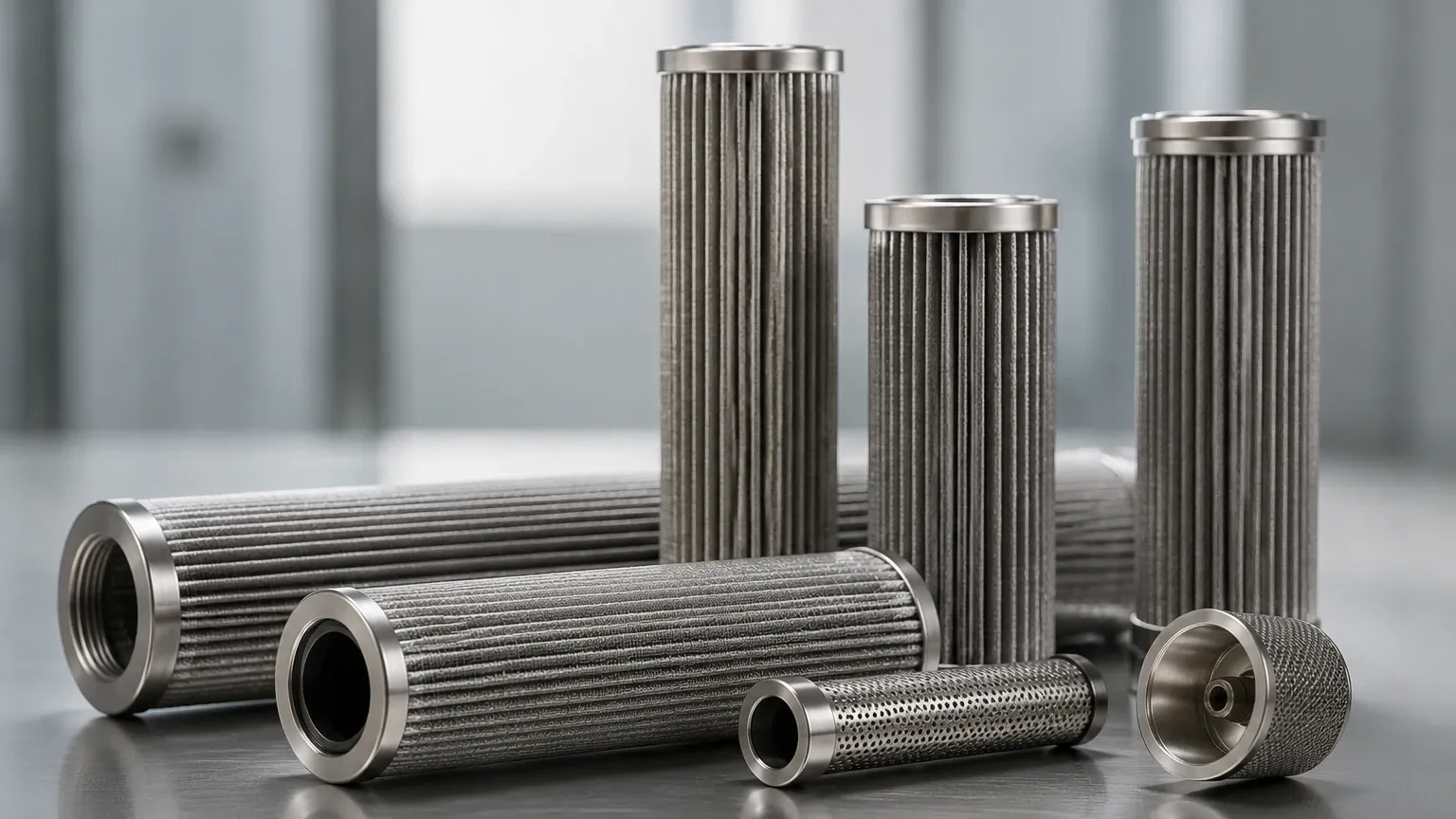
While many Type C cartridges in consumer markets are made of synthetic fibers or paper, industrial versions—particularly those manufactured by specialists like Kaifil—utilize stainless steel. The choice between 304 and 316L stainless steel is a fundamental engineering decision based on the chemical composition of the fluid being filtered.
Stainless Steel 304 vs. 316L
Stainless steel 304 is suitable for many general-purpose applications, providing excellent strength and basic corrosion resistance. However, for processes involving chlorides or high-temperature acidic environments, 316L is the industry standard. The addition of molybdenum in 316L provides superior resistance to pitting and crevice corrosion, which is essential for the longevity of a filter cartridge type c in chemical processing or marine environments.
Sintered Mesh vs. Pleated Designs
The internal structure of the filter also dictates performance. Sintered metal mesh provides a rigid, porous structure that can withstand extreme differential pressures without deforming. Conversely, pleated stainless steel designs increase the available surface area, allowing for higher flow rates and a greater dirt-holding capacity before the pressure drop reaches the replacement threshold.
Filtration Efficiency and Micron Ratings
One of the most critical specifications for any filter cartridge type c is the micron rating. Engineers must distinguish between nominal and absolute filtration ratings to ensure the process meets quality standards.
* Nominal Rating: This indicates the ability of the filter to retain a major weight percentage (usually 60% to 90%) of particles of a specific size. It is often used for pre-filtration stages where the goal is to remove the bulk of large contaminants.
* Absolute Rating: This refers to the diameter of the largest hard spherical particle that will pass through the filter under specified test conditions. In pharmaceutical or food and beverage applications, an absolute rating is often required to ensure the complete removal of specific bacteria or contaminants.
For a filter cartridge type c, the micron rating can range from sub-micron levels for fine chemical polishing to over 200 microns for coarse straining in hydraulic or cooling water systems.
Operational Considerations: Flow Rate and Pressure Drop
The efficiency of a filtration system is measured not just by what it removes, but by how it affects the overall system hydraulics. The Clean Pressure Drop ($ΔP$) is the initial resistance to flow caused by the filter media and the cartridge structure.
In a typical B2B application, the flow rate (measured in GPM or m³/h) must be balanced against the viscosity of the fluid. Higher viscosity fluids, such as oils or resins, require a more robust filter cartridge type c with a larger surface area to prevent an immediate spike in pressure. Engineers must calculate the "terminal pressure drop"—the point at which the filter is considered blinded and must be cleaned or replaced. Using stainless steel cartridges allows for backwashing or ultrasonic cleaning, which significantly reduces the total cost of ownership compared to disposable polymer alternatives.
Application-Specific Implementations
The versatility of the Type C configuration allows it to be used across diverse industries, each with unique challenges:
1. Chemical Processing: Here, the primary concern is chemical compatibility. Stainless steel Type C cartridges are used to filter aggressive solvents, polymers, and catalysts where plastic filters would degrade or leach contaminants.
2. Food and Beverage: In this sector, the focus is on hygiene and compliance. Stainless steel filters must meet FDA or equivalent standards for food contact. The ability to withstand Steam-in-Place (SIP) and Clean-in-Place (CIP) cycles is a mandatory requirement for any filter cartridge type c used in dairy or beverage production.
3. Hydraulic Systems: High-pressure hydraulic lines require filters that can handle sudden surges in pressure. Metal mesh cartridges are preferred here because they maintain their pore structure under mechanical stress, ensuring that sensitive valves and actuators remain protected from metal shavings or wear particles.
4. Water Treatment: For industrial boiler feed water or cooling towers, Type C cartridges act as a secondary barrier against scale and biological growth, protecting expensive heat exchangers from fouling.
Maintenance, Cleaning, and Replacement Protocols
A significant advantage of utilizing stainless steel Filter Cartridges in a Type C format is their reusability. Unlike melt-blown or string-wound cartridges that are discarded after a single use, metal cartridges can be restored to near-original performance levels through professional cleaning methods.
Cleaning Methods
* Ultrasonic Cleaning: Uses high-frequency sound waves to create cavitation bubbles that dislodge fine particles from deep within the mesh layers.
* Backflushing: Reversing the flow of fluid through the cartridge to push contaminants off the outer surface.
* Chemical Cleaning: Soaking the cartridge in specific solvents or acids to dissolve organic or mineral buildup, followed by a neutralizing rinse.
Monitoring Performance
Continuous monitoring of the differential pressure across the filter housing is the most reliable way to determine the maintenance schedule. Most industrial systems are equipped with pressure transducers that trigger an alarm when the $ΔP$ exceeds a pre-set limit (e.g., 15-25 psi). For a filter cartridge type c, consistent monitoring prevents "media migration" or structural failure that can occur if the cartridge is pushed beyond its design limits.
Customization and OEM Integration
Standardization is helpful, but many industrial applications require bespoke solutions. As a manufacturer, Kaifil specializes in adapting the filter cartridge type c to meet specific OEM requirements. This might include modifying the end-cap design to fit a proprietary housing, adjusting the pleat density to accommodate high-solids loading, or using specialized alloys like Monel or Hastelloy for extreme environments.
When purchasing for a large-scale project, engineers should confirm the following with their supplier:
* Housing Compatibility: Exact measurements of the internal seat and the overall length.
* Seal Material: Selection of O-rings (Viton, EPDM, Silicone, or PTFE) based on chemical and temperature exposure.
* Structural Support: Whether an internal core or external cage is required for high-pressure applications.
* Certification: Documentation for material traceability (MTRs) and filtration efficiency (Beta ratios).
Conclusion
The filter cartridge type c represents a vital component in the industrial filtration landscape. By moving beyond generic specifications and focusing on the engineering realities of stainless steel construction, B2B buyers can ensure their systems operate with maximum uptime and minimal environmental impact. Whether the application involves high-temperature steam, corrosive chemicals, or high-viscosity lubricants, selecting a high-quality, precision-engineered cartridge is the first step toward process optimization. For those seeking durable and customized solutions, exploring the technical capabilities of professional manufacturers ensures that the chosen filtration components will meet the rigorous demands of modern industry.
