


Filter Cartridge Uf
In the landscape of industrial liquid-solid separation, the filter cartridge uf (ultrafiltration) represents a critical bridge between coarse microfiltration and the molecular-level separation of nanofiltration. For engineers and procurement specialists in the chemical, pharmaceutical, and food and beverage sectors, understanding the technical nuances of ultrafiltration is essential for optimizing process efficiency and ensuring product purity.
Ultrafiltration is a pressure-driven membrane process capable of removing suspended solids, bacteria, viruses, and high-molecular-weight solutes from a process stream. Unlike standard mechanical filters that rely on simple sieving, a filter cartridge uf utilizes a semi-permeable membrane with pore sizes typically ranging from 0.01 to 0.1 micrometers. This technical guide explores the engineering principles, material considerations, and selection criteria necessary for implementing these components in demanding industrial environments.
Technical Principles of Ultrafiltration Cartridges
At its core, the operation of a filter cartridge uf is defined by the relationship between transmembrane pressure (TMP) and the physical characteristics of the membrane. The process selectively allows solvent and low-molecular-weight species to pass through (the permeate) while retaining larger particles and macromolecules (the retentate).
Molecular Weight Cut-Off (MWCO)
One of the primary specifications for any ultrafiltration media is the Molecular Weight Cut-Off. MWCO is defined as the molecular weight of a globular protein or polymer where 90% of the solute is rejected by the membrane. In industrial applications, selecting the correct MWCO is vital. If the MWCO is too high, critical contaminants may pass through; if it is too low, the flux rate decreases significantly, leading to higher energy consumption and faster fouling.
Flux and Permeability
Flux refers to the rate at which the permeate passes through a unit area of the membrane per unit of time, usually expressed in GFD (gallons per square foot per day) or LMH (liters per square meter per hour). In a B2B industrial context, maintaining a stable flux is the primary goal of system design. Factors affecting flux include:
* Feed Concentration: Higher solids loading increases the concentration polarization layer at the membrane surface.
* Temperature: Higher temperatures reduce fluid viscosity, typically increasing flux, though the thermal limits of the cartridge materials must be respected.
* Flow Velocity: In cross-flow configurations, higher velocities help scour the membrane surface, reducing the cake layer.
Material Selection and Construction
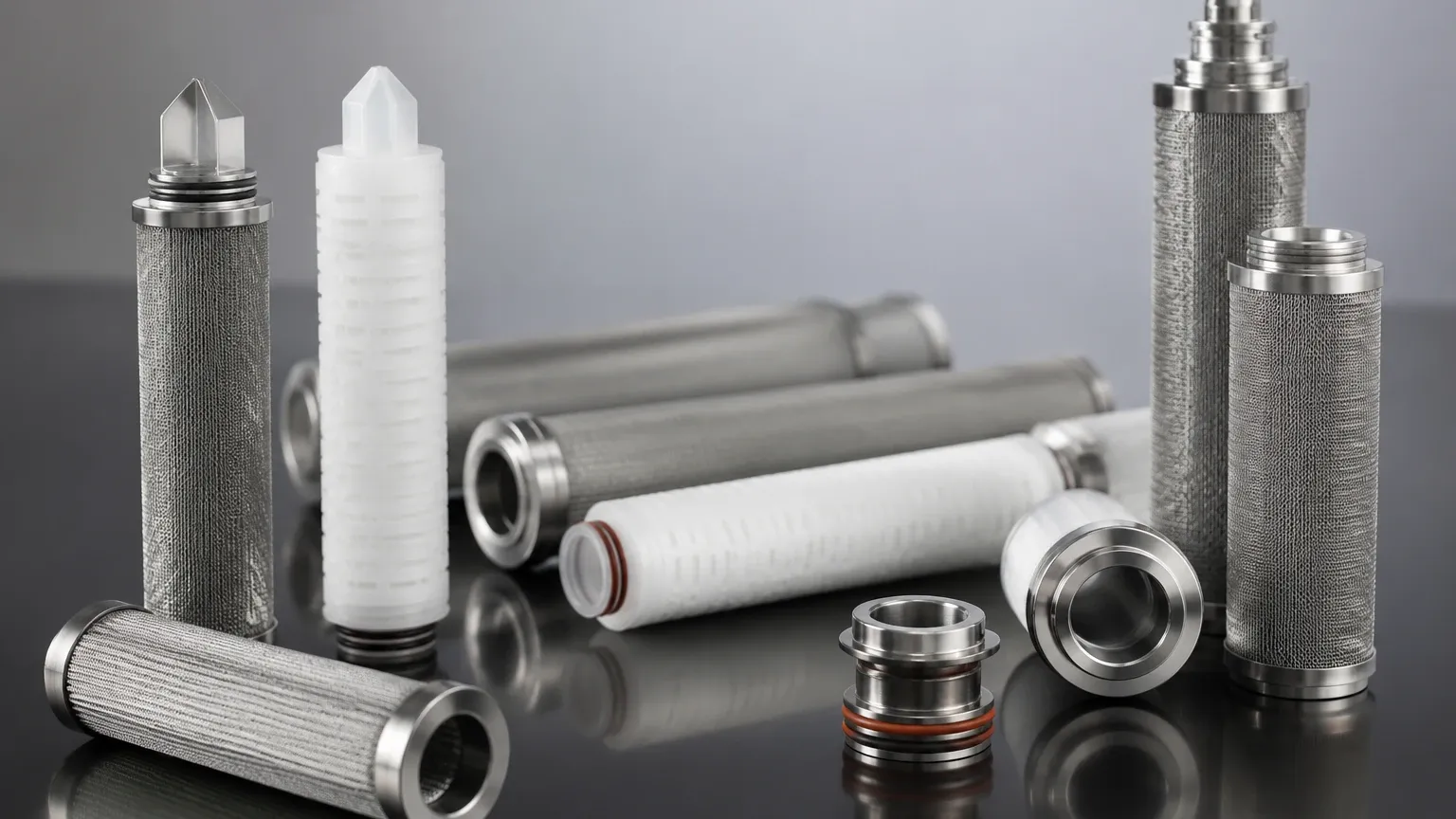
While the active membrane layer of a filter cartridge uf is often composed of polymeric materials like Polyethersulfone (PES) or Polyvinylidene Fluoride (PVDF), the structural integrity of the cartridge is paramount. In heavy industrial applications, the choice of Filter Cartridges often depends on the durability of the support components.
Stainless Steel Support and Housing
In high-pressure or high-temperature environments, standard plastic housings and supports may fail. Stainless steel (304 or 316L) is frequently utilized for the center cores, end caps, and outer cages of high-performance cartridges. The use of precision-engineered metal components ensures that the ultrafiltration membrane remains stable under the mechanical stresses of backpulsing and high differential pressures. Furthermore, stainless steel components offer superior chemical resistance during aggressive Clean-in-Place (CIP) cycles involving caustic or acidic agents.
Membrane Morphology
Most industrial UF membranes feature an asymmetric structure. This consists of a very thin, dense "skin" layer that performs the actual separation, supported by a highly porous substructure. This design minimizes flow resistance while providing the mechanical strength necessary to withstand industrial operating pressures.
Key Applications Across Industrial Sectors
The versatility of the filter cartridge uf makes it a staple in various specialized industries. Its ability to perform cold sterilization and remove pyrogens without chemical additives is particularly valued.
1. Pharmaceutical and Biotechnology
In the pharmaceutical sector, UF cartridges are used for protein concentration, buffer exchange (diafiltration), and the removal of endotoxins. Because these processes often involve high-value biological products, the cartridges must be manufactured in controlled environments and meet stringent extractable/leachable standards.
2. Food and Beverage Processing
Ultrafiltration is widely used for the clarification of fruit juices, the concentration of whey proteins in dairy processing, and the removal of microorganisms in bottled water production. The process preserves the organoleptic properties of the product (taste and aroma) because it does not require thermal treatment.
3. Chemical and Petrochemical
In chemical manufacturing, a filter cartridge uf may be used for catalyst recovery or the purification of specialty chemicals. The robustness of the cartridge is tested here by exposure to solvents and extreme pH levels, necessitating the use of chemically resistant membranes and stainless steel hardware.
4. Industrial Water Treatment
UF serves as an excellent pretreatment for Reverse Osmosis (RO) systems. By removing silt, colloidal silica, and organic macromolecules, the UF stage significantly extends the life of the downstream RO membranes and reduces the frequency of expensive membrane replacements.
Engineering Considerations for System Integration
Integrating a filter cartridge uf into an existing process requires more than just matching pipe sizes. Engineers must evaluate the hydraulic balance of the entire system.
Dead-End vs. Cross-Flow Filtration
* Dead-End Filtration: All the feed water passes through the membrane. This is efficient for low-solids applications but leads to rapid cake buildup.
* Cross-Flow (Tangential Flow) Filtration: The feed stream flows parallel to the membrane surface. This creates turbulence that minimizes the accumulation of solids, making it the preferred method for high-concentration industrial streams.
Pressure Drop and Monitoring
Differential pressure (ΔP) is the difference between the inlet and outlet pressure of the filter housing. A rising ΔP is the most reliable indicator of membrane fouling. Systems should be equipped with precision pressure transducers and automated alarms to trigger cleaning cycles before the cartridge reaches its structural collapse pressure.
Chemical Compatibility
Before selecting a filter cartridge uf, the chemical composition of the feed stream must be fully characterized. This includes not only the primary product but also any trace solvents, cleaning agents, and surfactants. For example, while PES membranes offer high flux, they may have limited compatibility with certain organic solvents compared to ceramic or specialized metal-supported membranes.
Addressing Fouling and Maintenance Cycles
Fouling is the inevitable accumulation of rejected species on the membrane surface or within its pores. Effective management of fouling is the difference between a cost-effective process and a constant maintenance burden.
Cleaning-in-Place (CIP) Strategies
Industrial UF systems are designed for CIP, allowing the membranes to be cleaned without removing the cartridges from the housing. This typically involves:
* Forward Flush: High-velocity flow to wash away loose debris.
* Backwash/Backpulse: Reversing the flow of permeate back through the membrane to dislodge particles trapped in the pores.
* Chemical Cleaning: Using acids (to remove mineral scale), bases (to remove organics and proteins), or sanitizers (to eliminate biofouling).
Integrity Testing
To ensure that the filter cartridge uf is providing the required level of separation, regular integrity testing is required. Common methods include the Bubble Point Test and the Pressure Decay Test. These tests verify that the membrane is free of defects or ruptures that could compromise the sterile barrier or separation efficiency.
How to Select the Right Filter Cartridges for Your Facility
Choosing the correct filtration solution requires a balance of performance, durability, and total cost of ownership. When evaluating options, engineers should confirm the following data points with their manufacturer:
1. Particle Size Distribution: What is the specific size of the target contaminant?
2. Stream Chemistry: What is the pH range, and are there aggressive solvents present?
3. Operating Conditions: What are the maximum operating temperatures and pressures?
4. Regulatory Compliance: Does the cartridge need to meet FDA, USP Class VI, or other industry-specific certifications?
By focusing on high-quality Filter Cartridges that utilize robust materials like stainless steel for structural components, facilities can achieve longer service lives and more predictable filtration performance. The integration of a well-specified filter cartridge uf not only protects downstream equipment but also ensures the consistent quality of the final product in demanding industrial environments.
Ultimately, successful ultrafiltration depends on the synergy between the membrane's microscopic separation capabilities and the macroscopic engineering of the cartridge itself. Whether for wastewater recovery or pharmaceutical purification, the right technical selection is the foundation of process reliability.
