


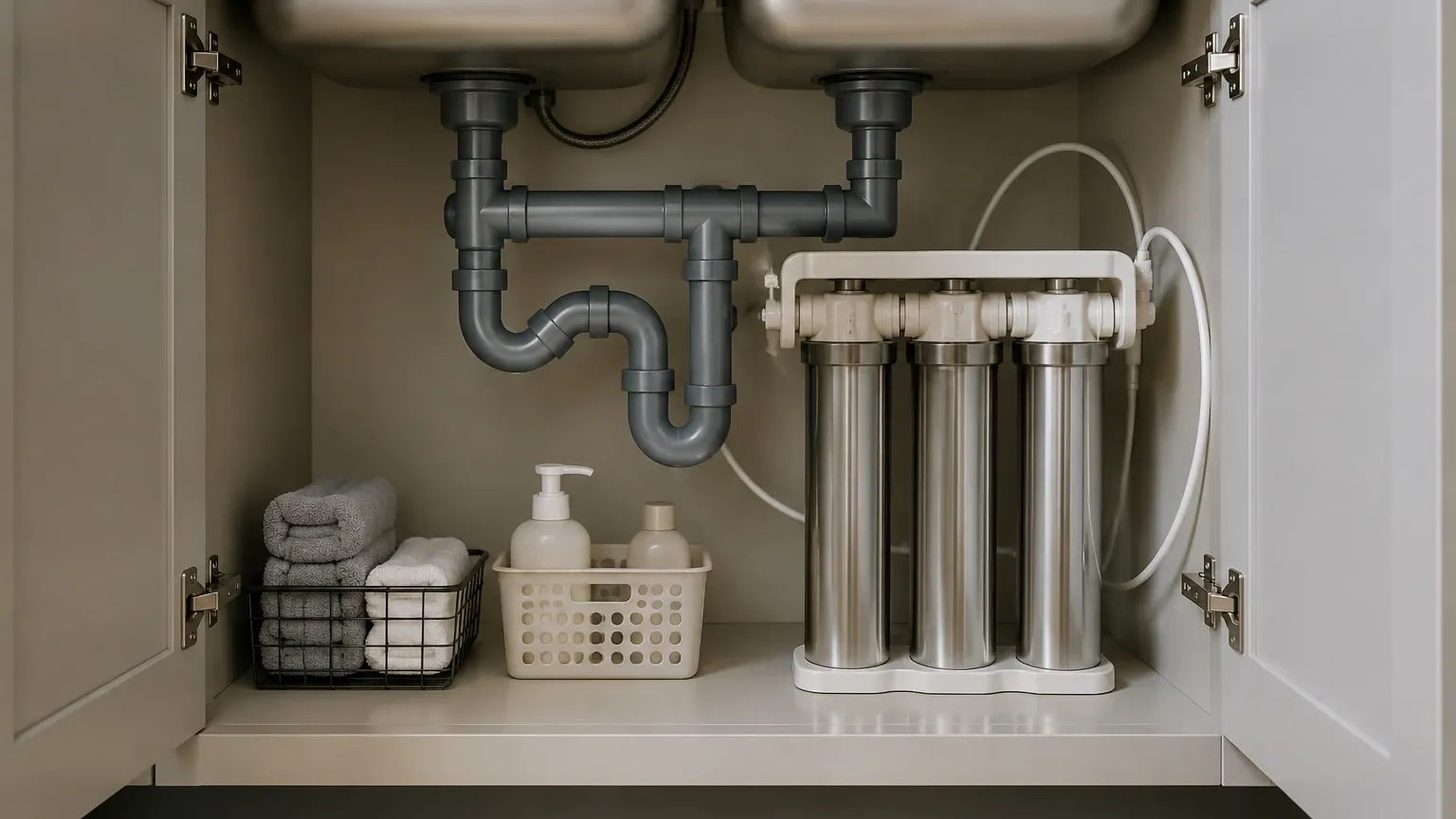
Filter Cartridge Under Sink
In industrial and commercial environments, point-of-use (POU) filtration is a critical component for ensuring the quality of water and process fluids at the final stage of delivery. While many associate the term "filter cartridge under sink" with residential kitchen applications, the engineering requirements for B2B sectors—such as laboratory water systems, commercial food preparation, pharmaceutical cleanrooms, and industrial breakroom facilities—demand a much higher level of durability and precision.
For engineers and facility managers, selecting the right filtration component involves more than just fitting a unit into a restricted space. It requires a deep understanding of material science, fluid dynamics, and the specific contaminant profiles of the local supply. Stainless steel Filter Cartridges offer a robust alternative to standard plastic disposables, providing long-term cost efficiency and superior structural integrity in demanding environments.
Technical Specifications and Engineering Considerations
When evaluating a filter cartridge under sink for professional use, the first technical hurdle is balancing filtration efficiency with the available flow rate. Most under-sink systems operate on standard municipal or building-wide pressure, typically ranging from 40 to 80 PSI. However, the introduction of a high-efficiency filter cartridge inevitably creates a pressure drop ($ΔP$).
Micron Ratings and Filtration Efficiency
Engineers must distinguish between nominal and absolute micron ratings. A nominal rating refers to a filter's ability to intercept a major percentage of particles of a given size, whereas an absolute rating indicates that 99.9% (or higher) of particles at that size are removed. For under-sink applications requiring high-purity water, such as in medical laboratories, a sub-micron absolute rating may be necessary. Conversely, for general sediment removal in a commercial kitchen, a 5-to-10-micron nominal stainless steel mesh may be sufficient to protect downstream equipment like ice machines or coffee brewers.
Flow Rate Dynamics
The flow rate is governed by the surface area of the filter media. In the confined space of an under-sink housing, maximizing surface area is often achieved through pleating. Pleated stainless steel cartridges provide significantly more surface area than cylindrical depth filters, allowing for higher flow rates without a corresponding increase in the housing size. This is particularly important in B2B settings where multiple users or high-demand appliances rely on a single POU source.
Material Selection: The Case for Stainless Steel
In many industrial contexts, standard polypropylene or carbon-block cartridges are insufficient due to temperature fluctuations, chemical exposure, or the risk of housing failure. Kaifil specializes in the manufacture of stainless steel filtration solutions that address these vulnerabilities.
Corrosion Resistance and Longevity
Using 304 or 316L stainless steel for the filter cartridge under sink ensures that the component will not degrade when exposed to aggressive cleaning agents or mildly acidic water. 316L, in particular, contains molybdenum, which provides enhanced resistance to pitting and crevice corrosion in chloride-rich environments. This makes it the preferred choice for facilities located in coastal areas or those using treated water with high residual chlorine levels.
Temperature and Pressure Stability
Plastic filter components can become brittle over time or fail under sudden pressure spikes (water hammer). Stainless steel cartridges are hydrostatically tested to withstand significantly higher pressures and can operate in high-temperature environments where plastic would deform. This structural stability ensures that the bypass of contaminants—a common failure mode in lower-quality cartridges—is virtually eliminated.
Performance Evaluation and Selection Criteria
Selecting a filter cartridge under sink requires a systematic evaluation of the fluid characteristics and the desired output quality. Engineers should consider the following factors during the procurement process:
1. Contaminant Profile: Is the primary goal the removal of suspended solids (sediment, rust, scale) or dissolved constituents? For sediment, a stainless steel wire mesh or sintered metal cartridge is ideal. For chemical removal (chlorine, VOCs), a multi-stage system incorporating a metal mesh pre-filter and a carbon post-filter is often required.
2. Chemical Compatibility: Ensure that the gaskets and O-rings (typically Viton, EPDM, or Silicone) are compatible with the fluid being filtered. In food and beverage applications, FDA-compliant materials are mandatory.
3. Total Suspended Solids (TSS): High TSS levels will lead to rapid blinding of the filter media. In such cases, a coarser pre-filter or a cleanable stainless steel cartridge can prevent frequent downtime and reduce the total cost of ownership.
Installation and Maintenance in Restricted Spaces
The "under sink" designation implies significant spatial constraints. Industrial under-sink housings must be designed for ease of maintenance to ensure that filter changes do not disrupt business operations.
Connection Types and Sealing
Standard industrial POU systems often utilize NPT or BSPT threaded connections to ensure a leak-proof seal. The internal seating of the filter cartridge is equally important. Double Open End (DOE) or Single Open End (SOE) configurations with 222 or 226 O-ring fittings provide a positive seal that prevents raw water from bypassing the filter media.
Maintenance Indicators
For critical B2B applications, relying on a calendar-based replacement cycle is often inefficient. Installing a differential pressure gauge across the under-sink housing allows maintenance teams to monitor the exact state of the filter. When the pressure drop reaches a predetermined limit (e.g., 15-20 PSI), the cartridge should be cleaned or replaced. Stainless steel cartridges offer the unique advantage of being cleanable via ultrasonic baths or backwashing, extending their service life far beyond that of disposable alternatives.
Customization and OEM Solutions
Every industrial facility has unique requirements that off-the-shelf products may not meet. Customization is a core strength of Kaifil’s manufacturing process. When a standard filter cartridge under sink does not fit the specific dimensions of an existing manifold or fails to meet a particular filtration threshold, custom engineering becomes necessary.
Tailored Mesh Weaving
The weave pattern of the stainless steel mesh—whether plain, twilled, or Dutch weave—determines the flow characteristics and particle retention. For example, a Dutch weave provides a denser structure for finer filtration, while a plain weave offers higher permeability for high-flow applications.
Dimensional Adjustments
In many retrofit projects, the height and diameter of the cartridge must be adjusted to fit legacy housings. Kaifil can produce custom-length cartridges and specialized end-cap geometries to ensure perfect compatibility with existing infrastructure, reducing the need for costly plumbing overhauls.
Total Cost of Ownership (TCO) Analysis
While the initial purchase price of a stainless steel Filter Cartridges solution is higher than that of a plastic disposable, the Total Cost of Ownership (TCO) is frequently lower in a B2B context.
* Reduced Waste: Reusable stainless steel components align with corporate sustainability goals by reducing the volume of plastic waste sent to landfills.
* Durability: The elimination of housing cracks and cartridge collapses reduces the risk of expensive water damage and emergency repairs.
* Operational Continuity: Longer intervals between maintenance and the ability to clean rather than replace components ensure that critical POU water remains available for laboratory or production use.
Conclusion: Making an Informed Decision
Choosing a filter cartridge under sink for industrial or commercial use requires a move away from consumer-grade mindsets toward an engineering-led approach. By focusing on material integrity, precise micron ratings, and the ability to withstand the rigors of a professional environment, procurement teams can ensure the reliability of their filtration systems.
Whether the application involves protecting sensitive analytical equipment in a lab or providing high-quality water for a large-scale commercial facility, stainless steel filtration components provide the performance and longevity required for modern industrial standards. Engineers are encouraged to confirm their specific flow requirements and contaminant challenges before selecting a final configuration to ensure optimal system performance.
