


Filter Cartridge Unit
In industrial process engineering, the filter cartridge unit serves as the critical functional component within a filtration system, responsible for the physical separation of solids from liquids or gases. Unlike bulk media filters, a cartridge-based system offers a modular, high-precision approach to fluid clarification. For engineers and procurement specialists, understanding the technical nuances of a filter cartridge unit—ranging from its structural composition to its hydraulic performance—is essential for optimizing process efficiency and ensuring the longevity of downstream equipment.
Industrial filtration demands more than simple particle capture; it requires a balance of flow rate, pressure differential, and chemical resistance. This guide examines the engineering principles, material science, and selection criteria that define high-performance Filter Cartridges and their integrated units.
Understanding the Filter Cartridge Unit in Industrial Applications
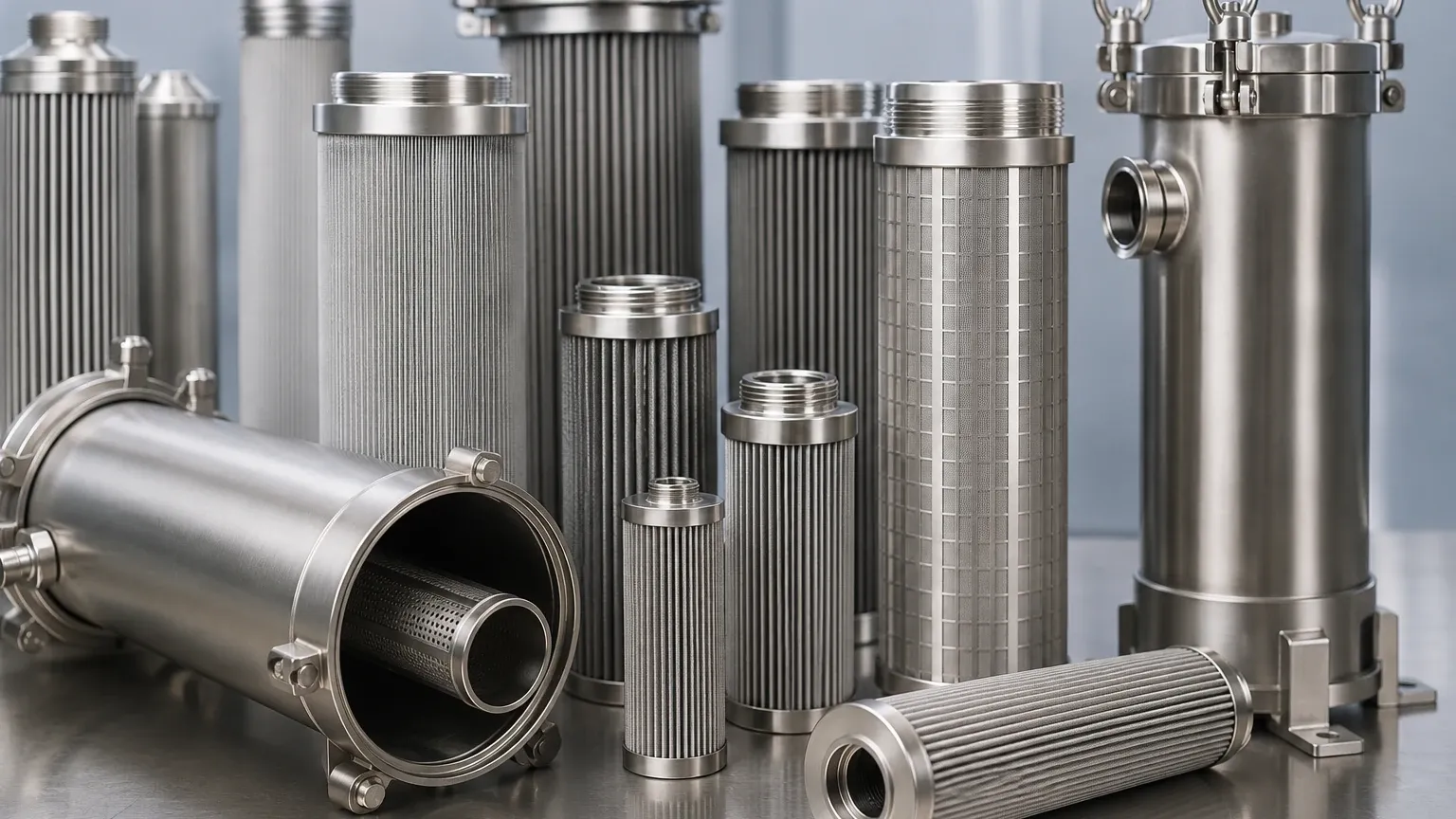
A filter cartridge unit is typically defined as the replaceable element designed to fit into a permanent housing or vessel. In heavy industrial environments, these units are often constructed from stainless steel or specialized alloys to withstand extreme temperatures, high pressures, and corrosive fluids. The "unit" designation often refers to the assembly of the filter media, the internal support core, and the sealing end caps.
In sectors such as chemical processing, pharmaceuticals, and food and beverage production, the filter cartridge unit must meet stringent regulatory and performance standards. For instance, in hydraulic systems, the unit must maintain structural integrity under rapid pressure fluctuations, while in food processing, it must be constructed from FDA-compliant materials that can withstand Clean-in-Place (CIP) protocols.
Core Components and Structural Integrity
The performance of a filter cartridge unit is fundamentally tied to its mechanical design. A failure in any single component can lead to fluid bypass, downstream contamination, or system-wide downtime.
1. Filtration Media
The media is the primary barrier where particle retention occurs. In stainless steel units, this often consists of wire mesh, sintered metal fibers, or sintered powder.
* Wire Mesh: Available in various weaves (plain, twilled, or dutch), wire mesh provides precise surface filtration and is easily cleaned.
* Sintered Metal: This involves bonding multiple layers of mesh or metal fibers through a high-temperature vacuum process, resulting in a robust, multi-layered media that offers excellent depth filtration and mechanical strength.
2. Internal Support Core
To prevent the media from collapsing under high differential pressure, a perforated or spiral-welded internal core is used. The core must be engineered to provide maximum structural support while minimizing resistance to fluid flow. In high-viscosity applications, the thickness and hole pattern of the core are critical variables in the unit's overall pressure drop profile.
3. End Caps and Sealing Interfaces
The end caps secure the media and core, ensuring that all fluid is forced through the filter. These are typically welded to the media in stainless steel units to eliminate the need for adhesives, which can fail at high temperatures or leach chemicals into the process stream. Common configurations include Double Open End (DOE), Single Open End (SOE) with code 7 (226 O-rings), or threaded connections.
Engineering Considerations for Filtration Performance
When specifying a filter cartridge unit, engineers must look beyond basic dimensions and focus on the physics of the filtration process. Several key metrics dictate how a unit will perform in a real-world industrial environment.
Micron Rating: Absolute vs. Nominal
A common point of confusion in filter selection is the distinction between absolute and nominal ratings.
* Nominal Rating: This is an approximate value indicating that the filter can trap a large percentage (typically 60% to 90%) of particles at a specific size. It is often used for pre-filtration.
* Absolute Rating: This refers to the diameter of the largest hard spherical particle that will pass through the filter under specific test conditions. For critical applications, such as final-stage pharmaceutical filtration, an absolute-rated filter cartridge unit is mandatory to ensure process consistency.
Differential Pressure ($ΔP$)
Differential pressure is the difference between the upstream and downstream pressure. A well-designed filter cartridge unit starts with a low "clean" $ΔP$. As particles accumulate, the $ΔP$ increases. Engineers must determine the "terminal" $ΔP$—the point at which the unit must be cleaned or replaced to prevent media rupture or a significant drop in flow rate.
Flow Velocity and Residence Time
The velocity at which the fluid passes through the media affects the efficiency of particle capture. High velocities can force deformable particles through the pores or cause "bridge-breaking," where previously captured particles are pushed downstream. Sizing the filter cartridge unit correctly involves calculating the total surface area required to maintain a low flux rate (flow per unit area).
Material Selection and Chemical Compatibility
The choice of material for a filter cartridge unit is dictated by the operating environment. While polymer-based filters are common in water treatment, industrial process fluids often require the durability of metal.
Stainless Steel (304 and 316L)
Stainless steel is the industry standard for reusable filtration units. Type 304 is suitable for general industrial use, while Type 316L offers superior resistance to pitting and crevice corrosion, making it the preferred choice for marine environments, acidic chemical processing, and pharmaceutical manufacturing.
Specialized Alloys
In environments involving high concentrations of chlorides or extremely high temperatures (exceeding 500°C), specialized alloys like Hastelloy, Monel, or Inconel may be required. These materials ensure the filter cartridge unit does not undergo stress corrosion cracking or oxidation that could compromise the purity of the filtrate.
Seal Materials
The O-rings or gaskets used in the unit must also be compatible with the process fluid. Common materials include Viton (FKM) for high temperatures and chemicals, EPDM for steam and polar solvents, and PTFE-encapsulated silicone for broad chemical resistance in food and pharma applications.
Maintenance, Cleaning, and Service Life
One of the primary advantages of a stainless steel filter cartridge unit is its cleanability. Unlike disposable depth filters, metal units can be restored to near-original performance through various cleaning methods, significantly reducing the total cost of ownership.
Cleaning Techniques
* Backwashing: Reversing the flow of the fluid to dislodge particles from the surface of the media. This is effective for surface-filtration mesh units.
* Ultrasonic Cleaning: Using high-frequency sound waves in a cleaning solvent to remove fine particles trapped deep within sintered media.
* Chemical Cleaning: Using acids, alkalis, or surfactants to dissolve organic or inorganic scaling. The material of the unit must be verified for compatibility with the cleaning agents.
* Burn-off / Pyrolysis: For polymer-contaminated filters, high-temperature ovens can be used to vaporize the contaminants, leaving the metal media intact.
Monitoring for Replacement
While metal units are durable, they are not infinite. Repeated cleaning cycles can eventually lead to work hardening of the mesh or localized thinning of the wire. Engineers should implement a monitoring program that tracks the time it takes for the unit to reach terminal $ΔP$ after each cleaning. A significant decrease in the time-to-clog indicates that the media is reaching the end of its functional life.
Specifying Custom Filter Cartridge Units for OEM Projects
Standard off-the-shelf filters may not meet the requirements of specialized machinery or unique process conditions. In such cases, a custom-engineered filter cartridge unit is necessary. When collaborating with a manufacturer for an OEM solution, several factors must be confirmed:
1. Housing Constraints: The unit must interface perfectly with the existing vessel, requiring precise tolerances on length, diameter, and seal geometry.
2. Pressure Ratings: The unit must be rated for both the operating pressure and potential pressure spikes (water hammer) within the system.
3. Filtration Efficiency Targets: Defining the specific particle size distribution that needs to be managed.
4. Regulatory Compliance: Ensuring materials meet industry-specific certifications (e.g., PED for pressure vessels, FDA for food contact).
By focusing on these technical parameters, purchasing teams can move beyond price-based decisions and select filtration solutions that offer the best balance of performance and durability. A properly specified filter cartridge unit not only protects expensive downstream equipment like pumps and spray nozzles but also ensures the consistent quality of the final product.
For technical assistance in selecting the appropriate configuration for your specific industrial application, you can Review product options and application support to evaluate material compatibility and filtration precision requirements.
