


Filter Cartridge Vacuum Pump
In industrial vacuum systems, the reliability and efficiency of the vacuum pump are directly linked to the quality of the filtration system protecting it. A filter cartridge vacuum pump configuration—where high-performance filter cartridges are integrated into the intake, exhaust, or internal lubrication circuits—serves as the primary defense against mechanical wear, process contamination, and environmental emissions. For engineers and maintenance professionals, selecting the correct filtration media and housing design is critical to maintaining system vacuum levels and extending the mean time between failures (MTBF).
Vacuum pumps operate by displacing gas molecules from a sealed volume to create a partial vacuum. During this process, the pump is susceptible to various contaminants, including fine particulates, liquid droplets, and corrosive vapors. Without effective Filter Cartridges, these contaminants can cause catastrophic damage to internal components such as vanes, rotors, and valves. This article examines the technical requirements, material considerations, and engineering challenges associated with filter cartridge vacuum pump applications.
The Role of Filtration in Vacuum Pump Systems
Filtration in a vacuum system is not a singular task but a multi-stage process designed to protect both the equipment and the surrounding environment. The specific placement of the filter cartridge determines its primary function within the vacuum circuit.
Intake Protection
Inlet filtration is perhaps the most critical stage. Positioned between the process chamber and the vacuum pump, the inlet filter cartridge must capture solid particulates and liquid carryover before they reach the pump’s internal mechanisms. In applications like wood routing, plastic extrusion, or chemical processing, the volume of debris can be significant. A high-efficiency filter cartridge vacuum pump inlet prevents abrasive wear on the pump’s precision-machined surfaces, which is essential for maintaining the tight tolerances required for high vacuum levels.
Exhaust Oil Mist Elimination
In oil-sealed vacuum pumps, the exhaust air often carries a fine mist of lubricating oil. Exhaust filter cartridges, often referred to as oil mist eliminators or coalescing filters, are designed to capture these microscopic droplets and return the oil to the pump’s reservoir. This not only reduces oil consumption but also ensures that the discharged air meets environmental and workplace safety standards. For cleanroom or laboratory environments, the efficiency of these cartridges must be exceptionally high to prevent hydrocarbon contamination.
Internal Oil Filtration
Many industrial vacuum pumps utilize an internal oil circulation system for cooling and sealing. Over time, this oil can become contaminated with carbon deposits or fine metallic wear particles. Internal filter cartridges continuously scrub the oil, ensuring that the lubricant remains effective and reducing the frequency of full oil changes.
Engineering Considerations for Filter Cartridge Selection
When specifying a filter cartridge vacuum pump setup, engineers must balance several competing technical factors. The choice of filtration media is not merely about capturing particles; it is about doing so without compromising the pump's performance.
Conductance and Pressure Drop
In vacuum technology, "conductance" refers to the ease with which gas flows through a component. Every filter cartridge introduces a degree of flow resistance, known as pressure drop ($ΔP$). In a vacuum system, an excessive pressure drop at the inlet reduces the effective pumping speed at the process chamber. Therefore, the filter must have a large surface area—often achieved through pleating—to allow for high flow rates with minimal resistance. Engineers must calculate the maximum allowable $ΔP$ to ensure the system reaches its target vacuum level within the required timeframe.
Micron Ratings and Efficiency
Selecting the appropriate micron rating requires an understanding of the specific contaminants present in the process. While a finer micron rating provides better protection, it also increases flow resistance and clogs more quickly. For vacuum pumps, common inlet filtration ranges from 1 to 10 microns, while exhaust coalescing filters may require sub-micron efficiency to effectively capture oil aerosols.
Material Compatibility and Outgassing
In high-vacuum applications, the materials used in the filter cartridge must be carefully vetted for outgassing. Outgassing is the release of gas trapped within a solid material under low-pressure conditions. If the filter media, adhesives, or gaskets outgas significantly, they can prevent the system from reaching the desired ultimate vacuum. Stainless steel wire mesh is often preferred over synthetic fibers in these scenarios due to its inorganic nature and excellent vacuum stability.
Advantages of Stainless Steel Filter Cartridges
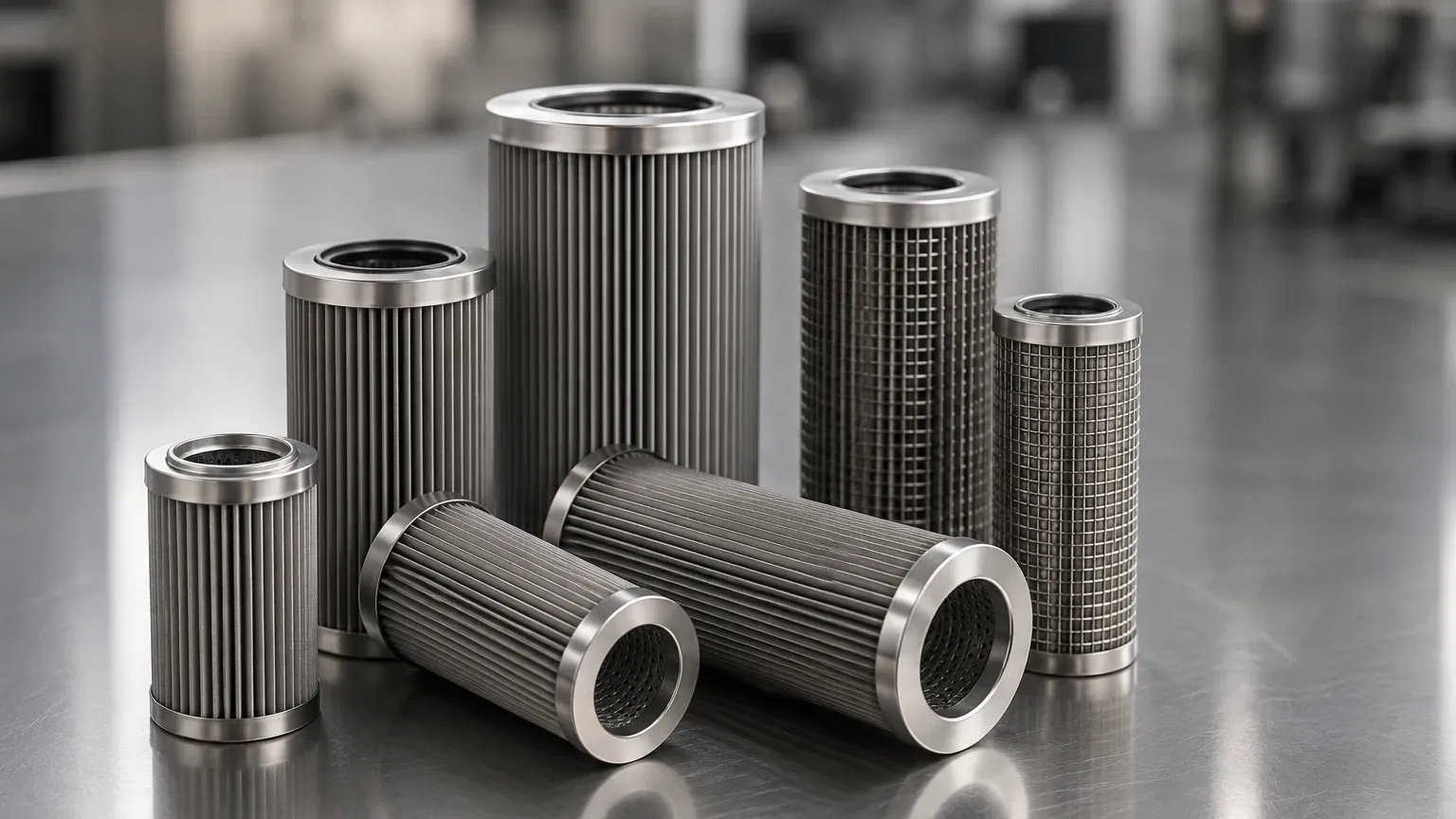
For demanding industrial environments—such as chemical processing, pharmaceuticals, and high-temperature manufacturing—stainless steel filter cartridges offer distinct advantages over disposable paper or polyester alternatives. Kaifil specializes in manufacturing these robust components to meet specific OEM requirements.
1. Chemical and Thermal Resistance: Vacuum processes often involve corrosive gases or high-temperature vapors. Stainless steel (typically 304 or 316L) remains structurally sound and chemically inert in environments where polymer-based filters would degrade or melt.
2. Mechanical Strength: Under the high differential pressures that can occur during system startup or sudden venting, filter cartridges must resist collapsing or bursting. Sintered or reinforced wire mesh provides the necessary structural integrity to withstand these mechanical stresses.
3. Cleanability and Reusability: Unlike disposable cartridges, stainless steel filters can often be cleaned via ultrasonic baths, backflushing, or chemical cleaning. This reduces the total cost of ownership and minimizes waste in high-volume industrial operations.
4. Precision Manufacturing: Advanced weaving and sintering techniques allow for highly controlled pore sizes. This ensures consistent filtration performance, which is vital for protecting sensitive vacuum pump components.
Common Risks in Vacuum Filtration Management
Failure to properly manage the filter cartridge vacuum pump interface can lead to several operational risks that increase costs and decrease productivity.
Saturation and Clogging
As a filter cartridge accumulates debris, the pressure drop across the media increases. If the filter is not replaced or cleaned, the pump must work harder to maintain vacuum, leading to increased energy consumption and higher operating temperatures. In extreme cases, a completely clogged inlet filter can starve the pump of gas flow, causing overheating and potential motor failure.
Bypass and Seal Failure
If a filter cartridge is improperly seated or if the gaskets fail, contaminated gas can bypass the filtration media entirely. This often occurs when using low-quality aftermarket cartridges that do not meet the exact dimensional tolerances of the original equipment. Even a small amount of bypass can introduce abrasive particles into the pump's compression chamber, leading to rapid wear.
Oil Emulsification
In processes involving high humidity or water vapor, moisture can accumulate in the vacuum pump oil. If the exhaust filter cartridge is not designed to handle moisture or if the pump's gas ballast is not used correctly, the oil can become emulsified. This reduces the oil's lubricating properties and can lead to corrosion of the internal pump surfaces.
Maintenance and Replacement Cycles
Establishing a proactive maintenance schedule for filter cartridges is essential for any facility relying on vacuum technology. Because every process is unique, replacement cycles should be determined based on empirical data rather than generic recommendations.
* Differential Pressure Monitoring: The most effective way to track filter health is by installing differential pressure gauges across the filter housing. A clear "change-out" pressure should be established based on the pump manufacturer’s specifications.
* Visual Inspection: During routine maintenance, filter cartridges should be inspected for signs of mechanical damage, chemical attack, or unusual contamination patterns. This can provide early warning signs of process deviations.
* Oil Analysis: For pumps with internal oil filtration, regular oil analysis can reveal the effectiveness of the filter cartridge and indicate when the oil's additive package has been depleted.
Customization for Specialized Vacuum Applications
Standard off-the-shelf filter cartridges do not always meet the needs of specialized vacuum applications. In many cases, custom engineering is required to optimize the filter cartridge vacuum pump performance. Customization options often include:
* Custom Dimensions: Tailoring the length and diameter of the cartridge to fit existing housings while maximizing surface area.
* Specialized End Caps: Utilizing threaded, flange, or bayonet-style connections to ensure a leak-tight seal within the vacuum circuit.
* Multi-Layer Media: Combining different layers of wire mesh or sintered metal to provide graded filtration—capturing large particles on the outer layers and fine particles on the inner layers to extend service life.
For organizations seeking to optimize their filtration processes, Kaifil provides comprehensive OEM and customized solutions. By focusing on material durability and precise filtration accuracy, these solutions ensure that industrial vacuum systems operate at peak efficiency even in the most demanding environments. When evaluating your next filtration upgrade, consider the long-term benefits of high-quality Filter Cartridges designed specifically for the rigors of vacuum service.
In conclusion, the filter cartridge is a small but vital component of the vacuum pump system. By understanding the engineering principles of conductance, material compatibility, and structural integrity, technical teams can make informed decisions that protect their capital equipment and ensure consistent process results.
