


Filter Element Oil
In industrial machinery, oil serves as the lifeblood of hydraulic systems, lubrication circuits, and fuel delivery lines. However, the presence of microscopic contaminants—ranging from metal shavings and silica to varnish and water—can compromise system integrity, leading to premature component failure and costly downtime. A high-quality filter element for oil is the primary defense mechanism against these threats. Selecting the appropriate filtration solution requires a deep understanding of fluid dynamics, material compatibility, and the specific mechanical demands of the application.
Industrial filtration is not a one-size-fits-all discipline. The efficiency of a filter element oil system depends on the precise alignment of the filter media with the operating environment. Whether dealing with high-viscosity lubricants or high-pressure hydraulic fluids, engineers must evaluate how different Filter Cartridges perform under varying thermal and mechanical stresses to ensure long-term reliability.
The Critical Role of Oil Filtration in Industrial Systems
Contamination is the leading cause of failure in oil-dependent systems. Even particles invisible to the naked eye, often in the 2-to-15-micron range, can cause abrasive wear on precision-machined surfaces such as valve spools, pump pistons, and bearings. When a filter element oil component is integrated into a system, its primary objective is to maintain fluid cleanliness levels according to ISO 4406 standards.
Effective filtration provides several key benefits:
* Component Longevity: By removing abrasive particles, filters prevent the "chain reaction of wear" where one particle creates several more through internal erosion.
* System Stability: Clean oil ensures that hydraulic actuators and control valves respond predictably, maintaining the precision of automated processes.
* Extended Oil Life: Removing oxidation precursors and solid contaminants helps maintain the chemical stability of the oil, reducing the frequency of oil changes.
* Reduced Maintenance Costs: High-performance filtration reduces the need for emergency repairs and extends the intervals between scheduled overhauls.
Material Selection for Oil Filter Elements
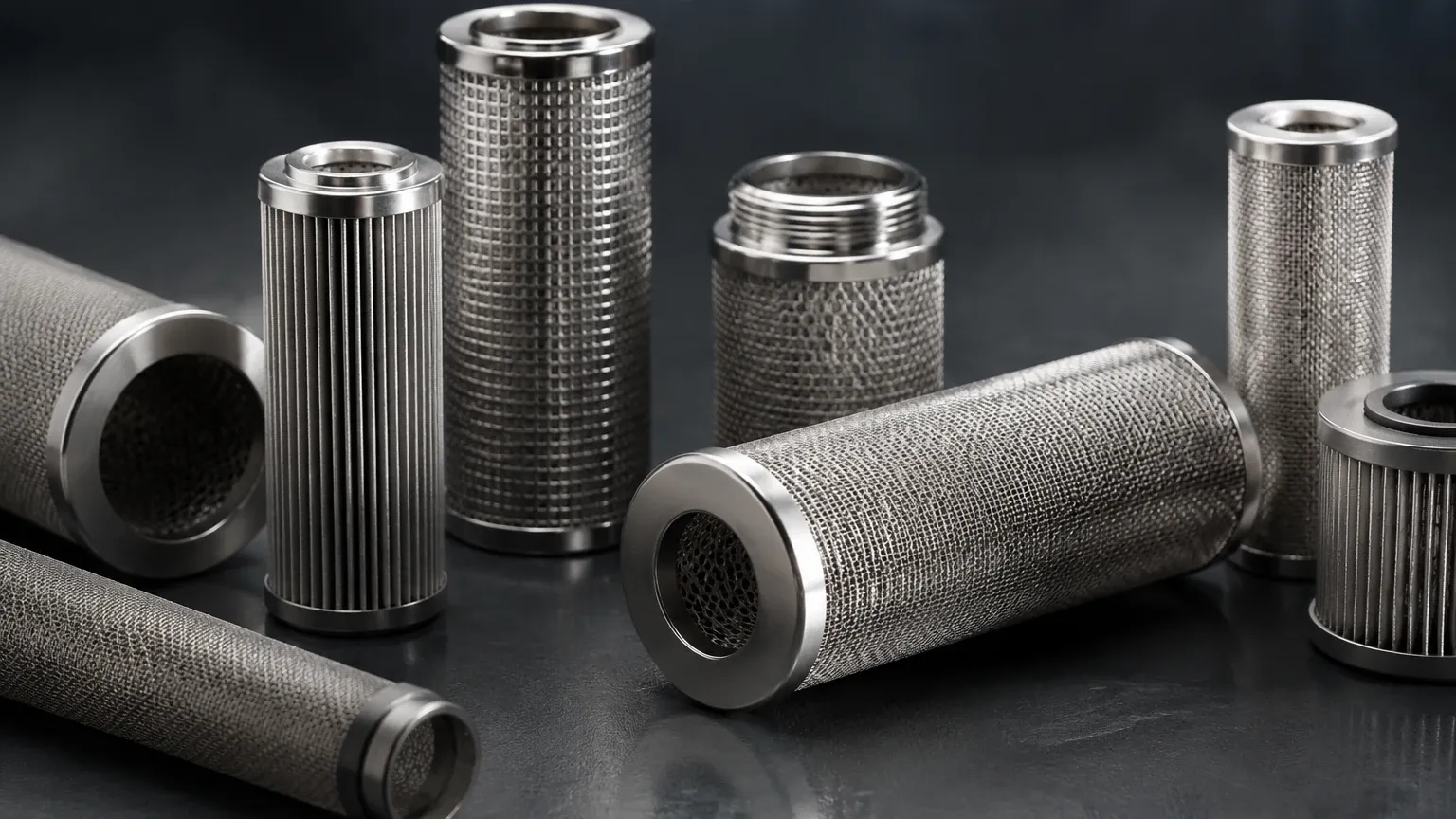
The material used in a filter element oil assembly determines its chemical resistance, thermal thresholds, and structural durability. While disposable cellulose or synthetic fiber media are common in light-duty applications, demanding industrial environments often require stainless steel filtration solutions.
Stainless Steel Wire Mesh
Stainless steel (typically Grade 304 or 316L) is the material of choice for harsh industrial oil applications. Its primary advantage is durability. Unlike paper or polymer-based media, stainless steel can withstand extreme temperatures and high differential pressures without collapsing or shedding fibers into the fluid stream. Furthermore, stainless steel elements are often cleanable and reusable, offering a lower total cost of ownership in the long run.
Sintered Metal Media
For applications requiring extreme precision and high structural strength, sintered metal filter elements are used. These are created by fusing layers of wire mesh or metal powder under heat and pressure. The result is a porous, monolithic structure that provides excellent pore size control and can handle the most aggressive chemical additives found in modern synthetic oils.
Compatibility with Synthetic and Mineral Oils
Engineers must ensure that the seals and adhesives used in the filter element oil assembly are compatible with the specific fluid. For example, certain synthetic oils or phosphate esters can degrade standard Nitrile (Buna-N) seals, necessitating the use of Viton (FKM) or EPDM gaskets to prevent bypass leakage.
Structural Design and Filtration Mechanics
The internal geometry of a filter element oil component significantly impacts its performance. Most industrial Filter Cartridges utilize one of two primary designs: pleated or cylindrical.
Pleated Filter Elements
Pleating is a technique used to increase the effective surface area of the filter media within a fixed volume. By folding the media, manufacturers can provide significantly more filtration area than a simple cylinder. This results in:
* Lower Initial Pressure Drop: More flow paths for the oil reduce resistance.
* Higher Dirt-Holding Capacity: More surface area allows the filter to trap more contaminants before reaching its terminal pressure drop.
* Extended Service Life: Because the filter takes longer to clog, replacement intervals are lengthened.
Support Cores and End Caps
Because oil systems often operate under high pressure, the filter media must be supported to prevent deformation. High-strength internal cores, usually made of perforated stainless steel, provide the necessary rigidity. The end caps—which can be configured as threaded, bolt-on, or O-ring plug-in styles—ensure a secure seal within the filter housing, preventing unfiltered oil from bypassing the media.
Technical Specifications: Micron Ratings and Beta Ratios
When selecting a filter element oil solution, engineers rely on standardized metrics to predict performance. The two most critical values are the micron rating and the Beta ratio.
Micron Rating: Absolute vs. Nominal
* Nominal Rating: This is an arbitrary value indicating the filter's ability to trap a percentage of particles of a certain size. It is often unreliable for critical systems because it does not guarantee a specific efficiency.
* Absolute Rating: This represents the diameter of the largest hard spherical particle that will pass through the filter under specified test conditions. For critical hydraulic and lubrication systems, absolute-rated elements are essential to ensure that no particles larger than the fluid film thickness reach sensitive components.
Understanding the Beta Ratio (β)
The Beta ratio is a measure of filtration efficiency derived from the Multi-Pass Test (ISO 16889). It compares the number of particles of a specific size upstream of the filter to the number of particles downstream. For instance, a Beta ratio of β10 = 200 means that for every 200 particles of 10 microns entering the filter, only one passes through. This equates to 99.5% efficiency. High-performance oil filters typically aim for Beta ratios of 200, 1000, or higher for their target micron size.
Analyzing Pressure Drop and Flow Characteristics
Every filter element oil component introduces a degree of resistance to the flow, known as pressure drop (ΔP). Maintaining a low pressure drop is vital for system efficiency and to prevent the filter from going into "bypass mode."
Factors influencing pressure drop include:
1. Fluid Viscosity: Thicker oils (common in cold starts or high-viscosity gear oils) create higher resistance.
2. Flow Rate: As the velocity of the oil increases, the pressure drop across the media increases exponentially.
3. Contaminant Loading: As the filter traps debris, the available flow paths decrease, causing the pressure drop to rise over time.
Engineers must size the filter so that the clean pressure drop is well below the system's bypass valve setting, typically allowing for a significant "dirt-loading" margin before maintenance is required.
Maintenance and Replacement Cycles
The effective management of a filter element oil program requires proactive monitoring. Relying solely on a calendar-based replacement schedule often leads to either premature disposal of useful filters or, conversely, running a clogged filter in bypass mode, which allows contaminated oil to circulate freely.
Differential Pressure Monitoring
The most reliable way to determine when a filter needs service is by monitoring the differential pressure across the housing. Many industrial systems are equipped with visual indicators or electronic sensors that alert operators when the ΔP reaches a critical threshold.
Cleaning vs. Replacement
While many polymer filters are disposable, stainless steel filter element oil components are often designed to be cleaned. Ultrasonic cleaning is the most effective method, using high-frequency sound waves to dislodge deeply embedded particles from the mesh without damaging the structure. However, it is critical to verify the integrity of the element after cleaning through a bubble-point test to ensure no pores have been enlarged or the mesh breached.
Customization for Specialized Industrial Applications
Standard off-the-shelf filters may not meet the requirements of specialized machinery. In these cases, customized filtration solutions are necessary. Customization can involve:
* Non-Standard Dimensions: Fitting a high-performance element into a legacy housing or a compact machine envelope.
* Extreme Chemical Resistance: Utilizing specialized alloys for oils containing aggressive detergents or acidic byproducts.
* High-Pressure Reinforcement: Designing elements that can withstand massive pressure surges or "water hammer" effects in hydraulic lines.
By working with a manufacturer that understands the nuances of metal fabrication and fluid engineering, purchasing teams can secure Filter Cartridges that are precisely tuned to their specific operational challenges.
Conclusion: Selecting the Right Filter Element for Your Operation
Choosing the right filter element oil solution is a balance between filtration fineness, flow capacity, and structural durability. For industrial professionals, the goal is to achieve the required ISO cleanliness code while minimizing the total cost of ownership. Stainless steel elements provide a robust, high-performance alternative to disposable media, particularly in high-temperature or high-pressure environments where reliability is non-negotiable.
Before finalizing a filtration specification, engineers should confirm the maximum operating pressure, the expected flow rate range, the fluid's chemical composition, and the target cleanliness level. By focusing on these technical fundamentals, organizations can ensure their oil-dependent systems remain efficient, durable, and productive for years to come.
