


Filter Jug Cartridges
In the realm of water treatment and fluid purification, filter jug cartridges serve as a primary point-of-use (POU) solution for reducing contaminants in potable water. While often associated with domestic environments, the underlying technology of these cartridges involves complex chemical and mechanical principles that are fundamental to broader industrial filtration. For engineers and technical procurement teams, understanding the performance characteristics, material limitations, and filtration mechanisms of these components is essential when evaluating water quality requirements or scaling up to more robust Filter Cartridges for industrial applications.
This guide examines the technical architecture of filter jug cartridges, the engineering considerations behind their design, and the critical factors that distinguish these consumer-grade components from high-performance industrial filtration solutions.
Technical Composition and Filtration Mechanisms
Filter jug cartridges are typically multi-stage systems designed to address specific water quality issues, primarily taste, odor, and hardness. The effectiveness of a cartridge is determined by the synergy between its internal media and its structural housing.
Activated Carbon Adsorption
Most cartridges utilize Granular Activated Carbon (GAC) or carbon blocks. Activated carbon is highly porous, providing a massive surface area for adsorption. This process is effective for removing organic compounds, chlorine, and certain volatile organic compounds (VOCs) that affect the sensory profile of water. In industrial contexts, the iodine number and pore size distribution of the carbon are critical metrics for determining the adsorption capacity for specific molecular weights.
Ion Exchange Resins
To address water hardness and heavy metal contamination, cartridges incorporate ion exchange resins. These resins consist of small beads that swap unwanted ions (such as calcium, magnesium, lead, or copper) with more desirable ions (typically hydrogen or sodium). In a B2B environment, the choice between cation and anion resins depends on the specific chemical profile of the source water and the required purity levels for downstream processes.
Mechanical Pre-filtration
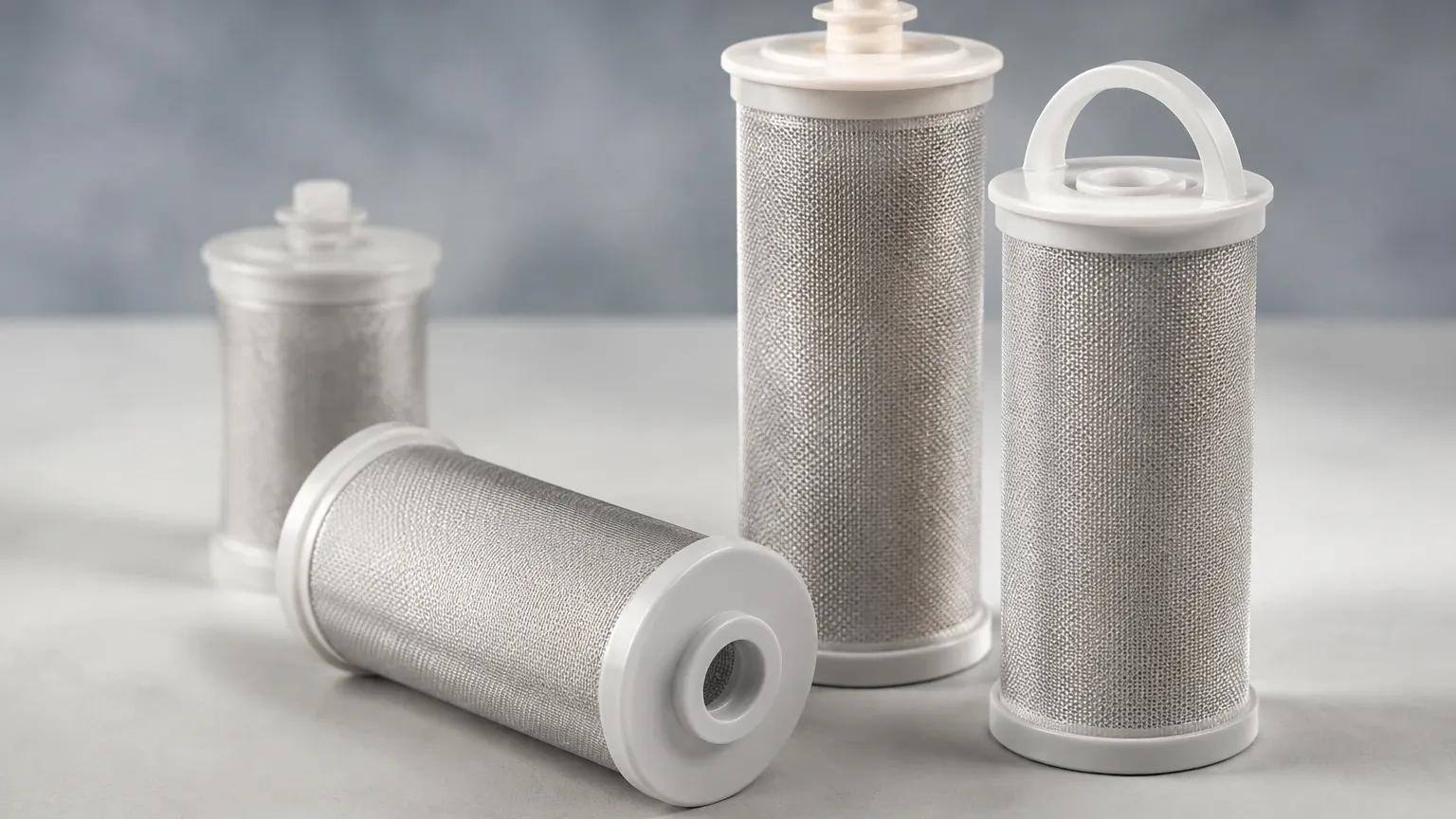
Before the water reaches the chemical media, it passes through a fine mesh or non-woven fabric. This stage is designed to trap sediment, rust, and other suspended solids. While domestic cartridges often use basic polymer meshes, industrial-grade systems frequently transition to stainless steel wire mesh to ensure durability and precise micron ratings under higher pressure and flow conditions.
Performance Evaluation and Micron Ratings
When specifying filtration components, engineers must distinguish between nominal and absolute filtration ratings. Most filter jug cartridges operate on a nominal rating system, meaning they can trap a high percentage of particles at a specific size but are not guaranteed to stop 100% of them.
Contaminant Reduction Efficiency
The performance of a cartridge is usually validated against standards such as NSF/ANSI 42 (Aesthetic Effects) and NSF/ANSI 53 (Health Effects). Key metrics include:
- Chlorine Reduction: Often exceeding 90% in the initial stages of the cartridge life.
- Heavy Metal Retention: The ability of ion exchange resins to maintain high selectivity for lead and copper over the duration of the filter's service life.
- Turbidity Reduction: The removal of suspended particles to improve water clarity.
Flow Dynamics and Contact Time
A critical engineering constraint for gravity-fed cartridges is the balance between flow rate and contact time (Empty Bed Contact Time or EBCT). Because these systems rely on gravity rather than pumped pressure, the media must be packed loosely enough to allow water to pass through at a usable rate, yet densely enough to ensure sufficient contact for adsorption and ion exchange to occur. If the flow is too fast, the chemical removal efficiency drops significantly.
Engineering Considerations for Cartridge Selection
Selecting the right filtration solution requires a deep dive into the operational environment. For professionals managing water systems, several factors must be confirmed before integrating a specific cartridge design.
Material Compatibility and Food Safety
Since these cartridges are used for potable water, all materials—from the plastic housing to the internal resins—must be food-grade and BPA-free. In industrial food and beverage processing, the requirements are even more stringent, often demanding 304 or 316L stainless steel housings to withstand rigorous Cleaning-in-Place (CIP) cycles and high-temperature sterilization.
Housing Integrity and Bypass Prevention
A common failure point in low-quality cartridges is "bypass," where water flows around the media rather than through it. This is often caused by poor sealing at the interface between the cartridge and the jug reservoir. Industrial Filter Cartridges solve this through precision-engineered end caps and O-ring seals (such as 222 or 226 configurations) that ensure a positive mechanical seal.
Pressure and Temperature Limits
Filter jug cartridges are designed for atmospheric pressure and ambient temperatures. Attempting to use these components in pressurized lines or with hot water can lead to structural failure, media migration, or the release of adsorbed contaminants. For applications involving high pressure or temperature fluctuations, metal-based filtration components are the standard requirement.
Operational Lifespan and Replacement Cycles
The effective life of a filter jug cartridge is finite and is determined by the exhaustion of its chemical media. Unlike mechanical filters, which may simply clog and reduce flow, chemical filters can reach a point of "breakthrough" where they no longer remove contaminants despite water still flowing through them.
Exhaustion Curves
The adsorption capacity of activated carbon follows a predictable decay curve. As the active sites on the carbon surface become occupied, the rate of contaminant removal decreases. Similarly, ion exchange resins have a fixed capacity for ion loading. Monitoring these cycles in a B2B setting often involves totalizing flow meters or periodic water chemistry analysis, rather than the simple calendar-based indicators found on consumer jugs.
Risks of Over-Usage
Using a cartridge beyond its rated capacity introduces several risks:
1. Desorption: In some cases, previously trapped contaminants can be released back into the water at higher concentrations.
2. Bacterial Proliferation: If a cartridge remains in a moist environment for too long without replacement, the organic matter trapped in the filter can serve as a substrate for biofilm growth.
3. Channeling: Over time, the granular media may shift, creating paths of least resistance that allow water to bypass the treatment zones entirely.
Transitioning from Consumer to Industrial Filtration
While filter jug cartridges are suitable for small-scale, low-demand scenarios, industrial processes require a level of reliability and durability that plastic-housed cartridges cannot provide. This is where the transition to stainless steel and precision-engineered filtration becomes necessary.
The Advantages of Stainless Steel Media
In demanding environments such as chemical processing or pharmaceutical manufacturing, the filtration media must be inert and capable of being cleaned and reused. Stainless steel wire mesh and sintered metal filters offer:
- High Mechanical Strength: Capability to withstand high differential pressures without collapsing.
- Thermal Stability: Performance remains consistent at extreme temperatures where polymers would degrade.
- Chemical Resistance: Compatibility with a wide range of solvents, acids, and bases.
- Precise Micron Control: Absolute ratings that ensure consistent output quality, critical for protecting downstream equipment like RO membranes or high-pressure pumps.
Customization and OEM Solutions
Industrial filtration often requires bespoke designs to fit existing machinery or to target specific particulate profiles. Unlike the standardized shapes of filter jug cartridges, industrial Filter Cartridges can be customized in terms of length, diameter, end-cap style, and mesh weave. This flexibility allows engineers to optimize the filtration surface area and minimize pressure drop across the system.
Total Cost of Ownership (TCO) Considerations
When evaluating filtration options, purchasing teams must look beyond the initial unit price. The total cost of ownership includes:
- Replacement Frequency: How often does the cartridge need to be changed?
- Labor Costs: The time required for maintenance and replacement.
- Waste Management: The environmental and financial cost of disposing of spent cartridges.
- System Downtime: The impact of filter failure on the overall production line.
In many high-volume applications, a higher initial investment in cleanable stainless steel filters results in a significantly lower TCO compared to the frequent replacement of disposable plastic cartridges.
Conclusion: Making Informed Filtration Decisions
Understanding the mechanics of filter jug cartridges provides a foundation for appreciating the complexities of water treatment. However, for B2B applications where consistency, durability, and high flow rates are paramount, the limitations of domestic-grade cartridges become clear.
Engineers should confirm source water quality, required effluent standards, and operational constraints (pressure, temperature, and flow) before selecting a filtration path. By moving toward professional-grade Filter Cartridges, organizations can ensure long-term operational efficiency and protect their critical infrastructure from the risks associated with inadequate filtration. Whether the goal is protecting sensitive analytical equipment or ensuring the purity of a food product, the choice of filtration technology is a decisive factor in the success of the process.
