


Filter Replacement Vacuum
In industrial vacuum systems, the efficiency of the entire process is often dictated by the performance of the filtration components. Whether it is a vacuum pump protection system, a vacuum dehydration unit, or a vacuum-assisted chemical filtration setup, the filter element serves as the critical barrier between operational success and mechanical failure. Understanding the technical nuances of a filter replacement vacuum strategy is essential for engineers and maintenance teams who must balance system uptime with the protection of expensive downstream equipment.
Industrial vacuum applications present unique challenges that differ significantly from positive-pressure systems. In a vacuum environment, the structural integrity of the filter element is under constant stress, as the external pressure pushes inward against the filter media. This necessitates the use of high-quality Filter Cartridges that are engineered to withstand these specific mechanical loads without collapsing or bypassing contaminants.
The Role of Filtration in Vacuum Systems
Vacuum systems are utilized across a broad spectrum of industries, including pharmaceutical manufacturing, food processing, chemical refining, and hydraulic power units. In these environments, the vacuum pump is the heart of the operation. However, vacuum pumps are highly sensitive to particulates, liquid carryover, and chemical vapors. Without adequate filtration, these contaminants can lead to internal abrasion, oil emulsification, and eventual pump seizure.
Filter replacement vacuum protocols are designed to ensure that the filter media remains permeable enough to allow for the required flow rate while maintaining the target micron efficiency. As a filter traps debris, its resistance increases, leading to a higher differential pressure. In a vacuum system, this manifests as a decrease in the effective vacuum level at the process point, forcing the pump to work harder and consume more energy to achieve the same results.
Identifying the Need for Filter Replacement Vacuum
Determining the optimal time for a filter replacement vacuum procedure involves monitoring several key performance indicators. Unlike positive pressure systems where a burst pipe might be the immediate consequence of a clogged filter, vacuum systems often exhibit a gradual decline in performance that can be harder to diagnose without proper instrumentation.
1. Differential Pressure Monitoring
The most reliable method for determining replacement cycles is the use of differential pressure (DP) gauges. For most industrial vacuum filters, a DP of 5 to 8 psi (0.35 to 0.55 bar) indicates that the filter is reaching its dirt-holding capacity. If the DP exceeds the manufacturer’s recommendations, the risk of media migration or structural collapse increases significantly.
2. Vacuum Level Degradation
If the system is unable to reach its target vacuum depth despite the pump running at full capacity, the intake filter is likely restricted. This "choking" effect reduces the volumetric efficiency of the pump. Monitoring the time it takes to reach a specific vacuum level (pull-down time) can provide an early warning that a filter replacement is necessary.
3. Oil Contamination in Lubricated Pumps
In oil-sealed rotary vane pumps, the filter’s job is often to prevent particulates from entering the oil. If the filter fails or is bypassed, the oil will quickly become discolored or gritty. Regular oil analysis can reveal if the intake filtration is performing correctly or if a more robust filter cartridge is required.
Engineering Considerations for Vacuum Filter Cartridges
When selecting a replacement for a vacuum application, engineers must look beyond basic dimensions. The material science and structural engineering of the cartridge determine its longevity and reliability in a vacuum.
Structural Reinforcement
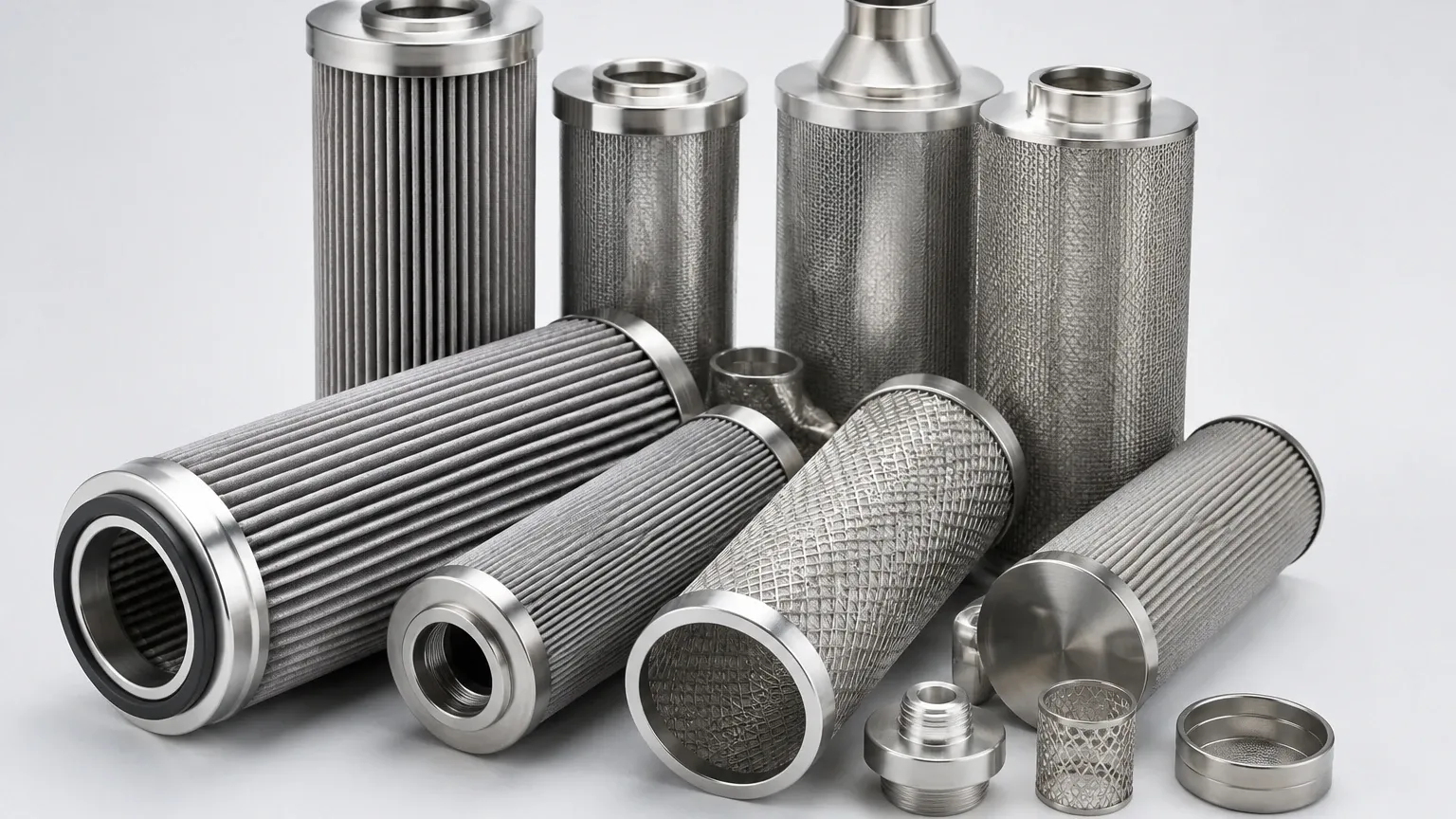
In vacuum filtration, the pressure differential acts from the outside of the cartridge toward the center. This means the internal core of the filter must be exceptionally strong. Kaifil utilizes heavy-duty stainless steel perforated cores or spiral-welded supports to ensure that the filter media remains supported even under high-vacuum conditions. Without this reinforcement, the media can deform, leading to "channeling" where contaminants bypass the filter entirely.
Material Compatibility
Stainless steel is the preferred material for many industrial filter replacement vacuum tasks due to its thermal and chemical resistance. In chemical processing or high-temperature vacuum distillation, synthetic fibers or paper filters may degrade or off-gas, potentially contaminating the process. Stainless steel wire mesh, particularly in 304 or 316L grades, offers a permanent solution that can withstand corrosive vapors and extreme temperatures without losing structural integrity.
Micron Rating and Efficiency
Choosing the correct micron rating is a balance between protection and flow. For vacuum pump protection, an absolute micron rating is often preferred over a nominal rating. An absolute rating ensures that 99.9% of particles above a certain size are captured, which is vital for protecting precision-machined pump components from scoring.
The Impact of Delayed Filter Replacement
Neglecting the filter replacement vacuum schedule can lead to a cascade of system failures that far exceed the cost of a new filter cartridge. The primary risks include:
* Pump Overheating: As the filter clogs, the pump must operate for longer periods to maintain the vacuum. This leads to excessive heat generation, which can break down lubricants and damage seals.
* Cavitation: In liquid ring vacuum pumps, a restricted intake can lead to cavitation, where vapor bubbles form and collapse violently against the impeller, causing pitting and mechanical damage.
* Product Contamination: In vacuum drying or packaging applications, a failed filter can allow particulates to enter the product chamber, leading to batch rejection and significant financial loss.
* Energy Inefficiency: A system operating with a clogged filter can consume up to 20% more electricity to maintain the same vacuum levels, increasing the total cost of ownership.
Customization and OEM Solutions
Many industrial vacuum systems utilize non-standard filter housings, requiring customized filtration solutions. When standard off-the-shelf filters do not meet the specific requirements of a high-vacuum application, custom-engineered stainless steel cartridges become necessary.
Customization options often include:
* End Cap Configurations: Threaded, flange, or O-ring seals designed to ensure a leak-proof fit within the vacuum vessel.
* Pleated vs. Cylindrical Designs: Pleated designs offer a significantly larger surface area, which is ideal for high-flow vacuum systems where a low initial pressure drop is required. Cylindrical mesh filters are often used for coarser filtration or as a pre-filter stage.
* Specialized Coatings: For applications involving extremely aggressive chemicals, stainless steel filters can be passivated or coated to enhance their resistance to pitting and crevice corrosion.
For those seeking high-performance components, exploring specialized Filter Cartridges provides access to the engineering depth required for complex vacuum environments.
Maintenance Best Practices for Vacuum Filtration
To maximize the lifespan of a vacuum system, a proactive maintenance strategy should be implemented. This includes more than just the physical act of replacing the filter; it involves a holistic approach to system health.
Regular Inspections
Even if the DP gauge is within the green zone, periodic visual inspections of the filter housing and seals are recommended. In vacuum systems, even a microscopic air leak at the filter housing seal can significantly degrade performance. Gaskets and O-rings should be replaced during every filter change to ensure a perfect seal.
Cleaning vs. Replacement
One of the primary advantages of stainless steel wire mesh filters is their cleanability. Unlike disposable synthetic filters, stainless steel elements can often be cleaned using ultrasonic baths, backwashing, or chemical cleaning agents. This makes them a cost-effective choice for processes with high particulate loads where frequent filter replacement vacuum cycles would otherwise be prohibitively expensive.
Documentation and Data Logging
Keeping a log of filter replacement dates, DP readings, and the condition of the used filters can help identify trends. If filters are clogging faster than expected, it may indicate a change in the process upstream or the need for a different micron rating or filter media type.
Conclusion: Optimizing the Vacuum Process
The filter replacement vacuum process is a critical maintenance task that directly impacts the reliability and efficiency of industrial operations. By selecting high-quality filter cartridges designed for the rigors of vacuum service, engineers can protect their equipment, reduce energy consumption, and ensure product purity.
Whether dealing with a standard vacuum pump or a complex customized filtration system, the focus must remain on structural integrity, material compatibility, and precise filtration accuracy. Investing in robust stainless steel filtration solutions not only simplifies the maintenance cycle but also provides the peace of mind that the vacuum system will perform at its peak capacity, even in the most demanding industrial environments.
