


Fish Tank Filter Cartridges
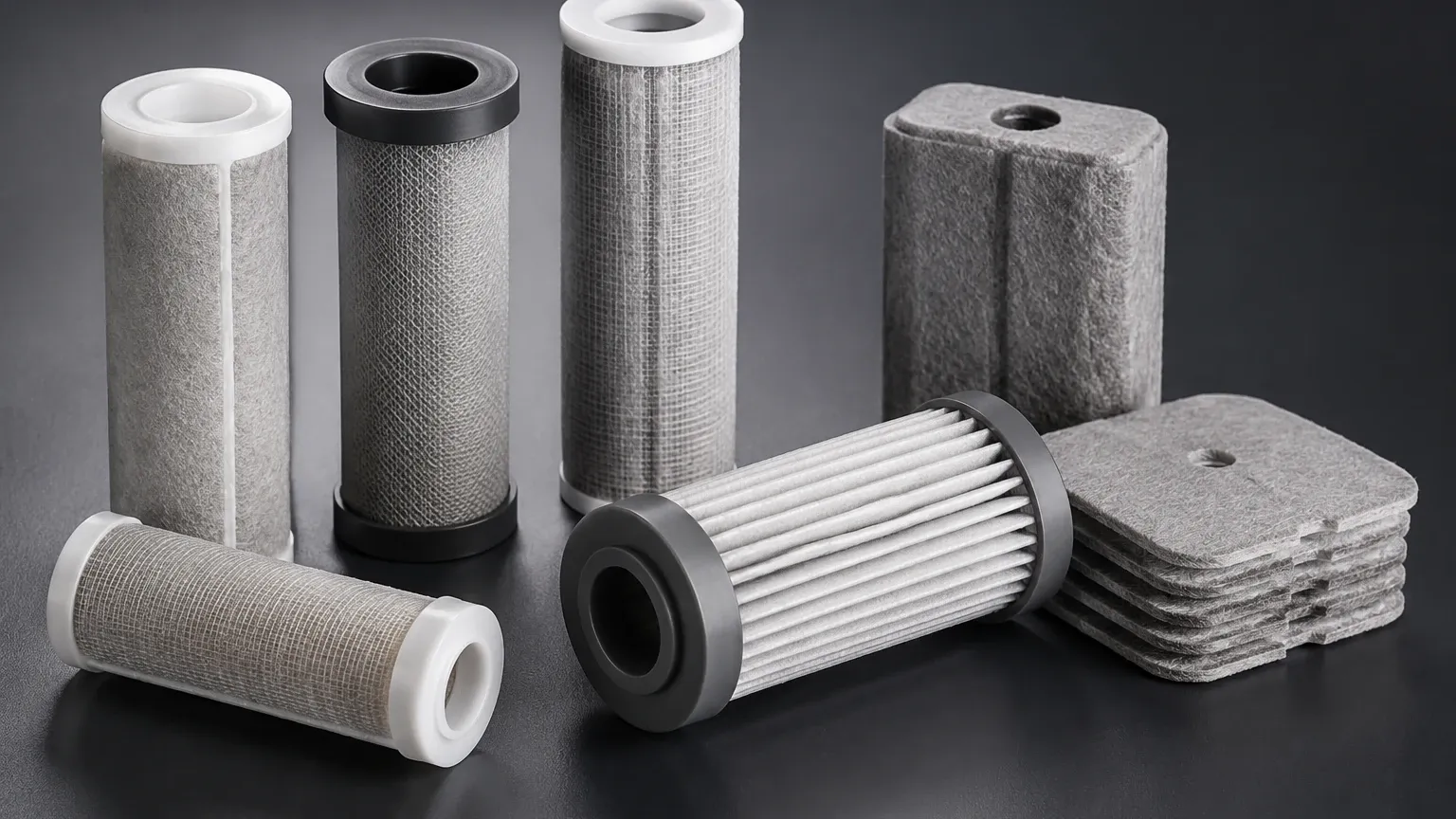
In commercial and industrial aquatic environments—ranging from large-scale aquaculture facilities and public aquariums to research laboratories and high-end ornamental displays—the reliability of filtration systems is paramount. While residential aquarium owners often rely on disposable media, professional operations require robust Filter Cartridges that can withstand continuous high-flow rates, chemical exposure, and rigorous cleaning cycles. Selecting the appropriate fish tank filter cartridges for industrial-scale applications involves a deep understanding of mechanical filtration principles, material science, and hydraulic performance.
Industrial filtration in aquatic systems is not merely about water clarity; it is about maintaining a stable biological environment. The failure of a filtration component can lead to rapid accumulation of ammonia, nitrite, and suspended solids, which can compromise the health of aquatic life and the integrity of the entire system. This article examines the technical considerations for selecting high-performance filter cartridges for commercial aquatic applications.
The Role of Mechanical Filtration in Aquatic Systems
Mechanical filtration is the first line of defense in any aquatic life support system (LSS). The primary function of fish tank filter cartridges in this context is the removal of particulate matter, including uneaten food, metabolic waste, and organic debris. By removing these solids before they decompose, the mechanical filter reduces the biological load on subsequent filtration stages, such as bio-reactors and protein skimmers.
In industrial settings, the efficiency of mechanical filtration is measured by its ability to capture specific particle sizes while maintaining a low pressure drop. For instance, in aquaculture recirculating systems (RAS), the removal of particles larger than 50 microns is often critical to prevent the clogging of oxygenation equipment and to reduce the risk of bacterial outbreaks. High-precision stainless steel filter cartridges allow for exact micron ratings, ensuring that the filtration system performs consistently under varying organic loads.
Material Selection: Stainless Steel vs. Polymer Media
When evaluating fish tank filter cartridges for professional use, material selection is one of the most critical engineering decisions. Most consumer-grade cartridges utilize polypropylene, polyester, or foam. While cost-effective for small setups, these materials have significant limitations in industrial environments.
Durability and Structural Integrity
Industrial systems often operate at higher pressures and flow rates than residential tanks. Polymer-based cartridges can compress or deform under high differential pressure (ΔP), leading to "bypass"—where unfiltered water escapes around the media. Stainless steel cartridges, particularly those manufactured from 304 or 316L grades, offer superior structural rigidity. They do not collapse or shed fibers, ensuring that the filtration accuracy remains constant throughout the service cycle.
Chemical and Corrosion Resistance
In saltwater or marine environments, corrosion is a constant threat. While plastics are inert, they degrade over time due to UV exposure (in outdoor systems) or ozone treatment (common in public aquariums). 316L stainless steel provides excellent resistance to chloride-induced pitting and crevice corrosion, making it the preferred choice for long-term installations in marine LSS. Furthermore, stainless steel can withstand aggressive chemical cleaning agents used to remove biofilm or mineral scale, which would destroy standard polymer media.
Technical Specifications for Commercial Filter Cartridges
Engineers must look beyond the "one size fits all" approach when specifying cartridges for large-scale aquatic systems. Several technical parameters define the suitability of a cartridge for a specific application.
Micron Rating and Pore Distribution
Filtration accuracy is defined by the micron rating. For fish tank filter cartridges used in commercial settings, it is essential to distinguish between nominal and absolute ratings. A nominal rating indicates the ability to trap a percentage of particles, while an absolute rating (often achieved through precision-woven wire mesh) ensures that no particles larger than the specified size pass through. In sensitive research environments, absolute filtration is often required to maintain sterile or controlled conditions.
Surface Area and Pleating Technology
To handle high flow rates without excessive pressure drop, the available surface area of the filter media must be maximized. Pleated stainless steel cartridges significantly increase the effective filtration area compared to cylindrical or depth-type filters. This design allows for longer run times between cleaning cycles and reduces the footprint of the filtration housing, which is often a constraint in crowded mechanical rooms.
Flow Rate and Pressure Drop (ΔP)
Every filter introduces resistance to the system. An ideal fish tank filter cartridge provides high permeability. Engineers must calculate the clean pressure drop and the terminal pressure drop (the point at which the filter must be cleaned or replaced). Stainless steel mesh filters typically offer lower initial ΔP compared to dense felt or foam media, leading to reduced energy consumption for the system's circulation pumps.
Applications in Large-Scale Aquatic Environments
The requirements for fish tank filter cartridges vary significantly depending on the specific B2B sector. Understanding these nuances is key to optimizing system performance.
Public Aquariums and Large Displays
In public aquariums, water clarity is a product of both mechanical and chemical filtration. Large display tanks require cartridges that can handle massive volumes of water while being easy for maintenance dive teams or technicians to service. Reusable stainless steel cartridges are often preferred here because they eliminate the waste stream associated with hundreds of disposable filters annually.
Aquaculture and Hatcheries
In commercial fish farming, the focus is on biosecurity and solids management. Filter cartridges are used to treat intake water to prevent the introduction of pathogens and to treat effluent water to meet environmental discharge regulations. The ability to backwash or ultrasonically clean stainless steel cartridges makes them a sustainable choice for these high-throughput operations.
Laboratory and Research Facilities
Zebrafish (Danio rerio) and other aquatic models used in biomedical research require highly standardized water quality. Filtration systems in these facilities must be reliable and repeatable. Precision-engineered Filter Cartridges ensure that particulate levels remain within strict experimental parameters, preventing water quality fluctuations from becoming a confounding variable in scientific studies.
Maintenance and Cleaning Protocols for Reusable Cartridges
One of the primary advantages of industrial-grade stainless steel fish tank filter cartridges is their cleanability. Unlike disposable cartridges that are discarded once fouled, metal filters can be restored to near-original performance through several methods.
1. Backwashing: Many automated systems use a reverse flow of water to dislodge accumulated debris from the surface of the mesh. This is highly effective for organic solids.
2. Chemical Cleaning: For cartridges fouled with mineral scale or stubborn biofilms, soaking in mild acidic or alkaline solutions can dissolve the contaminants without damaging the stainless steel substrate.
3. Ultrasonic Cleaning: This is the most thorough method for restoring pleated metal cartridges. High-frequency sound waves create cavitation bubbles that remove microscopic particles trapped deep within the mesh layers.
Implementing a structured maintenance schedule based on pressure differential readings ensures that the filtration system operates at peak efficiency and extends the total service life of the cartridges, often to several years.
Total Cost of Ownership (TCO) Considerations
When purchasing fish tank filter cartridges for industrial use, the initial acquisition cost is only one part of the equation. Procurement managers and engineers should conduct a Total Cost of Ownership (TCO) analysis that includes:
* Replacement Frequency: Disposable cartridges may be cheap individually but expensive when replaced weekly or monthly.
* Labor Costs: The time required to change out filters, manage inventory, and dispose of used media adds up.
* Energy Consumption: Filters with higher pressure drops force pumps to work harder, increasing utility costs.
* Waste Management: In many jurisdictions, disposing of large quantities of contaminated plastic filter media incurs environmental fees.
While stainless steel cartridges represent a higher upfront investment, their longevity, energy efficiency, and lack of recurring replacement costs often result in a lower TCO within 12 to 24 months of operation.
Conclusion: Selecting the Right Filtration Partner
Choosing the correct fish tank filter cartridges for a commercial or industrial application requires balancing technical performance with operational reality. For engineers and facility managers, the priority is finding a solution that offers precision, durability, and ease of maintenance. Custom-engineered stainless steel filtration components provide the reliability needed for demanding aquatic environments where failure is not an option.
When specifying filtration components, it is essential to confirm the chemical compatibility of the materials with the specific water chemistry (e.g., salinity, ozone levels, pH) and to ensure that the flow capacity of the cartridges matches the system's pump curves. By moving away from disposable consumer-grade products and toward industrial-strength Filter Cartridges, professional aquatic operations can achieve superior water quality, reduced environmental impact, and improved long-term profitability.
