


Flow Pro Filter Cartridges
In industrial filtration, the balance between high throughput and precise particle retention is a constant engineering challenge. Flow pro filter cartridges are designed to address this by optimizing the internal geometry and surface area of the filter media to handle significant fluid volumes without compromising the integrity of the filtration process. For engineers and procurement teams, selecting the right high-flow solution requires a deep understanding of fluid dynamics, material compatibility, and the specific mechanical demands of the application.
Industrial Filter Cartridges serve as the primary barrier against contaminants in systems ranging from chemical processing to food and beverage production. When standard cartridges fail to meet the required flow rates or result in excessive pressure drops, flow pro filter cartridges—often characterized by larger diameters and specialized pleating—become the standard for maintaining system efficiency.
Understanding the Mechanics of Flow Pro Filter Cartridges
The primary distinction of flow pro filter cartridges lies in their ability to manage high flux rates. Traditional filtration systems often require multiple small-diameter cartridges to achieve a specific flow rate, which necessitates large, complex filter housings. High-flow or "flow pro" designs utilize a larger surface area, typically achieved through advanced pleating techniques or larger outer diameters (often 6 inches or more), allowing a single cartridge to do the work of several standard ones.
From an engineering perspective, this design reduces the number of seals and connection points within the housing, which in turn minimizes the risk of bypass—a common failure point in industrial filtration. By increasing the effective filtration area, these cartridges lower the fluid velocity through the media. Lower velocity reduces the pressure drop across the filter (Delta P), extending the service life of the media and preventing the premature deformation of the filter structure under hydraulic stress.
Material Selection for High-Performance Filtration
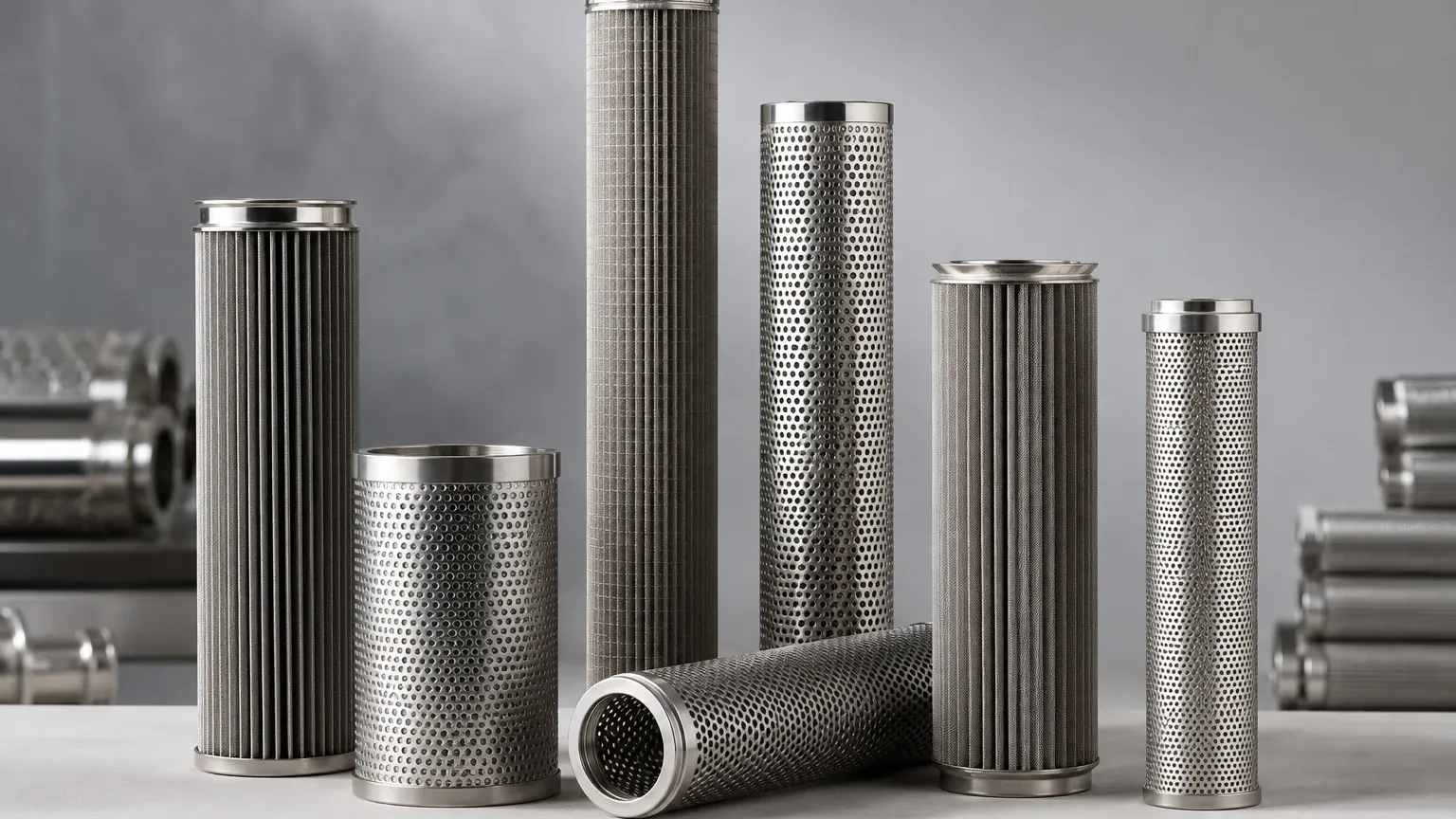
The performance of flow pro filter cartridges is heavily dependent on the materials used in their construction. While polymer-based filters are common in water treatment, demanding industrial environments often require the durability of stainless steel. Kaifil specializes in manufacturing stainless steel filter components that provide the structural integrity needed for high-pressure and high-temperature applications.
Stainless Steel Wire Mesh
Stainless steel wire mesh is a preferred material for flow pro designs due to its precise pore size and high mechanical strength. It can be woven into various patterns—such as plain, twill, or dutch weave—to achieve specific filtration ratings while maintaining a high open area for fluid passage. This material is particularly effective in applications involving corrosive chemicals or extreme temperatures where synthetic fibers would degrade.
Sintered Metal Media
For applications requiring even greater structural stability, sintered metal fiber or multi-layer sintered mesh is utilized. Sintering bonds the metal strands at their contact points, creating a rigid porous structure that does not migrate or shed fibers. This is critical in pharmaceutical and food-grade applications where purity is paramount. Sintered flow pro filter cartridges can withstand repeated cleaning cycles, offering a lower total cost of ownership compared to disposable alternatives.
Key Evaluation Criteria for Engineers
When specifying flow pro filter cartridges for a new or existing system, engineers must evaluate several technical parameters to ensure the component meets the application's performance expectations.
1. Filtration Rating: Absolute vs. Nominal
It is essential to distinguish between nominal and absolute filtration ratings. A nominal rating indicates the ability of the filter to retain a majority of particles of a certain size, whereas an absolute rating (often expressed as a Beta ratio) guarantees the retention of nearly all particles at that micron level. For critical processes, such as protecting high-pressure nozzles or sensitive catalysts, absolute-rated cartridges are necessary.
2. Differential Pressure (Delta P)
The initial pressure drop across a clean filter is a baseline for system performance. Flow pro filter cartridges are engineered to keep this initial Delta P as low as possible. As the filter accumulates contaminants, the pressure drop increases. Engineers must define the "terminal pressure drop"—the point at which the filter must be cleaned or replaced to prevent housing damage or system failure.
3. Chemical and Thermal Compatibility
The choice of seals (O-rings and gaskets) is as important as the filter media itself. Common materials include EPDM, Viton, and PTFE. If the fluid being filtered is a caustic chemical or a high-temperature oil, the entire cartridge assembly, including the end caps and support cores, must be compatible to prevent leaching or structural collapse.
Common Risks and Mitigation in High-Flow Systems
Implementing flow pro filter cartridges is not without risks. One of the most common issues is "channeling," where the fluid finds a path of least resistance through the media, often caused by improper installation or the use of sub-standard cartridges that deform under pressure. If the cartridge does not seat correctly in the housing, unfiltered fluid can bypass the media entirely.
To mitigate these risks, it is crucial to confirm the mechanical tolerances of the cartridge end caps. Precision-machined components, such as those produced by Kaifil, ensure a tight seal within the filter housing. Furthermore, engineers should verify the collapse pressure of the internal support core. In high-viscosity applications or systems prone to pressure spikes, a reinforced stainless steel core is necessary to prevent the cartridge from imploding.
Maintenance and the Total Cost of Ownership
While the initial purchase price of flow pro filter cartridges is a factor, the total cost of ownership (TCO) is a more accurate metric for B2B procurement. TCO includes the cost of the cartridge, the labor required for change-outs, the cost of downtime, and disposal fees.
Stainless steel flow pro cartridges offer a significant advantage in TCO because they are often cleanable and reusable. Methods such as ultrasonic cleaning, backpulsing, or chemical baths can restore the filter's permeability, extending its life over many years. In contrast, disposable cartridges generate continuous waste and require frequent inventory management. For high-volume industrial lines, the reduction in downtime associated with fewer cartridge changes can result in substantial annual savings.
Customization and OEM Integration
Many industrial systems have unique spatial constraints or specific flow requirements that standard off-the-shelf cartridges cannot meet. Customization is a core strength of manufacturers like Kaifil, where filter cartridges can be engineered to specific lengths, diameters, and fitting types (such as 222, 226, or threaded connections).
When working with an OEM partner, engineers should provide detailed data on:
* Fluid Characteristics: Viscosity, density, and chemical composition.
* Contaminant Profile: Particle size distribution and concentration.
* Operating Conditions: Normal and maximum flow rates, temperature ranges, and system pressure.
* Housing Dimensions: Internal clearances and connection styles.
By providing this data, procurement teams can ensure that the flow pro filter cartridges they receive are optimized for their specific equipment, rather than settling for a generic solution that may underperform.
Conclusion: Selecting the Right Filtration Partner
The transition to flow pro filter cartridges represents a strategic move toward higher efficiency and reduced operational overhead. However, the success of this transition depends on the quality of the filtration components and the technical expertise of the manufacturer. Reliable filtration is not just about the media; it is about the engineering that ensures the cartridge can withstand the rigors of industrial use without failure.
For organizations looking to optimize their filtration processes, it is advisable to consult with specialists who understand the nuances of metal filtration and high-flow dynamics. By focusing on material integrity, precise manufacturing, and application-specific design, companies can achieve the reliable, long-term performance required in today’s demanding industrial landscape. To explore specific configurations and technical data, engineers should Review product options and application support to find the ideal solution for their unique operational needs.
