


Flow Pro Melt Blown Filter Cartridges
In the landscape of industrial liquid processing, flow pro melt blown filter cartridges represent a fundamental technology for sediment removal and pre-filtration. These depth-style filters are engineered to capture a wide range of particulate matter through a complex matrix of thermally bonded fibers. For engineers and procurement specialists, understanding the structural nuances, material properties, and performance limits of these cartridges is essential for optimizing system efficiency and protecting downstream equipment.
While many industrial applications eventually require the durability of stainless steel components, melt blown cartridges serve as the primary defense in water treatment, chemical processing, and food production. This guide examines the technical specifications and selection criteria necessary to integrate these components into a professional filtration assembly.
The Engineering Behind Melt Blown Technology
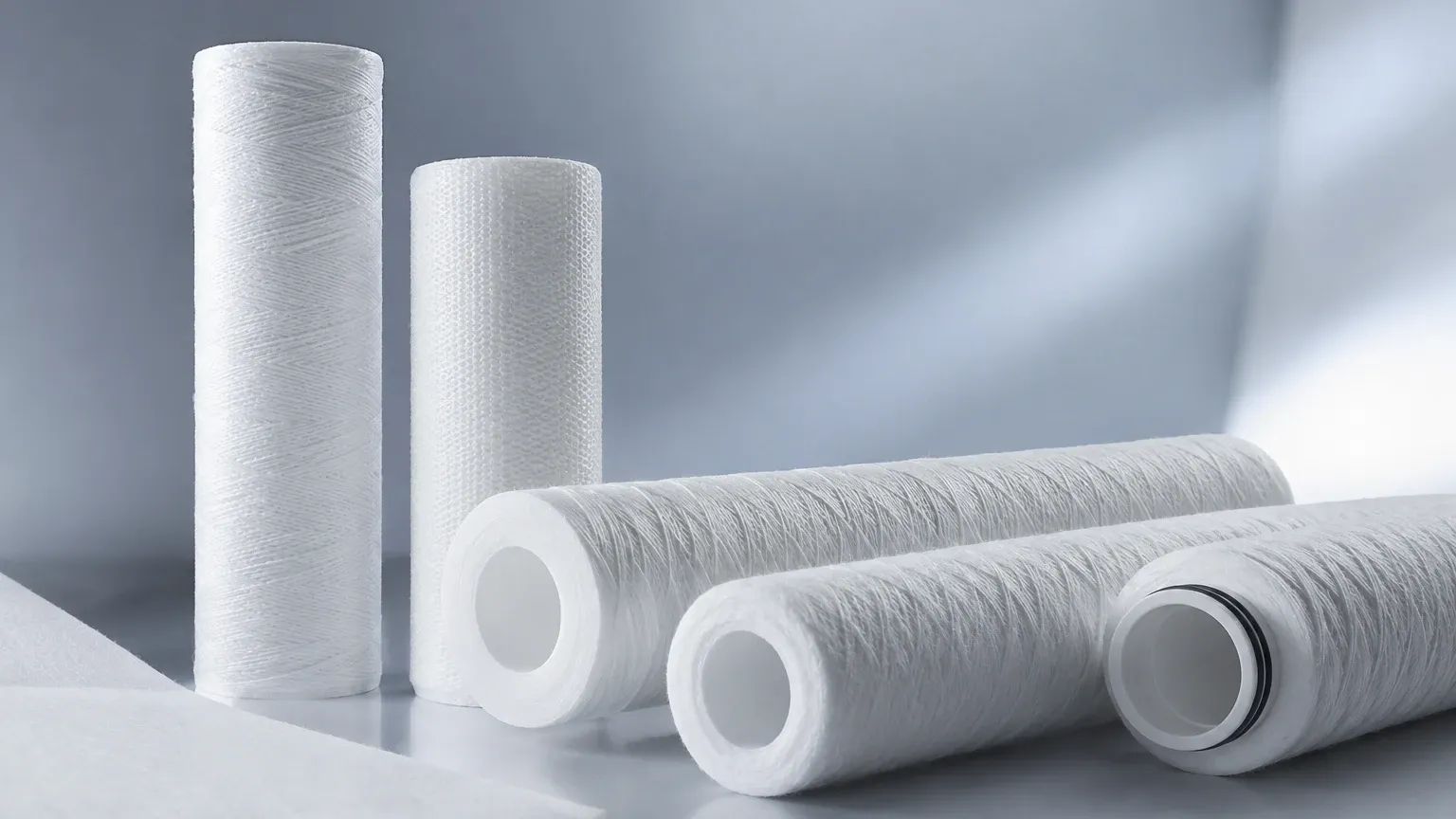
The performance of flow pro melt blown filter cartridges is derived from the melt-blowing process, a non-woven fabrication technique. In this process, a thermoplastic polymer—most commonly polypropylene—is extruded through small nozzles and attenuated by high-velocity hot air. The resulting microfibers are collected on a rotating mandrel, where they thermally bond to form a cohesive, porous tube.
Graded Pore Structure
One of the most critical technical features of a high-quality melt blown cartridge is its graded density. Unlike surface filters that trap particles only on the outer layer, a graded-density depth filter features larger pores on the exterior and progressively finer pores toward the inner core.
This architecture allows larger particles to be trapped in the outer zones, while finer particles penetrate deeper into the matrix before being captured. This distribution prevents the outer surface from blinding prematurely, significantly increasing the dirt-holding capacity and extending the service life of the Filter Cartridges compared to uniform-density alternatives.
Thermal Bonding and Media Integrity
Because the fibers are thermally bonded during the extrusion process, flow pro melt blown filter cartridges do not require chemical binders or adhesives. This is a vital consideration for high-purity applications, such as pharmaceutical processing or potable water filtration, as it eliminates the risk of extractables leaching into the process stream. Furthermore, the bonded structure ensures that the fibers do not migrate or release into the filtrate, even under fluctuating pressure conditions.
Key Performance Metrics for Industrial Selection
When evaluating filter cartridges for a specific industrial process, engineers must look beyond nominal micron ratings. Several interconnected variables determine the actual efficiency and cost-effectiveness of the filtration stage.
Micron Rating: Nominal vs. Absolute
Most melt blown cartridges are rated "nominally," meaning they are designed to catch a high percentage (typically 85% to 95%) of particles at a specific size. However, for critical applications where total particle removal is mandatory, absolute-rated cartridges may be required. Engineers should confirm the Beta Ratio of the filter—a mathematical expression of filtration efficiency—to ensure the selected cartridge meets the specific cleanliness requirements of the downstream process.
Differential Pressure and Flow Rates
The relationship between flow rate and differential pressure (ΔP) is a primary indicator of system health. A flow pro melt blown filter cartridge is designed to maintain a low initial pressure drop. As the filter accumulates contaminants, the ΔP will naturally increase.
In most industrial settings, a cartridge change-out is recommended when the differential pressure reaches 15 to 25 psi (1.0 to 1.7 bar). Operating beyond this point can lead to "breakthrough," where the pressure forces trapped particles through the media, or even structural collapse of the cartridge core.
Dirt-Holding Capacity
Dirt-holding capacity refers to the total mass of contaminants a filter can retain before reaching its terminal pressure drop. High-quality flow pro melt blown filter cartridges utilize complex fiber geometries to maximize the available void volume within the media. A higher void volume typically correlates to a longer service life and lower total cost of ownership, as it reduces the frequency of maintenance shutdowns.
Material Compatibility and Operating Limits
Polypropylene is the standard material for melt blown cartridges due to its broad chemical resistance and low cost. However, its physical properties impose certain limits on the operating environment.
1. Temperature Constraints: Polypropylene typically has a maximum operating temperature of approximately 140°F to 176°F (60°C to 80°C). For applications involving steam sterilization or high-temperature chemical baths, engineers should transition to stainless steel or specialized fluoropolymer filters.
2. Chemical Resistance: Polypropylene is highly resistant to most acids, bases, and salts. However, it can be degraded by strong oxidizing agents and certain aromatic or chlorinated hydrocarbons.
3. Surfactants and Wetting: Standard melt blown media is naturally hydrophobic. In certain aqueous applications, the presence of surfactants may be necessary to ensure the media wets out properly and achieves the intended flow rate.
Application Environments for Flow Pro Cartridges
Flow pro melt blown filter cartridges are utilized across diverse sectors, often serving as the "pre-filter" that protects more expensive secondary filtration stages or sensitive machinery.
* Reverse Osmosis (RO) Pre-filtration: In desalination and boiler feed water systems, melt blown cartridges remove silt, sand, and scale that would otherwise foul the RO membranes. This is perhaps the most common application for 1-micron and 5-micron melt blown filters.
* Food and Beverage Processing: Used for the clarification of bottled water, juices, and spirits. The absence of binders makes these cartridges compliant with FDA requirements for food contact.
* Chemical Manufacturing: Filtering process water, cooling loops, and chemical intermediates. The chemical inertness of polypropylene allows it to handle a variety of aggressive industrial fluids.
* Metal Finishing and Plating: Removing particulates from plating baths to ensure a smooth, defect-free finish on manufactured parts.
Customization and Configuration Options
To ensure a proper seal within the filter housing, flow pro melt blown filter cartridges are available in various lengths and end-cap configurations. Selecting the correct hardware interface is as important as selecting the micron rating.
* Standard Lengths: Industrial housings typically accommodate cartridges in 10-inch increments (10", 20", 30", and 40").
* End-Cap Styles:
* Double Open End (DOE): Features a gasket on both ends; relies on the housing's compression to create a seal.
* Single Open End (SOE): Often features a 222 or 226 O-ring configuration at one end and a flat cap or fin at the other. This provides a more secure, bypass-free seal suitable for critical applications.
* Core Support: While standard melt blown cartridges are self-supporting, versions with an internal plastic or stainless steel core are available for high-pressure or high-viscosity applications where extra structural rigidity is required.
Transitioning to High-Performance Solutions
While flow pro melt blown filter cartridges are excellent for general-purpose sediment removal, certain industrial environments exceed the capabilities of polymer-based media. When processes involve extreme temperatures, high pressures, or the need for a permanent, cleanable solution, stainless steel filtration components become the preferred choice.
At Kaifil, we specialize in the engineering and manufacture of custom stainless steel filtration solutions. Our expertise in wire mesh and precision metal components allows us to support engineers who need to move beyond disposable cartridges toward durable, high-performance filtration systems. Whether your application requires the fine-tuned accuracy of a pleated metal cartridge or the ruggedness of a wedge wire screen, our technical team provides the guidance necessary to select the right materials for your specific chemical and thermal environment.
Conclusion: Optimizing the Filtration Lifecycle
Successful industrial filtration is a balance of performance, compatibility, and cost. Flow pro melt blown filter cartridges offer a versatile solution for high-volume sediment removal, provided that the graded density and material limits are correctly matched to the process.
By monitoring differential pressure, understanding the nuances of nominal vs. absolute ratings, and ensuring proper housing fitment, technical teams can significantly improve fluid clarity and protect downstream assets. For applications that demand more than what a disposable polymer can offer, consulting with a manufacturer of custom metal filtration solutions ensures that even the most demanding industrial requirements are met with precision and reliability.
