


Franke Water Filter Cartridges
In the landscape of precision water treatment, the performance of point-of-use (POU) systems relies heavily on the engineering integrity of the filtration media. Franke water filter cartridges represent a specific segment of the market focused on high-end residential and light commercial applications. For engineers, facility managers, and B2B procurement specialists, understanding the technical specifications, material compositions, and performance benchmarks of these components is essential for maintaining water quality standards and system longevity.
While Franke systems are often associated with aesthetic tapware, the internal filtration technology is a matter of fluid dynamics and material science. This article examines the technical nuances of these cartridges, the criteria for evaluating filtration performance, and how industrial-grade Filter Cartridges compare in more demanding environments.
Technical Foundations of Water Filtration Media
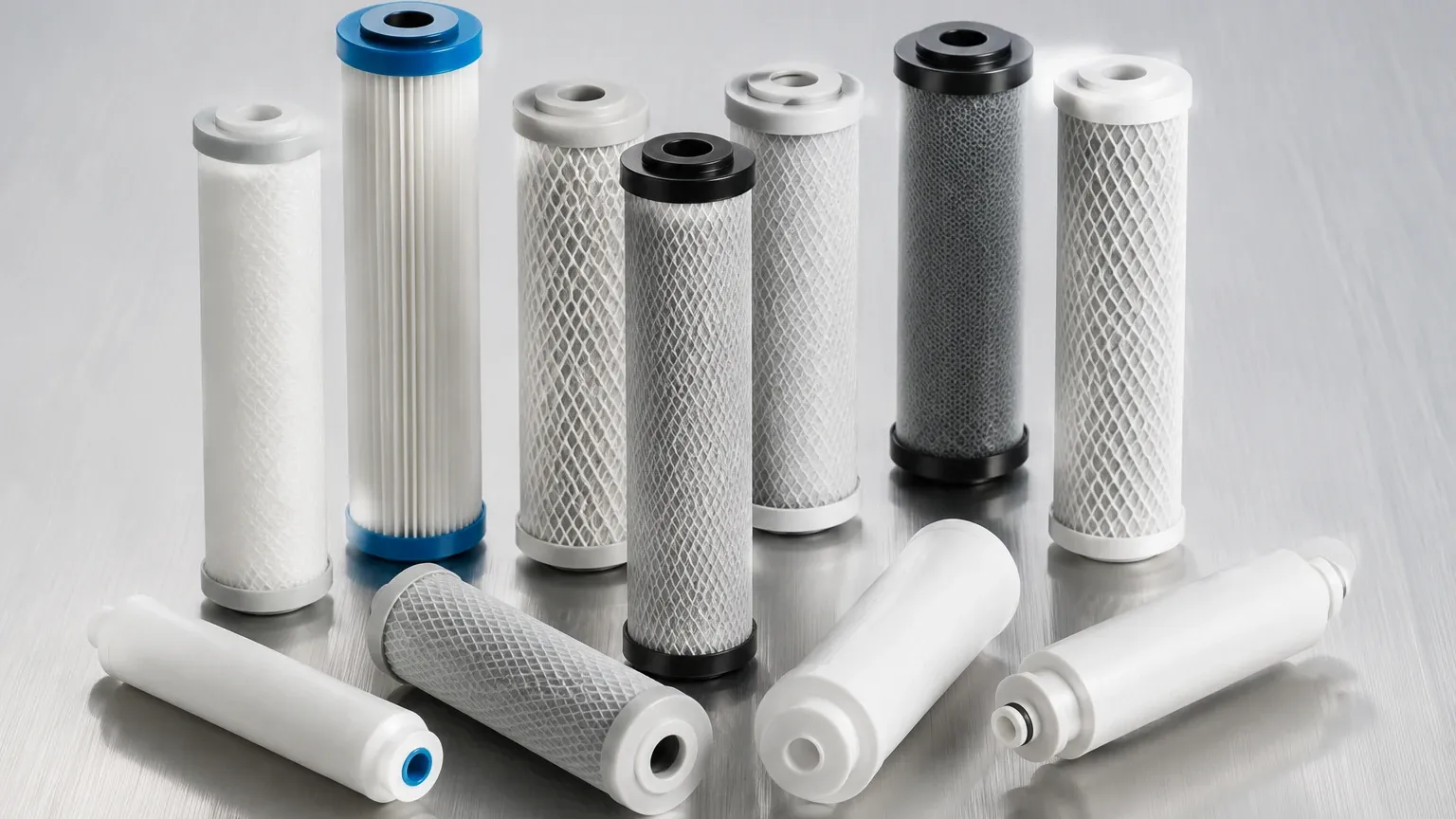
Filtration is the physical or chemical process of removing suspended solids, chemicals, and biological contaminants from a fluid stream. In the context of Franke water filter cartridges, the technology typically employs a combination of ceramic outer shells and activated carbon cores.
Mechanical Filtration
The outer ceramic layer serves as a mechanical barrier. High-quality ceramic filters are engineered with a controlled pore structure, often rated at sub-micron levels (typically 0.5 to 0.9 microns). This level of precision is necessary to intercept pathogenic bacteria such as cysts (Cryptosporidium and Giardia) and fine sediment. The tortuous path within the ceramic matrix ensures that particles are trapped throughout the depth of the material, rather than just on the surface.
Adsorption and Chemical Reduction
The inner core usually consists of an extruded or granular activated carbon (GAC) block. Carbon is utilized for its high surface area and porous structure, which facilitates adsorption. This process is critical for the removal of chlorine, volatile organic compounds (VOCs), and heavy metals like lead. In B2B applications where water is used for food preparation or sensitive laboratory processes, the efficiency of this carbon core directly impacts the sensory and chemical profile of the output water.
Key Evaluation Criteria for Filter Cartridges
When selecting or specifying replacement cartridges for industrial or commercial water systems, engineers must look beyond brand compatibility and focus on measurable performance data. The following parameters are critical for technical evaluation:
Micron Rating: Absolute vs. Nominal
A primary point of confusion in filtration procurement is the distinction between absolute and nominal micron ratings.
- Nominal Rating: Indicates the filter's ability to trap a percentage of particles of a given size (e.g., 85% of 5-micron particles).
- Absolute Rating: Refers to the diameter of the largest hard spherical particle that will pass through the filter under specified test conditions.
For critical applications, such as those requiring the removal of bacteria, an absolute rating is required. Franke water filter cartridges are generally designed to meet stringent standards for cyst reduction, necessitating a high degree of manufacturing consistency in the pore size of the ceramic or polymer media.
Flow Rate and Pressure Drop
Every filter cartridge introduces a degree of resistance into the fluid system, known as pressure drop ($ΔP$). As the filter captures contaminants, the $ΔP$ increases. Engineers must ensure that the selected cartridge can maintain the required flow rate (measured in gallons per minute or liters per minute) at the system's operating pressure. If the pressure drop is too high initially, it indicates that the filter may be undersized for the application or that the media density is too high for the required throughput.
Capacity and Service Life
The service life of a filter is typically rated in gallons. This rating is based on the volume of water the cartridge can treat before the chemical adsorption sites are exhausted or the mechanical pores become clogged. In commercial environments, tracking the total dissolved solids (TDS) and turbidity of the influent water is necessary to predict replacement cycles accurately.
Material Integrity and Industrial Alternatives
While ceramic and carbon are standard for many POU applications, industrial environments often demand higher durability and chemical resistance. This is where stainless steel Filter Cartridges provide a significant advantage.
Stainless Steel vs. Polymer/Ceramic
In many industrial processes—such as chemical processing, high-temperature steam filtration, or hydraulic systems—standard water filter cartridges may fail due to pressure spikes or chemical incompatibility. Stainless steel cartridges, often manufactured from 304 or 316L wire mesh or sintered metal, offer several benefits:
- Thermal Stability: Able to operate in temperatures exceeding 250°C, where polymers would melt or degrade.
- Structural Strength: High collapse pressure ratings ensure the filter remains intact during system surges.
- Cleanability: Unlike disposable ceramic or carbon cartridges, stainless steel filters can often be backwashed or ultrasonically cleaned, reducing the total cost of ownership in high-volume applications.
For organizations managing large-scale water treatment facilities alongside residential-style Franke systems, understanding these material differences allows for better strategic sourcing. While a ceramic cartridge is ideal for a breakroom tap, a stainless steel wire mesh filter is the appropriate choice for the main process water line entering the facility.
Common Risks and Maintenance Considerations
Failure to adhere to strict maintenance schedules for Franke water filter cartridges or any industrial filtration component leads to several operational risks:
Biofilm Accumulation
In carbon-based filters, the trapped organic matter can become a breeding ground for bacteria if the filter is not replaced at the recommended intervals. This is particularly dangerous in systems that remain stagnant for extended periods. Some high-end cartridges incorporate silver ions into the ceramic structure to provide bacteriostatic properties, inhibiting the growth of microorganisms within the filter media.
Channeling and Bypass
If a filter cartridge is poorly seated or if the internal media cracks, water may find a path of least resistance, bypassing the filtration media entirely. This "channeling" results in untreated water reaching the point of use. Regular inspection of O-rings and seals during cartridge replacement is a mandatory step in any professional maintenance protocol.
Total Cost of Ownership (TCO)
B2B procurement teams often focus on the initial purchase price of the cartridge. However, a more accurate metric is the cost per gallon of treated water. This includes:
1. Purchase Price: The unit cost of the cartridge.
2. Labor Costs: The time required for technicians to perform the replacement.
3. Disposal Costs: Environmental considerations for used media.
4. System Downtime: The impact of filter changes on operational availability.
Customization and OEM Solutions in Filtration
For manufacturers of water-dispensing equipment or industrial machinery, off-the-shelf Franke water filter cartridges may not always meet specific design constraints. Customization in filtration engineering allows for the optimization of the filter's footprint, micron rating, and connection types.
Engineering for Specific Applications
Custom filtration solutions involve selecting the appropriate weave pattern for wire mesh, the density of sintered metal, or the specific grade of activated carbon. For example, in the food and beverage industry, all materials must be FDA-compliant and resistant to the CIP (Clean-in-Place) chemicals used to sanitize the lines.
Manufacturers like Kaifil specialize in these high-performance, customized Filter Cartridges, providing the technical expertise required to bridge the gap between standard consumer products and heavy-duty industrial requirements. By working closely with an OEM partner, engineers can develop filtration components that are tailored to the exact flow dynamics and contaminant profiles of their specific application.
Conclusion: Selecting the Right Filtration Strategy
Whether managing a fleet of Franke water filter cartridges in a corporate office or overseeing complex industrial filtration systems, the principles of selection remain the same: prioritize material compatibility, verify absolute performance ratings, and maintain a rigorous replacement schedule.
For standard water quality needs, high-quality ceramic and carbon cartridges offer an effective and reliable solution. However, as the complexity of the fluid and the severity of the operating environment increase, the transition to robust, metallic filtration solutions becomes necessary. By understanding the technical boundaries of each technology, procurement and engineering teams can ensure the delivery of high-purity water while optimizing the efficiency and reliability of their systems.
