


How Long Do Water Filter Cartridges Last
In industrial water treatment and process engineering, the service life of filtration components is a critical variable that dictates both operational uptime and total cost of ownership. Determining how long do water filter cartridges last is not a matter of following a fixed calendar schedule, but rather understanding the complex interaction between the filter media, the fluid characteristics, and the system’s operational parameters. For engineers and procurement teams, predicting this lifespan is essential for maintaining process integrity and preventing unscheduled downtime.
While residential filters are often replaced based on time intervals, industrial Filter Cartridges are typically evaluated based on performance metrics, specifically the differential pressure across the media and the quality of the effluent. This article explores the technical factors that determine the longevity of industrial water filter cartridges, with a focus on high-durability stainless steel solutions.
Factors Influencing Filter Cartridge Longevity
The question of how long do water filter cartridges last depends heavily on the "dirt holding capacity" of the specific media used. In industrial environments, several variables directly impact how quickly a cartridge reaches its terminal state.
Contaminant Load and Particle Size Distribution
The most significant factor is the nature of the influent. A high concentration of suspended solids will naturally exhaust a filter faster than a relatively clean stream. However, the particle size distribution (PSD) is equally important. If the particles are slightly larger than the pore size of the filter, they will form a "filter cake" on the surface. While this cake can actually improve filtration efficiency, it also increases resistance to flow. If the particles are significantly smaller than the pores, they may pass through or become lodged deep within the media (in depth filtration), leading to internal blinding that is difficult to reverse.
Flow Rate and Flux
Flux is the flow rate per unit area of the filter media. Operating a system at high flux rates often shortens the lifespan of the cartridge. High velocity can force contaminants deeper into the filter matrix or compress the accumulated solids against the surface, accelerating the rise in differential pressure. Engineering a system with sufficient surface area—often by using pleated Filter Cartridges—allows for a lower flux, which typically extends the interval between cleanings or replacements.
Fluid Chemistry and Temperature
In industrial water applications, the presence of chemicals, oils, or biological growth can significantly alter the expected lifespan. For instance, in cooling water loops, biofilm accumulation (biofouling) can blind a filter much faster than inorganic silt. Similarly, high-temperature water can degrade polymer-based filters, leading to structural failure or bypass. This is why stainless steel wire mesh or sintered metal cartridges are preferred in demanding environments; they maintain structural integrity under thermal and chemical stresses that would destroy synthetic media.
Identifying the End of Service Life: The Pressure Drop
In professional filtration management, the primary indicator of when a filter has reached the end of its life is the differential pressure ($ΔP$). This is the difference in pressure between the upstream (inlet) and downstream (outlet) sides of the filter housing.
The Clean Pressure Drop
Every filter has an initial "clean pressure drop." This is the resistance inherent in the media and the housing design itself. As the filter begins to capture particles, the open area of the media decreases, and the pressure drop begins to rise.
The Terminal Pressure Drop
Manufacturers specify a "terminal pressure drop," which is the point at which the filter must be replaced or cleaned. For many disposable cartridges, this might be between 20 and 35 psi. For robust stainless steel Filter Cartridges, the structural limit may be much higher, but the operational limit is usually determined by the pump's capacity and the required flow rate for the downstream process. If a filter is left in service beyond its terminal $ΔP$, several risks emerge:
* Media Migration: The high pressure can force the filter media to break apart, releasing contaminants into the clean stream.
* Bypass: Seals or O-rings may fail under the excessive pressure, allowing unfiltered water to bypass the cartridge.
* Structural Collapse: The cartridge core may buckle, leading to a total failure of the filtration stage.
Material Selection: Stainless Steel vs. Disposable Media
When asking how long do water filter cartridges last, the material of construction is the most decisive factor in determining whether the "end of life" means the trash bin or a cleaning station.
Disposable Polymer Cartridges
Polypropylene, polyester, and cellulose filters are common in many water applications. These are depth-loading or surface-loading filters designed for single use. Their lifespan is strictly limited by their dirt-holding capacity. Once the $ΔP$ reaches the limit, they must be discarded. In high-load applications, this can result in frequent changes, high consumable costs, and significant waste.
Reusable Stainless Steel Cartridges
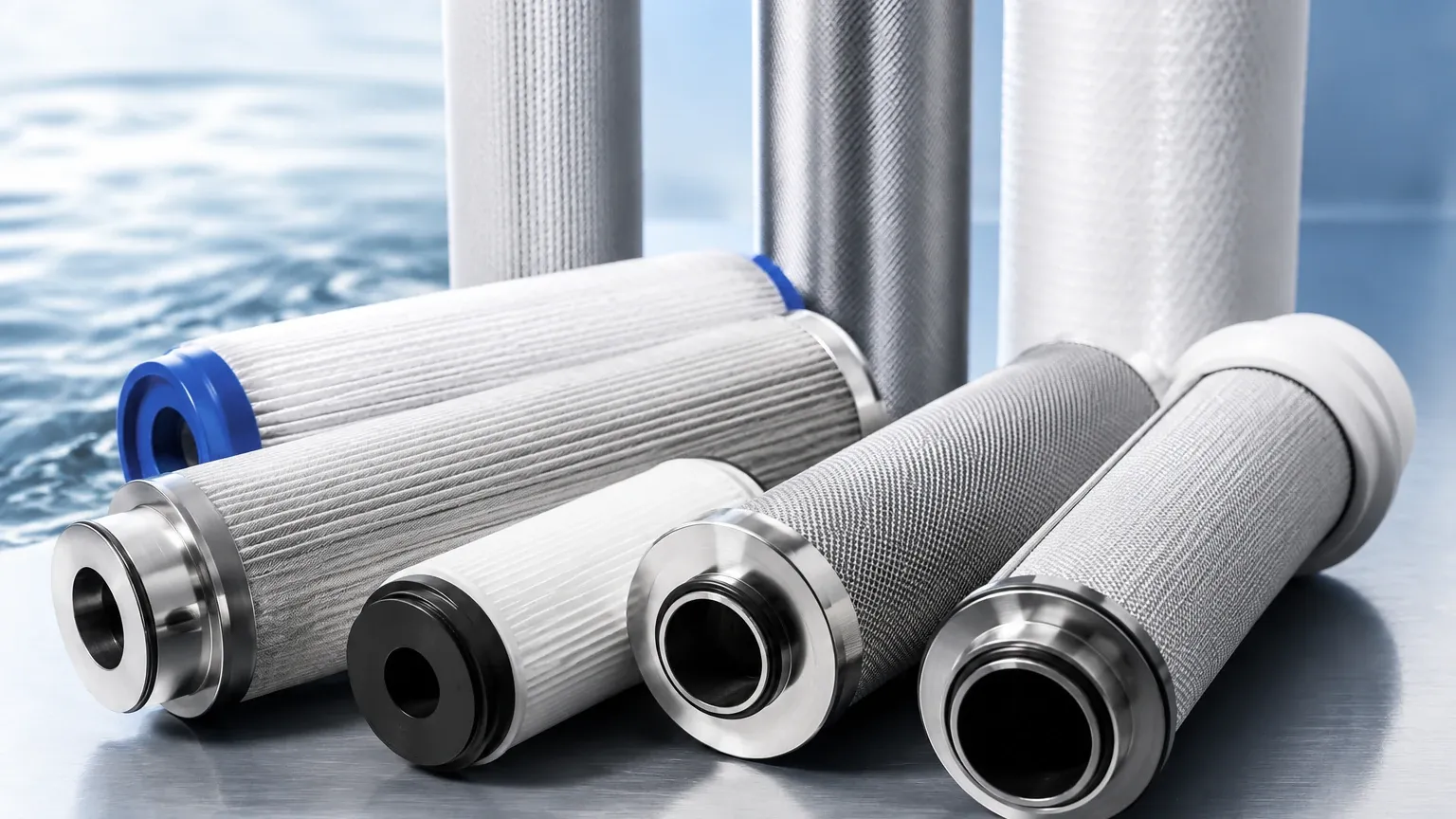
Stainless steel wire mesh and sintered metal cartridges represent a different approach. Because these materials are mechanically robust and chemically resistant, they can be cleaned and returned to service. In this context, the "life" of the cartridge is measured in years rather than weeks.
How long do water filter cartridges last when they are made of stainless steel? With proper maintenance, these components can last 5 to 10 years or more. The end of their life occurs only when the mesh becomes permanently blinded (where cleaning no longer restores the original pressure drop) or when mechanical wear from repeated cleaning cycles compromises the pore structure.
Maintenance and Cleaning Protocols for Longevity
For reusable Filter Cartridges, the method of cleaning is vital to ensuring a long service life. If cleaning is performed incorrectly, the media can be damaged, or the contaminants can be baked into the pores.
1. Backwashing: This involves reversing the flow of clean water through the filter to dislodge surface contaminants. It is effective for surface-loading wire mesh filters.
2. Ultrasonic Cleaning: For sintered or fine mesh filters, ultrasonic baths use high-frequency sound waves to create cavitation bubbles that dislodge deep-seated particles without damaging the metal structure.
3. Chemical Cleaning: Soaking cartridges in caustic or acidic solutions can dissolve organic biofilms or mineral scales. It is essential to ensure the stainless steel grade (e.g., 304 or 316L) is compatible with the cleaning agents used.
By implementing a structured cleaning regimen, industrial facilities can significantly extend the functional life of their filtration hardware, moving away from the "disposable" mindset and toward a more sustainable and cost-effective model.
The Role of Pre-filtration in Extending Cartridge Life
One of the most effective engineering strategies to answer the challenge of how long do water filter cartridges last is the implementation of multi-stage filtration. Using a coarse pre-filter upstream of a fine finishing filter can extend the life of the more expensive finishing cartridge by a factor of five or more.
For example, if a process requires 5-micron filtration, installing a 50-micron stainless steel mesh pre-filter will capture the bulk of the larger solids. This prevents the 5-micron Filter Cartridges from becoming overloaded with large debris that they were not designed to handle efficiently. The pre-filter is typically easier and cheaper to clean or replace, protecting the integrity of the final filtration stage.
Total Cost of Ownership and Decision Making
When evaluating how long do water filter cartridges last, engineers must look beyond the initial purchase price. The total cost of ownership (TCO) includes:
* Purchase Price: The upfront cost of the cartridge.
* Disposal Costs: The cost of hauling away used disposable filters, which may be classified as hazardous waste depending on the contaminants.
* Labor Costs: The man-hours required to perform filter changes and system restarts.
* Downtime: The lost production value during filter maintenance.
* Energy Costs: As a filter clogs, the pump must work harder to maintain flow, increasing energy consumption.
High-quality stainless steel cartridges often have a higher initial cost but a significantly lower TCO over several years because they eliminate the recurring costs of replacement and disposal. When selecting a filter, it is important to confirm the compatibility of the media with the fluid, the expected solids loading, and the available cleaning infrastructure.
Summary of Engineering Considerations
To optimize the lifespan of water filter cartridges in an industrial setting, consider the following technical checklist:
* Monitor $ΔP$ religiously: Install pressure gauges on both sides of the filter housing to track the loading curve.
* Analyze the solids: Understand what you are filtering to choose the right media (e.g., depth vs. surface).
* Evaluate the environment: Ensure the cartridge material can withstand the temperature and chemical profile of the water.
* Consider reusability: For critical or high-load processes, stainless steel Filter Cartridges offer a durable alternative to disposables.
* Optimize flux: Don't undersize the filter housing; more surface area almost always leads to a longer service life.
By treating the filter cartridge as a precision engineered component rather than a simple consumable, industrial operators can achieve more predictable performance and better control over their water treatment processes. Understanding how long do water filter cartridges last is the first step toward a more efficient and reliable filtration system.
