


Intex Filter Cartridges
In the landscape of water treatment and fluid management, the term "intex filter cartridges" typically refers to a specific category of pleated media filters designed for low-pressure, high-flow applications such as residential pools and spas. However, for engineers and procurement professionals in the industrial sector, understanding the technical limitations and performance benchmarks of these consumer-grade components is essential when evaluating filtration systems for commercial or industrial use. While these cartridges are effective for basic particulate removal in controlled environments, industrial applications often require the robust performance found in specialized Filter Cartridges manufactured from stainless steel or high-performance polymers.
This article examines the technical specifications of intex filter cartridges, compares them against industrial-grade filtration solutions, and provides an engineering perspective on material selection, flow dynamics, and total cost of ownership.
Understanding the Role of Intex Filter Cartridges in Water Filtration
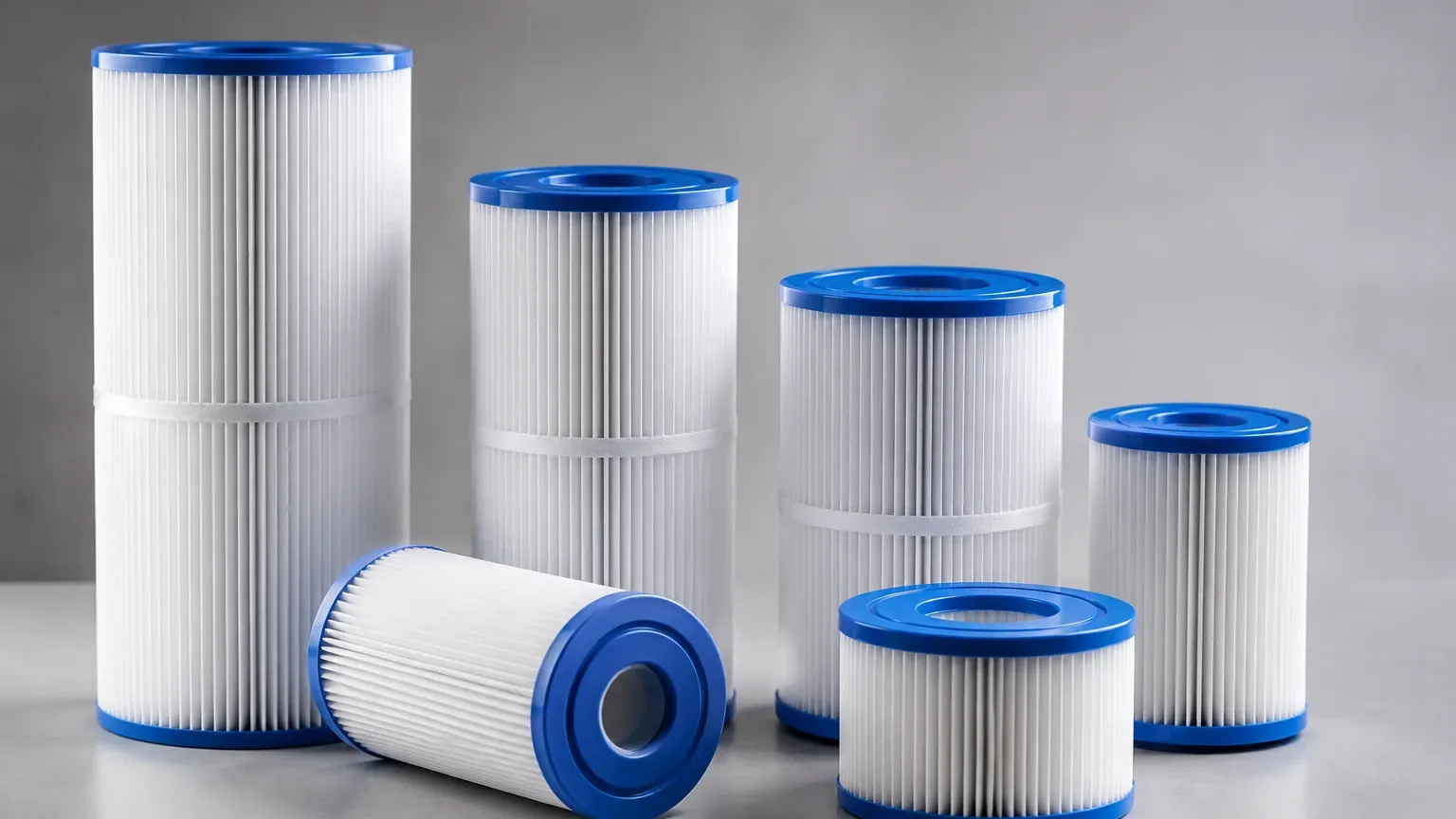
Intex filter cartridges are primarily designed for use in cartridge filter pumps. Their primary function is to trap suspended solids—such as hair, leaves, insects, and fine sediment—as water is circulated through the pump system. Structurally, these cartridges consist of a central plastic core, a pleated filtration medium (usually a non-woven polyester or Dacron material), and polyurethane or rubber end caps that provide a seal within the filter housing.
From a fluid dynamics perspective, the pleated design is critical. Pleating significantly increases the surface area of the filtration medium relative to the overall diameter of the cartridge. This increased surface area allows for a higher dirt-holding capacity and a lower initial pressure drop (ΔP) compared to non-pleated depth filters. In the context of small-scale water systems, this ensures that the pump can maintain a consistent flow rate even as the filter begins to accumulate debris.
Technical Specifications and Material Composition
To evaluate the suitability of intex filter cartridges for any given application, engineers must look closely at the material properties and mechanical limits of the components.
Filtration Media
Most standard intex filter cartridges utilize a polyester-based fabric. Polyester is chosen for its relative resistance to chemicals commonly found in pool environments, such as chlorine and bromine. However, polyester has distinct thermal and chemical limitations. It typically cannot withstand high-temperature fluids (exceeding 60°C/140°F) or aggressive solvents used in chemical processing. In contrast, industrial Filter Cartridges made from 304 or 316L stainless steel can operate in temperatures exceeding 250°C and are compatible with a wide range of corrosive acids and bases.
Structural Integrity
The core of a standard intex cartridge is usually a perforated plastic tube. While sufficient for the low-head pressures of residential pumps, these cores may collapse under the high differential pressures (PSID) found in industrial hydraulic or process water systems. Industrial-grade cartridges often feature reinforced stainless steel cores and outer cages to prevent media migration and structural failure during pressure surges.
Micron Ratings
Intex filter cartridges are generally rated for nominal filtration, typically ranging from 10 to 20 microns. A nominal rating means the filter will trap a large percentage of particles of that size, but not 100%. For applications requiring absolute filtration—where every particle above a certain size must be removed, such as in pharmaceutical or fine chemical production—engineers must specify absolute-rated Filter Cartridges which are tested to a Beta ratio of 5000 or higher.
Evaluating Filtration Efficiency and Flow Dynamics
The efficiency of any filter cartridge is governed by the relationship between flow velocity, particle size, and the physical properties of the media. For intex filter cartridges, the flow rate is a primary design constraint. If the flow rate exceeds the manufacturer’s recommendations, the velocity of the fluid through the media pores becomes too high, leading to "particle bypass" or forcing contaminants through the media.
Pressure Drop (ΔP)
The initial pressure drop is the resistance to flow caused by a clean filter. As the filter traps contaminants, the pores become restricted, and the pressure drop increases. In industrial monitoring, a pressure gauge is typically installed before and after the filter housing. When the differential pressure reaches a specific threshold (often 15–30 PSI for industrial systems, though much lower for Intex systems), the cartridge must be cleaned or replaced. Failure to do so can lead to pump cavitation or media rupture.
Surface Area vs. Depth Filtration
While intex filter cartridges rely on surface filtration (trapping particles on the face of the media), many industrial processes utilize depth filtration. Depth filters trap particles throughout the thickness of the media, which can be more effective for removing gelatinous or deformable contaminants that would quickly blind a surface filter. Understanding the nature of the contaminant (hard vs. soft particles) is vital when deciding whether a pleated polyester cartridge or a sintered metal mesh cartridge is more appropriate.
Industrial Alternatives for Demanding Applications
While intex filter cartridges are cost-effective for their intended use, they are often insufficient for industrial environments. Engineers frequently transition to stainless steel Filter Cartridges when the following conditions are met:
1. High Temperature Requirements: Processes involving steam or hot oils will degrade polyester media rapidly.
2. Chemical Aggressiveness: Strong solvents, hydrocarbons, and high-concentration acids require the inert properties of stainless steel.
3. High Differential Pressure: Systems that operate at high pressures or experience frequent pressure spikes require the mechanical strength of metal filtration components.
4. Requirement for Reusability: Unlike disposable polyester cartridges, stainless steel filters can be ultrasonically cleaned, backwashed, or chemically cleaned, allowing them to be reused for years. This reduces the long-term waste and replacement costs associated with disposable intex filter cartridges.
5. Sterilization: In food, beverage, and pharmaceutical industries, filters must often be sterilized via Autoclave or Steam-in-Place (SIP) procedures. Stainless steel cartridges are ideally suited for these high-heat sterilization cycles.
Maintenance, Cleaning, and Replacement Cycles
Proper maintenance is the most critical factor in extending the life of any filtration system. For intex filter cartridges, the standard recommendation is to rinse the cartridge every 1–2 weeks and replace it every 2–4 weeks, depending on the contaminant load.
In an industrial setting, the replacement cycle is determined by the "Terminal Pressure Drop." This is the maximum allowable pressure difference across the filter before the system's efficiency or safety is compromised.
Cleaning Protocols
For disposable cartridges, cleaning is limited to surface rinsing with water. However, this only removes the outermost layer of debris. Fine particles embedded deep within the fibers remain, meaning each subsequent cleaning is less effective than the last.
In contrast, professional Filter Cartridges made from metal mesh can be restored to nearly 100% of their original flow capacity through professional cleaning methods. This is a significant consideration for facilities looking to implement sustainable manufacturing practices and reduce their environmental footprint.
Engineering Considerations for Custom Filtration Solutions
When a standard off-the-shelf intex filter cartridge does not meet the requirements of a specific application, customization becomes necessary. OEM manufacturers like Kaifil specialize in engineering filtration components that fit existing housings while providing upgraded performance characteristics.
Custom Dimensions and Fittings
One of the challenges in upgrading a filtration system is the compatibility of the end caps and fittings. Custom manufacturing allows for the creation of stainless steel inserts or full-cartridge replacements that match the exact dimensions of standard consumer housings, such as those used for Intex systems, but with the durability of industrial materials.
Selecting the Right Mesh or Media
Engineering a custom filter involves selecting the appropriate weave or sintering method for the metal media. For example, plain weave wire mesh offers high flow rates and easy cleaning, while Dutch weave mesh provides higher filtration accuracy for fine particles. Sintered metal felt can be used for high-efficiency depth filtration in high-pressure environments.
Total Cost of Ownership (TCO)
When evaluating the purchase of intex filter cartridges versus industrial-grade alternatives, the initial price point is only one factor. The TCO analysis should include:
* Purchase Price: Disposable cartridges are cheaper upfront.
* Replacement Frequency: How often must the cartridge be changed?
* Labor Costs: The time required for maintenance staff to change filters.
* Disposal Costs: The cost and environmental impact of disposing of used filters.
* Downtime: The cost of stopping production to replace a failed or clogged filter.
For many industrial facilities, the higher initial investment in a permanent, cleanable stainless steel Filter Cartridges solution results in a significantly lower TCO over a 2-to-5-year period.
Conclusion: Making Informed Purchasing Decisions
Intex filter cartridges serve a vital role in light-duty water filtration, offering a simple and accessible solution for particulate removal. However, for technical professionals managing industrial processes, these components often represent a point of failure due to material limitations and low pressure tolerances.
When selecting a filtration solution, engineers must confirm the chemical compatibility, maximum operating temperature, and required micron rating of the application. If the environment involves high heat, aggressive chemicals, or the need for a reusable, high-strength component, moving beyond consumer-grade intex filter cartridges to industrial-grade stainless steel Filter Cartridges is the most technically sound and cost-effective strategy. By prioritizing durability and precise filtration performance, organizations can ensure the longevity of their equipment and the purity of their process fluids.
