


Jura Filter Cartridges
In the realm of commercial beverage preparation and precision water treatment, the quality of the input water directly dictates the performance of the equipment and the consistency of the final product. Specialized components such as Jura filter cartridges are designed to address specific water chemistry challenges, primarily the removal of chlorine and the mitigation of limescale buildup. While these cartridges are often associated with high-end coffee brewing systems, the engineering principles they employ—ion exchange and adsorption—are fundamental to broader industrial filtration processes. For engineers and procurement professionals managing large-scale beverage production or sensitive industrial water loops, understanding the mechanics of these Filter Cartridges is essential for maintaining system integrity and operational efficiency.
Understanding the Function of Jura Filter Cartridges in Water Treatment
Jura filter cartridges operate on a multi-stage filtration principle tailored for water conditioning. In commercial environments, water hardness (the concentration of calcium and magnesium ions) is a primary concern. If left untreated, these minerals precipitate out of the solution when heated, forming hard scale deposits on heating elements, sensors, and narrow fluid pathways.
Ion-Exchange Technology
At the core of many Jura-style cartridges is an ion-exchange resin. This process involves the replacement of calcium and magnesium ions with hydrogen or sodium ions. By chemically altering the mineral composition of the water, the cartridge prevents the formation of calcium carbonate (limescale). In an industrial context, this is critical for preventing thermal inefficiency and mechanical failure in heat exchangers and boilers.
Granular Activated Carbon (GAC) Adsorption
In addition to mineral management, these cartridges typically incorporate granular activated carbon. Carbon filtration works through adsorption, where organic compounds, chlorine, and chloramines are chemically bonded to the surface of the carbon pores. This stage is vital for removing off-flavors and odors, ensuring that the water meets the sensory standards required for food and beverage applications.
Engineering Requirements for Commercial-Grade Filtration
When transitioning from standard consumer applications to commercial or industrial settings, the engineering requirements for filtration components become significantly more stringent. Industrial systems often operate under higher pressures, faster flow rates, and longer duty cycles than residential equipment.
Pressure Stability and Housing Integrity
In a B2B environment, a filter cartridge must be able to withstand fluctuating line pressures without bypassing or structural failure. While many Jura filter cartridges utilize high-grade polymers for their housings, industrial-scale equivalents often require reinforced structures or stainless steel components to ensure long-term reliability. The seal between the cartridge and the manifold is a critical point of failure; precision-engineered O-rings and locking mechanisms are necessary to prevent leaks that could lead to downtime.
Flow Rate Optimization
One of the primary challenges in filtration design is balancing filtration efficiency with flow rate. A filter that is too restrictive will cause a significant pressure drop (Delta P), which can strain pumps and reduce the output of the system. Engineers must calculate the required flow velocity and select a cartridge with sufficient surface area to accommodate the demand without compromising the contact time necessary for effective ion exchange or carbon adsorption.
Comparing Materials: Plastic vs. Stainless Steel Filter Cartridges
While Jura filter cartridges are traditionally disposable plastic units, many industrial filtration applications demand the durability and temperature resistance of metal. As a manufacturer specializing in stainless steel filtration solutions, Kaifil provides insights into when an application necessitates a shift from polymer-based cartridges to precision metal components.
Thermal and Chemical Resistance
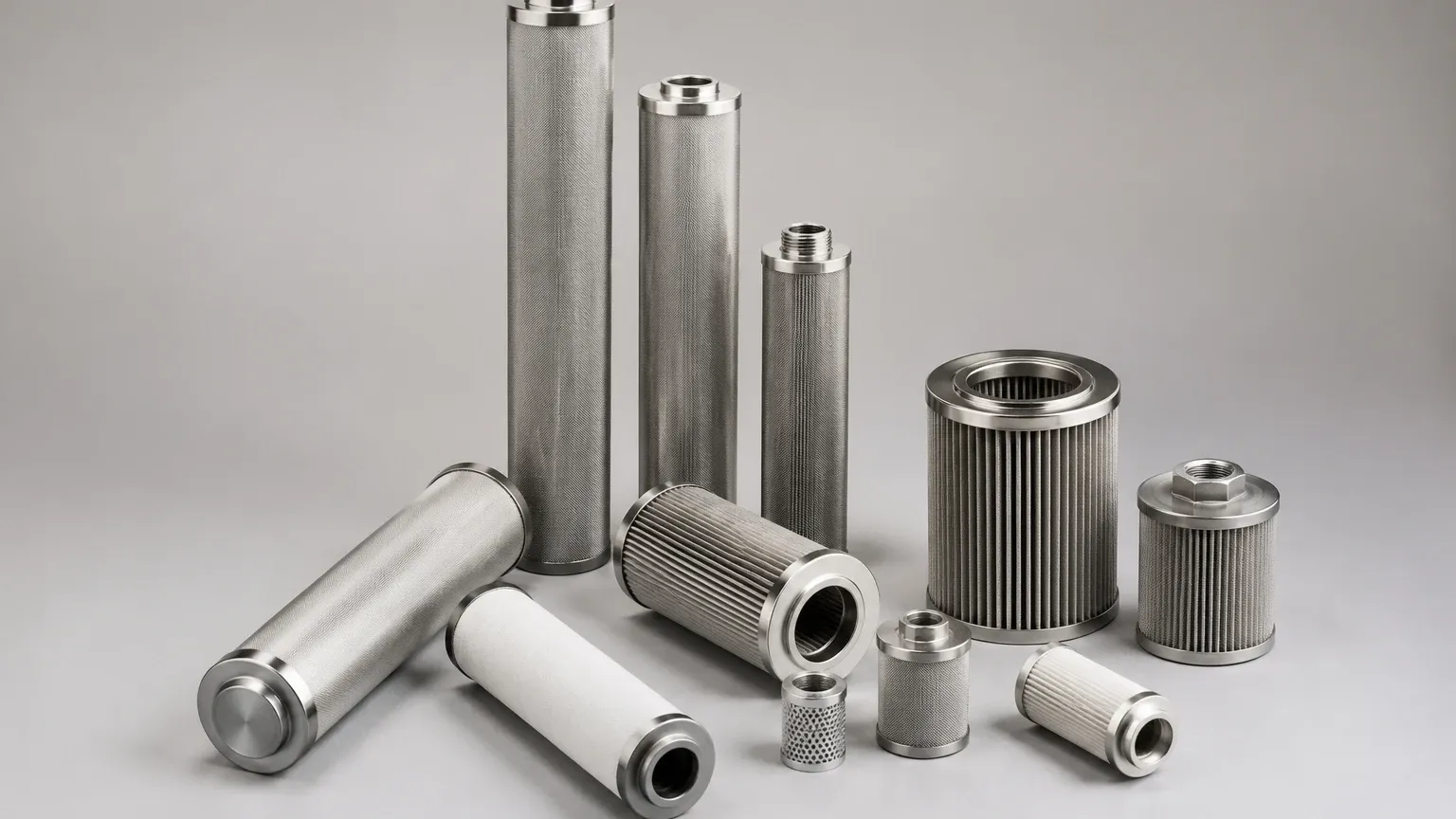
Stainless steel filter cartridges, often constructed from 304 or 316L grade steel, offer unmatched resistance to high temperatures and aggressive cleaning chemicals. In pharmaceutical or chemical processing, where steam-in-place (SIP) or clean-in-place (CIP) protocols are standard, plastic cartridges may degrade or leach contaminants. Stainless steel mesh and sintered metal filters provide a robust alternative that can be cleaned and reused, offering a lower total cost of ownership in specific industrial cycles.
Mechanical Strength
In high-viscosity fluid filtration or high-pressure hydraulic systems, the structural integrity of the filter media is paramount. Stainless steel wire mesh can be pleated to increase surface area while maintaining the rigidity needed to resist collapse under high differential pressure. While Jura-style cartridges are optimized for water, the broader category of industrial Filter Cartridges includes these metal variants designed for the most demanding environmental conditions.
Selection Criteria for High-Performance Industrial Cartridges
Selecting the correct filtration component requires a detailed analysis of the fluid properties and the desired output quality. For engineers tasked with specifying filtration systems, the following criteria are essential:
1. Micron Rating (Absolute vs. Nominal): It is vital to distinguish between a nominal rating (a general efficiency) and an absolute rating (the size at which 99.9% of particles are retained). For precision applications, absolute-rated cartridges are necessary to ensure consistent protection of downstream components.
2. Chemical Compatibility: The filter media, housing, and seals must all be compatible with the fluid being filtered. This includes considering the pH levels of the water and any additives or cleaning agents used in the system.
3. Contaminant Loading Capacity: This refers to the amount of particulate matter a cartridge can hold before the pressure drop reaches a critical level. High-capacity cartridges reduce the frequency of maintenance intervals, which is a key factor in operational cost calculations.
4. Regulatory Compliance: In food, beverage, and pharmaceutical industries, filters must often comply with FDA or NSF standards to ensure they do not introduce harmful substances into the process stream.
Maintenance and Longevity: Maximizing Service Life
The effective lifespan of Jura filter cartridges and their industrial counterparts is determined by the volume of water processed and the level of incoming contaminants. In commercial coffee and beverage service, bypass settings are often used to blend a portion of unfiltered water back into the stream, extending the life of the ion-exchange resin while still providing adequate protection against scale.
Monitoring Pressure Drop
In industrial systems, the most reliable method for determining replacement cycles is monitoring the differential pressure across the filter housing. As the filter media becomes loaded with particulates or as the resin beads compact, the pressure drop will increase. Setting clear thresholds for cartridge replacement prevents pump cavitation and ensures that the filtration efficiency remains within specified limits.
Total Cost of Ownership (TCO)
When evaluating filtration solutions, procurement teams should look beyond the initial purchase price. TCO includes the cost of the cartridge, the labor required for replacement, the cost of disposal, and the potential costs associated with equipment damage if a filter fails. In many cases, investing in a high-quality, high-capacity cartridge or a cleanable stainless steel solution provides significant long-term savings.
Customization in Filtration Systems
No two industrial applications are identical, and off-the-shelf solutions may not always meet the specific needs of a complex system. Customization is a core capability of manufacturers like Kaifil, where filtration components are engineered to fit unique housing dimensions or to achieve specific filtration accuracies.
OEM and Bespoke Designs
For equipment manufacturers (OEMs), having a filtration partner that can design and produce custom cartridges is a competitive advantage. This includes developing specific end-cap configurations, utilizing specialized mesh weaves, or creating multi-stage cartridges that combine different filtration technologies into a single unit. Whether the requirement is for a specialized water conditioning cartridge or a high-pressure metal filter, custom engineering ensures that the component performs optimally within the intended system architecture.
Conclusion: Strategic Filtration Management
Whether utilizing Jura filter cartridges for commercial beverage equipment or specifying heavy-duty stainless steel Filter Cartridges for industrial processing, the goal remains the same: the reliable removal of contaminants to protect equipment and ensure product quality. By understanding the technical nuances of ion exchange, adsorption, and mechanical filtration, engineers can make informed decisions that balance performance, durability, and cost-effectiveness. As industrial processes become increasingly sophisticated, the role of precision-engineered filtration components will only continue to grow in importance, necessitating a partnership with manufacturers who prioritize technical expertise and quality production.
