


Keurig Water Filter Cartridges How to Use
In professional environments, from corporate offices to high-traffic hospitality settings, the maintenance of beverage equipment is a critical operational task. Water quality not only affects the flavor profile of the final product but also significantly impacts the internal components of the machinery. For facility managers and engineers responsible for these systems, understanding keurig water filter cartridges how to use is the first step in a broader strategy of particulate management and equipment preservation.
While Keurig systems are often associated with consumer use, their presence in B2B environments requires a more technical approach to maintenance. This guide provides a factual, engineering-oriented overview of using these cartridges, while also exploring the technical considerations of industrial-grade Filter Cartridges for more demanding applications.
The Role of Filtration in Beverage Systems
Filtration in beverage systems serves two primary purposes: sensory optimization and mechanical protection. In the context of Keurig systems, the water filter cartridges typically utilize activated carbon. This material is highly effective at adsorbing chlorine, which can cause off-tastes and odors, and removing certain organic compounds.
From an engineering perspective, the use of a cartridge filter is a form of depth or surface filtration depending on the media. For Keurig units, the charcoal paper or carbon block acts as a chemical filter. However, in industrial beverage processing, engineers often look toward stainless steel wire mesh or sintered metal filters to handle higher pressures, temperatures, and more aggressive cleaning cycles. Understanding the basic operation of disposable cartridges provides a baseline for evaluating when a more robust, custom filtration solution from a manufacturer like Kaifil is required.
Keurig Water Filter Cartridges How to Use: A Step-by-Step Technical Guide
To ensure the filtration system operates at peak efficiency, the installation and priming process must be followed precisely. Improper use can lead to bypass—where water flows around the media rather than through it—or the introduction of carbon fines into the boiler system.
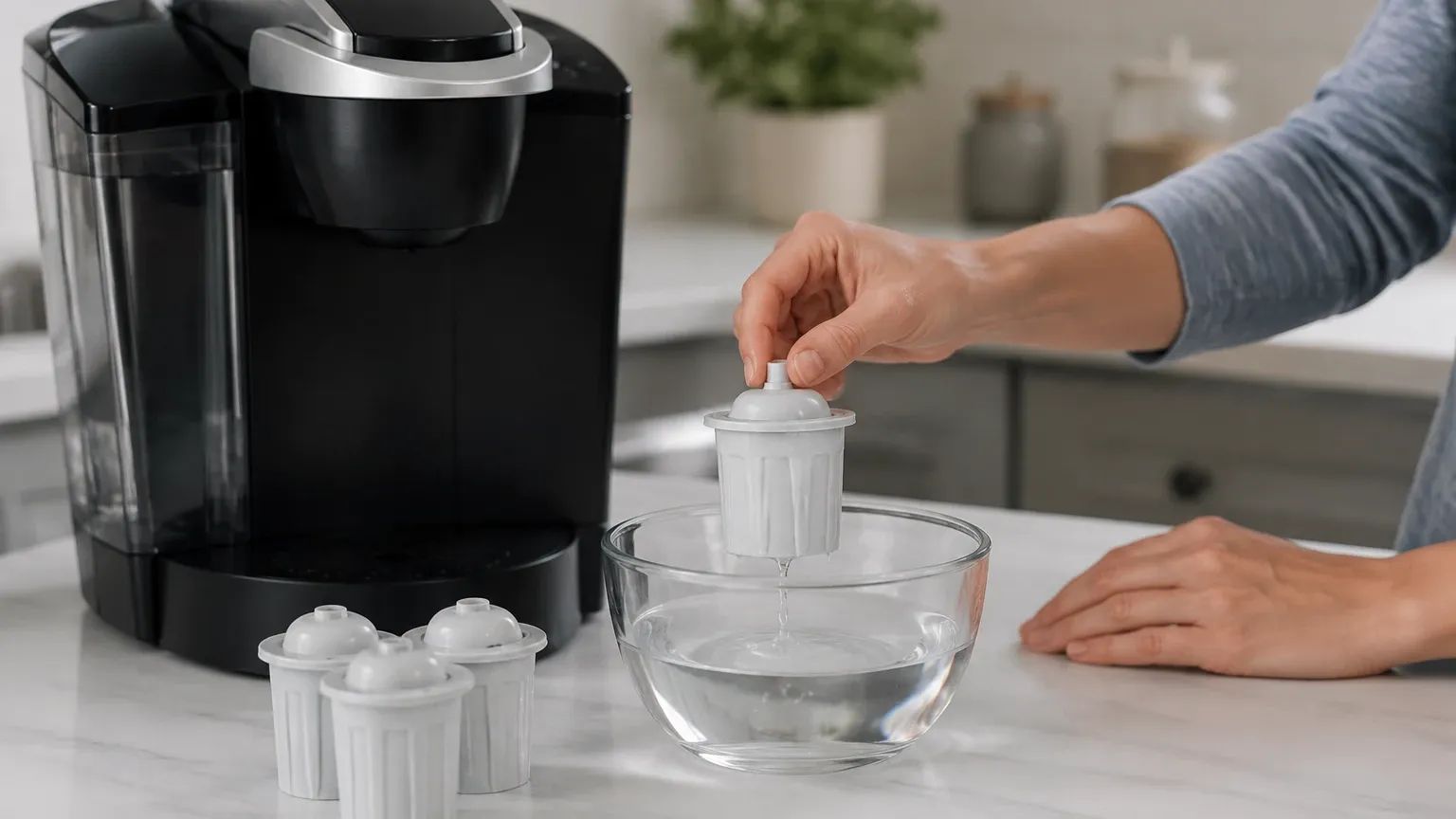
1. Preparation and Activation (Soaking)
Before a new cartridge is installed, the activated carbon must be hydrated. This process removes trapped air and loose carbon dust.
* Action: Submerge the filter cartridge in a container of clean, cold water.
* Duration: Allow it to soak for at least 5 to 10 minutes.
* Technical Note: Soaking ensures that the entire volume of the carbon media is available for adsorption once the brewing cycle begins.
2. Rinsing the Media
After soaking, the cartridge must be rinsed to flush out any remaining fine particulates that could clog the internal valves of the brewer.
* Action: Hold the cartridge under a stream of running tap water for approximately 60 seconds.
* Observation: Ensure the water runs clear. If the water appears gray, continue rinsing until all carbon fines are removed.
3. Cleaning the Filter Holder
Maintenance of the housing is as important as the cartridge itself. Biofilm or mineral scale can accumulate in the holder assembly.
* Action: Wash the lower filter holder and the upper clip with warm, soapy water and rinse thoroughly.
* Inspection: Check the mesh base of the holder for any tears or blockages that might impede flow.
4. Installation and Seating
Proper alignment prevents bypass and ensures the mechanical integrity of the water reservoir assembly.
* Action: Place the rinsed cartridge into the lower filter holder. Snap the upper clip onto the lower holder to secure the cartridge.
* Seating: Insert the assembled holder into the water reservoir, ensuring it clicks into place at the base.
5. Setting Replacement Reminders
In B2B settings, maintenance logs are vital. Most Keurig holders have a dial to track the replacement month.
* Standard Cycle: Replace the cartridge every 2 months or after 60 tank refills, whichever comes first. In high-volume environments, this cycle may need to be shortened based on total dissolved solids (TDS) levels in the local water supply.
Engineering Evaluation: Disposable vs. Permanent Filtration
When evaluating keurig water filter cartridges how to use, engineers must also consider the limitations of disposable plastic and carbon components. In industrial filtration, the choice of media is dictated by the specific contaminants and the operational environment.
Material Compatibility
Disposable cartridges are typically made of BPA-free plastics and charcoal. While sufficient for standard water, they lack the chemical and thermal resistance required in industrial chemical processing or high-pressure hydraulic systems. Stainless steel filter cartridges, such as those manufactured by Kaifil, offer superior resistance to corrosion and can withstand temperatures far exceeding the limits of plastic housings.
Micron Ratings and Precision
Keurig cartridges do not typically carry a specific micron rating, as their primary function is chemical adsorption rather than fine particulate removal. In contrast, industrial Filter Cartridges are engineered with precise micron ratings—ranging from coarse wire mesh at 100+ microns to fine sintered metal at sub-5-micron levels. This precision is essential for protecting downstream components like high-pressure pumps and sensitive nozzles.
Total Cost of Ownership (TCO)
While the initial cost of a disposable cartridge is low, the cumulative cost in a commercial setting can be significant. For large-scale industrial applications, engineers often opt for cleanable stainless steel filters. These components can be backwashed or ultrasonically cleaned, providing a longer service life and reducing the waste stream associated with disposable plastic cartridges.
Common Risks and Troubleshooting in Cartridge Use
Failure to follow the correct procedure for keurig water filter cartridges how to use can result in several operational issues:
* Air Locks: If the cartridge is not soaked properly, air bubbles can become trapped in the media, causing the pump to struggle or leading to inconsistent cup volumes.
* Scale Accumulation: Carbon filters do not remove minerals (calcium/magnesium). In hard water areas, engineers must supplement cartridge use with a descaling regimen or a dedicated water softening system to prevent scale-induced heater failure.
* Bacterial Growth: Because carbon removes chlorine—the primary disinfectant in municipal water—the filtered water in the reservoir is susceptible to bacterial growth if left stagnant. Regular replacement and cleaning of the reservoir are mandatory in B2B health and safety protocols.
Transitioning to Industrial Filtration Solutions
For organizations that have moved beyond standard office coffee systems into industrial food and beverage production, the requirements for filtration become significantly more complex. Kaifil specializes in the design and manufacture of custom stainless steel filtration solutions that address these professional needs.
Customization Options for Engineers
When a standard off-the-shelf cartridge is insufficient, Kaifil provides OEM capabilities to develop bespoke filtration components. This includes:
* Wire Mesh Selection: Choosing the appropriate weave (plain, twill, or dutch) to balance flow rate and filtration accuracy.
* Structural Integrity: Designing reinforced internal cores to prevent cartridge collapse under high differential pressure.
* End Cap Configurations: Customizing fittings (DOE, SOE, Code 7) to ensure seamless integration into existing industrial housings.
Conclusion: Confirming the Next Steps
Understanding keurig water filter cartridges how to use is a fundamental task for maintaining small-scale beverage equipment. However, for engineers and purchasing teams managing larger industrial systems, the focus shifts from simple maintenance to optimized filtration performance and durability.
Before selecting a filtration solution, technical professionals should confirm:
1. Fluid Compatibility: Does the filter media react with the process fluid?
2. Operating Parameters: What are the maximum pressure and temperature requirements?
3. Filtration Goals: Is the priority particulate removal, chemical adsorption, or equipment protection?
For those requiring high-performance, durable, and precisely engineered filtration components, exploring professional Filter Cartridges is the logical next step. Kaifil’s expertise in stainless steel and wire mesh technology ensures that even the most demanding industrial environments achieve reliable and cost-effective filtration results.
