


Kirkland Water Filter Cartridges
In the landscape of water treatment, the selection of appropriate filtration media is a critical decision for maintaining system integrity and ensuring the removal of specific contaminants. While residential users often turn to consumer-grade solutions such as Kirkland water filter cartridges for point-of-use applications, industrial engineers and procurement specialists must evaluate these technologies through a more rigorous technical lens. Understanding the underlying mechanics, material science, and performance limitations of standard water filter cartridges is essential for determining when a consumer-level product suffices and when an industrial-grade stainless steel solution is required.
Industrial filtration demands a level of durability and precision that often exceeds the capabilities of standard plastic-housed cartridges. However, the principles of filtration—ranging from mechanical straining to adsorption—remain consistent across both sectors. This guide examines the technical specifications of common water filtration components and provides engineering insights into selecting the right Filter Cartridges for diverse operational environments.
Technical Overview of Water Filter Cartridges
Water filter cartridges are designed to remove impurities through various physical and chemical processes. In the context of Kirkland water filter cartridges, the primary mechanism is a combination of activated carbon filtration and ion-exchange resin. These components are engineered to target common municipal water issues, such as chlorine taste, odor, and heavy metal reduction.
Activated Carbon Adsorption
Activated carbon is the most common medium used in water cartridges. It works through adsorption, where pollutant molecules are trapped inside the pore structure of the carbon granules. In high-quality cartridges, the carbon is often derived from coconut shells, which provide a high surface area and a dense pore structure ideal for removing volatile organic compounds (VOCs).
Ion-Exchange Resin
To address water hardness and specific heavy metals like lead or copper, many cartridges incorporate ion-exchange resins. These resins exchange undesirable ions for less harmful ones (typically hydrogen or sodium). In industrial settings, this process is scaled up significantly, but the fundamental chemistry remains a cornerstone of water softening and deionization.
Evaluating Filtration Performance Standards
When assessing any filtration component, engineers rely on standardized testing protocols. For water filter cartridges, the most recognized benchmarks are established by NSF International and the American National Standards Institute (ANSI).
1. NSF/ANSI 42: This standard covers aesthetic effects. It ensures the cartridge can effectively reduce non-health-related contaminants such as chlorine, taste, and odor.
2. NSF/ANSI 53: This is a more stringent standard for health effects. It verifies the reduction of specific contaminants like lead, cysts, and asbestos.
3. NSF/ANSI 401: This standard applies to emerging contaminants, including trace pharmaceuticals and pesticides that may be present in municipal supplies.
For industrial applications, these certifications provide a baseline for safety and performance, though industrial filters often require additional certifications for high-pressure and high-temperature tolerance, which are not typically covered by residential standards.
Industrial vs. Residential: The Case for Stainless Steel
While Kirkland water filter cartridges are effective for domestic use, they are typically constructed from polypropylene or other polymers. In industrial environments, these materials face significant limitations. When a process involves high temperatures, aggressive chemicals, or high differential pressures, engineers must transition to metal filtration media.
Temperature Resistance
Standard plastic cartridges generally have a maximum operating temperature of approximately 40°C to 60°C (104°F to 140°F). Exceeding these limits can lead to structural failure or the leaching of chemicals from the filter housing. Stainless steel filter cartridges, by contrast, can withstand temperatures exceeding 300°C, making them indispensable for steam filtration and hot process water.
Chemical Compatibility
In chemical processing or pharmaceutical manufacturing, the presence of solvents or acids can degrade standard plastic filters. Stainless steel (specifically 304 or 316L grades) offers superior resistance to a wide range of corrosive agents. This ensures that the filtration media does not become a source of contamination itself.
Mechanical Strength and Reusability
Industrial systems often experience pressure spikes or high flow rates that would collapse a standard residential cartridge. Stainless steel wire mesh or sintered metal cartridges provide the structural rigidity needed to maintain filtration integrity under stress. Furthermore, while residential cartridges are disposable, metal filters can often be cleaned through backwashing or ultrasonic cleaning, reducing the total cost of ownership over the long term.
Engineering Considerations for Filter Selection
Selecting the correct filtration solution requires a deep dive into the specific requirements of the application. Engineers should confirm the following parameters before finalizing a purchase order.
Micron Rating: Nominal vs. Absolute
The micron rating defines the size of particles the filter can remove. However, there is a significant difference between nominal and absolute ratings:
* Nominal Rating: Indicates that the filter can trap a large percentage of particles of a certain size (e.g., 85% of 5-micron particles).
* Absolute Rating: Guarantees that 99.9% or more of particles at that size will be captured.
For critical applications, such as protecting sensitive downstream equipment or ensuring food safety, an absolute-rated filter is mandatory.
Flow Rate and Pressure Drop (Delta P)
Every filter introduces resistance to the flow of fluid. This is measured as the pressure drop across the filter (Delta P). As the filter accumulates debris, the pressure drop increases. Engineers must calculate the initial pressure drop to ensure the pump system can handle the load and determine the terminal pressure drop at which the cartridge must be replaced or cleaned.
Dirt-Holding Capacity
This refers to the total amount of contaminant a filter can retain before the pressure drop becomes unacceptable. A filter with a high dirt-holding capacity requires fewer change-outs, which reduces downtime and labor costs. Pleated designs are often used in industrial Filter Cartridges to maximize surface area and extend the service life.
Compatibility and Retrofitting
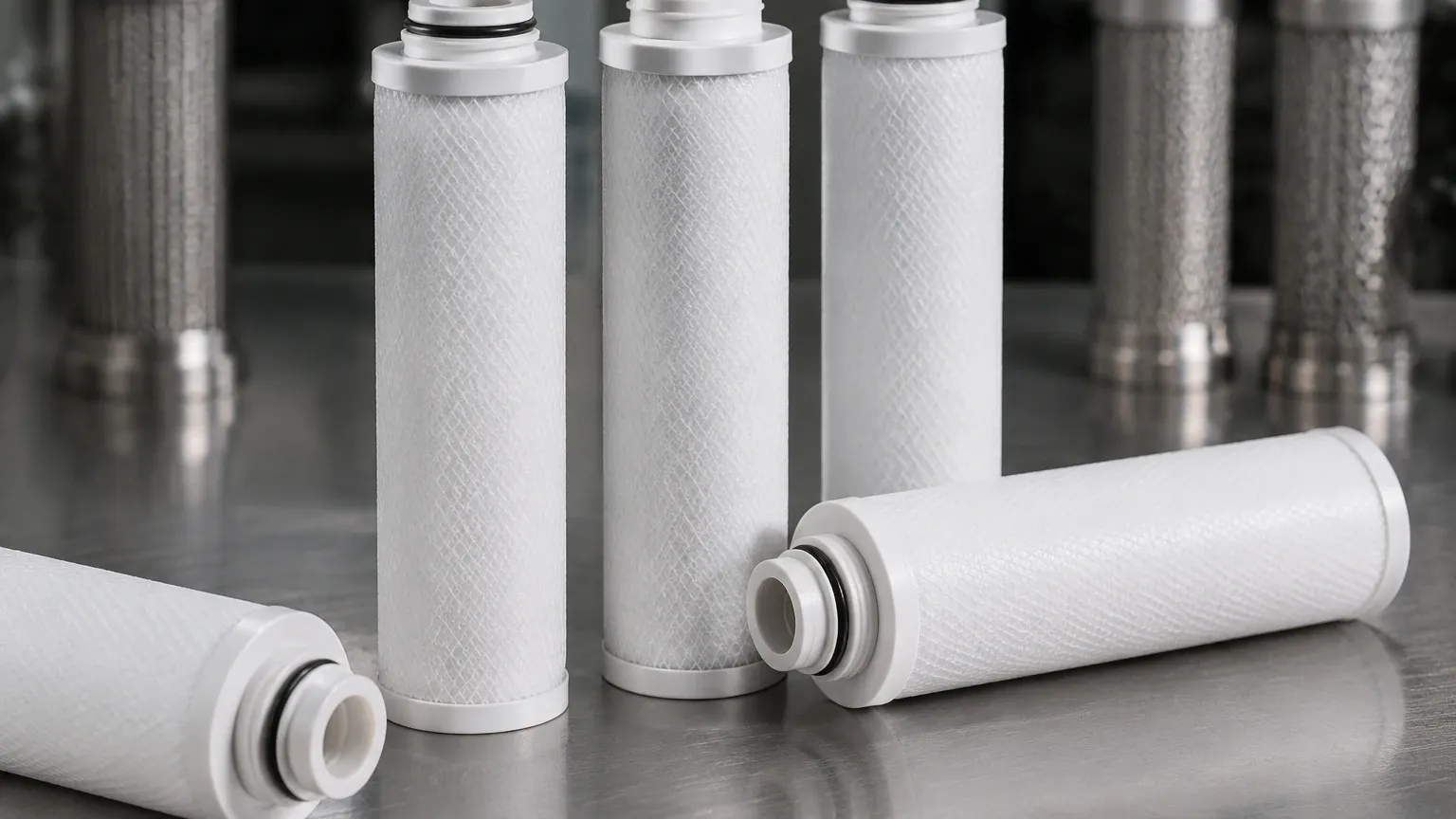
One common challenge in industrial procurement is ensuring that new filtration components are compatible with existing housings. Most standard water filter cartridges follow industry-standard dimensions, such as the 10-inch or 20-inch "Big Blue" or "Slim Line" formats.
When upgrading from a consumer-style setup to a more robust system, it is vital to verify the end-cap configuration. Common configurations include:
* DOE (Double Open End): The cartridge is open at both ends and requires gaskets for sealing.
* SOE (Single Open End): One end is sealed, and the other features a specific fitting, such as a 222 or 226 O-ring connector, to ensure a bypass-free seal.
Maintenance and Replacement Cycles
For products like Kirkland water filter cartridges, the replacement cycle is typically based on a fixed volume of water (e.g., 100 gallons) or a time interval (e.g., two months). In industrial settings, replacement cycles are data-driven.
Monitoring differential pressure is the most reliable method for determining when a filter is spent. If the pressure drop exceeds the manufacturer's recommendations, the filter is likely blinded and may lead to fluid bypass or structural damage. In systems where water quality is paramount, periodic laboratory analysis of the filtrate is also recommended to ensure the media has not reached its adsorption capacity.
Customization in Industrial Filtration
Unlike the one-size-fits-all approach of retail water filters, industrial filtration often requires customized solutions. Manufacturers like Kaifil specialize in developing bespoke filtration components tailored to specific challenges. This includes:
* Custom Micron Sizes: Engineering mesh counts to target specific particle distributions.
* Material Selection: Utilizing specialized alloys for extreme environments.
* Structural Reinforcement: Adding internal cores or external shrouds to handle high-pressure differentials.
* OEM Integration: Designing cartridges that fit proprietary housing systems for equipment manufacturers.
By working closely with a manufacturer, engineers can optimize the filtration process to balance efficiency, durability, and cost.
Conclusion
While Kirkland water filter cartridges serve as an accessible and effective solution for basic water improvement, they represent only a small segment of the broader filtration industry. For professional and industrial applications, the focus shifts from simple taste improvement to rigorous contaminant control, mechanical reliability, and material compatibility.
By understanding the technical nuances of Filter Cartridges, including micron ratings, pressure dynamics, and the benefits of stainless steel media, purchasing teams can make informed decisions that protect their equipment and ensure the quality of their output. Whether maintaining a simple water cooling loop or managing a complex chemical process, the right filtration choice is fundamental to operational success.
