


Lay Z Spa Filter Cartridges Vi
In the realm of fluid management and water treatment, the efficiency of a system is often dictated by the quality of its filtration components. The Lay Z Spa Filter Cartridges VI represent a specific standard in consumer-grade portable spa filtration, designed to maintain water clarity and protect mechanical pump components from particulate damage. However, for engineers and procurement professionals, understanding the underlying mechanics of these cartridges—and how they compare to industrial-grade Filter Cartridges—is essential for evaluating performance, durability, and total cost of ownership.
This technical guide examines the specifications of the Type VI cartridge, the engineering principles of pleated filtration media, and the critical differences between synthetic disposables and high-performance stainless steel alternatives used in demanding industrial environments.
Technical Overview of Type VI Filtration Media
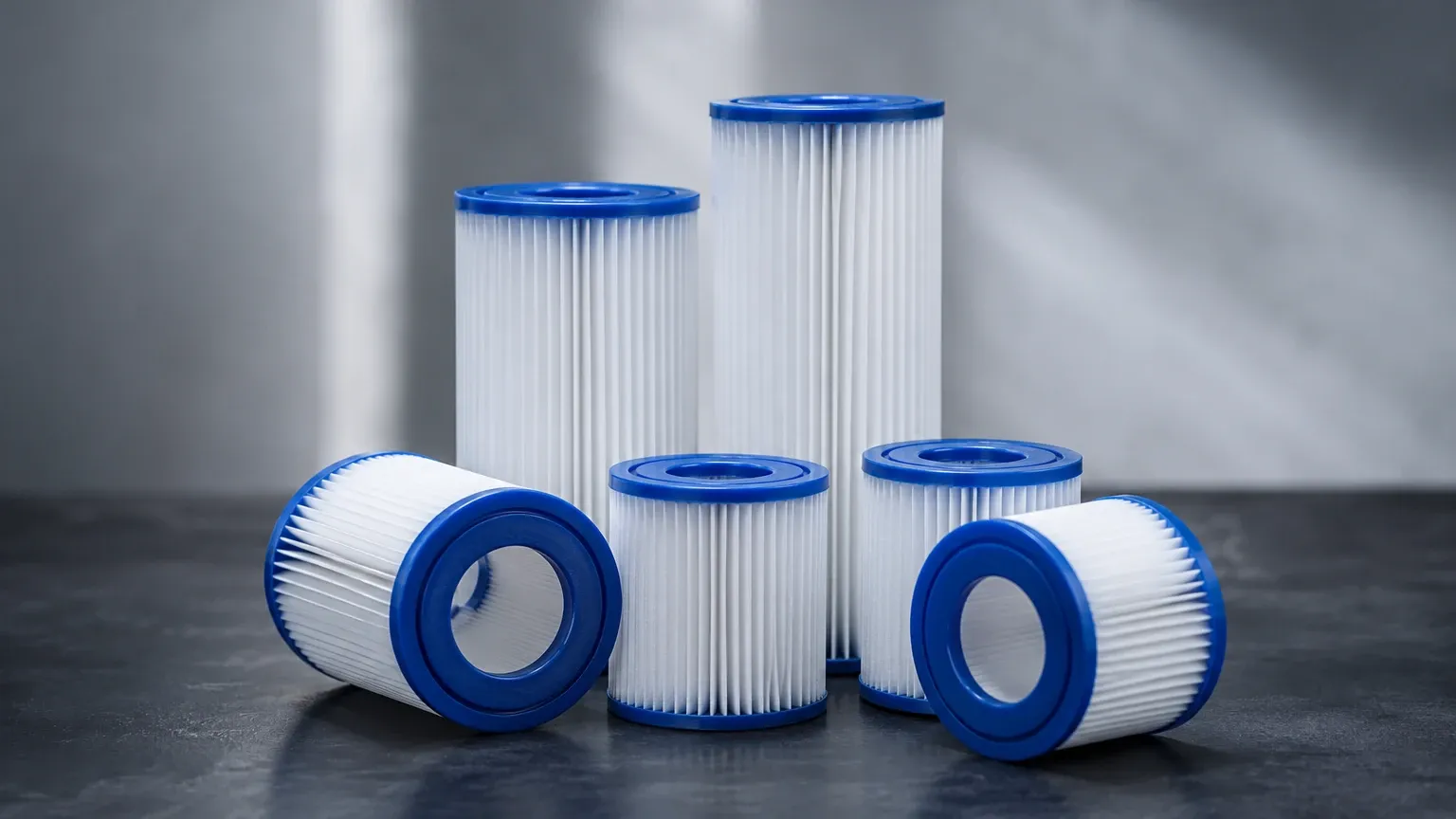
The Lay Z Spa Filter Cartridges VI are characterized by their compact, cylindrical design, typically measuring approximately 104mm in diameter and 80mm in height. These cartridges are engineered specifically for use in Bestway Lay-Z-Spa pump units. From a material science perspective, the primary filtration medium is a non-woven synthetic fabric, often polyester or Dacron, which is pleated to maximize the available surface area within a small footprint.
Filtration Rating and Pore Structure
In the filtration industry, the performance of a medium is defined by its micron rating. Standard Type VI cartridges generally offer a nominal filtration rating between 20 and 50 microns. This is sufficient for capturing common organic debris, skin cells, and fine silt found in residential spa environments. However, because these are nominal ratings, they do not guarantee 100% retention of particles at that size; rather, they indicate the ability to trap a significant percentage of solids over a specific time cycle.
Structural Components
The cartridge consists of three main parts:
1. The Media: The pleated synthetic fabric responsible for particulate capture.
2. The Core: A plastic (usually polypropylene) perforated tube that provides structural integrity against the pressure of the inward-flowing water.
3. The End Caps: Molded caps that ensure a tight seal within the filter housing, preventing "bypass"—the phenomenon where unfiltered water escapes around the edges of the media.
Engineering Principles: Surface Area and Pleat Density
The effectiveness of any cartridge filter, whether a Type VI or a heavy-duty industrial metal filter, relies on the principle of surface filtration. By pleating the material, manufacturers can fit several square feet of filtration surface into a cylinder only a few inches wide.
The Impact of Pleat Count
In fluid engineering, the relationship between surface area and flow velocity is critical. A higher pleat count increases the total surface area, which in turn reduces the "face velocity" of the fluid passing through the media. Lower face velocity results in:
* Higher Efficiency: Particles have a higher probability of being trapped by the fibers rather than being forced through the pores by high pressure.
* Lower Pressure Drop (ΔP): A larger surface area offers less resistance to flow, reducing the strain on the pump motor and lowering energy consumption.
* Increased Dirt Holding Capacity: More area means the filter can accumulate more debris before reaching its terminal pressure drop, extending the interval between cleanings.
For industrial applications, Kaifil utilizes these same principles but replaces synthetic fibers with precision-engineered stainless steel wire mesh. While a Type VI cartridge relies on the depth of the synthetic fibers to trap particles, stainless steel mesh provides a precise, absolute filtration barrier that is far more predictable under high-pressure conditions.
Comparing Synthetic Media to Stainless Steel Filter Cartridges
While the Lay Z Spa Filter Cartridges VI are effective for residential use, industrial processes—such as chemical processing, pharmaceutical manufacturing, and high-temperature hydraulic systems—require materials that can withstand more rigorous environments. This is where the transition from synthetic to stainless steel Filter Cartridges becomes necessary.
Chemical and Thermal Resistance
Synthetic polyester filters are limited by their chemical compatibility and thermal thresholds. They can degrade when exposed to high concentrations of chlorine, bromine, or extreme temperatures. In contrast, 304 or 316L stainless steel filters are virtually inert to most industrial chemicals and can operate in temperatures exceeding 500°F (260°C). For applications involving caustic cleaning agents or high-temperature sterilization (SIP), metal filters are the only viable option.
Structural Integrity and Pressure Tolerance
Under high differential pressure, synthetic cartridges can suffer from "pleat collapse" or media migration, where fibers break off and contaminate the downstream fluid. Stainless steel cartridges, particularly those featuring a sintered or reinforced mesh, maintain their geometric integrity even under significant pressure spikes. This ensures consistent filtration performance and protects sensitive downstream equipment like high-pressure nozzles or precision valves.
Reusability vs. Disposability
The Type VI cartridge is designed as a semi-disposable component. While it can be rinsed, the organic and oily residues eventually clog the microscopic pores of the synthetic fibers, necessitating replacement every 2–4 weeks in high-use scenarios. Industrial metal filters are designed for longevity. They can be cleaned using ultrasonic baths, backwashing, or chemical solvents, allowing them to be reused for years, which significantly reduces the long-term environmental impact and operational costs.
Performance Metrics: Flow Rate and Pressure Differential
When selecting or evaluating a filter cartridge, engineers must focus on the Pressure Differential (ΔP). This is the difference in pressure between the upstream (unfiltered) side and the downstream (filtered) side of the media.
For a system using Type VI cartridges, a rising ΔP indicates that the pleats are becoming loaded with debris. If the filter is not cleaned or replaced, the flow rate will drop, and the pump may overheat. In industrial settings, sensors monitor ΔP in real-time.
Kaifil’s engineering team designs Filter Cartridges with optimized porosity to ensure that the initial (clean) pressure drop is as low as possible. By using specialized weaving techniques, such as Dutch weave or twilled weave, we can achieve high flow rates while maintaining strict micron retention standards. This is a level of precision that standard synthetic spa filters cannot match, as their manufacturing tolerances are much broader.
Maintenance, Cleaning, and Replacement Protocols
Proper maintenance is the most effective way to extend the life of a filtration system and ensure water quality. For the Lay Z Spa Filter Cartridges VI, the following protocol is generally recommended:
1. Daily Inspection: In high-use environments, the filter should be checked daily for heavy debris.
2. Weekly Rinsing: Removing the cartridge and spraying it with a high-pressure hose clears surface-level contaminants.
3. Chemical Soaking: Periodically using a cartridge cleaner helps break down body oils and scale that rinsing alone cannot remove.
4. Replacement: Even with diligent cleaning, the synthetic fibers will eventually lose their loft and filtration efficiency. Replacement is typically required when the water remains cloudy despite chemical balancing.
In industrial B2B environments, the maintenance of stainless steel cartridges is more sophisticated. These components are often integrated into automated systems that perform "back-pulsing"—reversing the flow of fluid to knock debris off the surface of the mesh. When manual cleaning is required, the durability of the stainless steel allows for the use of aggressive degreasers or thermal cleaning, which would destroy a synthetic Type VI filter.
Industrial Customization and OEM Filtration Solutions
Many industrial applications require filtration solutions that do not fit standard consumer dimensions like the Type VI. This is where custom manufacturing becomes vital. Engineers often face challenges such as limited installation space, unique fluid viscosities, or the need for multi-stage filtration within a single housing.
Kaifil specializes in providing OEM and customized filtration components. Our capabilities include:
* Custom Micron Ratings: Engineering mesh to capture specific particle sizes ranging from 1 micron to several millimeters.
* Material Selection: Utilizing various grades of stainless steel or specialized alloys for extreme corrosion resistance.
* Structural Modifications: Designing custom end caps (threaded, flanged, or O-ring seals) to ensure 100% compatibility with existing industrial housings.
* Reinforced Cores: Creating heavy-duty inner supports for high-viscosity fluids or high-pressure hydraulic applications.
For purchasing teams, the decision between a standard off-the-shelf solution and a custom-engineered stainless steel cartridge often comes down to the Total Cost of Ownership (TCO). While a synthetic cartridge like the Type VI has a lower initial purchase price, the frequent replacement costs, downtime for maintenance, and potential for system failure often make high-quality metal Filter Cartridges a more economical choice over the lifecycle of the equipment.
Conclusion: Selecting the Right Filtration Standard
Understanding the specifications of the Lay Z Spa Filter Cartridges VI provides a foundational look at how pleated media functions to maintain fluid clarity. However, for industrial professionals, these consumer-grade components serve as a baseline for comparison against more robust filtration technologies.
Whether you are managing a commercial water feature, a chemical processing line, or a hydraulic system, the choice of filter cartridge must be informed by the specific demands of the environment. By focusing on material compatibility, structural integrity, and the long-term benefits of cleanable media, engineers can optimize their systems for maximum efficiency and reliability. For those requiring precision-engineered solutions that go beyond the capabilities of synthetic disposables, exploring custom stainless steel filtration remains the industry standard for high-performance fluid management.
