


Large Filter Cartridges
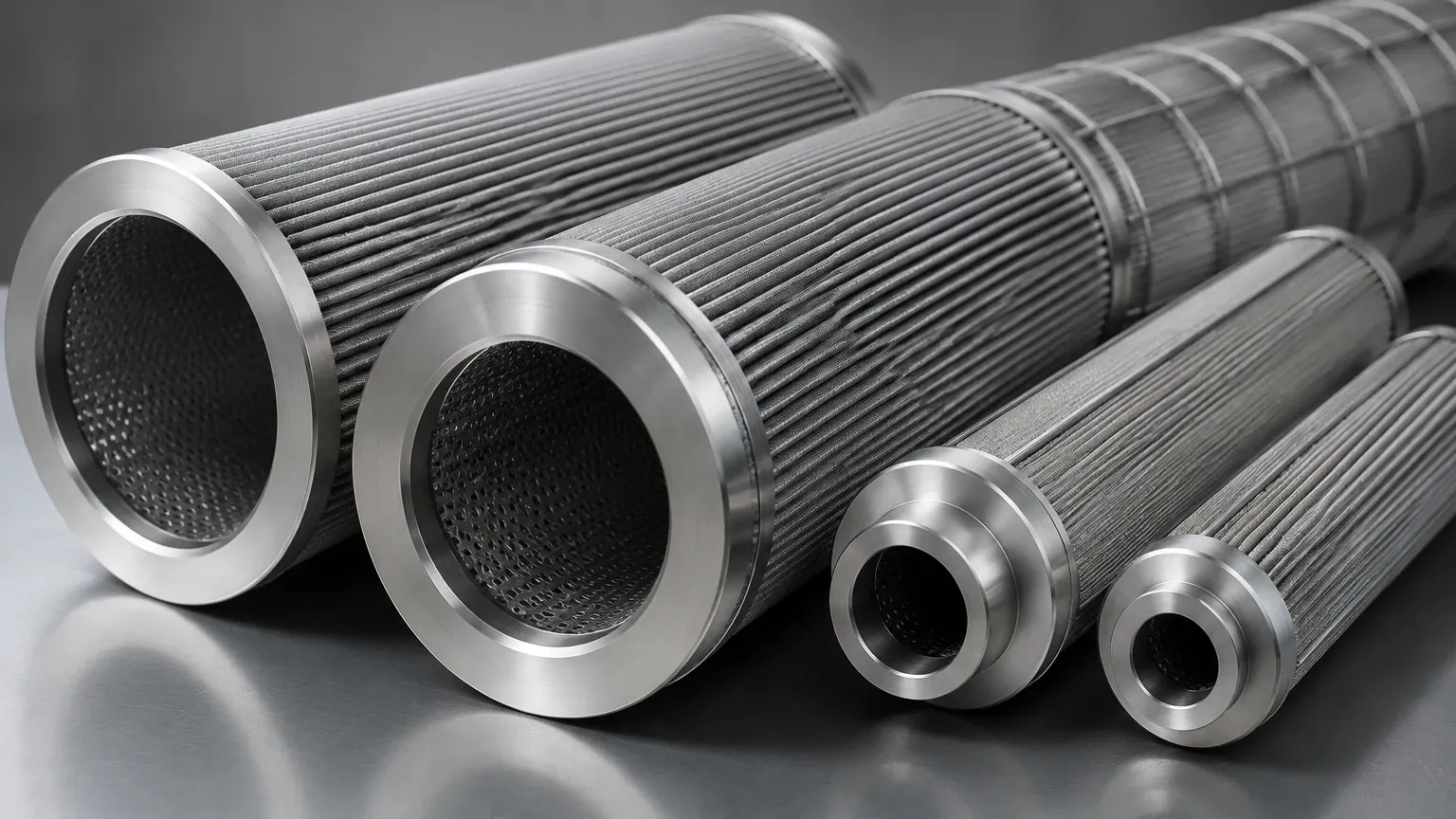
In industrial filtration, the scale of operation often dictates the efficiency and economic viability of a process. For high-flow applications such as chemical processing, large-scale water treatment, and industrial hydraulic systems, standard-sized filtration components frequently fall short of performance requirements. Large filter cartridges are engineered specifically to address these high-capacity demands, providing the necessary surface area and structural integrity to handle significant fluid volumes without compromising filtration precision.
As a specialized manufacturer, Kaifil provides stainless steel Filter Cartridges designed for durability and precision. Understanding the technical nuances of large-format filtration is essential for engineers and procurement teams who must balance initial capital expenditure with long-term operational costs and system reliability.
The Engineering Logic Behind Large Filter Cartridges
The primary driver for adopting large filter cartridges is the optimization of flow dynamics. In any filtration system, the relationship between flow rate, surface area, and pressure drop (differential pressure) is fundamental. By increasing the physical dimensions of the cartridge—both in diameter and length—engineers can achieve several critical technical advantages.
Increased Surface Area and Flux Management
A larger cartridge allows for a greater amount of filter media to be packed into a single unit. Whether using pleated wire mesh or sintered metal fibers, the increased surface area reduces the "flux" or the volume of fluid passing through a specific area of the media per unit of time. Lower flux results in a lower initial pressure drop and allows the media to capture more contaminants before reaching its terminal pressure drop. This directly translates to longer service intervals and reduced system downtime.
Reduced Housing Footprint
From a system design perspective, using a few large filter cartridges is often more efficient than utilizing a high-quantity manifold of smaller cartridges. A single high-flow housing containing large-diameter cartridges requires fewer seals, fewer internal support structures, and less labor during change-outs. This simplification reduces the number of potential leak points and streamlines the maintenance process.
Material Selection: The Case for Stainless Steel
While polymer-based cartridges are common in light-duty applications, industrial-scale filtration often requires the mechanical strength and chemical resistance of metal. Large filter cartridges manufactured from stainless steel (typically 304 or 316L grades) offer distinct advantages in demanding environments.
Thermal and Chemical Stability
Industrial processes in the chemical and pharmaceutical sectors often involve aggressive solvents or high-temperature fluids. Stainless steel cartridges maintain their structural integrity at temperatures exceeding 300°C, far beyond the melting points of polypropylene or polyester. Furthermore, the corrosion resistance of 316L stainless steel ensures that the filter media does not leach impurities into the process stream, which is a critical requirement for food and beverage applications.
Mechanical Strength and Pressure Resistance
Large-format filters are subject to significant mechanical stresses, especially during high-viscosity filtration or system start-ups where pressure surges may occur. Stainless steel wire mesh and sintered components are resistant to pleat collapse and media migration. The use of internal support cores and external cages, also constructed from stainless steel, ensures that the cartridge can withstand high differential pressures without bypassing or failing.
Structural Design and Filtration Media
The performance of large filter cartridges is heavily dependent on the internal configuration of the media. Depending on the specific application, different construction methods are employed to balance permeability and particle retention.
Pleated Wire Mesh Construction
Pleating is the most effective way to maximize the surface area of a large filter cartridge. By folding the stainless steel wire mesh, the available filtration area can be increased by several factors compared to a standard cylindrical design. This is ideal for high-flow applications where low pressure drop is a priority. Kaifil utilizes advanced pleating technology to ensure uniform pleat spacing, which prevents "blinding" (where pleats bunch together and restrict flow).
Sintered Metal Fiber and Mesh
For applications requiring extreme precision or the removal of very fine particulates, sintered metal media is preferred. Sintering involves bonding layers of wire mesh or metal fibers together through a high-temperature vacuum process. This creates a rigid, porous structure with fixed pore sizes. In large filter cartridges, sintered media provides exceptional depth filtration capabilities and can be cleaned and reused multiple times, offering a sustainable alternative to disposable depth filters.
Wedge Wire and Perforated Elements
In some heavy-duty industrial sectors, such as mining or raw water intake, large cartridges may utilize wedge wire or perforated metal. These designs are focused on coarse filtration and high mechanical impact resistance. They are often used as pre-filters to protect more sensitive downstream Filter Cartridges and equipment.
Performance Metrics and Selection Criteria
When specifying large filter cartridges for an industrial system, engineers must evaluate several performance metrics to ensure the component is fit for purpose.
1. Micron Rating (Absolute vs. Nominal): It is vital to distinguish between absolute ratings (where 99.9% of particles at a specific size are retained) and nominal ratings (which indicate a general efficiency). For critical pharmaceutical or chemical processes, absolute-rated stainless steel mesh is typically required.
2. Flow Velocity and Viscosity: Large cartridges are often used for high-viscosity fluids like resins or heavy oils. The larger diameter helps maintain a manageable flow velocity, preventing shear stress on the fluid and excessive wear on the filter media.
3. Dirt Holding Capacity: This refers to the total mass of contaminants the cartridge can retain before the pressure drop reaches a critical level. Large filter cartridges naturally offer higher dirt-holding capacities, but the specific weave or fiber density of the media will influence this value.
4. Seal Compatibility: The choice of O-ring or gasket material (Viton, EPDM, PTFE, or Silicone) is as important as the metal itself. In large-scale systems, a seal failure can lead to significant bypass and product contamination.
Customization and OEM Capabilities
Industrial filtration is rarely a one-size-fits-all field. Large filter cartridges often require customization to interface with existing housings or to meet unique process conditions. Kaifil specializes in providing tailored solutions that go beyond standard catalog dimensions.
Custom End Cap Configurations
Different housing manufacturers use proprietary seating mechanisms. Customizing the end caps—whether they are Code 7 (226 O-rings with locking tabs), DOE (Double Open End), or custom threaded connections—ensures a secure, leak-proof fit in any vessel.
Variable Lengths and Diameters
While standard lengths like 20, 30, or 40 inches are common, some high-flow vessels require non-standard dimensions. Manufacturing large filter cartridges with custom lengths or increased diameters allows for the optimization of the filtration area within the constraints of the available physical space.
Reinforced Construction
For applications involving high-pressure backwashing or extreme hydraulic shocks, the internal support structure of the cartridge can be reinforced. This includes thicker inner cores and heavy-duty outer guards to prevent deformation during reverse flow cycles.
Maintenance, Cleaning, and Total Cost of Ownership
One of the most significant advantages of stainless steel large filter cartridges is their cleanability. Unlike disposable polymer cartridges that must be incinerated or sent to a landfill after a single use, metal cartridges can be restored to near-original performance levels.
Cleaning Methodologies
* Ultrasonic Cleaning: High-frequency sound waves create cavitation bubbles that dislodge fine particulates from deep within the mesh or sintered structure.
* Backwashing: Reversing the flow of clean fluid through the cartridge can effectively remove surface-loaded contaminants.
* Chemical Cleaning: Soaking the cartridges in compatible solvents or acids can dissolve organic or mineral scaling without damaging the stainless steel media.
Economic Considerations
While the initial purchase price of a large stainless steel filter cartridge is higher than a disposable equivalent, the Total Cost of Ownership (TCO) is often lower. By eliminating the costs associated with frequent replacements, disposal fees for contaminated waste, and the labor required for constant change-outs, stainless steel provides a superior return on investment over the life of the system.
Technical Confirmation Before Procurement
To ensure the successful implementation of large filter cartridges, engineering teams should confirm several technical details with the manufacturer before finalizing an order:
* Housing Dimensions: Confirm the internal clearance and the exact distance between the tube sheet and the housing base.
* Operating Pressure and Temperature: Provide the maximum expected values, including potential surge conditions.
* Fluid Compatibility: Verify the chemical composition of the process fluid to ensure the correct grade of stainless steel and seal material is selected.
* Target Particle Size: Clearly define the required filtration efficiency for the most critical contaminant size.
By addressing these factors, organizations can ensure that their filtration systems operate at peak efficiency. Kaifil’s expertise in manufacturing custom stainless steel filtration components allows for the development of Filter Cartridges that meet the most rigorous industrial standards, providing reliable performance in the most demanding environments.
