


Pentair Ccp420 Filter Cartridges
In the realm of large-scale water management and light industrial filtration, the Pentair Clean & Clear Plus 420 (CCP420) system represents a significant standard for high-capacity sediment removal. Engineering teams and facility managers often rely on pentair ccp420 filter cartridges to maintain water clarity in environments ranging from commercial aquatic centers to pre-filtration stages in industrial water treatment plants. Understanding the technical nuances of these components—from their structural composition to their hydraulic performance—is essential for optimizing system uptime and reducing long-term operational costs.
Industrial filtration requires a balance between surface area, flow velocity, and particle retention. The CCP420 system achieves this through a multi-cartridge manifold design, utilizing four distinct filters to reach a cumulative surface area of 420 square feet. This article examines the engineering specifications, performance metrics, and the strategic transition from standard synthetic media to high-performance industrial Filter Cartridges for more demanding applications.
Engineering Specifications of CCP420 Systems
The architecture of a CCP420 system is designed to handle high flow rates while maintaining a compact footprint. Each of the four pentair ccp420 filter cartridges typically measures approximately 26 inches in length with an outer diameter of 7 inches. The 420-square-foot designation refers to the total effective filtration area provided by the pleated media across all four units.
From an engineering perspective, the use of four cartridges instead of one large single element serves several purposes. First, it allows for easier handling during maintenance cycles. Second, it distributes the hydraulic load more evenly across the manifold, reducing the risk of localized media failure. The cartridges are usually constructed with a high-impact thermal plastic center core to provide internal support against vacuum or pressure differentials, and they feature molded end caps that ensure a secure seal within the filter housing.
For B2B procurement teams, verifying the exact dimensions and the integrity of the end-cap seals is critical. A failure in the seal or a slight deviation in the cartridge length can lead to "bypass," where unfiltered water escapes around the cartridge, compromising the entire process downstream. High-quality replacements must adhere to strict tolerances to ensure the manifold maintains its intended pressure-tight seal.
Material Science: Polyester vs. Industrial Metal Mesh
The standard material for pentair ccp420 filter cartridges is a spun-bond polyester fabric, often referred to by the trade name Reemay. This material is chosen for its balance of durability, chemical resistance to chlorine and common water-balancing agents, and its ability to be cleaned multiple times. The pleat count and pleat depth are calculated to maximize the surface area without causing the pleats to collapse against one another under high flow conditions.
However, in industrial contexts where the fluid may contain aggressive chemicals, high temperatures, or sharp particulate matter, synthetic polyester may reach its physical limits. In these scenarios, engineers often look toward stainless steel Filter Cartridges as a more robust alternative. While polyester is excellent for 20-30 micron filtration in standard water, stainless steel wire mesh can be engineered for much finer or coarser requirements, offering superior structural rigidity and the ability to withstand extreme pH levels that would degrade synthetic fibers.
When evaluating media, technical professionals must consider the "dirt-holding capacity." Pleated polyester provides a high surface area for depth filtration, capturing particles within the fibrous matrix. In contrast, metal mesh filters provide precise surface filtration, which is often easier to backwash or ultrasonically clean in an industrial setting, leading to a longer total service life in high-load environments.
Hydraulic Performance and Pressure Management
The efficiency of any filtration system is dictated by its hydraulic profile. For the CCP420 system, the maximum recommended flow rate is typically around 150 gallons per minute (GPM) for commercial applications, though many industrial engineers prefer to operate at lower velocities to extend the life of the media.
One of the most critical metrics to monitor is the "Clean Start" differential pressure (ΔP). When new pentair ccp420 filter cartridges are installed, the pressure drop across the system should be minimal. As the media captures debris, the ΔP increases. In B2B environments, it is standard practice to schedule a cleaning or replacement when the pressure rises 8-10 PSI above the clean starting pressure. Operating beyond this threshold leads to several engineering risks:
1. Media Compression: High pressure can compress the pleats, reducing the effective surface area and accelerating further pressure increases.
2. Particle Breakthrough: Excessive pressure can force captured contaminants through the media pores, a phenomenon known as "unloading."
3. Structural Failure: The internal core of the cartridge may collapse if the differential pressure exceeds the manufacturer's rated limit.
By selecting cartridges with high-strength support bands and reinforced cores, facilities can ensure that the filtration system remains stable even during unexpected surges in particulate loading.
Maintenance Strategies for Large-Scale Filtration
Maintenance of pentair ccp420 filter cartridges is not merely a matter of rinsing; it requires a systematic approach to preserve the integrity of the media. In industrial water loops, cartridges may become fouled with oils, minerals, or biological films.
* Degreasing: If oils or lotions are present, the cartridges must be treated with a degreaser before any acid cleaning. Applying acid to an oily filter can permanently set the oils into the fabric, effectively blinding the filter.
* Acid Washing: For mineral scale (calcium carbonate), a mild acid solution is used. However, engineers must ensure the acid concentration does not weaken the polyester fibers or the polyurethane end caps.
* Drying and Inspection: After cleaning, cartridges should be allowed to dry so the fibers can "fluff" back to their original state. This is also the ideal time to inspect for pleat wear or cracks in the end caps.
In many B2B applications, the labor cost of cleaning four large cartridges exceeds the cost of replacement. Consequently, many facilities move toward a "replace-only" strategy or invest in more durable stainless steel Filter Cartridges that can be cleaned using automated industrial processes like ultrasonic baths, which are more effective than manual hosing.
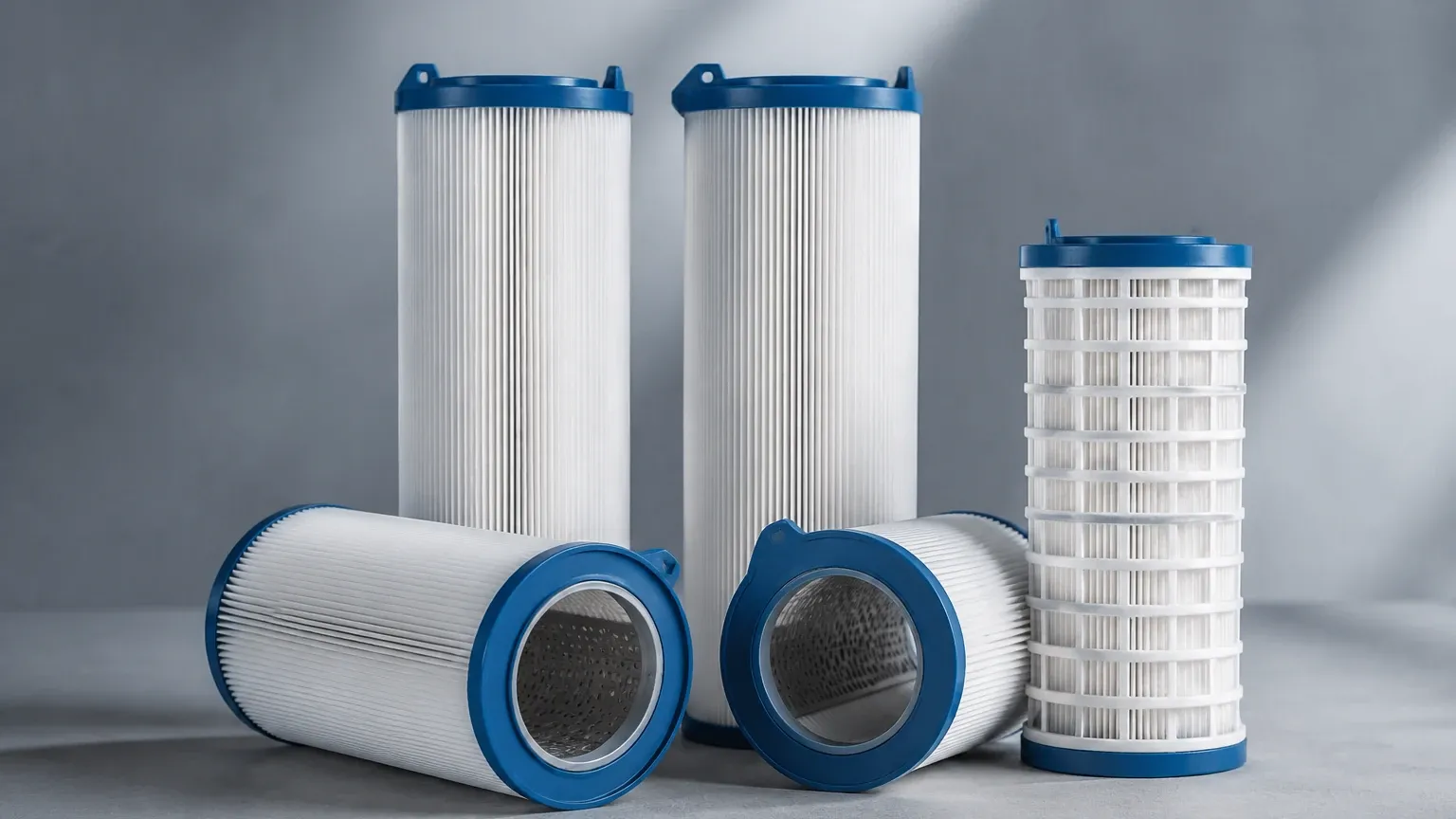
Comparing Standard and Industrial Filter Cartridges
While the CCP420 is a widely recognized platform, it is important to distinguish between standard consumer-grade replacements and industrial-grade components. For a purchasing manager, the lowest price often indicates a thinner media or a less robust center core.
Industrial-grade Filter Cartridges are characterized by:
* Increased Pleat Stability: More frequent and stronger banding to prevent pleat bunching.
* Chemical-Resistant End Caps: Use of specialized resins that do not become brittle in the presence of ozone or aggressive sanitizers.
* High-Flow Cores: Engineered to minimize internal turbulence, which helps in maintaining a lower overall system pressure.
When sourcing pentair ccp420 filter cartridges for a B2B application, it is vital to confirm the "micron rating" (nominal vs. absolute). A nominal 20-micron filter might only capture 60-70% of particles at that size, whereas an industrial-spec absolute-rated filter will provide much higher consistency, which is often required for protecting sensitive downstream equipment like reverse osmosis (RO) membranes or high-pressure pumps.
Custom Engineering for Specialized Filtration Environments
Not every industrial process fits into the standard mold of a CCP420 housing. In many cases, engineers require custom filtration solutions that offer the same high surface area but with different material properties. This is where the expertise of a manufacturer like Kaifil becomes invaluable.
Custom stainless steel Filter Cartridges can be designed to fit existing housings while providing benefits that synthetic media cannot match. For instance, in food and beverage processing or pharmaceutical manufacturing, the ability to withstand steam sterilization (SIP) or high-temperature clean-in-place (CIP) cycles is mandatory. Synthetic cartridges used in the CCP420 would melt or degrade under these conditions, whereas stainless steel mesh remains unaffected.
Furthermore, customization allows for the adjustment of filtration accuracy. If a process requires a specific 50-micron pre-filter to protect a 5-micron secondary stage, custom wire mesh cartridges can be manufactured to those exact specifications, ensuring the entire filtration train operates at peak efficiency. This tailored approach reduces waste and ensures that the filtration system is a perfect match for the specific contaminants present in the fluid stream.
Total Cost of Ownership (TCO) Considerations
When evaluating pentair ccp420 filter cartridges, B2B buyers should look beyond the initial purchase price and consider the Total Cost of Ownership. TCO includes the cost of the cartridges, the labor required for frequent cleanings, the water costs associated with cleaning, and the energy costs related to pump head pressure.
1. Energy Efficiency: A high-quality cartridge with better flow characteristics allows the pump to operate at a lower RPM (if using a variable speed drive), leading to significant electricity savings over the course of a year.
2. Replacement Frequency: If a cheaper cartridge lasts only six months while a premium industrial version lasts eighteen, the premium option is significantly more cost-effective despite the higher upfront price.
3. Process Protection: The most significant cost is often the failure of downstream equipment. If a low-quality filter allows bypass, the cost of repairing a damaged pump or replacing fouled RO membranes can be thousands of dollars.
By investing in high-performance Filter Cartridges, industrial operators can ensure a more predictable maintenance schedule and a more reliable production process.
Conclusion: Selecting the Right Filtration Partner
The Pentair CCP420 system is a workhorse in the filtration industry, but its performance is entirely dependent on the quality of the cartridges installed within it. Whether you are maintaining a standard water loop or managing a complex industrial process, understanding the technical requirements of your application is the first step in successful filtration.
For facilities requiring more than just standard replacements, exploring customized metal filtration components offers a path toward greater durability and precision. By focusing on engineering facts—such as material compatibility, hydraulic efficiency, and structural integrity—purchasing teams can make informed decisions that support the long-term health of their mechanical systems. For those looking to optimize their filtration performance with high-quality components, it is essential to Review product options and application support to find the ideal match for specific industrial needs.
