


Pleated Filter Cartridges
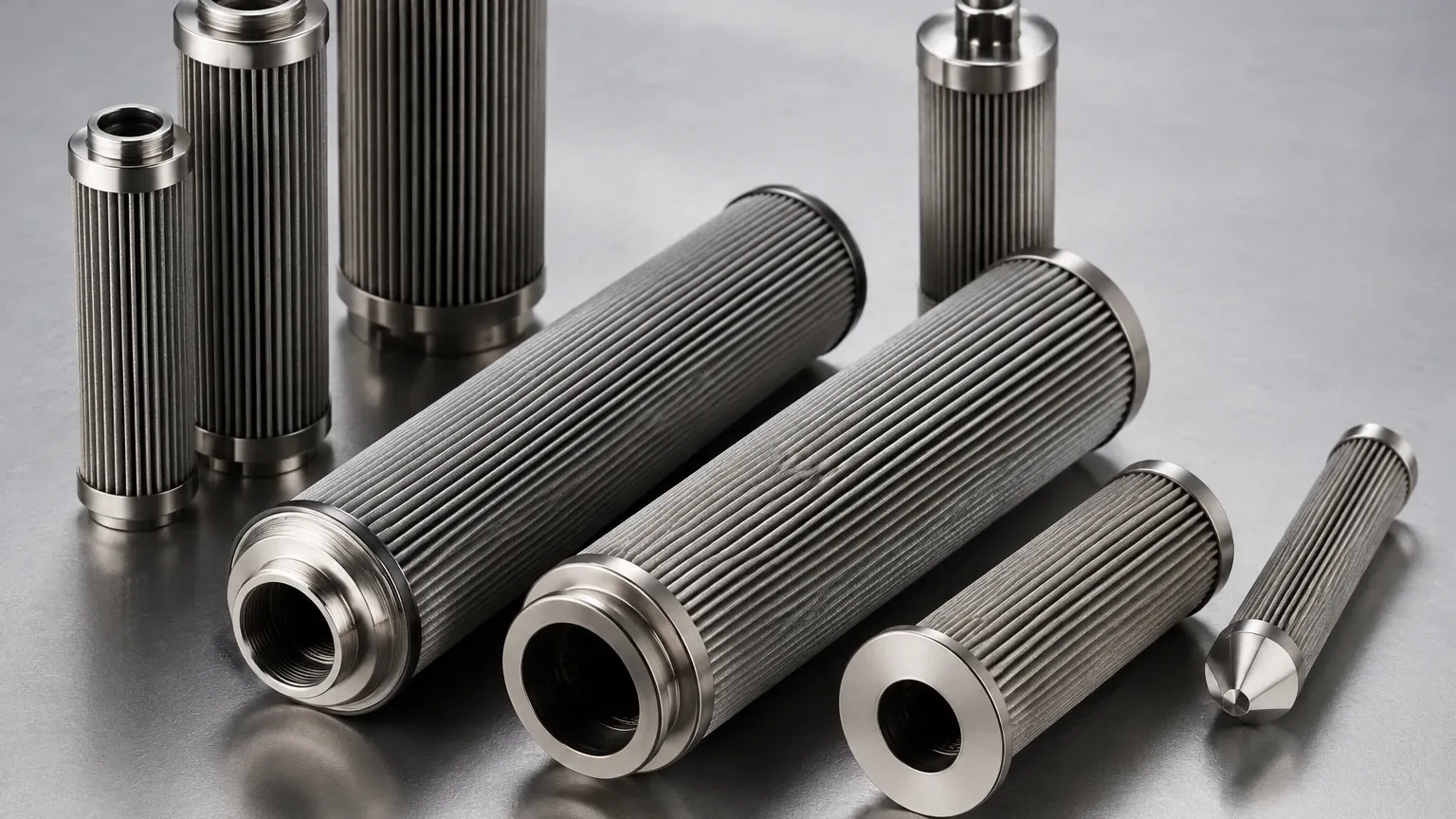
In industrial filtration, the efficiency of a system is often dictated by the relationship between surface area and flow resistance. Pleated filter cartridges represent a sophisticated engineering solution designed to maximize the effective filtration area (EFA) within a standardized footprint. By folding the filtration media into a series of pleats, manufacturers can provide significantly higher dirt-holding capacity and lower initial pressure drops compared to traditional cylindrical or depth-style filters.
For engineers and procurement professionals in sectors such as chemical processing, pharmaceuticals, and hydraulic systems, selecting the correct pleated configuration is critical for optimizing process uptime and reducing the total cost of ownership. This guide examines the technical specifications, material considerations, and performance benchmarks of pleated filtration technology.
Engineering Principles of Pleated Filtration
The primary objective of pleating is to increase the surface area available for fluid contact. In a standard cylindrical filter, the surface area is limited to the outer circumference of the media. In contrast, pleated filter cartridges utilize a geometry that allows for several square feet of media to be packed into the same volume.
The Relationship Between Surface Area and Flux
Flux, defined as the flow rate per unit of filtration area, is a key metric in filter sizing. By increasing the surface area through pleating, the flux across any specific point of the media is reduced. Lower flux leads to several technical advantages:
1. Reduced Pressure Drop (ΔP): Fluid passes through the media at a lower velocity, encountering less resistance.
2. Extended Service Life: Particles are distributed across a larger area, preventing the rapid formation of a restrictive filter cake.
3. Improved Retention Efficiency: Lower velocities through the pores reduce the likelihood of "particle breakthrough," where high pressure forces contaminants through the media.
Pleat Density and Geometry
Engineering a pleated filter requires a balance between pleat count and pleat depth. If pleats are packed too tightly (over-crowding), the fluid cannot access the base of the pleat, effectively reducing the usable surface area and increasing the risk of pleat collapse under high differential pressure. Conversely, if pleats are too loose, the filter loses its capacity advantage. Quality industrial filters utilize support layers—often made of coarser mesh or specialized polymers—to maintain pleat separation and structural integrity during high-flow conditions.
Material Selection and Structural Integrity
The choice of material for pleated filter cartridges is determined by the chemical nature of the fluid, the operating temperature, and the required filtration precision. While polymer-based filters are common in water treatment, industrial applications involving aggressive solvents, high temperatures, or high pressures often necessitate the use of stainless steel.
Stainless Steel Pleated Media
Stainless steel (typically 304 or 316L) is the material of choice for demanding B2B environments. It offers exceptional mechanical strength and thermal stability. In these designs, the filtration media is usually a woven wire mesh or a sintered metal fiber felt.
* Woven Wire Mesh: Provides precise pore sizes and is highly durable. It is ideal for surface filtration where particles are retained on the exterior of the mesh, making it easier to clean via backwashing.
* Sintered Metal Fiber: Offers a high-porosity structure with excellent dirt-holding capacity, functioning similarly to a depth filter but with the temperature and chemical resistance of metal.
Construction Methods
To ensure the longevity of Filter Cartridges, the method of assembly is paramount. For stainless steel variants, TIG (Tungsten Inert Gas) welding or plasma welding is preferred over adhesives. Welded construction eliminates the risk of bypass caused by adhesive failure and ensures that no extractables or leachables contaminate the process fluid. This is particularly vital in pharmaceutical and food-grade applications where purity is a regulatory requirement.
Performance Metrics: Efficiency vs. Pressure Drop
When evaluating pleated filter cartridges, engineers must look beyond simple micron ratings. The performance of a filter is a dynamic interaction between efficiency, capacity, and flow resistance.
Absolute vs. Nominal Ratings
* Nominal Rating: An arbitrary micrometer value indicated by the manufacturer, often representing a 60% to 90% retention of a specific particle size. It is a useful guide but lacks the precision required for critical processes.
* Absolute Rating: Refers to the diameter of the largest hard spherical particle that will pass through the filter under specified test conditions. In high-stakes industrial applications, absolute-rated pleated filters are necessary to guarantee downstream protection.
Dirt-Holding Capacity (DHC)
The DHC is the total mass of a standard contaminant that a filter can retain before the differential pressure reaches a terminal limit (the point at which the filter must be replaced or cleaned). Pleated designs inherently offer superior DHC. In a B2B context, higher DHC translates directly to fewer maintenance interventions and lower labor costs.
Industrial Applications and Use Cases
Pleated filtration technology is versatile, but its implementation varies significantly across industries. Understanding these nuances helps in selecting the right cartridge configuration.
Chemical and Petrochemical Processing
In these environments, filters must withstand corrosive fluids and high temperatures. Pleated stainless steel cartridges are used to remove catalysts, protect high-pressure pumps, and ensure the clarity of final chemical products. The ability of metal pleats to resist "media migration"—where bits of the filter material break off into the fluid—is a critical safety feature.
Food and Beverage Production
Filtration in this sector focuses on removing spoilage organisms and ensuring visual clarity. Pleated cartridges are used for the filtration of syrups, juices, and bottled water. Here, the focus is on materials that comply with FDA or EU food contact regulations. The high surface area allows for high-volume throughput without compromising the delicate flavor profiles of the product.
Hydraulic and Lubrication Systems
Hydraulic systems are sensitive to particulate contamination, which can cause catastrophic component failure. Pleated filters are used in return lines and pressure lines to maintain ISO fluid cleanliness codes. The structural rigidity of pleated metal mesh is essential here to handle the rapid pressure fluctuations common in hydraulic circuits.
Selection Considerations for Engineering Teams
Before purchasing or specifying pleated filter cartridges, technical teams should confirm several operational variables to ensure compatibility and performance.
1. Fluid Compatibility: Verify that the media, support layers, and O-ring materials (e.g., Viton, EPDM, PTFE) are chemically compatible with the process fluid at the maximum operating temperature.
2. Flow Velocity: Calculate the expected flow rate. If the velocity is too high, it may cause pleat deformation or premature blinding. Sizing the filter housing to accommodate a larger number of cartridges can mitigate this.
3. Differential Pressure Limits: Determine both the clean pressure drop and the maximum allowable pressure drop. Exceeding the collapse pressure of a cartridge can lead to system-wide contamination.
4. End-Cap Configurations: Cartridges come with various end-cap styles, such as Double Open End (DOE), Code 7 (226 O-rings with a locking fin), or Code 3 (222 O-rings). Ensuring a proper seal within the housing is the only way to prevent fluid bypass.
Maintenance, Cleaning, and Longevity
One of the primary advantages of stainless steel pleated filter cartridges is their cleanability. Unlike disposable polymer filters, metal cartridges can be refurbished multiple times, significantly reducing waste and long-term costs.
Cleaning Techniques
* Ultrasonic Cleaning: Uses high-frequency sound waves in a cleaning solution to dislodge fine particulates trapped deep within the pleats.
* Backwashing: Reversing the flow of fluid through the filter to push contaminants off the surface. This is most effective with surface-loading woven wire mesh.
* Chemical Cleaning: Using acids, alkalis, or solvents to dissolve organic or inorganic deposits. This requires careful selection of chemicals to avoid damaging the stainless steel passivated layer.
Monitoring Replacement Cycles
Industrial systems should be equipped with differential pressure gauges. A sudden drop in ΔP may indicate a filter rupture, while a rapid increase suggests a change in the upstream contaminant load. Establishing a baseline for "normal" pressure increases allows maintenance teams to schedule cleanings during planned downtime rather than reacting to emergency failures.
The Role of Customization in Industrial Systems
Standard off-the-shelf filters do not always meet the requirements of specialized industrial equipment. Customization in pleated filter design allows for optimizations that standard products cannot offer. This includes custom lengths, non-standard diameters, and specialized reinforcement cores for extreme pressure applications.
Working with a manufacturer that understands the nuances of OEM requirements ensures that the filtration component is integrated seamlessly into the larger system. Whether it is adjusting the pleat height to accommodate high-viscosity fluids or selecting a specific grade of stainless steel for cryogenic applications, customized pleated filter cartridges provide the precision required for modern industrial processes.
