


Pentair Ccp520 Filter Cartridges
In the landscape of industrial and commercial water treatment, the Pentair Clean & Clear Plus (CCP) series represents a standard for high-capacity, multi-cartridge filtration. Specifically, the pentair ccp520 filter cartridges are engineered for applications requiring high flow rates and significant debris-loading capacity without the footprint of traditional sand filters. For engineers and facility managers, understanding the technical specifications, material limitations, and performance variables of these cartridges is essential for maintaining system efficiency and optimizing the total cost of ownership.
Industrial filtration often demands a balance between mechanical strength and filtration fineness. The CCP520 system utilizes a quad-cartridge configuration, where four individual cartridges work in parallel to provide a total effective filtration area of 520 square feet. This design reduces the flux—the flow rate per unit of surface area—which in turn lowers the pressure drop and extends the service interval between cleanings.
Technical Specifications and Architecture
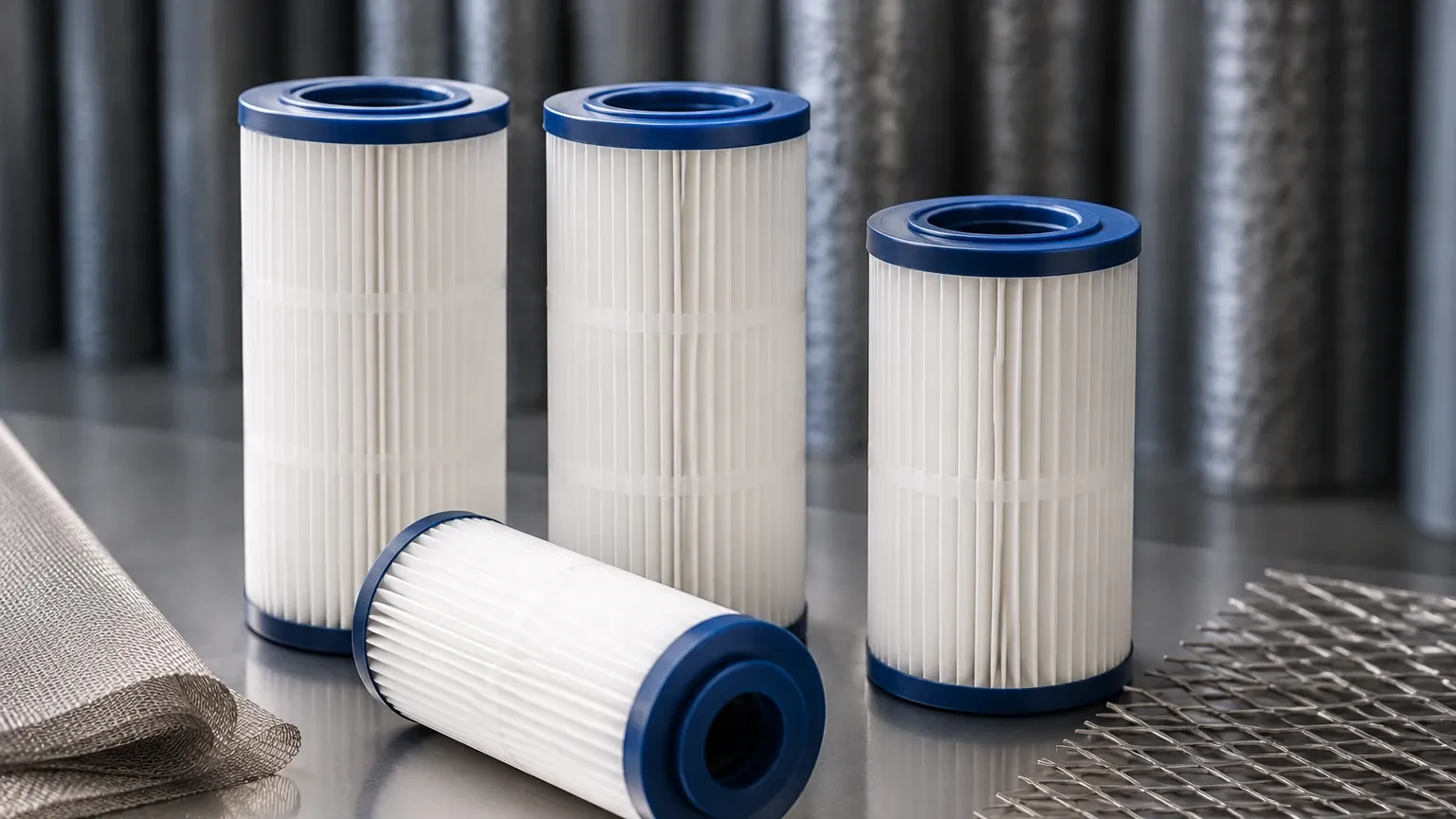
The pentair ccp520 filter cartridges are defined by their physical dimensions and the structural integrity of their components. Each of the four cartridges in a standard CCP520 set typically measures approximately 32 inches in length with an outer diameter of 7 inches. However, the performance of these units is dictated less by their size and more by the geometry of their pleats.
Surface Area and Pleat Density
The 520-square-foot rating is achieved through high-density pleating. By folding the filter media, manufacturers maximize the surface area available for particle interception. In industrial contexts, pleat stability is a critical engineering concern. Under high-pressure differentials, poorly supported pleats can "pinch" or collapse, effectively sealing off large portions of the filter media and causing a rapid spike in system pressure. High-quality replacement Filter Cartridges utilize reinforced cores and outer bands to maintain uniform pleat spacing even as the particulate load increases.
Flow Dynamics and Flux Rates
The CCP520 system is typically rated for a maximum flow rate of 150 gallons per minute (GPM) in commercial applications, though residential standards may differ. From an engineering perspective, operating at the maximum rated flow is rarely the most efficient strategy. Lower flux rates (GPM/sq. ft.) allow for deeper penetration of particles into the media and reduce the likelihood of "breakthrough," where pressure forces contaminants through the filter matrix. For critical industrial pre-filtration, maintaining a flux rate below 0.25 GPM per square foot is often recommended to maximize filtration efficiency.
Material Science in Cartridge Filtration
The choice of media is the most significant factor in determining the chemical compatibility and thermal limits of pentair ccp520 filter cartridges. Most standard versions utilize a non-woven, spun-bond polyester fabric.
Polyester Media Capabilities
Polyester is favored for its balance of hydrophobicity and mechanical strength. It resists stretching when wet and maintains a consistent pore structure. However, engineers must be aware of its limitations:
1. Temperature Limits: Standard polyester cartridges are generally rated for temperatures up to 100°F (38°C). In industrial processes involving heated fluids, the structural integrity of the polyester and the plastic end caps can degrade, leading to bypass.
2. Chemical Compatibility: While polyester is resistant to many common water treatment chemicals, it can be compromised by high concentrations of certain acids or petroleum-based solvents.
3. Micron Ratings: These cartridges typically provide nominal filtration in the 10 to 20-micron range. For applications requiring absolute filtration or sub-micron capture, alternative media or secondary filtration stages are necessary.
Structural Components
The core and end caps of the cartridge provide the necessary rigidity to withstand the pump's head pressure. In many commercial-grade cartridges, these are made from high-impact ABS or polypropylene. In more demanding industrial environments, where the fluid may be aggressive or the pressure spikes are frequent, the transition to metal-reinforced or fully metallic filtration components becomes a technical necessity to prevent catastrophic failure of the filter element.
Performance Metrics and Evaluation
To evaluate the effectiveness of pentair ccp520 filter cartridges in a specific process, engineers should monitor three primary metrics: differential pressure, turbidity reduction, and cycle time.
Differential Pressure (ΔP)
The pressure gauge on the CCP520 tank is the primary diagnostic tool. A clean system typically shows a baseline pressure depending on the plumbing configuration. The industry standard for cleaning or replacing cartridges is when the differential pressure increases by 8 to 10 PSI over the clean baseline. Operating beyond this point not only stresses the pump but can also lead to "media migration," where the filter fabric itself begins to shed fibers into the effluent.
Dirt-Holding Capacity (DHC)
DHC refers to the total mass of contaminants a cartridge can retain before the ΔP reaches the terminal limit. This is influenced by the particle size distribution of the influent. In systems with high concentrations of fine silts, the surface of the media may blind quickly, leading to a high ΔP even if the total mass of debris is low. Conversely, with larger granular debris, the cartridges may achieve their full DHC without a significant initial pressure rise.
Maintenance and Lifecycle Management
The longevity of pentair ccp520 filter cartridges is heavily dependent on the cleaning protocol. Unlike sand filters, which are backwashed, cartridge filters must be physically removed and cleaned.
Cleaning Procedures
1. Rinsing: Using a high-volume, low-pressure water source to remove loose debris from between the pleats.
2. Degreasing: In industrial applications where oils or organic polymers are present, soaking the cartridges in a specialized degreasing solution is necessary. Oils can permanently bind to polyester fibers, creating a waterproof barrier that prevents filtration.
3. Acid Washing: If mineral scaling (calcium carbonate) is present, a dilute muriatic acid soak may be used. However, this must be done after degreasing to prevent the acid from "setting" the oils into the media.
Signs of Failure
Cartridges should be inspected during every cleaning cycle for:
* End Cap Delamination: Separation of the media from the plastic end caps, which allows unfiltered fluid to bypass the system.
* Pleat Collapse: Flattening of the pleats against the core.
* Fraying: Visible "fuzz" on the media surface, indicating the fibers are breaking down.
Typically, even with meticulous maintenance, polyester cartridges in a commercial or industrial setting have a service life of 12 to 24 months before the media becomes permanently fouled or structurally weakened.
Industrial Alternatives: Custom Metal Filtration
While the pentair ccp520 filter cartridges are excellent for standard water treatment, certain industrial applications exceed the capabilities of synthetic media. When processes involve high temperatures, high pressures, or aggressive chemical solvents, engineers often look toward customized stainless steel filtration solutions.
Manufacturers like Kaifil specialize in engineering metal filter components that can mirror the footprint of standard cartridges while offering vastly superior durability. Stainless steel wire mesh or sintered metal cartridges provide absolute micron ratings and can be cleaned via ultrasonic baths or chemical stripping, allowing for a much longer service life in harsh environments. For facilities looking to reduce waste and improve process reliability, upgrading to custom-engineered Filter Cartridges made from 304 or 316L stainless steel can be a viable alternative to frequent synthetic cartridge replacements.
Procurement and Selection Checklist
When purchasing replacement pentair ccp520 filter cartridges or considering an upgrade to a more robust filtration solution, technical buyers should confirm the following data points:
* Actual Surface Area: Ensure the replacement set provides the full 520 square feet. Some lower-cost aftermarket options reduce the pleat count, which increases the flux rate and shortens the service life.
* Media Weight: Standard high-quality media is typically 4 oz/yd². Lighter media is more prone to tearing and bypass.
* Core Strength: For industrial pumps with high flow rates, a reinforced center core is essential to prevent collapse.
* Chemical Compatibility: Verify that the end cap adhesive and the media itself are compatible with any additives or process chemicals used in the system.
* Micron Rating Requirements: Determine if the process requires nominal (standard) or absolute (high-precision) filtration.
By focusing on these engineering fundamentals rather than just the initial purchase price, organizations can ensure that their CCP520 systems provide consistent, high-clarity effluent while minimizing downtime and maintenance labor. Whether utilizing standard polyester media or moving toward high-performance custom metal cartridges, the goal remains the same: reliable particulate removal and protected downstream equipment.
