


Raymor Water Filter Cartridges
In the landscape of commercial and light industrial water treatment, the selection of appropriate filtration components is critical for maintaining system integrity and ensuring the quality of the process water. Raymor water filter cartridges are widely recognized in the plumbing and water treatment sectors for their role in point-of-use and point-of-entry systems. For engineers and procurement professionals, understanding the technical nuances of these cartridges—ranging from material composition to flow dynamics—is essential for optimizing filtration performance and managing the total cost of ownership.
As industrial processes become more demanding, the transition from standard consumer-grade solutions to high-performance Filter Cartridges becomes a matter of operational efficiency. This guide examines the technical specifications, application criteria, and engineering considerations associated with water filter cartridges, providing a framework for informed decision-making in industrial environments.
Technical Specifications and Design Architecture
Raymor water filter cartridges are typically designed to fit standard filter housings, which are categorized by their physical dimensions—most commonly 10-inch and 20-inch lengths with standard or "Big Blue" diameters. However, the external dimensions are only the starting point for technical evaluation.
Micron Ratings: Nominal vs. Absolute
One of the most critical specifications for any water filter cartridge is its micron rating. This defines the size of particles the filter is capable of trapping.
* Nominal Micron Rating: This indicates that the filter can trap a large percentage of particles of a certain size (e.g., 85% of 5-micron particles). Most standard sediment and carbon cartridges used in general water treatment carry nominal ratings.
* Absolute Micron Rating: This refers to a filter's ability to trap 99.9% or more of particles at a specific size. In precision industrial applications, such as pharmaceutical or fine chemical processing, absolute ratings are often required to ensure consistent output quality.
Media Composition
The performance of raymor water filter cartridges is largely dictated by the media used inside the housing. Common media include:
1. Polypropylene (Melt-Blown or String-Wound): Primarily used for sediment removal. These are depth filters that trap particles throughout the thickness of the media.
2. Activated Carbon (Block or Granular): Utilized for the adsorption of chlorine, volatile organic compounds (VOCs), and the improvement of taste and odor. Carbon blocks offer higher surface area and better filtration efficiency compared to granular activated carbon (GAC).
3. Pleated Media: Often made from polyester or specialized synthetics, pleated designs offer a significantly higher surface area, allowing for higher flow rates and lower initial pressure drops.
Evaluating Filtration Efficiency in Industrial Contexts
When integrating raymor water filter cartridges into an industrial workflow, engineers must look beyond the basic product labels. The efficiency of a filtration system is a balance between the required purity levels and the mechanical constraints of the system.
Flow Rate and Pressure Drop (ΔP)
Every filter cartridge introduces a degree of resistance to the fluid flow. This resistance is measured as pressure drop. An ideal filtration setup maximizes particle retention while minimizing the energy required to push water through the media. Factors influencing pressure drop include:
* Media Density: Finer micron ratings naturally result in higher resistance.
* Surface Area: Pleated cartridges generally exhibit lower pressure drops than depth filters of the same micron rating because the fluid has more paths to travel through.
* Fluid Viscosity and Temperature: While water viscosity is relatively stable, significant temperature fluctuations can affect the structural integrity of polymer-based cartridges.
Loading Capacity and Service Life
The loading capacity refers to the amount of contaminant a cartridge can hold before the pressure drop reaches a terminal point (the point at which the filter must be replaced). In high-sediment environments, using a multi-stage approach—where a coarse pre-filter protects a finer secondary cartridge—is the standard engineering practice to extend the service life of more expensive components.
Material Compatibility and Chemical Resistance
In B2B applications, water is rarely "just water." It may contain process chemicals, high mineral content, or be subjected to varying pH levels. While raymor water filter cartridges are robust for standard potable water, industrial users must verify material compatibility.
Polymer Limitations
Most standard cartridges use polypropylene, polyethylene, or various resins. While these are excellent for general use, they may degrade when exposed to certain industrial solvents or high-temperature water (typically above 60°C). In these instances, the engineering team must evaluate whether a standard cartridge is sufficient or if a transition to stainless steel or specialized fluoropolymer media is necessary.
Structural Integrity
Under high-pressure surges (water hammer) or continuous high-pressure operation, the structural core of a filter cartridge is tested. Industrial-grade cartridges often feature a reinforced center core—sometimes made of stainless steel—to prevent the media from collapsing or "unloading" trapped contaminants back into the downstream flow.
Common Risks and Performance Failures
Failure to correctly specify a filter cartridge can lead to significant downstream issues. Understanding the common failure modes of raymor water filter cartridges helps in developing a proactive maintenance strategy.
1. Bypass: This occurs when fluid leaks around the end caps of the cartridge rather than passing through the media. This is often caused by incorrect seating or the use of the wrong end-cap style (e.g., using a Double Open End (DOE) cartridge where a Single Open End (SOE) with an O-ring is required).
2. Media Migration: In low-quality cartridges, the fibers of the filter media itself can break off and enter the process stream. This is a critical failure in food, beverage, and pharmaceutical applications.
3. Biofouling: In systems where water sits stagnant or where organic matter is high, bacteria can grow on the filter media. This not only clogs the filter but can also contaminate the entire water system. Regular replacement cycles and, in some cases, the use of antimicrobial media or UV sterilization are required.
Maintenance Cycles and Total Cost Considerations
From a procurement perspective, the initial purchase price of raymor water filter cartridges is only one component of the total cost. The frequency of replacement, the labor costs associated with change-outs, and the potential cost of system downtime must all be factored into the equation.
Monitoring Differential Pressure
The most scientific way to determine when a cartridge needs replacement is by monitoring the differential pressure across the filter housing. Installing pressure gauges upstream and downstream allows operators to see exactly when the filter is reaching its loading capacity. Replacing filters based on actual pressure data rather than a fixed calendar schedule can lead to significant cost savings and better protection of downstream equipment.
Reusable vs. Disposable Options
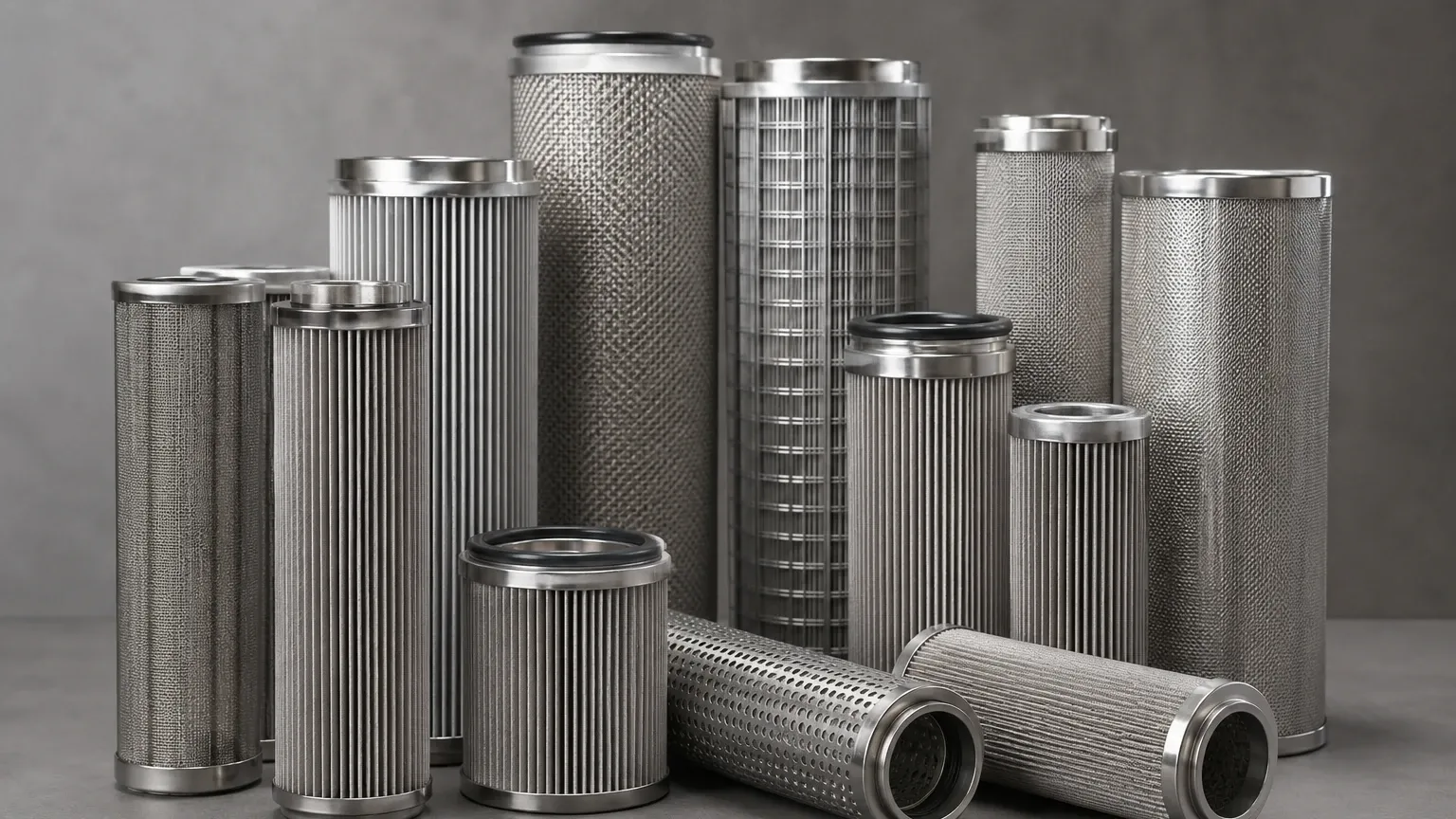
While most water filter cartridges are disposable, certain industrial applications benefit from cleanable, reusable stainless steel mesh filters. For high-temperature or highly corrosive environments where polymer cartridges fail prematurely, a custom-engineered stainless steel solution provides a much longer service life and reduces the waste stream. Professionals should evaluate the long-term ROI of switching to permanent filtration components for demanding stages of their process.
Confirming Requirements Before Purchase
Before finalizing a bulk order or specifying a particular model of raymor water filter cartridges for a new project, technical teams should confirm the following parameters:
* Exact Fluid Chemistry: Are there trace chemicals or temperatures that exceed the limits of standard polypropylene?
* Required Effluent Quality: Is a nominal rating sufficient, or does the process require an absolute micron barrier?
* Housing Compatibility: Does the cartridge utilize a DOE, 222 O-ring, or 226 O-ring configuration? Ensuring a perfect seal is paramount to preventing bypass.
* Flow Requirements: What is the peak flow rate, and will the selected cartridge size maintain an acceptable pressure drop at that rate?
By addressing these questions, engineers can ensure that their filtration system remains a reliable part of their infrastructure rather than a point of frequent failure. Whether utilizing standard cartridges for general utility water or seeking specialized Filter Cartridges for high-precision industrial tasks, the focus must always remain on technical compatibility and long-term performance.
In conclusion, while raymor water filter cartridges serve as a dependable standard for many applications, the industrial sector demands a rigorous approach to selection. By understanding the interplay between media types, micron ratings, and operational constraints, organizations can achieve a balance between water purity and operational economy. For those dealing with extreme conditions—such as high temperatures, aggressive chemicals, or the need for permanent, cleanable solutions—exploring custom stainless steel filtration components may provide the necessary durability that standard disposable cartridges cannot offer.
